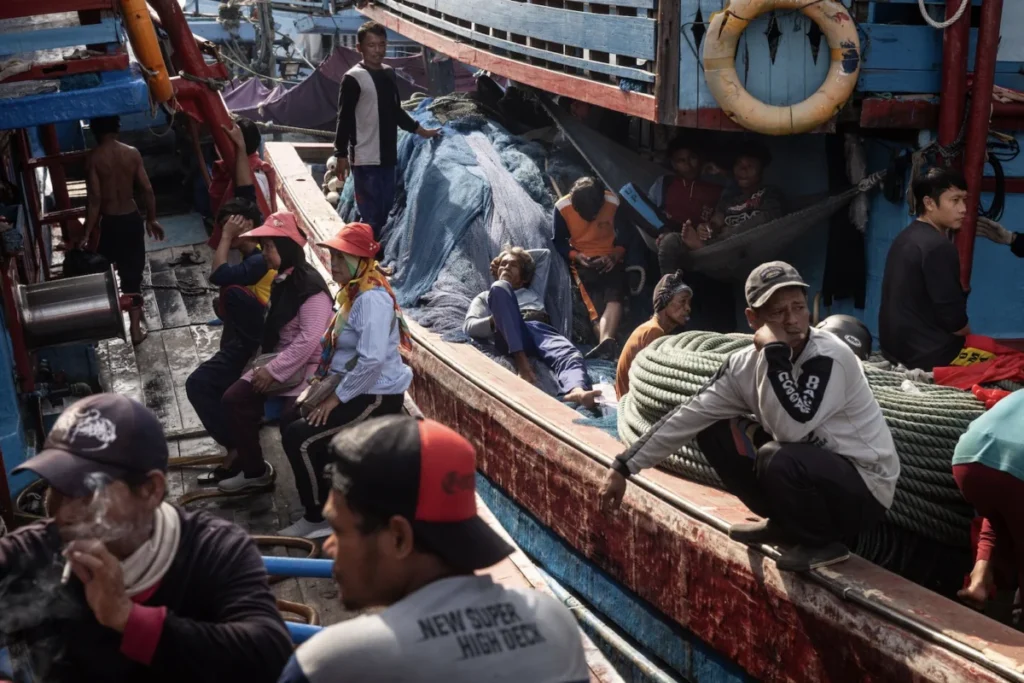

The Bronx Documentary Center is currently hosting a comprehensive and multi-layered exhibition titled Overfishing in Southeast Asia, featuring the work of renowned photojournalist Nicole Tung. As the laureate of the 15th Carmignac Photojournalism Award, Tung spent nine months conducting an exhaustive investigation across Thailand, the Philippines, and Indonesia to document the collapsing marine ecosystems and the human rights abuses inherent in the global fishing industry. The exhibition, which remains on view until April 26, 2026, serves as a visual indictment of an industrial-scale machine that operates largely out of the public eye, revealing the intersection of environmental degradation, labor exploitation, and geopolitical tension.
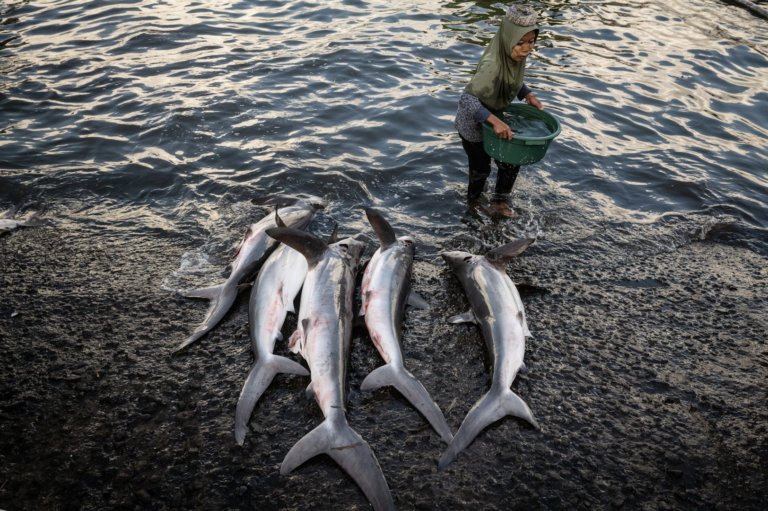
Through a series of stark, high-contrast images and intimate portraits, Tung traces the trajectory of a crisis that threatens the food security of millions. Her reporting highlights a grim reality for small-scale coastal communities: as industrial fleets sweep the oceans clean using advanced technology and massive nets, local fishermen are left with empty waters, forced to choose between poverty or entering a dangerous, unregulated labor market.
The Industrialization of the Ocean and the Displacement of Tradition
The primary driver of the crisis documented by Tung is the sheer scale of industrial fishing operations. In Southeast Asia, a region that accounts for approximately 25% of the world’s fish production, the transition from traditional subsistence fishing to export-oriented industrialism has been devastating. Tung’s work in General Santos, known as the "Tuna Capital" of the Philippines, illustrates this shift. The city is a massive hub for the export of Yellowfin and Bigeye tuna, where fish are processed and canned for global markets. However, the abundance seen at the ports masks a deeper scarcity.

Small-scale fishermen reported to Tung that "fish of value" have vanished from near-shore waters. This depletion forces artisanal boats to venture further into the open sea, where they lack the safety equipment or fuel capacity to compete with massive commercial trawlers. This economic displacement has fractured traditional social structures, as younger generations abandon the sea for precarious work in urban centers or on commercial vessels where labor protections are often non-existent.
Thailand: A Case Study in Regulatory Volatility
Thailand’s fishing industry has long been under international scrutiny. In 2015, the European Union issued a "yellow card" warning to Thailand, threatening to ban seafood imports unless the country addressed widespread illegal, unreported, and unregulated (IUU) fishing and human trafficking. In response, the Thai government implemented the Port In Port Out (PIPO) system, a rigorous monitoring framework designed to track crew manifests and catch data.

During her reporting in early 2025, Tung observed the efficacy of these reforms, noting that several areas had begun to see a recovery in biodiversity. However, she also documented a growing political movement to roll back these regulations. Commercial fishing interests have placed significant pressure on the Thai Parliament to relax labor laws and environmental restrictions, arguing that they make the industry uncompetitive. Environmentalists and small-scale fisherfolk told Tung that any rollback would be catastrophic, undoing a decade of progress in just a few years. The exhibition captures this tension, showing docked vessels that have been idle for years alongside the Burmese migrant workers who still form the backbone of the Thai processing industry.
Indonesia: The Frontline of Biodiversity Loss and Labor Abuse
In Indonesia, the world’s largest archipelagic nation, the challenges are twofold: the protection of endangered species and the monitoring of a vast, often corrupt, commercial fleet. Tung’s investigation took her to Tanjung Luar in East Lombok, one of the largest shark markets in Southeast Asia. Here, she photographed the unloading of sharks and wedgefish—species that are critically threatened.

While Indonesia has signed international treaties like CITES (Convention on International Trade in Endangered Species of Wild Fauna and Flora), enforcement remains a Herculean task across 17,000 islands. Shark fins are frequently exported to East Asian markets for luxury soups, while the meat provides a cheap source of protein for local populations. The government faces the difficult task of balancing the immediate survival needs of its citizens with the long-term necessity of protecting apex predators essential for reef health.
Furthermore, Tung’s reporting reveals that labor conditions on Indonesian-flagged and foreign-operated vessels (particularly Chinese, Taiwanese, and South Korean ships) remain dire. Fishermen described a system rife with physical abuse, withheld wages, and "sea slavery," where men are kept at sea for years at a time without touching land. Unlike Thailand’s PIPO system, Indonesia’s monitoring efforts are often described by workers as corrupt or easily bypassed by boat owners.

The Philippines and the Geopolitics of the Nine-Dash Line
The crisis of overfishing in the Philippines is inextricably linked to territorial disputes in the South China Sea. Tung’s work highlights how Filipino fishermen are caught in the crosshairs of China’s "Nine-Dash Line" claim. In traditional fishing grounds like the Scarborough Shoal, Filipino boats are frequently intimidated, harassed, or chased away by Chinese maritime militias and coast guard vessels.
This geopolitical pressure has created a "squeezing" effect. Filipino fishermen, unable to access their traditional waters, are forced to over-exploit coastal reefs, leading to a rapid decline in local biodiversity. The Philippine government, lacking the naval capacity to challenge major powers, struggles to enforce its own maritime laws against foreign "super-trawlers" that enter its Exclusive Economic Zone (EEZ) under the cover of night. The resulting loss is not just economic but a matter of national food security, as fish remains the primary source of protein for the archipelago’s population.

The Hidden Ecological Toll: Ghost Nets and Seabed Destruction
Beyond the targeted catch, Tung’s exhibition sheds light on the "invisible" environmental damage caused by industrial fishing. One of the most poignant images in the collection features a veterinarian in Thailand’s Rayong province treating a hawksbill turtle that required a double amputation. The injury was caused by "ghost nets"—discarded or lost nylon fishing nets that continue to drift through the ocean, entangling marine life for decades.
Industrial bottom-trawling—a practice where weighted nets are dragged across the seafloor—is also documented as a primary cause of habitat destruction. This method obliterates coral reefs and seagrass beds, which serve as the "nurseries" of the ocean. Without these habitats, fish populations cannot regenerate, creating a feedback loop of extinction that affects the entire marine food web.

A Call for Consumer Awareness and Policy Reform
The Overfishing in Southeast Asia exhibition concludes with a focus on the role of the global consumer. Much of the seafood harvested under the conditions Tung documented ends up in supermarkets and restaurants in North America, Europe, and East Asia. The complexity of global supply chains often masks the origin of the product, making it difficult for consumers to make ethical choices.
Experts and environmental organizations, such as the Monterey Bay Aquarium’s Seafood Watch, advocate for greater transparency. They suggest that consumers should:

- Inquire about the "catch method" and origin of seafood at restaurants.
- Support policies that mandate traceability in the seafood supply chain.
- Avoid species known to be overfished, such as certain varieties of bluefin tuna and shark.
- Support the expansion of Marine Protected Areas (MPAs) where industrial fishing is strictly prohibited.
Conclusion: The Interconnectedness of Ocean Health and Human Survival
Nicole Tung’s nine-month odyssey across Southeast Asia serves as a reminder that the health of the ocean is not a niche environmental concern but a fundamental pillar of global stability. Overfishing contributes directly to the climate crisis; healthy oceans are the planet’s largest carbon sinks, and the destruction of marine life reduces the ocean’s ability to sequester carbon dioxide.
As the exhibition at the Bronx Documentary Center makes clear, the "invisible" nature of the high seas has allowed an extractive industry to operate with impunity for too long. By bringing these stories to the heart of New York, Tung and the Fondation Carmignac aim to bridge the gap between the remote waters of the Pacific and the daily lives of global consumers. The collapsing nets of Southeast Asia are a warning of a broader ecological bankruptcy—one that requires immediate international cooperation and a fundamental shift in how humanity values its most vital natural resource.