

Artificial intelligence is rapidly transforming how businesses engage with their online presence. As AI models learn by ingesting vast amounts of web data and direct users to information through citations in their responses, marketers are left grappling with a critical blind spot: understanding precisely how their websites are being consumed and utilized by these burgeoning technologies. A comprehensive analysis of bot-tracking data, specifically from Cloudflare, reveals significant patterns in AI’s interaction with marketing websites, offering crucial insights for strategists aiming to optimize their digital footprint for the AI era.
The research, dubbed "The AI Crawl vs. Traffic Report," examined reports from 74 distinct accounts, focusing on AI requests logged in Cloudflare’s "Most crawled paths" and "AI referral traffic" sections. The findings illuminate the specific pages AI bots prioritize for crawling and, more importantly, the pages from which they ultimately send human visitors. This analysis aims to demystify AI’s engagement with websites, moving beyond assumptions to data-driven understanding.
AI’s Disproportionate Focus on Homepages
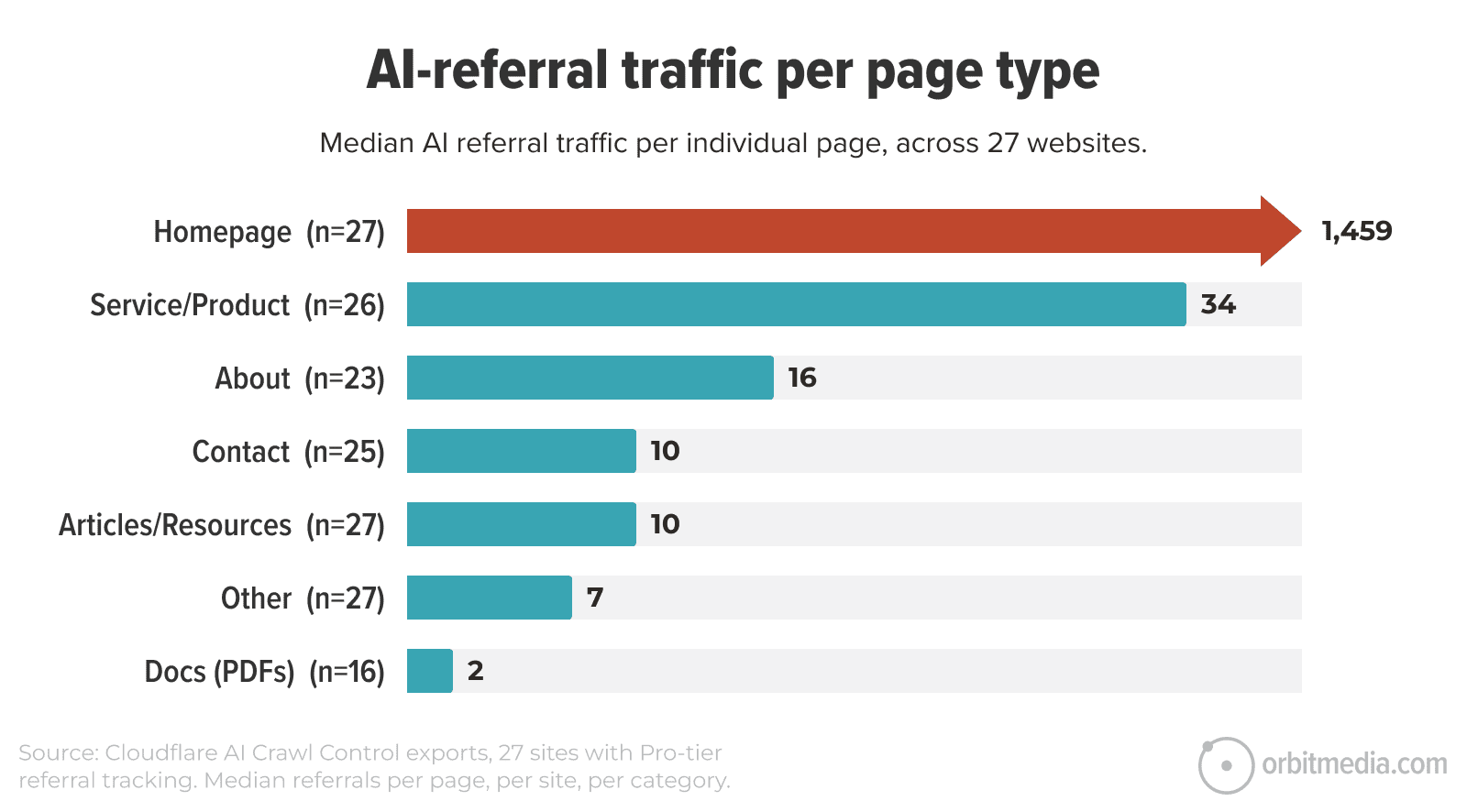
A primary revelation from the study is the overwhelming attention AI gives to homepages. Across the analyzed accounts, homepages are crawled approximately 15 times more frequently than any other page type on a website. This isn’t a subtle preference; it’s a significant deviation from an even distribution of AI attention. If AI requests were spread proportionally across a site’s URLs, a single homepage would receive a fraction of the traffic allocated to pages that constitute 5% of a site’s total content. However, the data indicates that homepages are vastly overrepresented in AI crawl requests, shattering baseline expectations.
This phenomenon holds true even when accounting for the fact that a homepage is just one of potentially hundreds of pages on a website. While other page categories such as service/product pages, articles, about sections, contact forms, pricing pages, and case studies also receive AI attention, they collectively garner significantly less proportional interest compared to the homepage. The study concludes that AI crawlers do not exhibit a disproportionate favor towards any specific content type in general; instead, they disproportionately favor the homepage itself.
This finding carries significant implications for content strategy. Marketers often ponder the types of content AI "prefers." However, the data suggests that the strategic placement of information may be more critical than the content itself. For businesses aiming to ensure AI models understand their brand comprehensively, prioritizing key brand messaging and offerings on the homepage is paramount.
Cyrus Shepard, Founder at Zyppy, commented on these findings, stating, "Incredible. This data suggests that many publishers may be sleeping on the potential of their homepages. Makes sense, but you have to wonder how many brands really pay attention to what their homepage says about them, or if they are offloading this valuable information space to about, support, and article pages."
Recommendations for Marketers: Optimizing the Homepage
Based on this insight, the report strongly advises marketers to focus their optimization efforts on their homepage. To effectively train AI to act as a brand advocate, the homepage should meticulously include:
- A clear value proposition: What problem does your brand solve, and for whom?
- Key product/service highlights: Briefly showcase your core offerings.
- Brand differentiators: What makes your brand unique and superior?
- Calls to action: Guide users on the next steps (e.g., request a demo, learn more).
- Credibility signals: Testimonials, awards, or notable partnerships.
The analysis controlled for website size (number of URLs) to ensure that these findings were not skewed by the sheer volume of content on larger sites. The next phase of the research explored the correlation between website size and AI attention.

Larger Websites Attract More AI Attention, But With Nuances
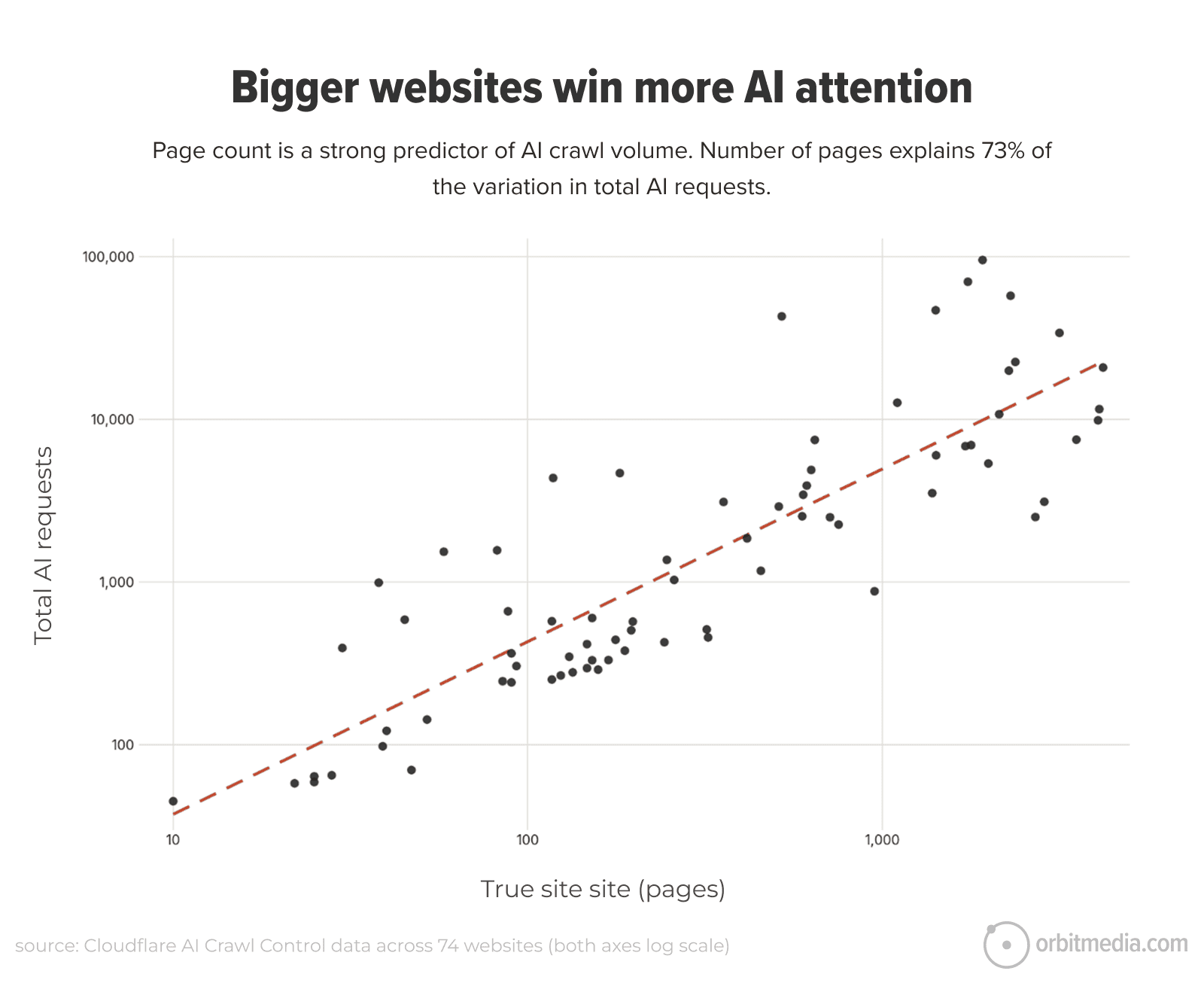
A strong correlation exists between the size of a website, measured by its total number of URLs, and the amount of AI attention it commands. Larger sites, with more pages, tend to attract more AI crawl requests. This relationship is nearly proportional, with a correlation coefficient of 0.86, indicating that AI requests generally scale with page count. This mirrors traditional search engine crawling behavior, where more pages offer more entry points for bots to discover and index. The larger the digital surface area, the more opportunities for interaction.
However, the correlation is not perfect. The study observed outliers where smaller websites garnered disproportionately high AI attention compared to their size. Some sites with as few as 50 pages received as many AI requests as sites with over 1,000 pages. This suggests that factors beyond sheer volume are at play. Potential reasons for this include the quality and optimization of content on specific pages, the prominence and strength of the brand in AI’s underlying training data, or more effective marketing strategies that draw AI bots.
Takeaways for Marketers: Scale and Visibility
For marketers, this implies that while a larger website can naturally attract more AI traffic, it is not the sole determinant of AI engagement. The following considerations are crucial:
- Content Quality Over Quantity: Even a smaller site can achieve significant AI visibility if its content is highly relevant, well-optimized, and authoritative.
- Brand Strength: A strong, recognizable brand may be prioritized by AI models, regardless of website size.
- Strategic Optimization: Focusing on core pages and ensuring they are easily discoverable and informative can yield outsized results.
AI Referral Traffic: Where Do Visitors Actually Go?
Beyond crawling, the study delved into AI referral traffic – actual human visits originating from AI citations. This distinction is vital: a citation is merely a mention, while referral traffic signifies a click-through. Cloudflare’s position "upstream" in the data flow provides a more accurate picture than traditional analytics tools like Google Analytics.
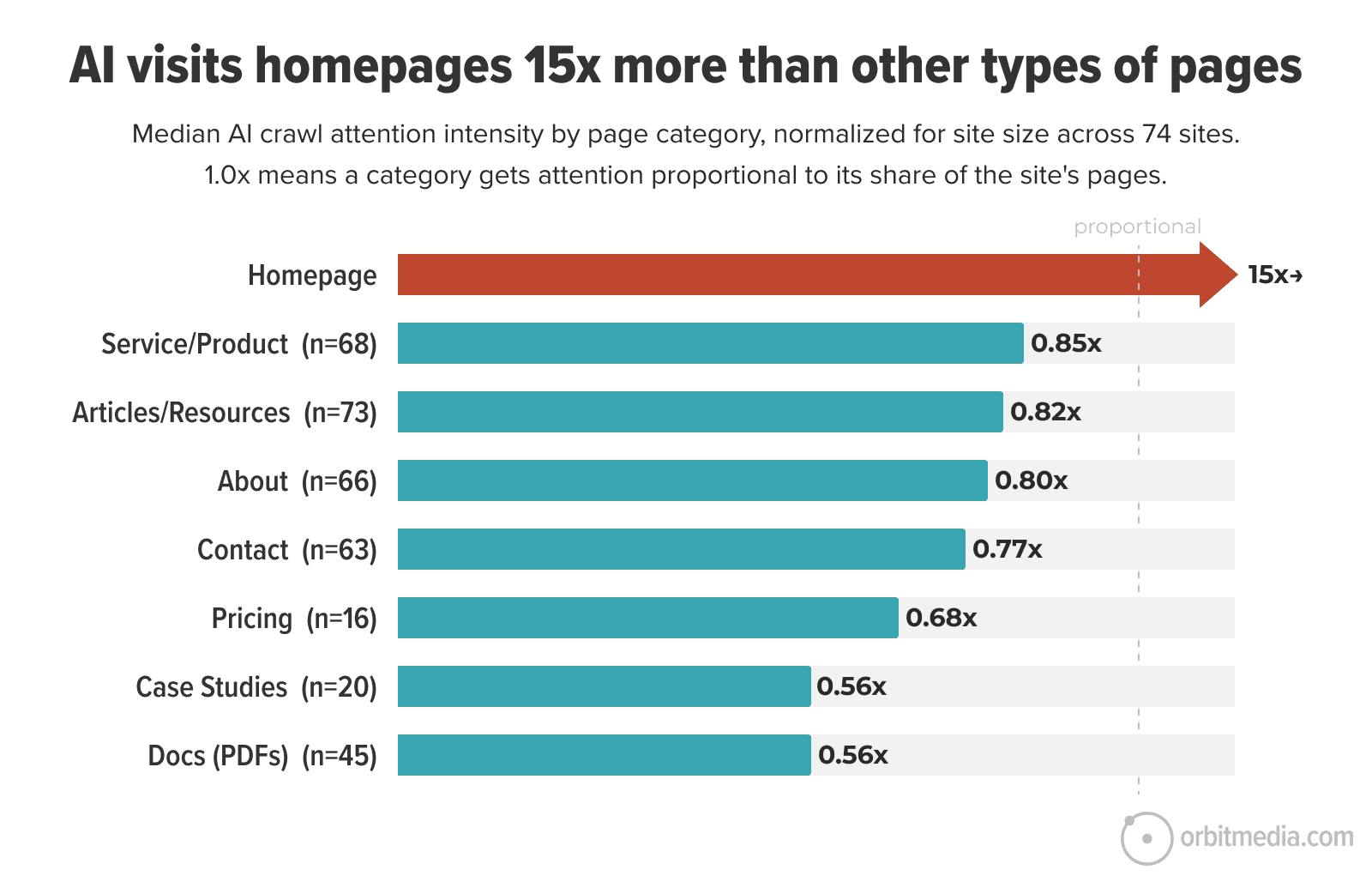
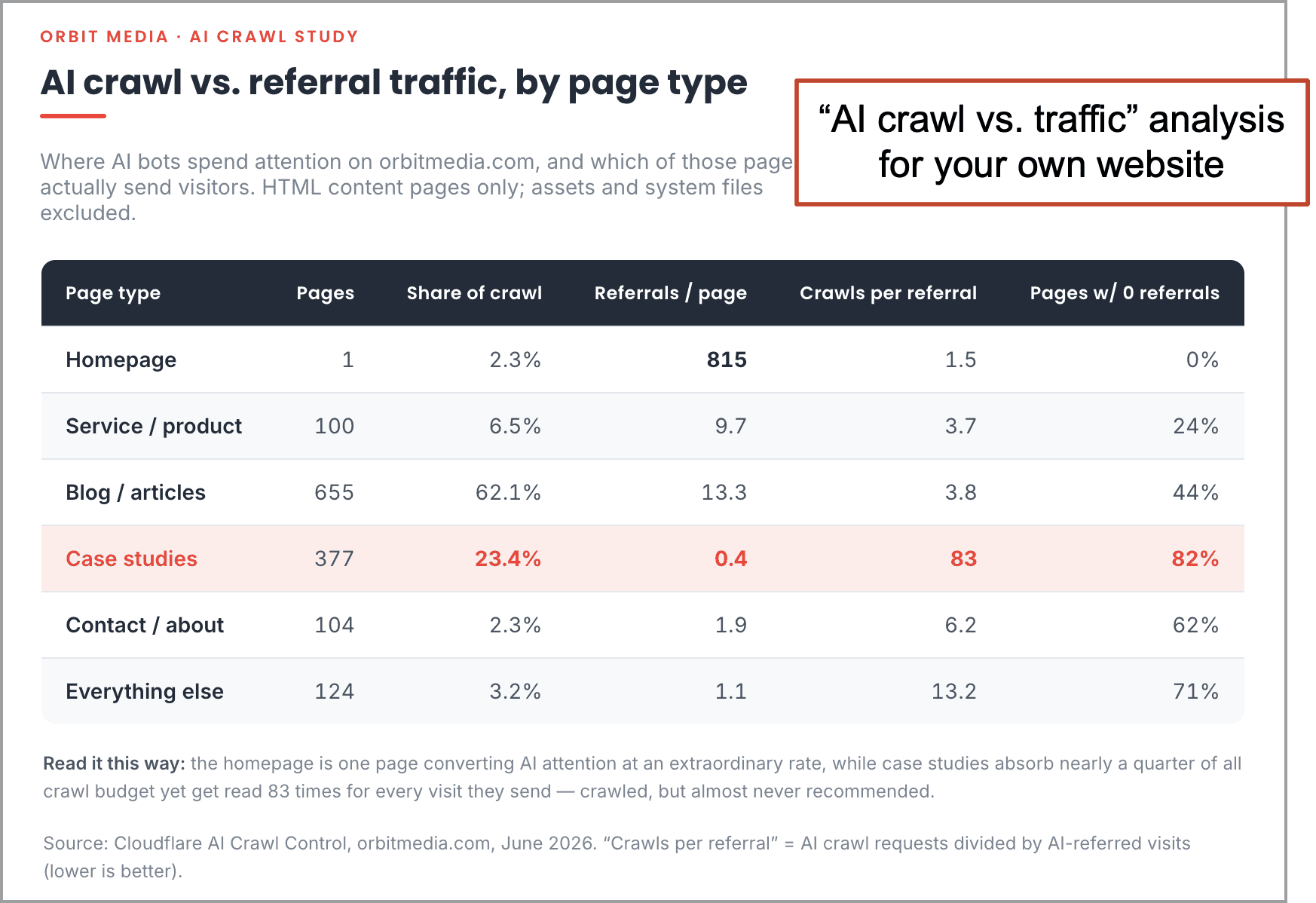
The research categorized pages into "decision-shaping" pages (service/product pages) and other types like home, articles, about, and case studies. The analysis revealed that homepages and service/product pages are the primary destinations for AI-referred traffic. When comparing the ratio of crawls to referrals, these categories significantly outperform others.
Conversely, articles and resources, despite being frequently crawled by AI, often underperform in generating referral traffic. This phenomenon is termed the "Dark Library Effect," where AI models absorb and summarize article content to answer user queries directly, leading to "zero-click" interactions similar to those seen in traditional search. AI systems are effectively using articles for knowledge acquisition rather than directing users to them.
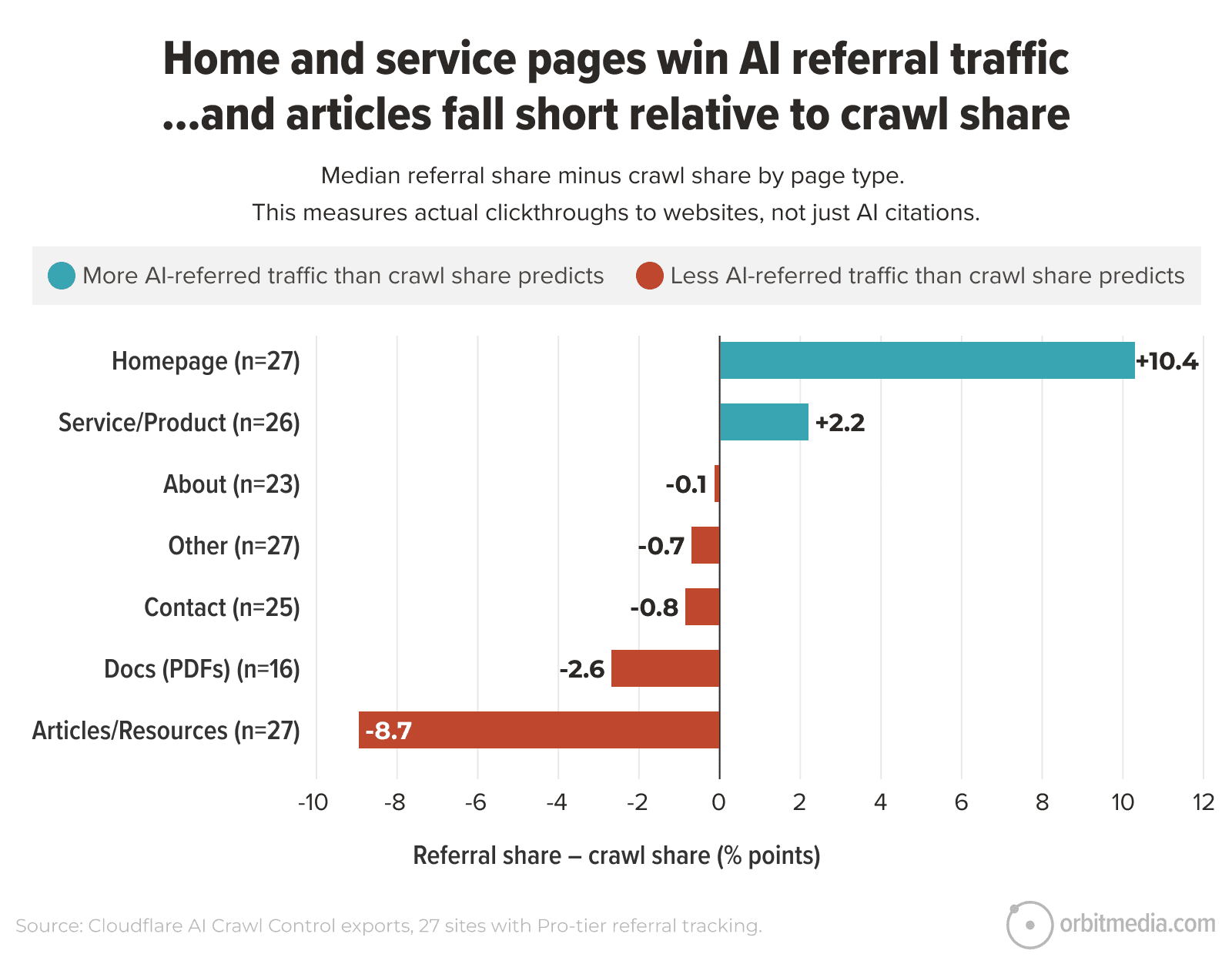
This finding has profound implications for content marketing. While articles are invaluable for SEO, thought leadership, and brand building, their role in directly driving AI-referred traffic may be limited. The data suggests that service/product pages and homepages are more effective at converting AI’s knowledge acquisition into tangible website visits.
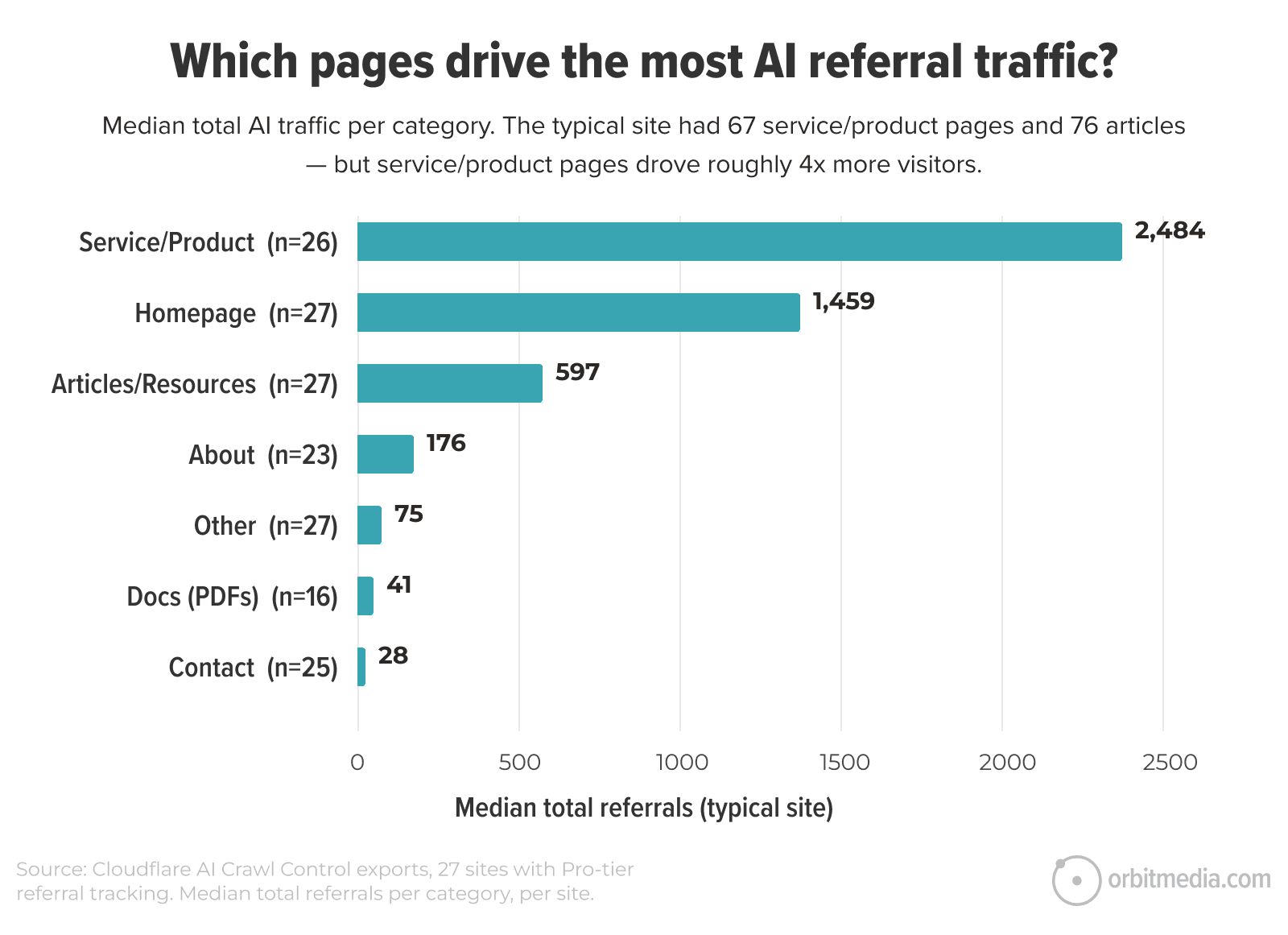
Specifically, the study found that service and product pages generate approximately three times more total AI-referral traffic per page than a typical article. When looking at the rate of referrals per page type, homepages lead with a substantial margin, followed by service/product pages. Articles and resources, while crawled frequently, fall significantly short in converting these crawls into actual visits.
The "Dark Library Effect" and Content Strategy
The "Dark Library Effect" highlights a shift in how AI utilizes content. Marketers should not solely measure the success of articles by direct referral traffic from AI. Content marketing retains significant value through:
- Brand Education: Informing AI models about your offerings and expertise.
- Sales Support: Providing detailed information that AI can reference.
- Audience Engagement: Building authority and trust, even without direct clicks.
- Thought Leadership: Positioning the brand as an expert in its field.
URL Depth and AI Referral Behavior
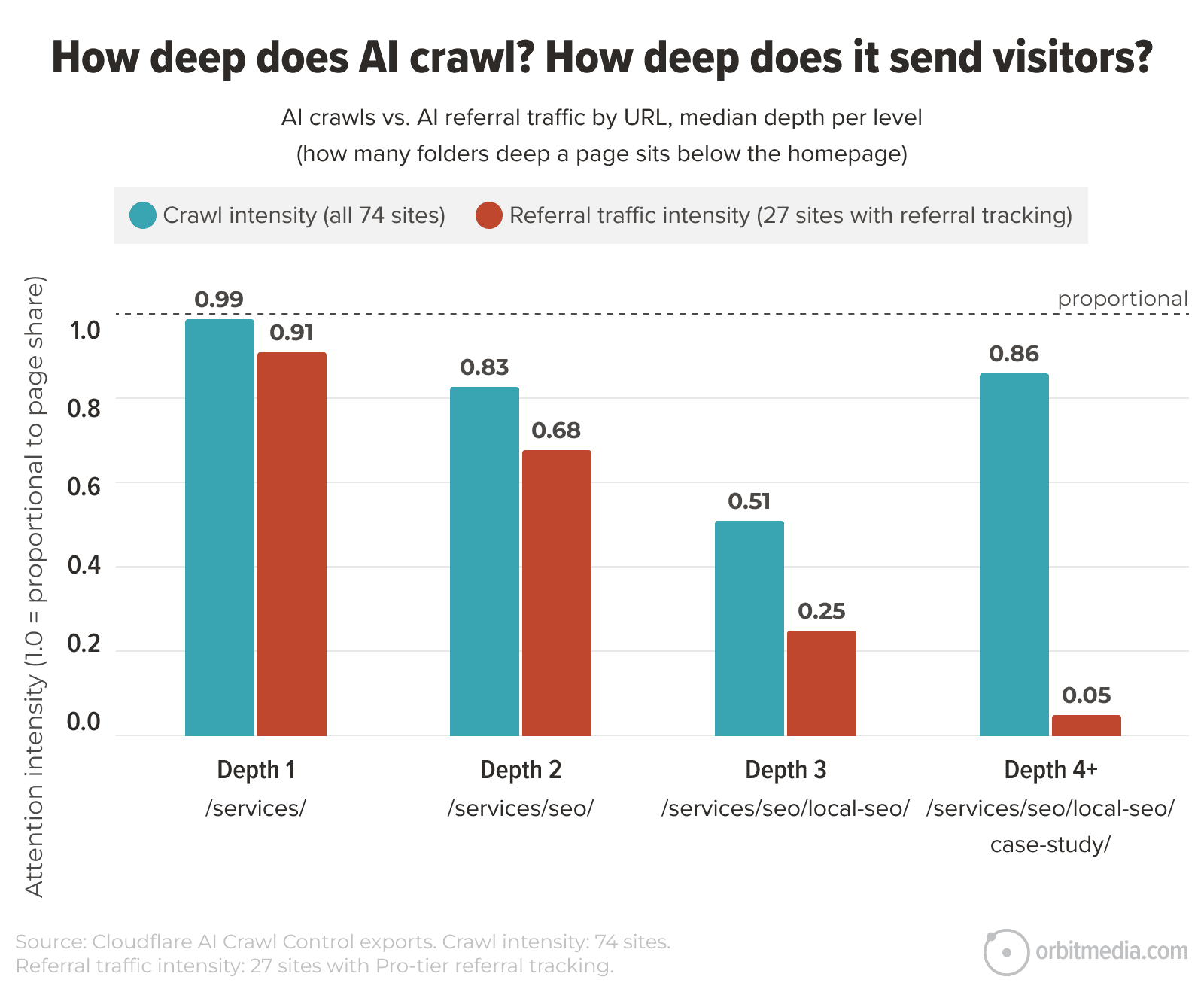
The analysis also examined the impact of URL structure and page depth on AI traffic. AI bots are capable of navigating deep into website structures, crawling pages located several folders down. However, the data indicates a sharp decline in AI’s propensity to send human visitors to these deeply nested pages. Pages buried three folders deep receive approximately one-quarter of the AI referral traffic their crawl frequency might predict, and pages four folders deep receive almost no referral traffic.
This pattern is attributed to crawl budget limitations and the way AI models prioritize information. While AI bots will discover deep pages, they are less likely to recommend them to users. This suggests an "architecture tax" associated with complex URL structures, where deeply buried content faces a higher barrier to AI-driven traffic generation.
While the study does not recommend immediately reorganizing existing websites solely for this reason, it offers guidance for new website builds or redesigns. Prioritizing shallower URL structures for key content can enhance its discoverability and potential for AI-driven referrals.
Takeaways for Marketers: Site Architecture and AI
The insights into URL depth emphasize the importance of a well-organized website structure:
- Strategic URL Structure: For new projects, aim for flatter URL hierarchies to improve AI referral potential.
- Content Prioritization: Ensure critical pages are easily accessible and not buried deep within site architecture.
- Focus on Top-Level Content: The homepage and primary service/product pages are the most likely destinations for AI-referred traffic.
Empowering Marketers: Analyzing Your Own Data
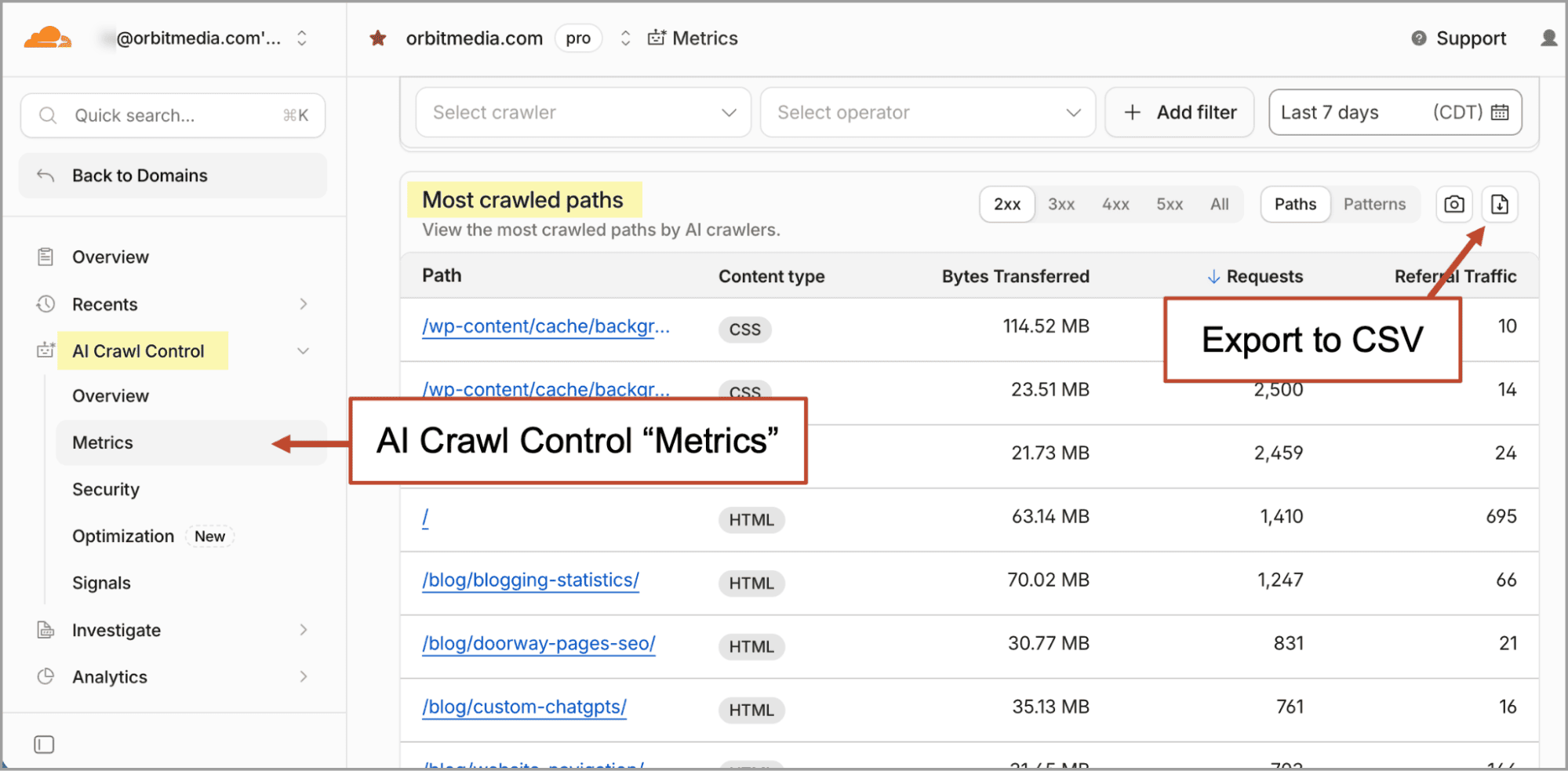
For businesses using Cloudflare, the platform offers tools to perform a similar analysis. By downloading the "Most Crawled Paths" and, if available, the "AI referral traffic" CSV reports, marketers can gain personalized insights. A detailed prompt is provided to guide users in analyzing this data with AI, benchmarking it against the findings of the comprehensive study. This diagnostic tool allows for a quick assessment of a website’s AI engagement patterns, identifying strengths and weaknesses in content discoverability and referral potential.
Training AI to Recommend Your Brand
Ultimately, a brand’s website is its most controllable digital asset. While AI models learn from a vast array of online sources, the website serves as the direct conduit for training AI to recommend that specific brand. The research underscores that AI bots are actively visiting websites, and understanding their behavior provides marketers with the knowledge to optimize their content and structure accordingly.
The study revealed that a significant portion of pages (47% in the dataset) generated zero referrals, which is not necessarily a negative outcome. AI bots serve dual purposes: training background knowledge and acting as search agents. Regardless of the bot’s immediate objective, the data now clarifies where that attention is directed.
Marketers are encouraged to engage in dialogue with AI models about their brands, sharing insights from this research. This proactive approach can help refine AI’s understanding of brand offerings, differentiators, and impact, thereby improving the likelihood of AI recommending the right solutions to potential customers. As the web continues to evolve with AI integration, marketers play a crucial role in ensuring AI can efficiently connect the most suitable prospects with the value that businesses provide.
Dataset Overview and Methodology
The analysis encompassed a diverse range of marketing websites, including those in professional services, B2B technology, industrial sectors, non-profits, educational institutions, and some e-commerce platforms. To ensure robust findings, each page was categorized by type and by its depth within the URL structure. This data was then measured against the website’s own baseline to prevent large sites from disproportionately influencing the results.
The classification process presented challenges due to variations in URL structures across different websites. Meticulous review was necessary to accurately categorize pages, particularly distinguishing between common directories for blog posts and more individualized URL patterns. Data processing and analysis were conducted using Claude Opus, with careful consideration given to all major judgment calls.
Special attention was paid to PDFs, which were categorized separately due to the difficulty in their classification (e.g., newsletters, manuals, case studies). Furthermore, the study identified and excluded instances of AI bots repeatedly crawling pages and files with no practical value, such as backend files or cache-busting assets, to ensure the analysis focused on meaningful interactions.
Website Access for AI Bots
A critical aspect for marketers is understanding whether their websites are accessible to AI bots. Blocking AI access could inadvertently hinder brand discovery and recommendation. A tool, the "AI Bot Access Checker," is available to assess which bots are accessing a domain and whether they are being allowed or blocked. For marketers aiming for AI visibility, ensuring AI bots can access their content is a fundamental step in the process of being discovered and recommended.