

Artificial intelligence is fundamentally reshaping how businesses connect with their audiences, a shift that is largely occurring behind a veil of limited visibility for marketers. As AI models learn by processing vast amounts of online data, their interactions with websites are becoming increasingly significant. However, the precise nature of these interactions—which pages AI "visits" most frequently and where it directs human traffic—remains a critical unknown for many. A recent comprehensive analysis, dubbed "The AI Crawl vs. Traffic Report," delves into this uncharted territory, offering crucial insights derived from bot-tracking services and a deep dive into the data of 74 diverse marketing websites.
The core challenge for marketers lies in understanding the AI’s digital footprint on their sites. While AI tools undoubtedly ingest website content for training and subsequently cite these sources in their responses, leading to potential traffic referrals, strategies and expectations have largely been developed in a vacuum. Key questions like "Which of my pages does AI visit most?" and "Where does it send visitors?" have gone unanswered, creating a blind spot in digital marketing efforts. This report aims to illuminate these dark corners by analyzing data from bot-tracking services, specifically focusing on Cloudflare’s "Most crawled paths" and "AI referral traffic" reports.
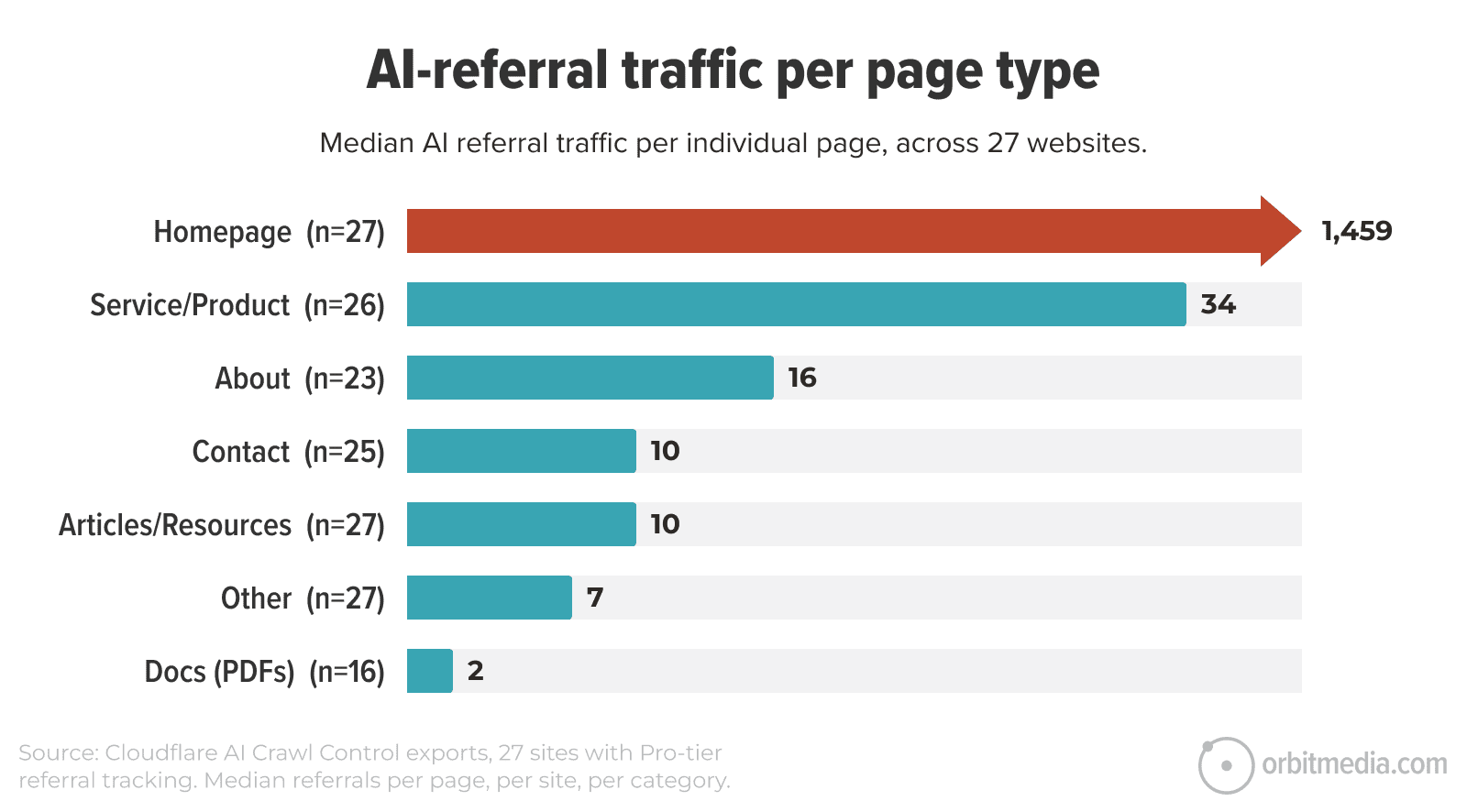
Homepage Dominance: The Uncontested AI Favorite
One of the most striking findings from the report is the overwhelming preference AI crawlers exhibit for website homepages. Across the analyzed accounts, homepages are visited approximately 15 times more frequently by AI than any other type of page. This disproportionate attention shatters any assumption of even distribution. If AI requests were spread evenly across a site’s URLs, a homepage, representing a tiny fraction of a site’s total pages, would receive a minuscule percentage of crawls. Instead, the data shows homepages are veritable magnets for AI attention, far exceeding the combined crawl volume of other critical sections like service/product pages, articles, "about us" sections, contact pages, pricing information, and case studies.
This phenomenon suggests that AI’s engagement is not simply a matter of content type but rather a strategic focus on a site’s primary entry point. The report emphasizes that for brands aiming to educate AI about their core offerings, the homepage is paramount. This insight challenges the common marketing practice of distributing crucial brand information across various sub-pages, suggesting that consolidating key messages on the homepage might be the most effective strategy for ensuring AI comprehension and subsequent recommendation.
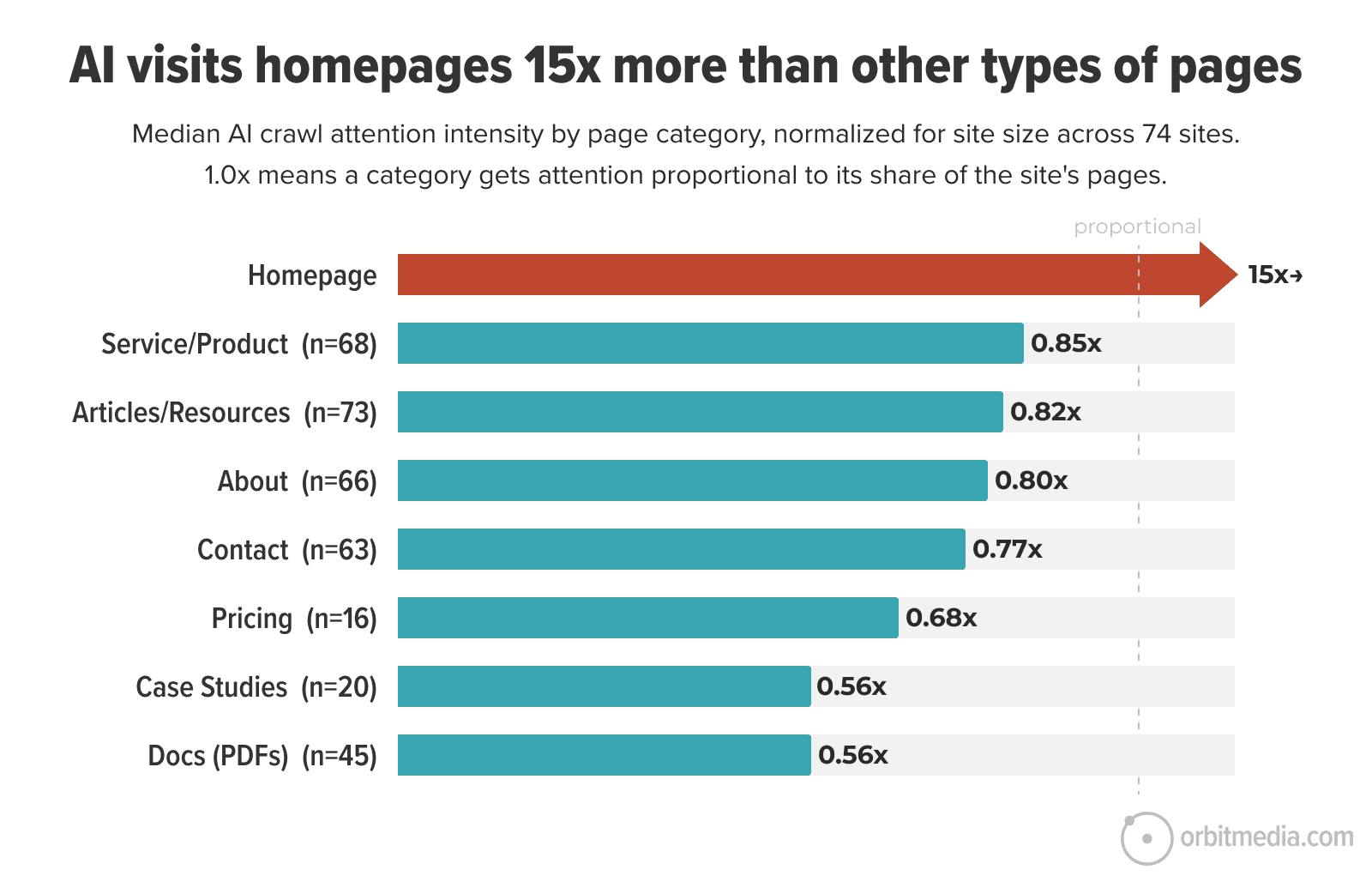
Cyrus Shepard, Founder at Zyppy, commented on these findings, stating, "Incredible. This data suggests that many publishers may be sleeping on the potential of their homepages. Makes sense, but you have to wonder how many brands really pay attention to what their homepage says about them, or if they are offloading this valuable information space to about, support, and article pages."
The implications for marketers are clear: optimizing the homepage for clarity, comprehensiveness, and accuracy is more critical than ever in the age of AI. This includes ensuring it clearly articulates the brand’s value proposition, key offerings, and unique selling points.
Website Size and AI Engagement: A Proportional Relationship with Outliers

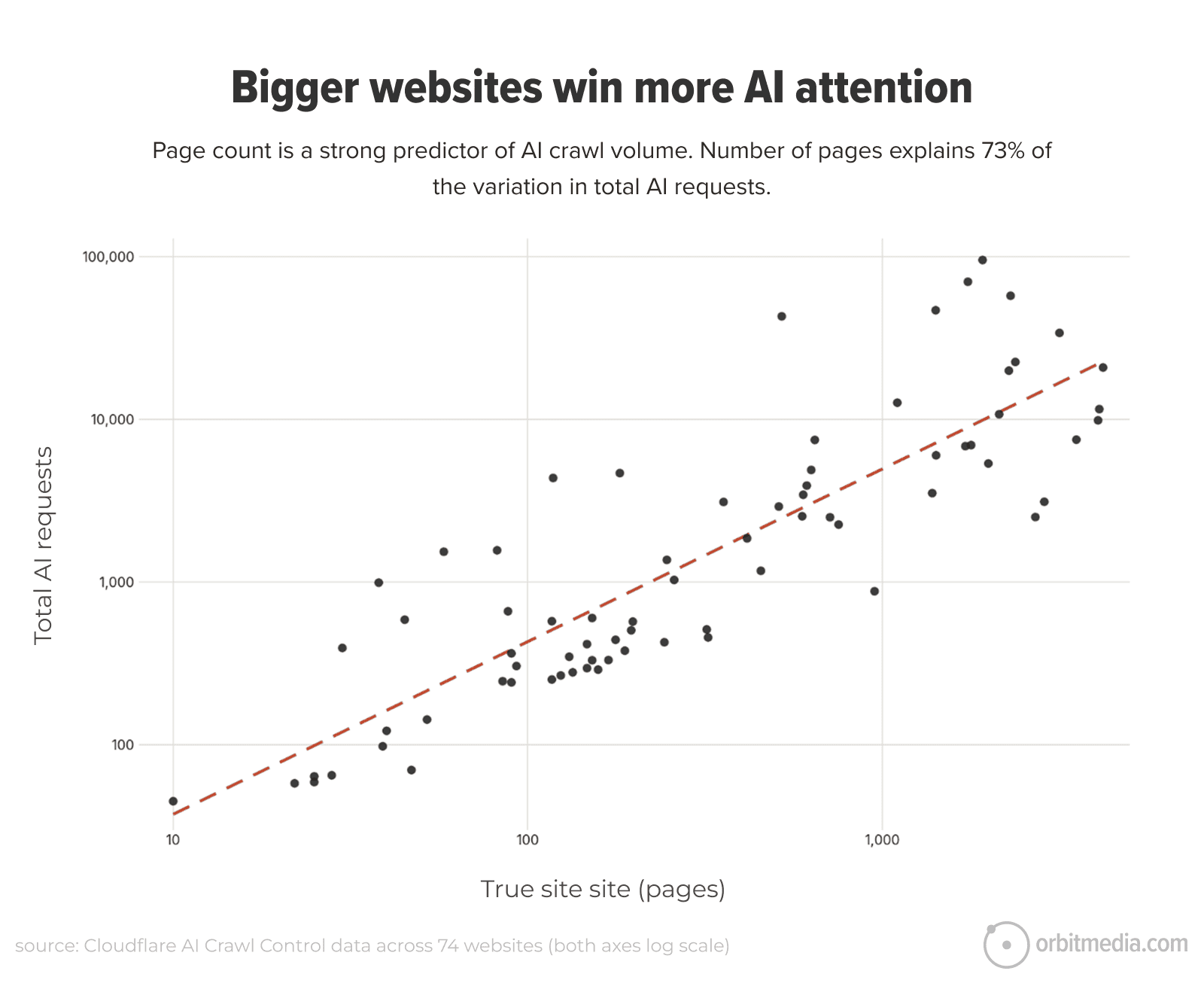
Beyond page type, the sheer size of a website, measured by its total number of URLs, demonstrates a strong correlation with the volume of AI attention it receives. The data reveals a near-perfect proportional relationship (0.86 correlation) between the number of pages on a site and the total AI crawl requests. In essence, larger websites with more content tend to attract more AI bot activity. This can be attributed to the increased "surface area" that a larger site presents, offering more potential entry points for AI crawlers to discover and index.
However, this proportionality is not absolute. The report highlights notable outliers where smaller websites attract a disproportionately high level of AI attention, sometimes rivaling that of much larger sites. This suggests that factors beyond sheer volume play a significant role. Websites with exceptionally high-quality, well-optimized content, strong brand recognition, or effective marketing strategies may capture AI’s interest regardless of their overall size. These instances underscore the importance of content quality and strategic optimization in the AI landscape, indicating that a focused, high-impact online presence can still command significant AI engagement.
The "Dark Library Effect": AI Citations vs. Actual Referrals
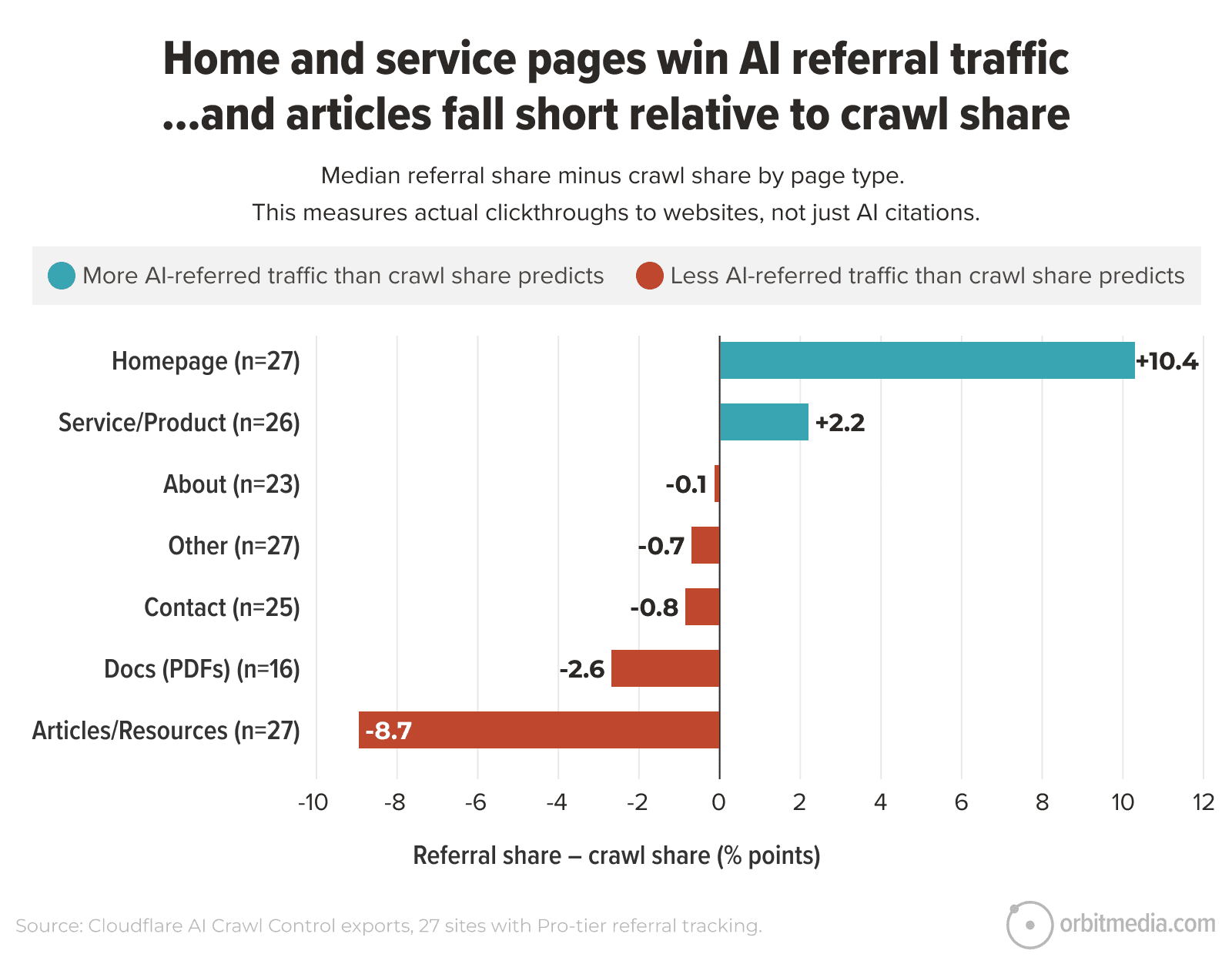
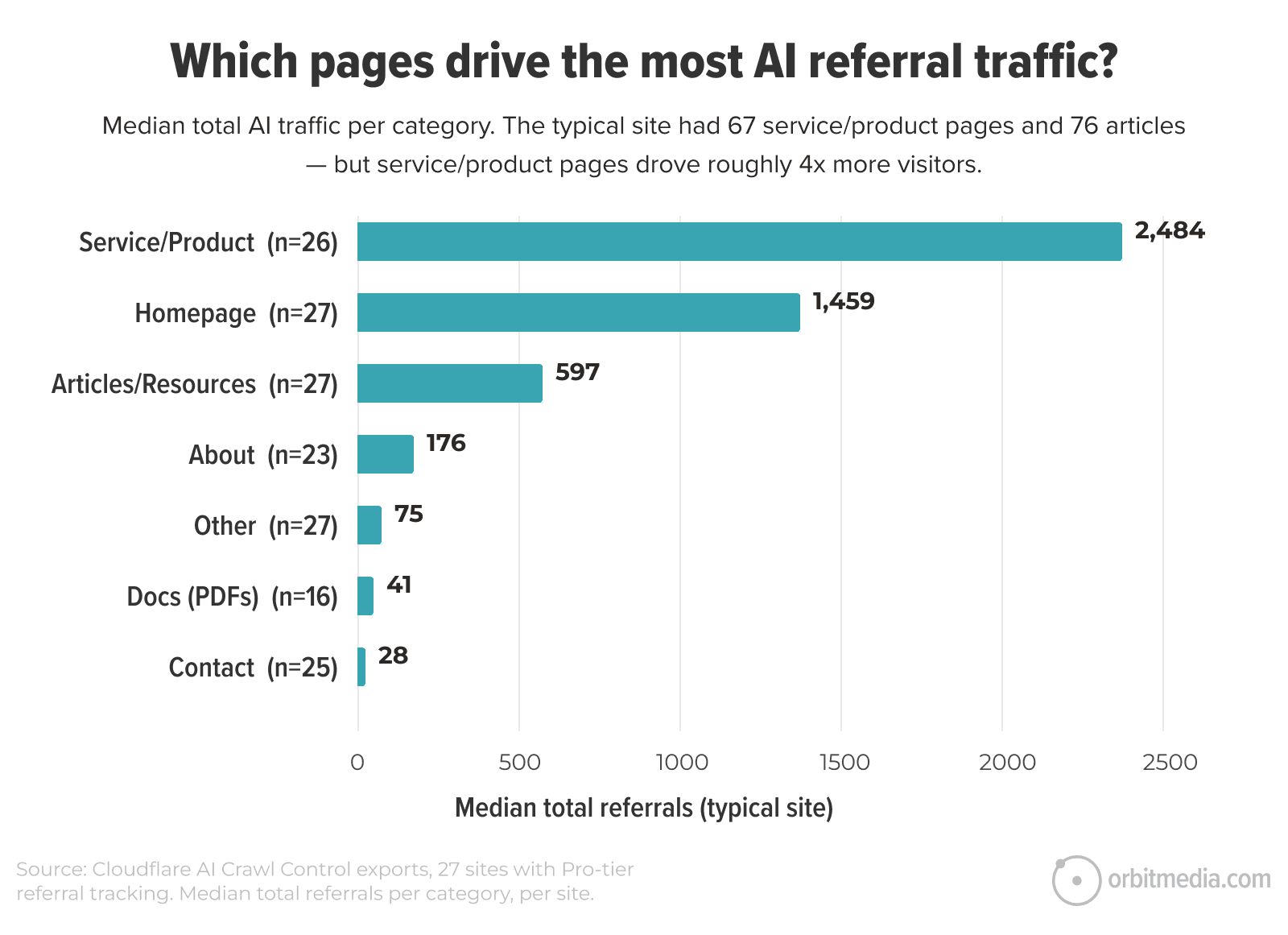
A crucial distinction emerges when examining AI’s interaction with different page types concerning actual referral traffic, as opposed to mere crawling. While AI bots may frequently crawl article pages to absorb information, this does not translate into a proportionate number of human visitors clicking through from AI-generated citations. This phenomenon, termed the "Dark Library Effect," means that many articles, while being read by AI, are not effectively driving traffic.
The analysis reveals that homepages and service/product pages are significantly more effective at converting AI crawls into actual human visits. Service and product pages, in particular, tend to generate substantially more AI referral traffic per page than articles. This pattern mirrors the dynamics observed in traditional search engine optimization, where AI systems increasingly summarize content and answer user queries directly, leading to "zero-click" scenarios for many web pages. Marketers are therefore cautioned against solely applying traditional SEO traffic goals to articles, recognizing that their value may lie in other forms of brand awareness and thought leadership, rather than direct click-throughs.
URL Structure and Page Depth: The Architecture Tax
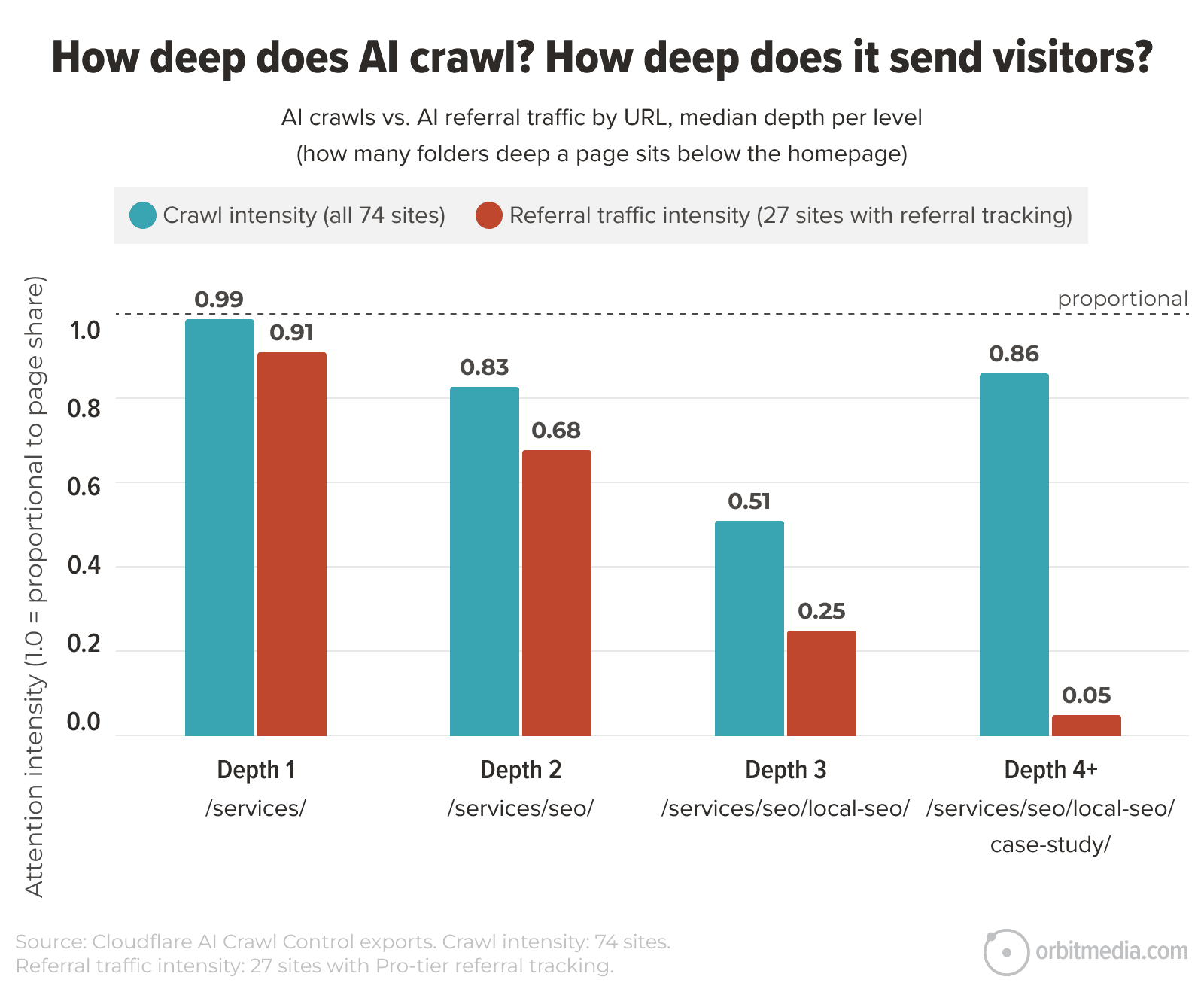
The structure of a website’s URLs and the "depth" at which pages are located within a folder hierarchy also impact AI referral traffic. While AI bots are capable of crawling pages located several folders deep into a website’s structure, they are significantly less likely to send human visitors to these deeply buried pages. The data shows a steep drop-off in referral traffic beyond the first folder level.
This observation suggests an "architecture tax" imposed by complex or deep URL structures. While AI may discover and index these pages for its training data, the propensity to recommend them to users diminishes. This finding does not advocate for arbitrary page reorganizations but serves as a valuable consideration for new website development or redesign projects. A flatter, more intuitive URL structure can improve the discoverability and recommendability of key pages by AI systems, thereby potentially increasing referral traffic.
Implications for Marketers: Adapting to the AI Ecosystem
The findings of "The AI Crawl vs. Traffic Report" offer actionable insights for marketers navigating the evolving digital landscape:
- Prioritize the Homepage: Ensure your homepage is a clear, concise, and compelling representation of your brand, encapsulating your core value proposition and offerings.
- Optimize for AI Comprehension: Focus on high-quality, well-structured content, particularly on service and product pages, as these are more likely to be cited and drive traffic.
- Understand Content Value Beyond Clicks: Recognize that articles and blog posts, while potentially underperforming in direct AI referrals, contribute to brand awareness, thought leadership, and overall SEO value.
- Strategic Site Architecture: When planning new sites or reorganizations, consider a flatter URL structure to enhance AI’s ability to recommend deeper pages.
- Leverage Bot Data: Utilize tools like Cloudflare’s AI Crawl Control to gain visibility into AI interactions with your website and benchmark against industry trends.
The report also provides a diagnostic prompt for website owners using Cloudflare data. By uploading their "Most Crawled Paths" and "AI referral traffic" CSV files, marketers can engage an AI tool to analyze their specific site’s performance against the study’s benchmarks, identifying areas of strength and weakness in their AI engagement strategy.
The Evolving Role of AI in Information Discovery
As AI continues to mature, its role as an information curator and recommender will only grow. Websites that fail to understand and adapt to these AI dynamics risk becoming invisible to a significant and growing segment of potential customers. The study underscores that while AI’s ability to crawl the web is vast, its capacity to effectively translate that crawl into actionable recommendations for users is nuanced and influenced by page structure, content prominence, and overall website architecture.
The dataset analyzed in the report encompassed a variety of marketing websites, including professional services, B2B tech, industrial, nonprofit, and educational institutions. The classification of pages by type and depth, coupled with normalization against each site’s baseline, ensured that the findings were representative and not skewed by the size of individual websites. The analysis also acknowledged the peculiarities of AI bot behavior, noting their tendency to repeatedly crawl irrelevant files, necessitating data cleanup to focus on meaningful interactions.
Ultimately, the report serves as a call to action for marketers to actively engage with and understand the AI ecosystem. By training AI on high-quality, accessible content, brands can ensure they are not only discovered but also effectively recommended, fostering new avenues for growth and customer acquisition in the AI-driven future. The website remains the most controllable piece of the internet for any brand, and optimizing it for AI engagement is no longer optional but essential.