
The landscape of professional networking is undergoing a significant behavioral shift as 2026 data reveals that the traditional "9-to-5" posting schedule for LinkedIn is no longer the gold standard for audience engagement. A comprehensive analysis of over 4.8 million posts processed through the Buffer social media management platform has identified a distinct migration of high-traffic activity toward the late afternoon and early evening hours. This data-driven study, spearheaded by data scientist Julian Winternheimer, challenges long-held assumptions regarding when professionals interact with B2B and career-focused content.
A Shifting Paradigm in Professional Engagement
For years, digital marketing strategies were built upon the premise that LinkedIn engagement mirrored the standard work day, peaking during morning commutes or mid-day lunch breaks. However, the 2026 findings indicate a departure from this historical pattern. Unlike the 2025 landscape, where engagement metrics plummeted sharply after 5:00 p.m., the current data shows a robust persistence of activity well into the evening.
This trend mirrors the behavioral evolution observed on consumer-facing platforms like Instagram and TikTok, suggesting that professionals are increasingly utilizing the post-work window—perhaps during their commute home or while settling into their evening routines—to consume industry thought leadership, research new service providers, and engage in professional networking. This shift represents a transition from "passive scrolling" during office hours to more intentional engagement after the professional day has concluded.
Chronology of the 2026 Engagement Trends
The analysis, which spanned two years of continuous data collection, paints a clear picture of the modern LinkedIn user’s habits. The data demonstrates that while mid-day hours remain relevant, they no longer represent the primary peak for interactions.
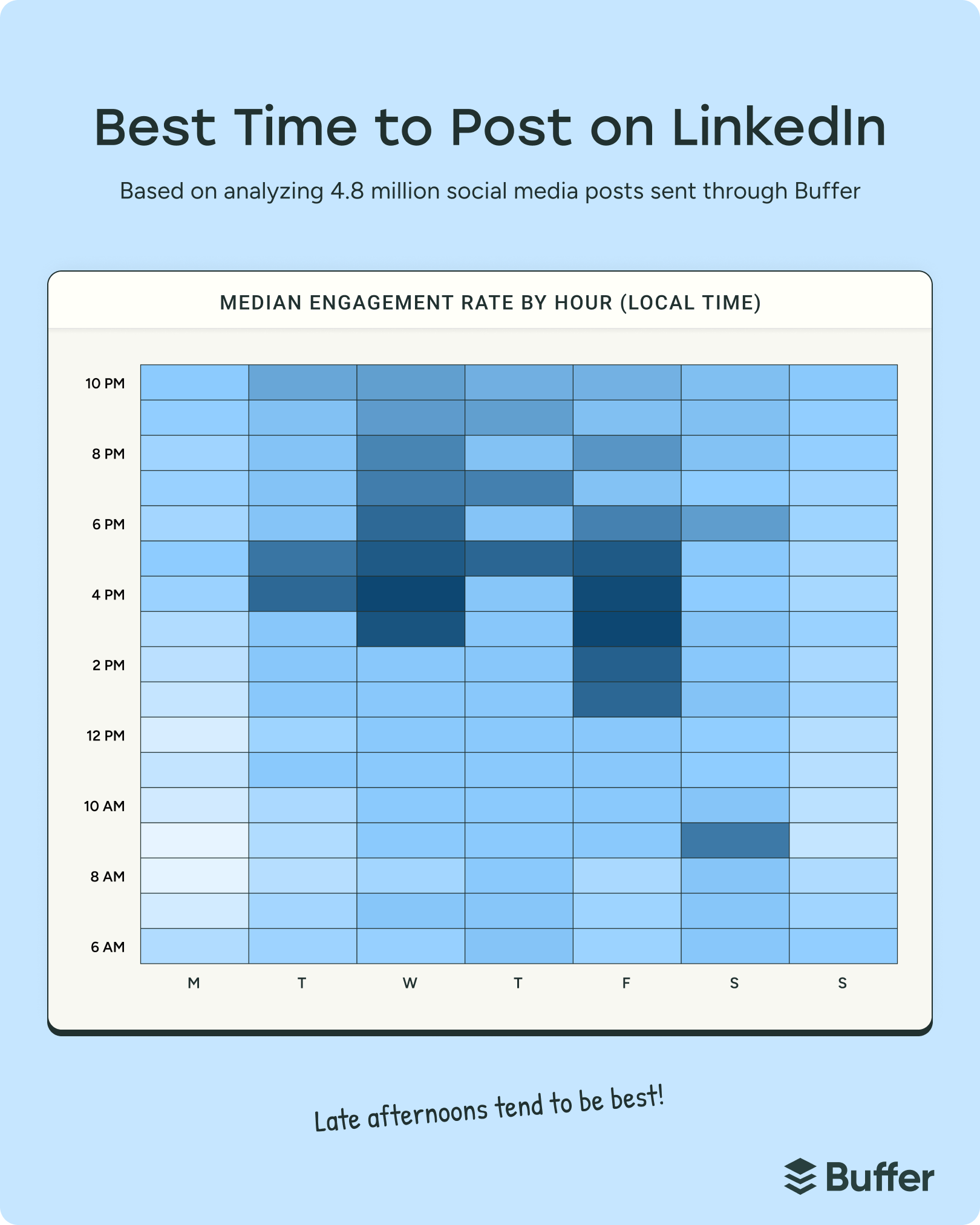
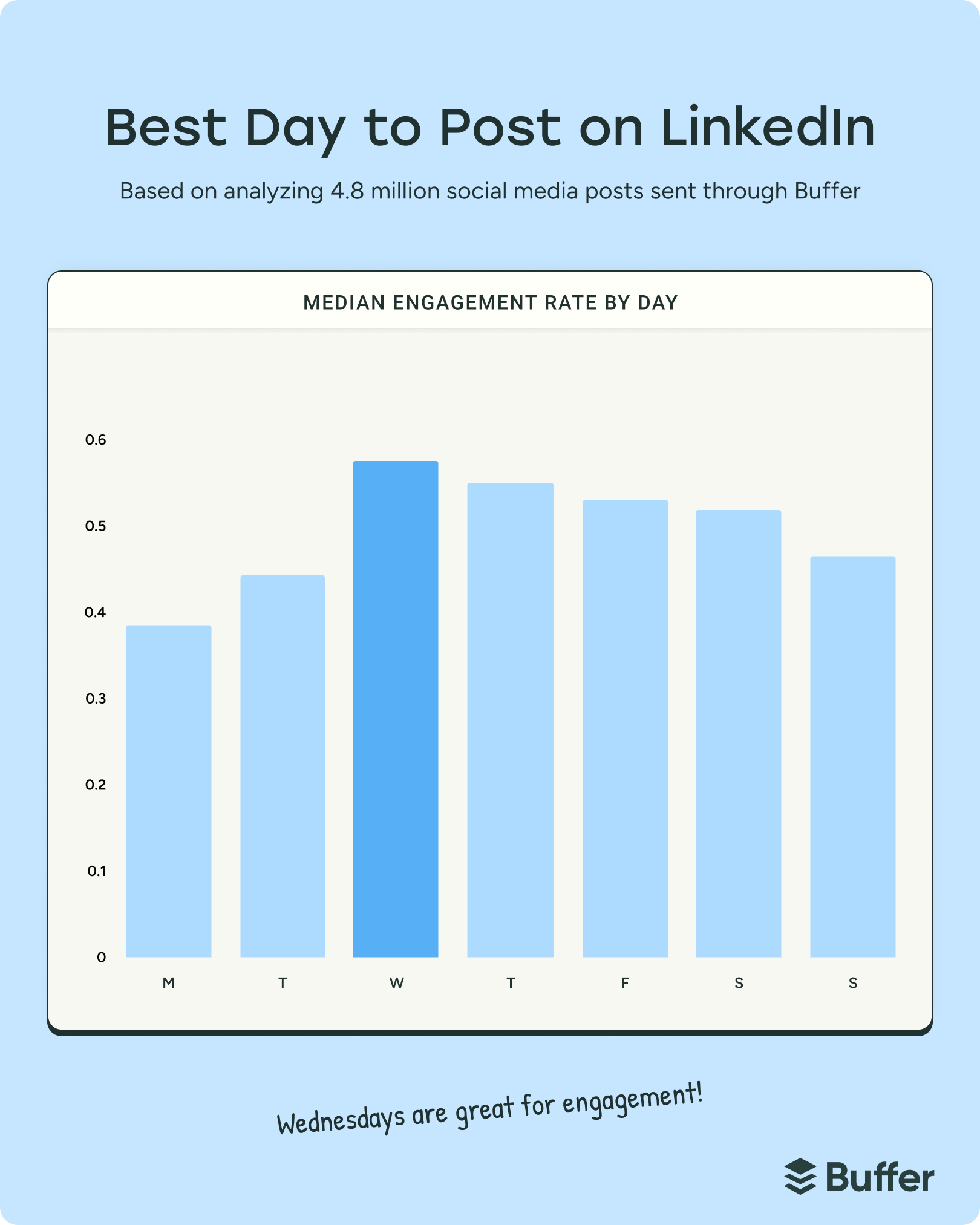
- The Mid-Week Surge: Wednesday has emerged as the most effective day for content performance, with peak engagement occurring consistently at 4:00 p.m. This aligns with the "mid-week focus" theory, where users are fully settled into their professional tasks but not yet distracted by the impending end of the work week.
- The Afternoon-to-Evening Transition: From Monday through Friday, the optimal posting windows have consolidated into a 3:00 p.m. to 8:00 p.m. block.
- Weekend Dips: Weekend activity remains significantly lower than weekday benchmarks. However, the data reveals a micro-peak on Saturday mornings at 9:00 a.m. and a late-evening Sunday window around 10:00 p.m., likely as users prepare for the week ahead.
Data-Driven Breakdown by Day
The research provides a granular look at the most favorable times for publishing content across the seven-day cycle. Each timestamp provided is normalized to the user’s local time zone, removing the complexity of geographical conversion.
| Day | Optimal Posting Slots (Local Time) |
|---|---|
| Monday | 10:00 p.m., 5:00 p.m., 9:00 p.m. |
| Tuesday | 4:00 p.m., 5:00 p.m., 10:00 p.m. |
| Wednesday | 4:00 p.m., 3:00 p.m., 5:00 p.m. |
| Thursday | 5:00 p.m., 7:00 p.m., 9:00 p.m. |
| Friday | 3:00 p.m., 4:00 p.m., 5:00 p.m. |
| Saturday | 9:00 a.m., 6:00 p.m., 10:00 p.m. |
| Sunday | 10:00 p.m., 9:00 p.m., 6:00 a.m. |
Analyzing the "Why": Implications for Content Strategy
The shift toward late-day interaction carries profound implications for content creators and brand managers. If users are engaging with LinkedIn during their personal time, the nature of the content they seek may also be changing. The data suggests that when individuals are away from their office desks, they are more likely to engage with high-value, long-form content, personal branding narratives, and industry analysis.
Furthermore, the LinkedIn algorithm, which prioritizes social signals—such as reactions, comments, and shares—within the first hour of a post’s life, rewards content that triggers immediate interaction. By aligning posting schedules with these newfound peak engagement windows, organizations can effectively "prime" the algorithm to boost their content reach.
Expert Perspective: The Role of Consistency
While timing is a critical component of social media strategy, it is not a panacea for poor-quality content. Industry experts emphasize that timing is a force multiplier for a pre-existing, robust content strategy. A common pitfall for brands is relying on these data points to mask low-value or irrelevant material.
The consensus among social media strategists, supported by these findings, is that consistency in posting frequency—aiming for two to five times per week—is more predictive of long-term success than perfectly timing a single, sporadic post. Accounts that maintain a steady rhythm of publication tend to see a higher average of impressions per post, as the algorithm favors reliable contributors over those with erratic schedules.
Comparative Analysis: Industry Benchmarks
It is essential to acknowledge that while these findings are derived from a massive dataset, they serve as a baseline rather than an absolute rule. LinkedIn’s own marketing documentation has previously suggested that early-week activity remains strong for certain industries, particularly in sectors where decision-makers check their feeds early in the day.
The discrepancy between various studies highlights a crucial takeaway: audience segmentation is paramount. A B2B firm targeting high-level executives in the financial sector may find that their specific audience behaves differently than the broader user base analyzed here. Consequently, the recommended 2026 schedule should be viewed as a starting point for A/B testing rather than a static mandate.
Actionable Steps for Content Optimization
For organizations looking to leverage this data, the following steps are recommended:
- Baseline Testing: Utilize the 3:00 p.m. to 8:00 p.m. weekday window as a control variable for upcoming campaigns.
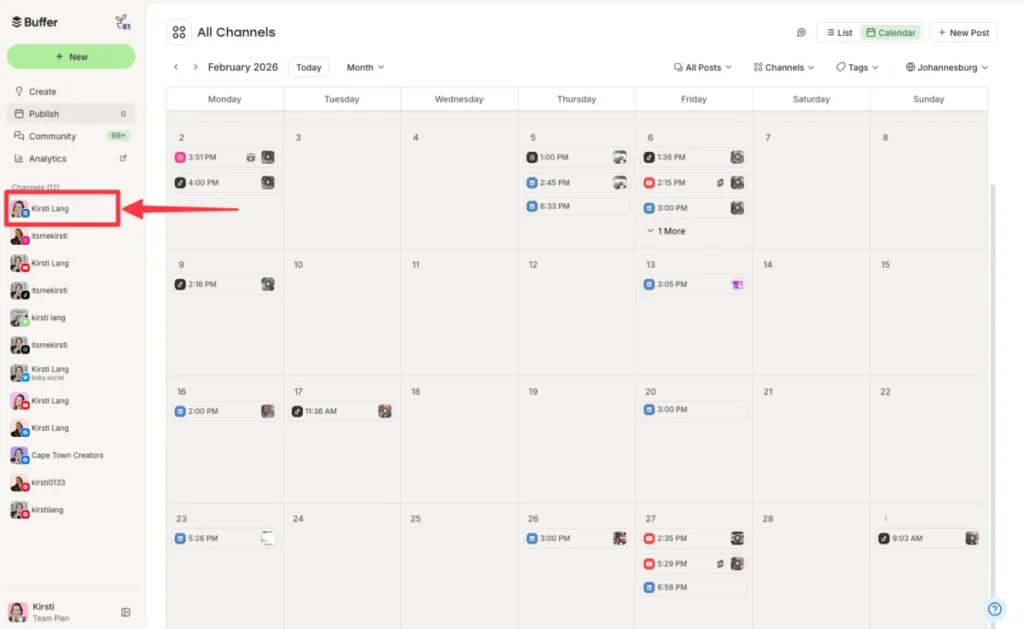
- Audit Existing Analytics: Use native LinkedIn insights alongside third-party scheduling tools to compare the performance of existing morning posts against the newly identified evening windows.
- Refine Content Formats: Because carousel (document) posts have shown to generate up to 596% more engagement than text-only updates, pair these high-engagement formats with the optimal evening posting times to maximize the potential for virality.
- Community Management: Because the "golden hour" remains a vital concept for initial algorithmic signals, consider scheduling posts at times when community managers are available to respond to initial comments, fostering an immediate feedback loop.
Future Outlook and Strategic Adjustment
As the digital landscape approaches the latter half of the decade, the behavior of social media users continues to be fluid. The shift toward evening engagement on LinkedIn is a reflection of a broader trend: the blurring of lines between professional and personal digital life.
For the modern professional, the smartphone has made the LinkedIn feed an accessible resource at all hours. Organizations that adapt to this reality—moving away from the restrictive, legacy 9-to-5 mindset—will likely find themselves better positioned to capture the attention of an audience that is increasingly choosing to engage with their professional networks on their own terms and in their own time. By integrating these analytical insights into a cohesive content calendar, brands can move beyond guesswork and rely on the empirical trends that are defining the future of professional social media.