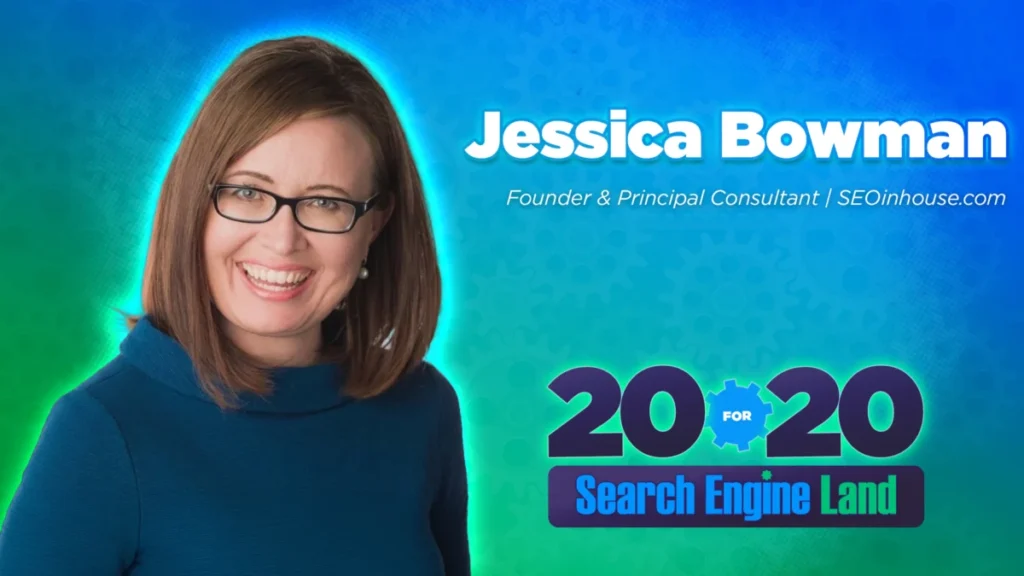

Jessica Bowman has spent more than two decades at the forefront of the search engine optimization (SEO) industry, navigating the transition from the nascent days of web directories to the complex, algorithm-driven ecosystem of today. Her career, which began by chance at Enterprise Rent-A-Car, serves as a mirror for the broader shifts within digital marketing. As artificial intelligence fundamentally alters how consumers discover products and services, Bowman argues that the era of traditional SEO—defined by keyword density and link building—has reached a critical inflection point. For modern organizations, visibility is no longer merely a marketing objective; it is a holistic operational challenge that transcends the traditional boundaries of the marketing department.
From Accidental SEO to Enterprise Pioneer
Bowman’s trajectory into the search industry was serendipitous. While working in user experience (UX) and project coordination at Enterprise Rent-A-Car, her department was shuttered, leaving her to search for new opportunities within the company. A product manager, recognizing her analytical capabilities, tasked her with investigating a burgeoning field: search engine marketing. After conducting an exhaustive audit, Bowman presented her findings to leadership, asserting that the project contained enough scope for five years of full-time work.
Her assessment was correct. In the mid-2000s, SEO was a nascent discipline, particularly within large enterprises. Unlike smaller businesses that could pivot quickly, large organizations faced systemic hurdles: fragmented web architecture, siloed internal teams, and rigid IT approval processes. Bowman’s work became a blueprint for navigating these corporate structures. She learned that successful SEO at scale was not about "hacking" the algorithm but about building internal consensus, educating stakeholders, and embedding search-friendly practices into the product development lifecycle.
The Rise and Fall of Short-Term Strategies
During the early 2010s, the SEO playbook was deceptively straightforward. The prevailing formula—optimized content plus high-quality backlink acquisition plus technical crawlability—consistently yielded top-tier search results. However, this success often tempted organizations to engage in high-volume, low-quality content generation. Companies began deploying thousands of "thin" pages targeting individual keywords, prioritizing search engine crawlers over human users.
This strategy, while initially lucrative, proved to be a systemic vulnerability. As Google’s algorithms evolved—specifically through updates like Panda and Penguin—the search engine became significantly more proficient at evaluating user intent and content quality. Bowman recalls consulting for numerous companies during this period that faced catastrophic revenue losses as their keyword-stuffed infrastructures were de-indexed or penalized. These crises underscored a fundamental truth in digital strategy: financials built upon thin, non-value-added content are inherently unsustainable. Bowman’s remedy was to adopt a "Google engineer" mindset, shifting the focus toward architectural integrity, semantic relevance, and long-term user satisfaction.
AI as the New Arbiter of Consumer Intent
Today, the landscape has shifted from traditional link-based discovery to AI-driven advisory models. Bowman distinguishes between two primary modes of AI interaction: retrieval and advice. While early search engines retrieved a list of links, modern AI systems act as sophisticated advisors, making qualitative judgments on product fit, brand reputation, and user preference.
This shift is profound because AI systems synthesize data from a vast, decentralized footprint. When an AI provides a recommendation, it does not rely solely on a company’s marketing collateral. Instead, it aggregates information from customer complaints, software release notes, earnings calls, vendor case studies, and third-party employee reviews.
The implications for brand management are significant. In one instance, Bowman observed a retailer struggling to achieve visibility within ChatGPT. When she interrogated the system directly about the company, the AI actively discouraged her from engaging with the brand, citing specific, documented complaints regarding product quality, inconsistent materials, and problematic refund policies. This suggests that in an AI-dominated search environment, the most effective "SEO" is actually comprehensive operational excellence. If a company fails to manage its public reputation or address customer service failures, those systemic issues will now directly impair its visibility in AI-generated search results.
Navigating the "Zero-Click" Reality
The rise of generative AI has ushered in a new metric of success: the "zero-click" engagement. As search interfaces provide direct answers rather than driving traffic to external websites, marketers must adapt their KPIs. Organizations can no longer rely on traffic volume as the primary indicator of digital health.
Bowman points out that AI systems are increasingly nuanced in how they describe brands compared to their competitors. She recently audited how ChatGPT compared a client against its peers. While the client received a positive description, competitors were often described using more robust, persuasive language that emphasized specific competitive advantages. This variation highlights the importance of "brand sentiment mapping." Companies must understand not just what the AI says about them, but how it compares them to the market at large.
Furthermore, these AI narratives are dynamic. Bowman discovered that AI recommendations often evolve based on the specific context of the user. During her personal research into HEPA vacuums, ChatGPT initially recommended a high-suction model. However, after the AI "learned" from previous conversation context that Bowman was dealing with fatigue, it pivoted to recommending a lighter model, effectively de-prioritizing the "best" product based on a singular, tailored user profile. This level of personalization means that brands can no longer assume a static position in search results; visibility is now fluid and context-dependent.
The Convergence of Operations and Marketing
As the search landscape matures, the silo between SEO and other organizational functions is rapidly dissolving. Bowman predicts that the next generation of SEO leaders will operate more like product managers or operations directors than traditional marketers. Their role will involve monitoring the "public record" of the organization—including legal filings, customer support tickets, and public sentiment—because all of these data points feed into the AI models that now dictate brand perception.
The challenge for SEO leaders is to influence these factors across departments where they may have no direct authority. This requires a high degree of cross-functional diplomacy. The SEO leader of the future must be capable of presenting data-driven cases to the C-suite on why a change in product development or customer support policy is necessary, not just for the sake of the customer, but for the sake of the brand’s "digital footprint."
Future Implications and Strategic Adjustments
For many in the industry, the current volatility of search feels reminiscent of the "wild west" days of the early 2000s, when the community was small and knowledge was shared through collaborative trial and error. However, the stakes are now significantly higher. The integration of AI into search is not a temporary trend; it is a structural change in the way information is disseminated and consumed.
Bowman’s advice to organizations is to abandon the assumption that AI-driven search will mirror the mechanics of the old web. The old rules—backlinks, keyword density, and technical site architecture—are becoming foundational table stakes rather than primary drivers of success. The new frontier is "Entity Authority." Brands must prove to AI systems that they are trustworthy, high-quality, and relevant across every touchpoint of the digital and physical world.
As the industry moves forward, the most successful organizations will be those that integrate search strategy into their core business model. SEO is no longer a department; it is a measure of an organization’s digital reputation. As Bowman notes, the hunt is back on, but the target has moved from the search engine index to the core of the consumer’s decision-making process. Leaders who fail to embrace this shift, and who continue to view SEO as a siloed marketing task, risk losing their voice in an increasingly AI-curated digital world.