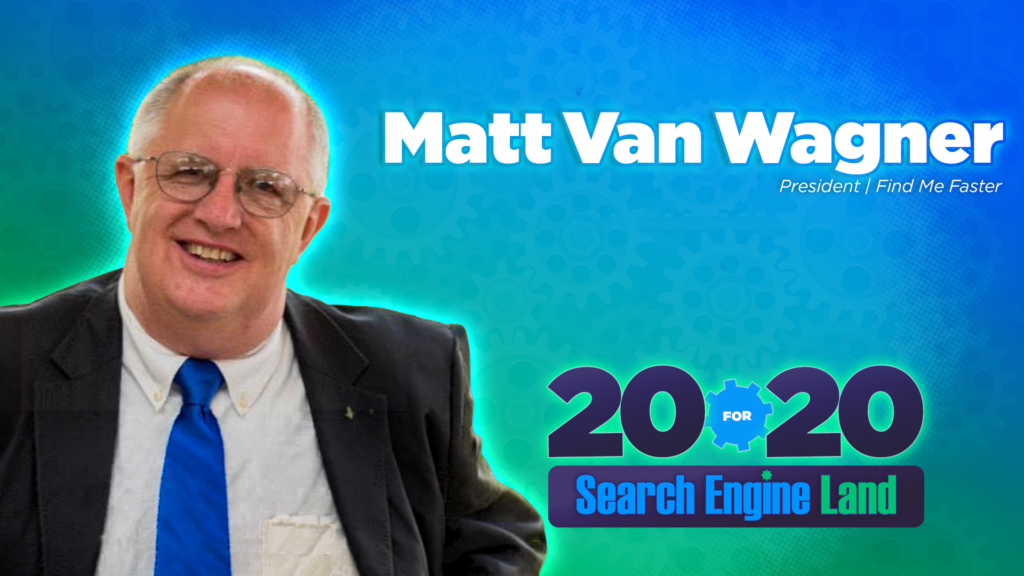

The search marketing industry has undergone a radical metamorphosis over the past two decades, shifting from a Wild West era of experimental discovery and manual granular control to a highly consolidated, AI-driven ecosystem. This transformation has fundamentally altered how businesses connect with consumers, shifting the focus from individual keyword management to broad, automated, and platform-defined success metrics. Reflecting on this journey, paid search veteran Matt Van Wagner offers a retrospective on the industry’s formative years, the maturation of search journalism, and the critical importance of maintaining advertiser skepticism in an age of black-box algorithms.
The Dawn of the Search Era: A Gold Rush Mentality
In the early 2000s, the marketing landscape was dominated by traditional, high-friction channels such as direct mail, trade publications, and physical conferences. As these methods faced diminishing returns, the emergence of search engine advertising represented a paradigm shift. For early practitioners like Van Wagner, the industry felt like an entrepreneurial gold rush. Businesses were eager to reach audiences in an entirely new way, and the sheer lack of competition meant that early adopters could achieve significant results with relatively rudimentary tactics.
During this period, selling search services was remarkably straightforward. Once the value proposition of Google Ads (then AdWords) was explained to stakeholders, the conversion rate for agencies was high. Demand far outstripped supply, and the community of early practitioners was characterized by a spirit of collaboration. Because the market was expanding at an exponential rate, agencies often shared insights freely rather than treating them as proprietary secrets. However, many of these early firms suffered from a lack of commercial maturity, frequently underpricing their services despite the massive ROI they were generating for their clients.
Chronology of a Maturing Industry
The trajectory of search marketing can be categorized into several distinct phases:
- 2000–2003 (The Formative Phase): The launch and expansion of Google AdWords. Marketers were largely experimenting, relying on manual keyword bidding and high-touch campaign management.
- 2003–2005 (The Algorithmic Wake-up Call): Google’s "Florida" update (November 2003) served as a seminal moment, wiping out organic rankings for countless businesses overnight. This forced a pivot, as companies realized organic search was not a guaranteed revenue stream and began treating paid search as an essential insurance policy.
- 2006–2010 (The Professionalization Phase): The birth of dedicated industry outlets like Search Engine Land and conferences like SMX. This era moved the discourse from basic "how-to" tutorials to deeper, technical strategy discussions.
- 2011–2018 (The Granular Peak): This period saw the height of manual control, with strategies like Single Keyword Ad Groups (SKAGs) and complex match-type sculpting.
- 2019–Present (The Automation and AI Era): Google began deprecating manual controls in favor of machine learning models. The introduction of broad match defaults and automated bidding marked the end of the "granular" era.
The Role of Independent Journalism
The professionalization of the industry was catalyzed by specialized journalism. As search conferences became increasingly repetitive, events like SMX Advanced introduced a higher threshold for participation. By curating content that moved beyond the basics, these forums fostered a more sophisticated community.
Crucially, the rise of independent editorial voices provided a necessary check on platform power. Publications like Search Engine Land acted as a bridge between the engineering-heavy culture of Google and the business-driven needs of advertisers. This role remains vital today; without independent reporting, the industry would be forced to rely entirely on the promotional messaging of the platforms themselves. Independent analysis provides the nuance necessary to differentiate between platform recommendations that genuinely improve performance and those that are designed primarily to increase platform revenue.
The Shift in Tactics: From Granularity to AI
For years, the gold standard of PPC management was "traffic sculpting"—the act of using complex negative-keyword structures and exact-match variations to dictate exactly how a search query matched an ad. Today, these practices are increasingly viewed as obsolete. Modern automation does not respond well to such rigid constraints; it requires broad data sets to train effectively.
However, this transition has created a tension between advertiser expertise and machine learning. As Van Wagner points out, the current reliance on "broad match" as a default setting often forces businesses to pay for their own education. Automated systems may spend significant budget on irrelevant queries before they "learn" what an experienced marketer already knows to be a poor fit. The industry currently faces a challenge: how to allow AI to scale while still providing practitioners with the ability to inject human intelligence and business-specific constraints into the process.
The Myth of Aligned Interests
Perhaps the most critical lesson for modern marketers is the distinction between the goals of Google and the goals of the advertiser. While Google’s technology aims to maximize performance, it is fundamentally a commercial entity driven by revenue growth. Advertisers often operate under the misconception that platform recommendations are neutral, objective, or optimized solely for their business’s bottom line.
This is a dangerous assumption. For instance, the transition toward automated bidding and "Performance Max" campaigns removes significant levers from the advertiser’s hand. While these tools can deliver strong results, they also obscure the underlying data, making it difficult for agencies to diagnose performance drops or capitalize on unique market insights. The role of the professional marketer has shifted from a manual bidder to a strategic architect who must decide which AI recommendations to accept and which to override.
Professional Accountability and Industry Culture
Early search culture was defined by an unusual degree of transparency. When platforms like Google underwent major changes—such as the introduction of "Google Instant" in 2010—the community engaged in deep, public analysis. This openness helped the entire ecosystem grow. Today, however, the "black box" nature of modern AI makes it easier for practitioners to blame the algorithm when performance dips.
Van Wagner argues that the industry needs a return to professional accountability. Whether it is an accidental budget-burning mistake or a failure to adapt to a new platform policy, the ability to acknowledge human error is a sign of a mature practice. Professionalism in the current era requires moving away from "creative explanations" for poor performance and toward a rigorous, data-backed evaluation of what the machine is doing versus what the business actually needs.
The Future of Search Marketing
Looking ahead, the influence of Google’s "Ad Liaison" role, currently held by Ginny Marvin, represents a positive step in navigating the friction between platform incentives and advertiser needs. By having an advocate who understands the agency perspective within the halls of Google, the industry has a more direct channel for feedback.
Yet, the core challenge remains: the industry has become increasingly consolidated, and the power dynamic has shifted heavily toward the search engines. As AI continues to replace manual tasks, the value of the search marketer will not be found in executing bid adjustments, but in strategic oversight—knowing when to trust the algorithm, when to challenge its assumptions, and how to protect a business’s unique competitive advantage in a world where the search experience is becoming increasingly homogenized.
In summary, the search marketing industry has matured from a collaborative, entrepreneurial frontier into a highly sophisticated, high-stakes ecosystem. While the tools of the trade have evolved from basic keyword management to advanced machine learning, the fundamental requirement for the practitioner remains unchanged: a healthy, informed skepticism and an unwavering focus on the specific, measurable business outcomes that automated systems cannot define on their own.