
In March 2010, the Museum of Modern Art (MoMA) in New York City sent shockwaves through the curatorial world by announcing a radical expansion of its design collection: the acquisition of the @ symbol. While the museum had long been a bastion for physical artifacts—ranging from Eames chairs to Bauhaus kitchenware—this move signaled a deliberate pivot toward the intangible. Senior Curator Paola Antonelli, the architect of this initiative, framed the acquisition not as a matter of property, but as a recognition of conceptual design. The decision immediately raised fundamental questions regarding the nature of museums, the definition of an object, and the viability of "acquiring" something that belongs to everyone and no one.

The inclusion of the @ symbol was not a singular eccentricity; it was the opening salvo in a campaign to redefine the museum’s role in the 21st century. Less than a year later, in early 2011, MoMA expanded this strategy by acquiring twenty-three digital typefaces. This transition from collecting symbols to collecting software—code that renders letterforms on a screen—marked a significant shift in museological practice. It forced the institution to confront the reality that its traditional "object-based epistemology"—the belief that museums exist primarily to house, preserve, and display physical matter—was becoming increasingly incompatible with the digital age.
A Chronology of Digital Accession
To understand the weight of these acquisitions, one must look at the timeline of MoMA’s engagement with graphic design. Historically, the museum’s collection of typography was limited to physical specimens. In 2007, for instance, the museum accessioned a 36-point metal font of Helvetica Bold. This acquisition was straightforward: it consisted of lead and wood trays, measurable dimensions, and a clear physical footprint.

However, the 2011 exhibition Standard Deviations: Types and Families in Contemporary Design served as the public debut for the museum’s digital typeface collection. The exhibition displayed these fonts not as metal blocks, but as digital projections applied to gallery walls. The shift in catalog registration was stark. Where the 2007 Helvetica font was documented by its physical weight and material composition, the new digital acquisitions were listed with dimensions defined simply as "variable." This signaled a move away from the "cold-metal" era of Gutenberg and toward a future where type is defined by computer instructions rather than physical impression.
The Evolution of Type Production: A History of Dematerialization
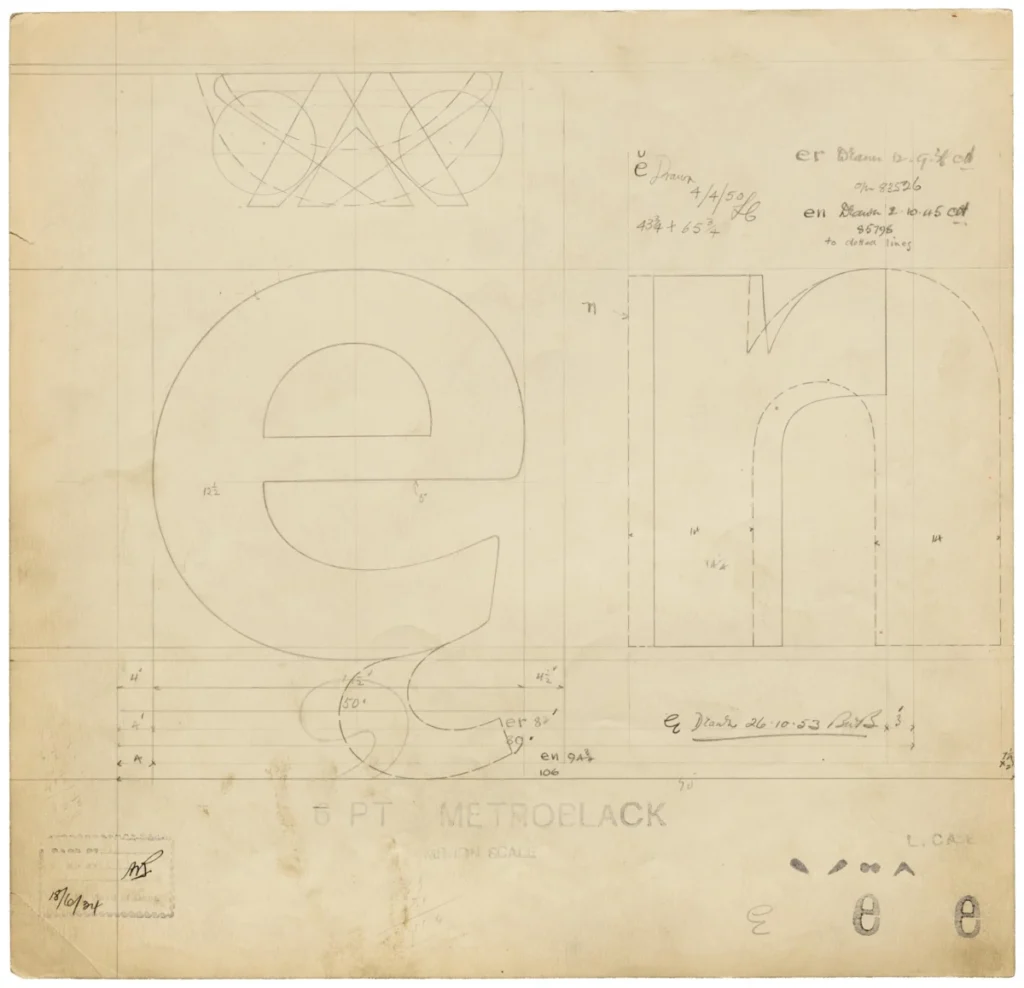
The current conundrum faced by curators is rooted in the long, progressive dematerialization of typography. This evolution can be categorized into five distinct technological eras:

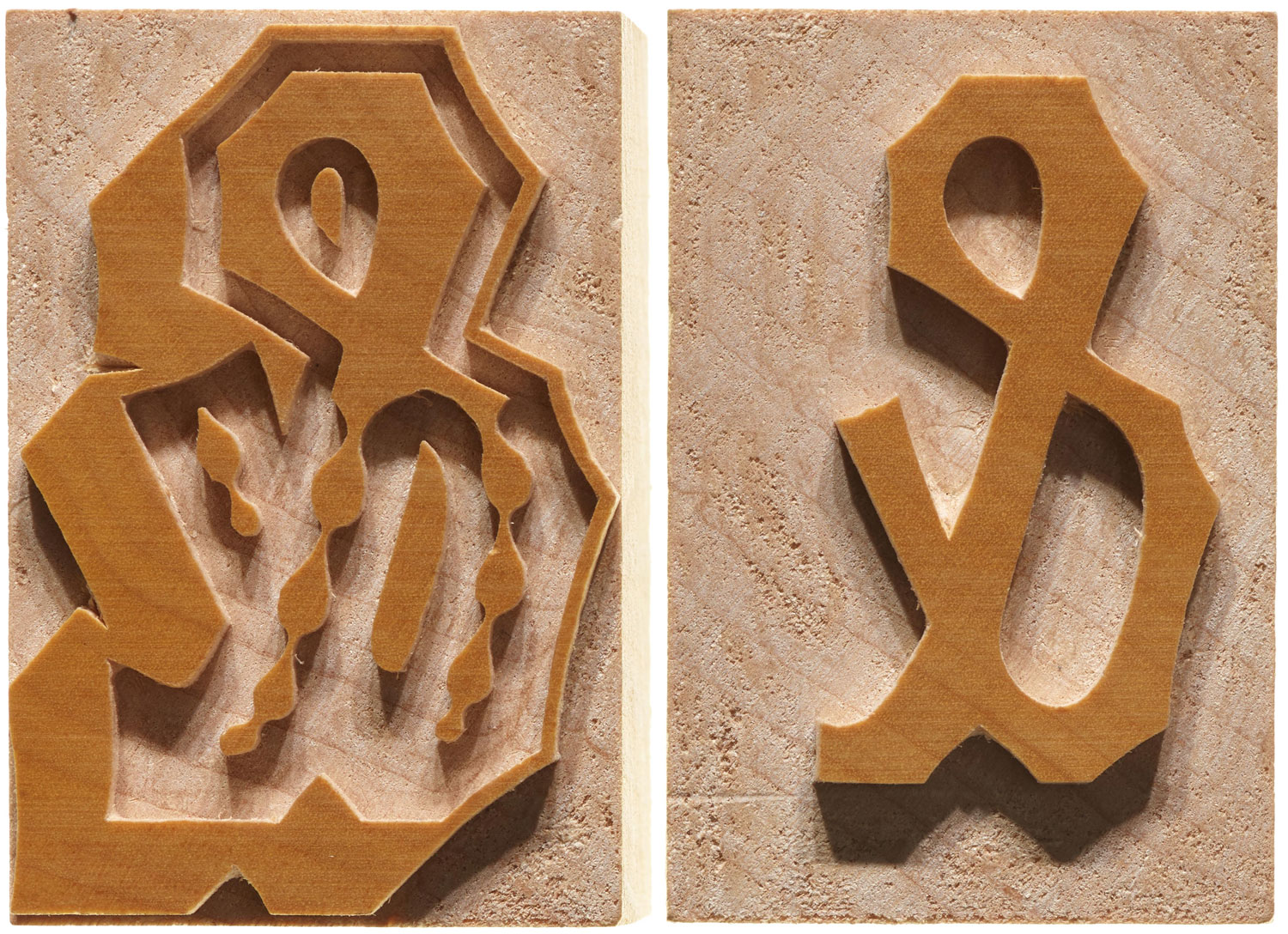
- The Foundry Era (15th–19th Century): Type was cast in molten metal from hand-carved steel punches. The physical object—the metal letter—was the end product.
- The Pantographic Era (19th Century): The invention of the pantograph allowed for the scaling of designs, moving away from the need for unique, hand-carved punches for every size.
- The Hot-Metal Era (Early 20th Century): Machines like Linotype and Monotype allowed for on-site casting. Type became ephemeral; once a page was printed, the metal could be melted down and reused.
- The Phototypesetting Era (Mid-20th Century): Light and film replaced metal. The physical "sort" was replaced by a negative image on a film strip.
- The Digital Era (Late 20th Century–Present): Type is now a set of mathematical vectors and rendering instructions. There is no physical artifact to hold, ink, or press.
By acquiring digital fonts, MoMA entered a domain where the "work of art" is a file—a piece of software that is endlessly reproducible. This creates a technical challenge for preservationists. Unlike a painting, which faces environmental degradation, a digital font faces the threat of technological obsolescence. If the hardware or operating systems change, the code may no longer render as the designer intended.
The Legal and Ethical Conundrum of Ownership
The primary challenge in these acquisitions is the concept of ownership. When MoMA "acquires" a typeface, it does not acquire the intellectual property (IP). In the commercial market, a graphic designer who "buys" a font is actually purchasing a limited license via an End User License Agreement (EULA). The foundry retains the IP, and the user is granted specific, restricted permissions.

For a museum, this presents a legal hurdle. MoMA’s standard collection policy requires "clear title" for any accessioned work to ensure it is not stolen or contested. However, because the museum cannot own the IP of a digital font, it had to negotiate bespoke, permanent licenses for each of the twenty-three fonts in its collection. As Paul Galloway, a specialist in the MoMA Design Department, noted in internal discussions, these were not standard consumer licenses but tailored agreements designed to ensure the museum would never have its access to the files revoked.
This created a "fiction of ownership." The museum does not own the typeface in the way it owns a Picasso or a Mies van der Rohe chair; it owns a perpetual right to use and display the software. This distinction is critical because it highlights that the museum is not acting as a collector of property, but as a custodian of cultural history.
Broader Implications for Museology
The criticism that followed the @ symbol announcement—with many accusing the museum of staging an April Fool’s joke—revealed the public’s deep-seated expectation that museums should be treasure chests of "things." By moving beyond this, MoMA is participating in a larger trend within the International Council of Museums (ICOM), which updated its definition in 2007 to include the "tangible and intangible heritage of humanity."
The implications of this shift are twofold. First, it forces a change in how museums document their collections. If a museum can "acquire" a Boeing 747 (a stated dream of Paola Antonelli) or a software program, the museum’s value proposition shifts from possession to stewardship. The institution becomes a repository for the knowledge and history behind the object, even when the object itself remains in the public domain or is constantly evolving.
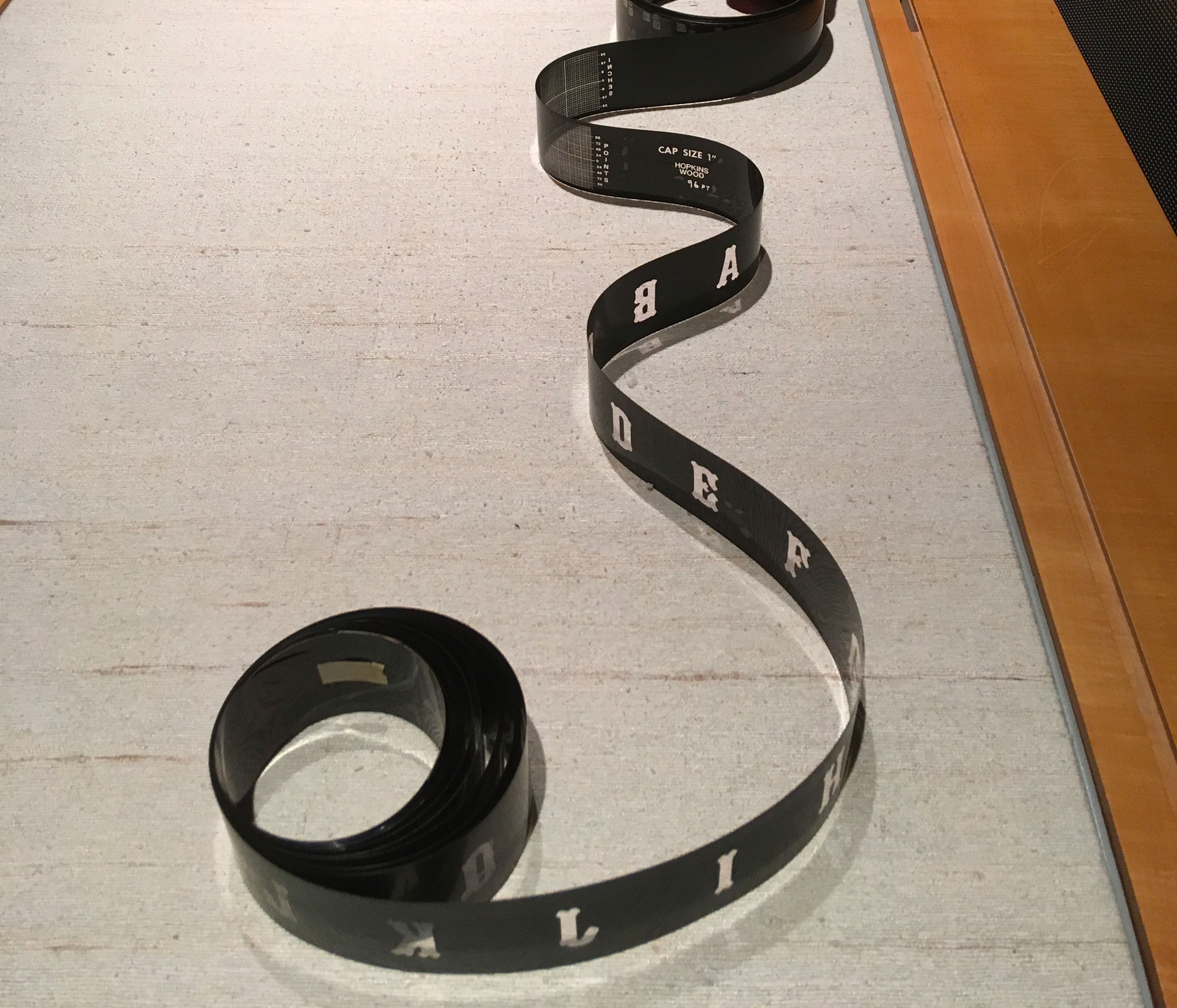
Second, it validates digital design as an art form equivalent to traditional fine arts. By placing digital typefaces in the same galleries as historical industrial design, MoMA asserts that the code governing our screen-based world is as culturally significant as the architecture of our physical cities. Jonathan Hoefler, one of the designers included in the 2011 acquisition, emphasized this point: digital artworks are just as vulnerable to the passage of time as physical ones. If museums do not act to preserve them, the digital artifacts of our era may disappear as completely as a melted lead slug from the 1920s.
Conclusion
The "acquisition" of the @ symbol and digital typefaces represents a transition from a museum of artifacts to a museum of ideas. While the language used by the institution remains rooted in an object-oriented past—a legacy of an era when history was carved into steel—the reality of these acquisitions is an acknowledgment of the digital environment.

The museum of the future, as demonstrated by MoMA’s recent history, will not be defined by the physical walls of its galleries or the quantity of its inventory. Instead, it will be defined by its ability to navigate the complex legal and technological frameworks of the digital age, ensuring that the ephemeral designs that define our modern existence are preserved for future generations. Whether or not one accepts the terminology of "acquisition," the necessity of the act remains clear: if the museum ignores the digital, it ignores the modern condition itself.