
The landscape of professional cinematography and video production has undergone a seismic shift over the past decade, driven primarily by the rapid evolution of Light Emitting Diode (LED) technology. Ten years ago, a portable lighting kit often required heavy external batteries, bulky ballast units, and fragile tungsten or HMI bulbs that generated immense heat. Today, the industry has transitioned into an era of miniaturization and high-efficiency performance. This technological trajectory has democratized high-quality production, allowing independent filmmakers, content creators, and event videographers to achieve cinematic results with tools that fit into a jacket pocket.
Thanks to the aggressive innovation of key manufacturers such as Aputure, Nanlite, and Lume Cube, the market is now saturated with small, affordable, and powerful LED solutions. These devices are no longer mere novelties; they are essential components of a modern grip truck, serving critical roles as background fill, subtle eye lights, or practical effects. For professionals working within tight financial constraints, the current selection of handheld lights offers a balance of color accuracy, battery longevity, and remote-control capabilities that were once reserved for high-end studio fixtures.
The Technological Evolution of Portable Lighting
To understand the value of current handheld LED offerings, it is necessary to examine the chronology of the technology. The early 2010s saw the introduction of the first generation of on-camera LED panels. These units were often criticized for poor color rendition, frequently casting a distracting green or magenta hue on subjects. Furthermore, they lacked the dimming granularity required for professional work.
By 2015, the introduction of Surface Mounted Device (SMD) LEDs allowed for higher density and better heat dissipation. This led to the development of Bi-color and later RGB (Red, Green, Blue) panels. The most recent breakthrough has been the integration of RGBWW technology, which adds two additional white chips (warm and cool) to the standard RGB array. This allows for significantly better skin tone reproduction and a wider range of color temperatures. Simultaneously, the development of Mesh Network technology, such as Aputure’s Sidus Link, has revolutionized how lights are managed on set, allowing a single operator to control dozens of fixtures via a smartphone or tablet.
Aputure MC: The Industry Standard for Compact Versatility
The Aputure MC stands as a benchmark in the "credit card-sized" lighting category. Its significance lies not just in its dimensions, but in its RGBWW chipset. Unlike traditional RGB lights that struggle to produce accurate white light, the MC offers a bi-color range of 3200K to 6500K with 100 levels of saturation adjustment.
From a technical perspective, the Aputure MC is designed for rapid deployment. The rear of the unit is magnetized, allowing it to be mounted to any metallic surface—light poles, door frames, or appliances—without the need for cumbersome clamps or stands. This feature is particularly useful in "run-and-gun" documentary filmmaking where setup time is a luxury. Furthermore, the inclusion of a silicone diffusion cover allows the light to function as a soft eye light or a subtle fill without the harsh shadows typically associated with small-point sources.
The integration of Sidus Link support is a critical data point for professionals. Using a Bluetooth mesh network, the MC can be grouped with larger fixtures like the LS 600d Pro, allowing for a unified lighting environment. This level of interconnectivity ensures that even the smallest light in the kit is synchronized with the overall production design.
Lume Cube RGB Panel Pro: Engineered for the Event Specialist
While the Aputure MC excels in hidden placement, the Lume Cube RGB Panel Pro is engineered for direct camera mounting. In the realm of event videography—specifically weddings and corporate galas—lighting conditions are notoriously unpredictable. The Lume Cube RGB Panel Pro addresses this with a high-density array of 263 LEDs capable of a 1000-lumen output.
Supporting data suggests that battery life is the primary concern for handheld operators. The RGB Panel Pro provides a solution with a robust internal battery capable of four hours of operation at 50% brightness and 2.5 hours at maximum output. This longevity is essential for professionals who may not have access to charging stations during an eight-hour wedding shoot. Additionally, the unit features a clear LCD display on the rear, providing real-time data on color temperature, brightness, and remaining battery life—a necessity for maintaining consistency across different segments of a shoot.
Nanlite LumiPad 11: The Soft Light Solution
Nanlite has emerged as a formidable competitor in the lighting space, often praised for its balance of power and price. The LumiPad 11 represents a different approach to handheld lighting: the ultra-thin soft panel. At only 1.4 inches thick and weighing a mere 0.6 lbs, the LumiPad 11 utilizes edge-lit technology to provide a diffused light source without the need for a bulky softbox.
In terms of technical performance, the LumiPad 11 is frequently utilized for "talking head" interviews and vlogging where a flattering, wrap-around light is required. While it lacks the full RGB spectrum of some of its peers, its bi-color accuracy and high Color Rendering Index (CRI) make it an ideal choice for ensuring natural skin tones. Nanlite’s commitment to reliability is reflected in their warranty programs, which have fostered a loyal following among independent creators who require gear that can withstand the rigors of travel and frequent use.
The Rise of Mini Tube Lights: Aputure MT Pro and Nanlite PavoTube II 6C
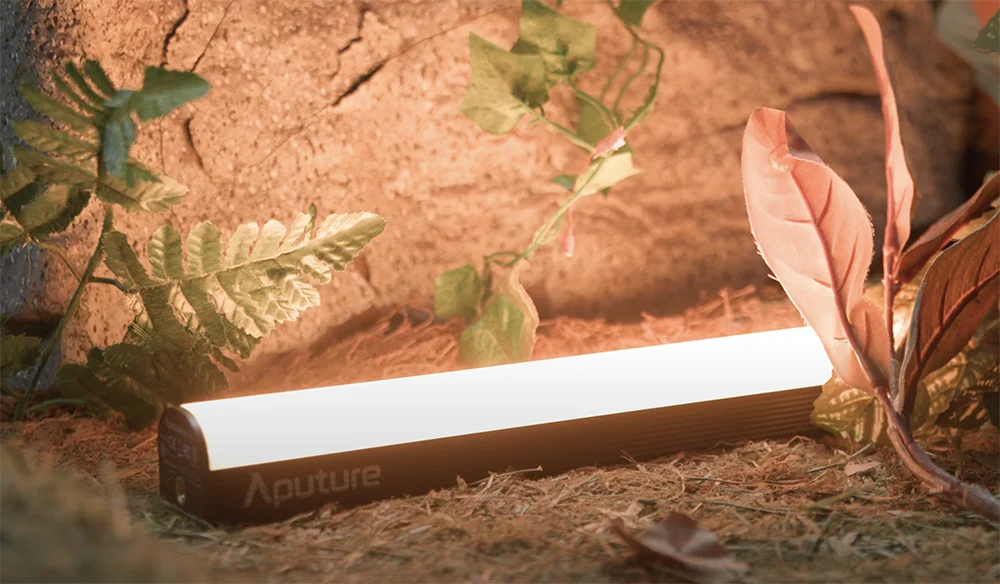
The most recent trend in handheld lighting is the "mini tube." These fixtures, such as the Aputure MT Pro and the Nanlite PavoTube II 6C, offer a unique form factor that allows them to be hidden in plain sight—behind books on a shelf, under kitchen cabinets, or tucked into the corners of a car interior.
The Aputure MT Pro is a full-color mini LED tube light that introduces pixel control to the handheld category. This allows for more complex lighting effects, such as a "chasing" light or a more realistic fire flicker, which are calculated across the length of the tube rather than just the entire unit. For interview setups, the MT Pro serves as an excellent background accent, adding depth and color to an otherwise flat frame.
Conversely, the Nanlite PavoTube II 6C is optimized for documentary and corporate work. It features an internal Li-ion battery that provides 65 minutes of run time at full brightness. With a color temperature range of 2700K to 7500K and a CRI of 98, it offers some of the most accurate light in its class. The inclusion of built-in programmable effects—ranging from police car strobes to lightning and "explosions"—makes it a versatile tool for narrative filmmakers who need to create atmospheric lighting on a limited budget.
Amaran AL-MX: The High-Output Powerhouse
Nicknamed "the brick," the Amaran AL-MX is built for durability and raw output. Unlike the plastic housings of many budget lights, the AL-MX features an aircraft-grade aluminum construction, making it nearly indestructible in the field. Its primary selling point is the "Boost Mode," which allows the light to output up to 1100 lux at 0.5 meters.
This level of brightness is particularly useful for outdoor photography and videography. In landscape photography, the AL-MX is often used to illuminate foreground elements during blue hour or to provide enough light for a photographer to adjust their settings in total darkness. For videographers, it serves as a makeshift key light in outdoor night scenes where larger fixtures are impractical. However, users must note that the Boost Mode significantly increases battery drain, necessitating careful power management.
Broader Impact and Industry Implications
The availability of these budget-friendly handheld lights has profound implications for the global film industry. By lowering the barrier to entry, these tools have allowed a more diverse range of voices to enter the cinematic space. The ability to create high-production-value content with a minimal investment has forced traditional production houses to adapt, emphasizing creativity and technical skill over the sheer size of a lighting budget.
Furthermore, the environmental impact of this shift cannot be ignored. LED lights consume significantly less power than their tungsten predecessors and generate far less heat, reducing the carbon footprint of film sets and decreasing the need for heavy-duty air conditioning in studio environments. As battery technology continues to improve, the reliance on gas-powered generators for remote shoots is also declining.
Looking forward, the industry expects to see further integration of Artificial Intelligence (AI) in lighting control. Future iterations of these handheld devices may be able to automatically sense the ambient color temperature of a room and adjust themselves to match, or use AI-driven motion sensors to track a subject and maintain consistent exposure.
In conclusion, the current selection of handheld lights—from the magnetic versatility of the Aputure MC to the high-output durability of the Amaran AL-MX—represents a golden age for video production tools. These fixtures prove that professional-grade lighting is no longer defined by price tag or physical size, but by the innovation and flexibility they bring to the modern set. For any filmmaker looking to enhance their visual storytelling, these budget-friendly options are not just luxuries; they are indispensable assets.