

The silicon-valley vision of a post-smartphone era, where digital information is seamlessly overlaid onto the physical world through sleek eyewear, is facing a critical inflection point. While major technology conglomerates including Meta, Snap Inc., and Google have spent billions of dollars positioning artificial intelligence-powered glasses as the next indispensable consumer innovation, a burgeoning wave of negative sentiment regarding privacy, social etiquette, and functional wearability is threatening to derail the entire product category. What was intended to be a revolution in personal computing is increasingly being characterized by regulators and the public as a suite of intrusive surveillance tools, leading to a resurgence of the social stigmas that famously doomed the first generation of smart glasses a decade ago.
The Privacy Crisis and the Rise of the Recording Stealth
At the center of the current controversy is Meta, which recently rebranded its collaborative effort with EssilorLuxottica from "Meta Ray-Bans" to "Meta AI glasses." While the rebranding and the integration of advanced multimodal AI features led to a significant commercial surge—with sales more than tripling in 2025—the increased adoption has brought the device’s inherent privacy risks into sharp focus.
One of the most significant blows to Meta’s hardware reputation involves the systematic subversion of the device’s safety features. Meta was recently forced to issue a critical firmware update after investigations revealed a thriving underground market where users were paying hackers to physically or digitally disable the recording indicator lights. These small LEDs are designed to glow when the glasses are capturing video, serving as a "privacy signal" to those in the wearer’s vicinity. By removing this indicator, wearers can record high-definition video and audio in public or private spaces without the knowledge or consent of their subjects.
This trend has given rise to a derogatory terminology within the tech community and on social media, where offenders are frequently labeled as "Meta Ray-Ban creeps." Reports from Wired and other investigative outlets have documented a rise in incidents where hours of content, often captured in sensitive environments, are fed back into Meta’s cloud systems for processing. The sheer volume of data being harvested has raised questions about where personal convenience ends and systemic surveillance begins.
Regulatory Scrutiny and the Content Review Scandal
The concerns are not merely speculative; they have attracted the attention of international regulators. In March, United Kingdom authorities launched a formal investigation into Meta’s data handling practices following a series of disturbing reports regarding the company’s content review process. According to documentation first highlighted by the Swedish publication Svenska Dagbladet, Meta’s third-party contractors—tasked with reviewing footage to train AI models—were allegedly viewing highly intimate moments captured by the glasses.
The leaked reports suggested that contractors had access to footage of users and bystanders in compromising situations, including bathroom visits, sexual encounters, and other private domestic moments. This breach of the "sanctity of the home" has fundamentally shaken consumer trust. Despite these scandals, Meta has continued to signal its intent to push the boundaries of the technology. The company is reportedly experimenting with a "24/7 recording" mode as part of a personalized AI training initiative. This feature would theoretically allow the AI to learn a user’s entire life context to provide better assistance, but it would do so by maintaining a constant, unblinking eye on the user’s surroundings, potentially without any outward indication that recording is active.
Furthermore, Meta’s Chief Technology Officer has confirmed that the company is exploring the integration of facial recognition technology into future iterations of the glasses. Such a feature would allow a wearer to identify strangers in real-time, cross-referencing their faces with social media profiles or public databases. While Meta frames this as a tool for social connection, civil liberties groups view it as the ultimate tool for doxing and public stalking.
The Aesthetic Hurdle: From Fashion to "Pervert Glasses"
Beyond the legal and ethical quagmires, the industry is struggling with a more visceral problem: social acceptance. In the world of wearables, "cool" is a currency as valuable as battery life or processing power. Meta’s initial success was largely attributed to the classic Ray-Ban aesthetic, which masked the technology within a familiar, fashionable frame. However, as the "creep" factor has grown, the brand association has soured.
The term "pervert glasses" has begun to circulate in public discourse, a label that carries enough social weight to discourage even the most enthusiastic early adopters. Engadget recently reported that a growing number of users feel a sense of "tech-shame," opting to leave their glasses at home rather than face the suspicious glares of strangers in public spaces.
This shift in sentiment was punctuated by high-profile celebrity pushback. During the Mad Cool festival in Madrid, pop icon Lorde took a moment during her set to address the crowd about the encroaching nature of AI wearables. Expressing her discomfort with the difficulty of knowing when she is being recorded, she bluntly told the audience, "Don’t get the glasses. Not sexy." For a product category that relies heavily on being perceived as the "next big thing," being labeled "unsexy" by a cultural tastemaker represents a significant marketing hurdle.
The Functional Failure of Snap’s AR Ambitions
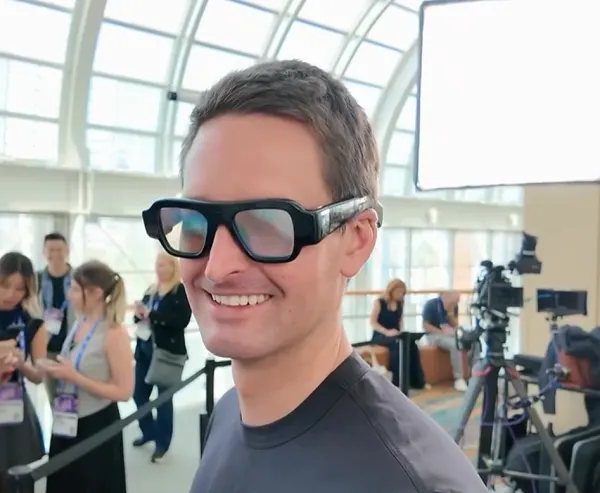
While Meta struggles with the social implications of its sleek design, Snap Inc. is facing criticism for the opposite reason: a total failure of form factor. Snap’s latest iteration of its AR Specs, recently previewed by CEO Evan Spiegel, has been widely ridiculed for its cumbersome size.
A promotional image featuring Spiegel wearing the new Specs became an unintended viral sensation for all the wrong reasons. Observers noted the visible strain on the CEO’s ear as it buckled under the weight of the massive, blocky frames. The image became a symbol of the "function over form" trap that has plagued the augmented reality industry for years. With a reported price tag of $2,000 per pair, market analysts are skeptical that the glasses will find a foothold beyond a tiny niche of developers. The high cost, combined with an aesthetic that many have described as "absurd," suggests that Snap may have miscalculated the average consumer’s willingness to sacrifice comfort for a heads-up display.
Historical Context: The Ghost of Google Glass
The current industry struggles are an echo of the 2013-2015 era, when Google Glass attempted to pioneer this market. Google ultimately discontinued consumer sales of the device after just two years, citing a lack of clear utility and a massive public backlash.
The "Glasshole" era, as it was colloquially known, established the precedent for smart glasses being banned in public venues. Bars, casinos, and movie theaters across the United States and Europe implemented immediate bans on the hardware to protect the privacy of their patrons and the integrity of copyrighted content. History appears to be repeating itself; the New York Office of Court Administration recently announced a total ban on camera-equipped glasses in all state courthouses, citing security and privacy risks. Legal experts expect this to be the first of many such bans as the "always-on" nature of AI glasses clashes with the legal requirements of sensitive environments.
The Utility Gap: Is the AI Worth the Risk?
The ultimate survival of the AI glasses industry may depend on whether the technology provides enough value to outweigh the social and privacy costs. Currently, even those within the industry express doubts. Alexandr Wang, a high-profile AI specialist and head of Meta’s "Superintelligence" unit, recently admitted on The Core Memory podcast that the user experience of AI-integrated tools is often "not overwhelmingly better" than traditional methods.
Wang noted that while AI assistants can be helpful, the "killer app" for smart glasses—the feature that makes them as essential as a smartphone—has yet to materialize. Meta’s strategy is to create an "always-on" assistant that can see what the user sees, but if the AI’s insights are only marginally useful, users are unlikely to endure the social stigma and regulatory hurdles associated with wearing a camera on their face.
Future Outlook and Market Implications
The smart glasses industry currently stands at a crossroads. On one hand, the technological progress in miniaturization and low-power AI processing is staggering. On the other hand, the human element—privacy, aesthetics, and social trust—is proving to be a much more difficult problem to solve than the engineering challenges.
If the "pervert glasses" stigma continues to take root, the market may see a retreat similar to the one experienced by Google a decade ago. For Meta, the stakes are particularly high. Mark Zuckerberg has pivoted the company’s entire future toward the concept of the "metaverse" and wearable AI, viewing glasses as the primary gateway to this new digital ecosystem. If the hardware fails to gain social legitimacy, the billions of dollars invested in the "Reality Labs" division may never see a return.
In the coming year, the industry will likely see a shift in focus. Companies may move away from "stealth" designs and toward more overt hardware signals to reassure the public. There may also be a pivot toward enterprise and industrial applications—such as logistics, medicine, and manufacturing—where the privacy concerns of the general public are less of an issue and the functional utility of a hands-free display is more easily defined. However, for the average consumer, the dream of the "all-seeing" AI companion remains clouded by the very real nightmare of a world where privacy is a thing of the past.