

A recent comprehensive analysis of Google Analytics 4 (GA4) data from 97 B2B lead generation websites, encompassing nearly 29 million visits over a one-year period, has revealed a significant trend: visitors originating from Artificial Intelligence (AI) sources are substantially more likely to convert into leads compared to those from traditional organic search, email, or social media channels. The study, conducted by Orbit Media, indicates that AI-referred visitors are up to three times more likely to become leads, and even seven times more likely on a per-site median basis, suggesting a profound shift in user intent and behavior driven by AI-powered discovery.
The research, spanning from July 1, 2025, to June 30, 2026, aimed to validate anecdotal observations of higher conversion rates from AI traffic. By aggregating data from a diverse range of B2B lead generation sites, the study sought to establish a statistically significant understanding of this emerging traffic source. The findings challenge conventional wisdom about online lead generation and highlight the growing influence of AI as a discovery and decision-making tool for potential customers.
Unveiling the AI Conversion Advantage: Key Findings
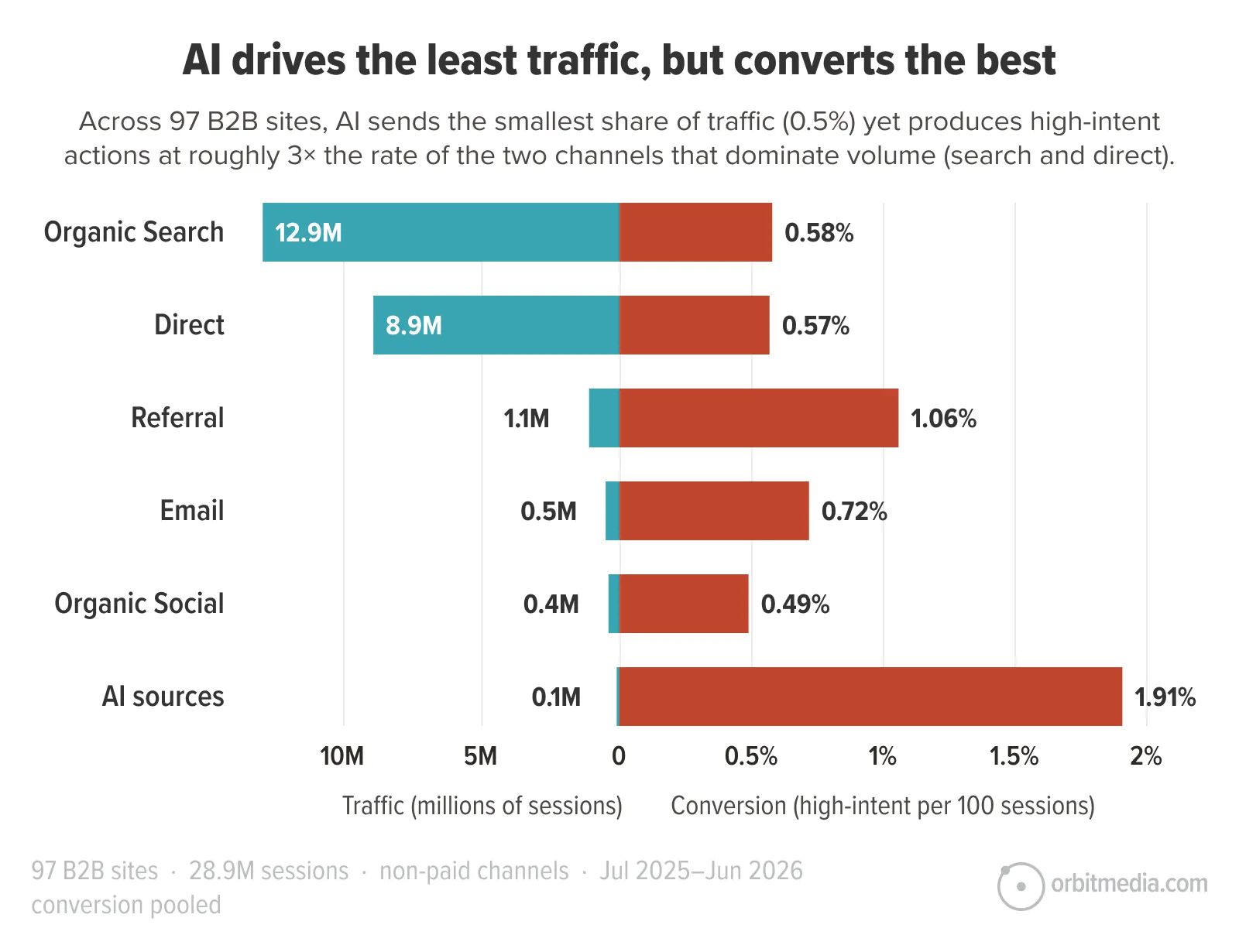
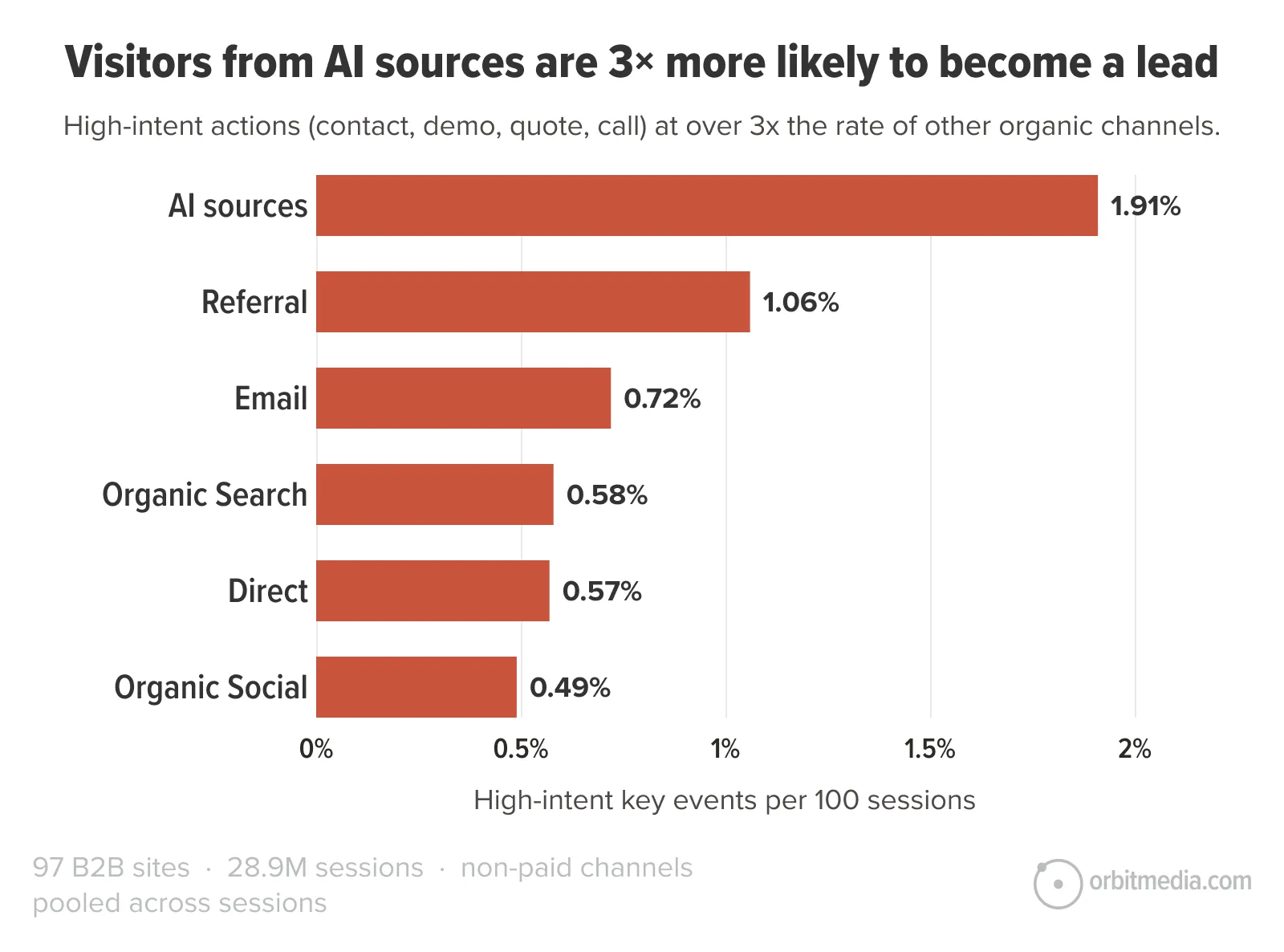
The core revelation of the study is the pronounced conversion advantage of AI-referred traffic. Across the sampled GA4 accounts, visitors arriving from AI platforms demonstrated a conversion rate that was three times higher than that of other organic traffic sources. This trend was particularly noticeable when these visitors landed on the homepage, indicating a strong initial engagement.
The analysis involved a meticulous categorization of key events within GA4, a process that required manual effort to distinguish genuine conversions (such as form submissions, demo requests, or direct contact) from less intent-driven actions like CTA clicks or page scrolls. After excluding non-conversion events, the data painted a clear picture: AI-driven users were not just browsing; they were actively seeking solutions and expressing intent to engage further.
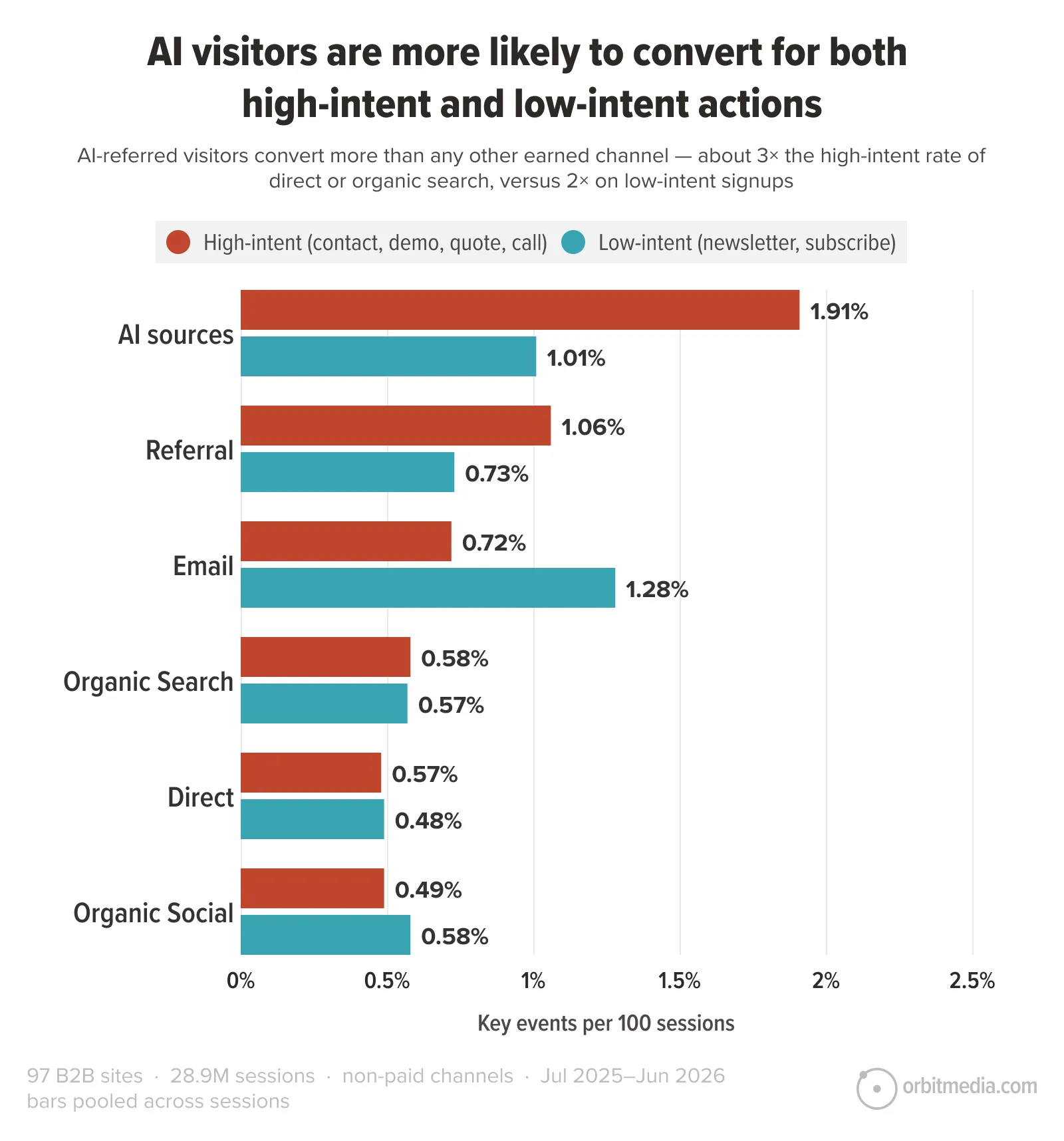
Further segmentation of the data revealed that when analyzing high-intent conversions specifically, AI sources still outperformed other channels, generating 1.91% leads per 100 sessions. This is a stark contrast to other organic channels, which showed lower rates for these critical actions.
The study also observed that this pattern held true on approximately two-thirds of the individual websites analyzed, reinforcing the aggregate findings. When looking at the median conversion rates per site rather than pooled data, the difference became even more dramatic, with AI-sourced visitors showing a 7x higher conversion rate.
The Paradox of High Conversion: Low Traffic Volume
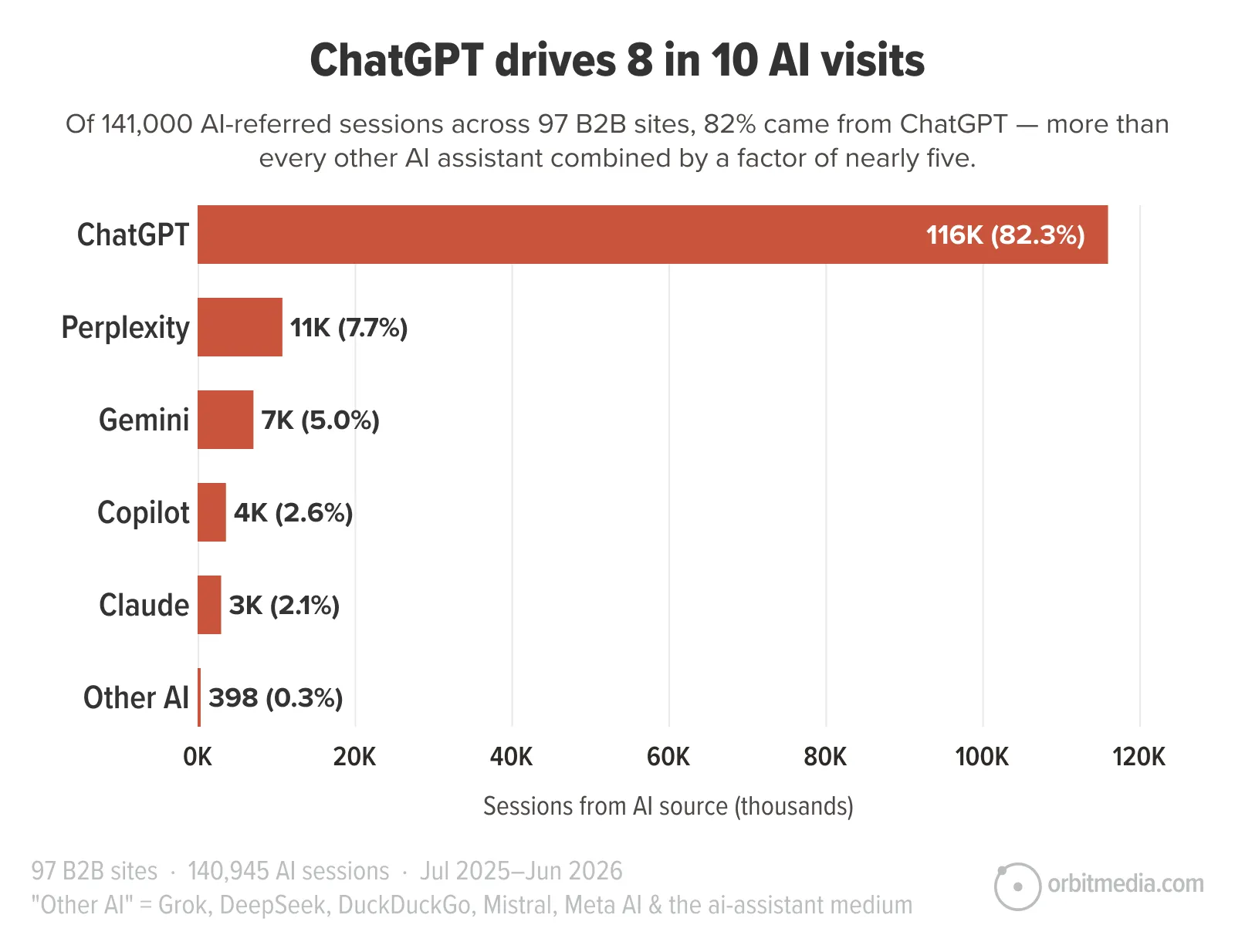
Despite the impressive conversion rates, a significant caveat emerged: AI sources currently represent a very small fraction of overall website traffic. Across the 29 million visits analyzed, only about 140,000, or approximately 0.5%, originated from AI platforms. This means that for every 200 visitors, only one was an AI referral.
This low traffic volume is attributed to several factors. Traditional search engines, particularly Google, remain the dominant entry point for internet users, driven by decades of ingrained habits and the ubiquitous nature of platforms like Chrome. The study acknowledges that a substantial portion of AI-driven traffic, especially from Google’s AI Overviews and AI Mode, is currently miscategorized within GA4 as "Organic Search," making it impossible to isolate these specific AI-powered clicks from traditional search results. Similarly, traffic from AI applications that do not pass referrer data is often classified as "Direct" traffic.
Dominance of ChatGPT and Emerging AI Platforms
The research also delved into the specific AI models driving this traffic. ChatGPT emerged as the clear leader, accounting for a dominant 82.3% of the 140,000 AI-referred sessions. This underscores its role as a primary research and information-gathering tool for consumers and businesses alike.
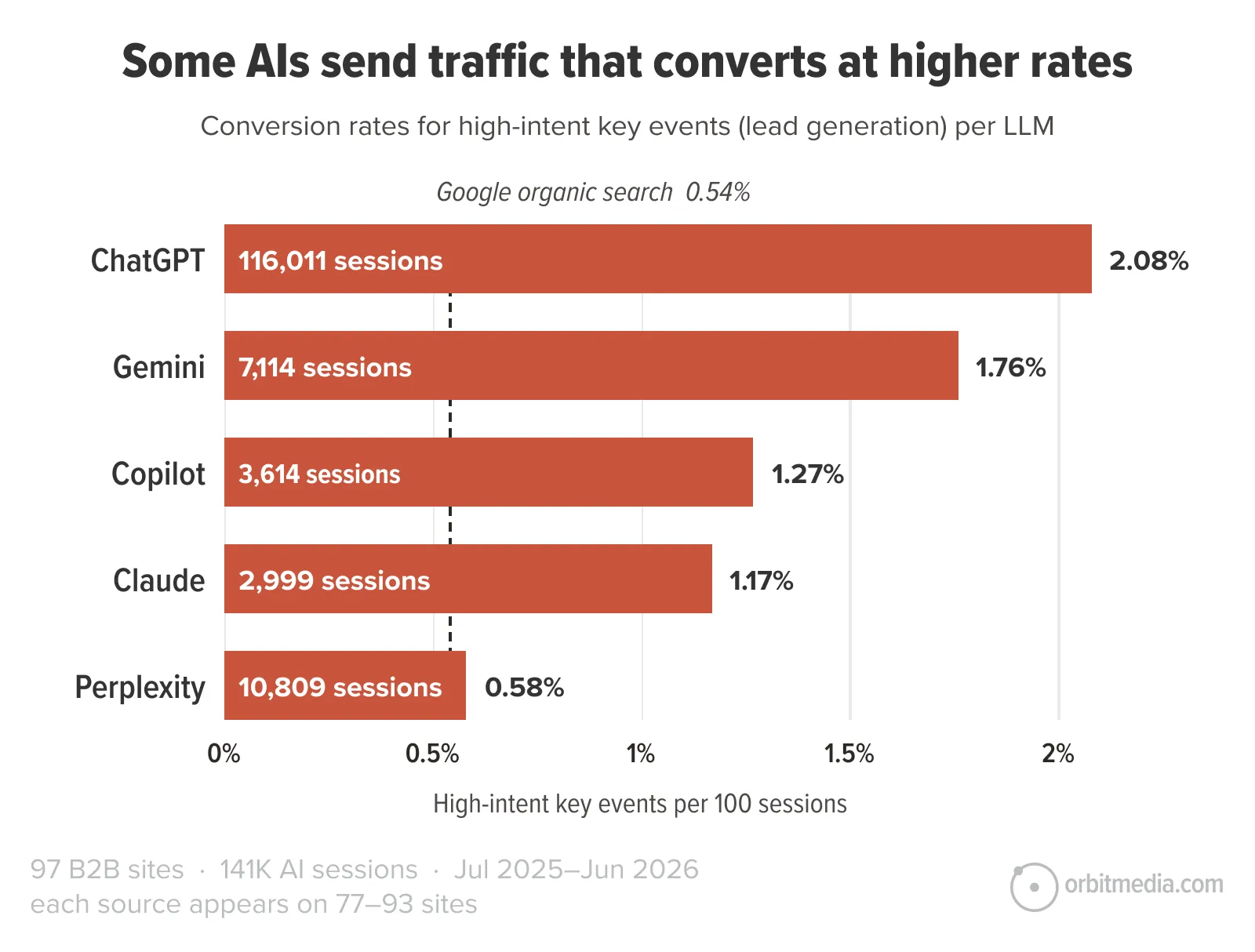
Other AI platforms, while contributing to the overall AI traffic, showed significantly lower session numbers. Perplexity, despite positioning itself as a Google alternative, generated a comparatively small amount of traffic to B2B websites. Crucially, the conversion rates from Perplexity visitors were not as high as those from ChatGPT.
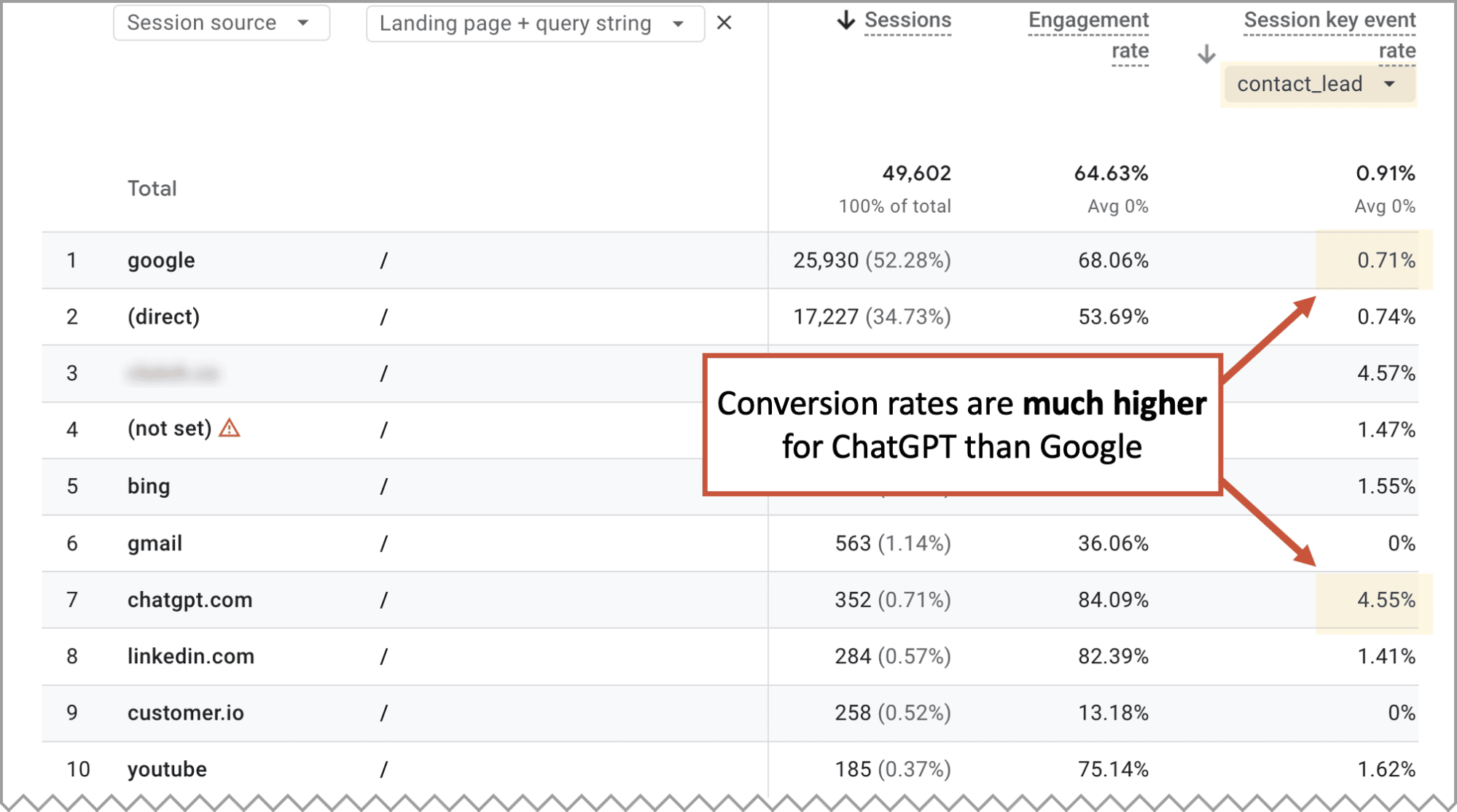
When comparing conversion rates directly between leading AI models and traditional search, ChatGPT exhibited a 2.1% conversion rate for leads, while Google Search managed 0.5%. However, the sheer volume of traffic from Google Search means it continues to be a more powerful overall source for lead generation, even with a lower per-visitor conversion rate.
Analyzing Intent: High vs. Low-Funnel Conversions
To gain a more nuanced understanding of user behavior, the study categorized conversions into high-intent and low-intent actions. High-intent conversions include actions like submitting contact forms, requesting demos or quotes, and clicking on phone numbers, all of which indicate a strong readiness to engage or purchase. Low-intent conversions encompass actions such as subscribing to newsletters, downloading guides, or registering for webinars, which represent earlier stages of interest.
The analysis showed that AI-referred visitors were twice as likely to engage in both high- and low-intent conversions compared to visitors from other traffic sources. This suggests that AI is not only directing users with immediate needs but also nurturing interest at earlier stages of the buyer’s journey.
Landing Page Performance: Where AI Visitors Engage
The study also examined the types of landing pages that attract AI-referred visitors and their subsequent conversion rates. Pages were categorized into groups such as homepage, services/products, articles, about pages, and case studies.
The findings indicated that blog articles attracted the largest volume of AI-referred traffic. However, case study pages exhibited the highest conversion rates for AI visitors, suggesting that users are seeking in-depth proof and validation of solutions at this stage. This aligns with the hypothesis that AI users are often further along in their research process and are looking for concrete evidence of value.
Understanding the "Why": Hypotheses for Higher AI Conversion Rates
The research team proposed several hypotheses to explain the significantly higher conversion rates observed from AI-referred traffic:
-
AI as a Pre-Qualifier: By the time a user clicks through from an AI platform like ChatGPT, they have likely engaged in a conversational process of inquiry, comparison, and shortlisting. The AI has effectively performed an initial filtering, presenting users who are already more informed and have narrowed down their options. This means they arrive on a website with a clearer understanding of their needs and a higher motivation to find a specific solution.
-
Familiarity and Trust: AI platforms can act as trusted advisors, providing recommendations that users perceive as objective advice rather than overt advertising. When an AI names a specific brand, it can feel akin to a personal recommendation or word-of-mouth endorsement, fostering a sense of trust and reducing the inherent skepticism often associated with traditional search results.
-
Intent-Driven Journeys: Users engaging with AI tools, such as large language models (LLMs), typically do so with a specific purpose – to solve a problem, gain information, or make a decision. This contrasts with the more passive browsing often associated with social media. This inherent intent translates into a more focused and motivated visitor who is more likely to take action once they land on a relevant website.
-
Navigation Intent and Brand Recognition: A portion of AI traffic may represent users who already know a brand and are using AI to navigate directly to its website. This is supported by the high proportion of AI visitors landing on homepages. In such cases, the AI is acting as a sophisticated search bar, facilitating a quick connection to a known entity, thereby bypassing earlier stages of the awareness funnel.
-
Reduced Friction and Enhanced Value Proposition Clarity: AI’s ability to provide synthesized information and personalized recommendations may reduce the friction a user experiences in the initial research phase. This can lead to a clearer understanding of a brand’s value proposition by the time they reach the website, aligning with the MECLABS conversion formula which emphasizes visitor motivation and clarity of value.
Implications for Marketers and Businesses
The findings of this study have significant implications for digital marketing strategies. Businesses that rely on lead generation should not only acknowledge the growing role of AI in user discovery but also actively optimize their online presence to capture this high-intent traffic.
Key strategies include:
- Content Optimization for AI: Ensuring website content is clear, concise, and directly addresses user needs and questions is paramount. This involves optimizing for clarity of value proposition and providing strong supporting evidence, as AI users are likely to be well-informed.
- Homepage and Key Page Optimization: Given that many AI visitors land on homepages, these pages must be highly effective at communicating value and guiding users to the next step. Similarly, service, product, and case study pages should be meticulously crafted to address specific buyer intents.
- Understanding AI Traffic Sources: While current GA4 data has limitations in accurately tracking all AI traffic, marketers should explore methods to identify and analyze AI-referred sessions where possible. This includes monitoring referral data and potentially using custom event tracking for AI-specific interactions.
- Leveraging AI for Lead Nurturing: The understanding that AI users are often further along in their decision-making journey suggests that lead nurturing strategies can be more direct and focused on conversion.
The study also highlights the need for better integration and categorization of AI-driven traffic within analytics platforms. As AI continues to evolve, the ability to accurately attribute and understand its impact on website performance will become increasingly critical.
Future Outlook and Data Methodology
The research team emphasizes that while anecdotal evidence has suggested AI traffic’s higher conversion potential, this study provides the data-driven validation needed for strategic decision-making. The methodology involved meticulous data cleaning and categorization, acknowledging the inherent complexities of interpreting GA4 data, especially concerning evolving traffic sources like AI.
The definition of AI traffic included sessions identified by pattern-matching session source and medium against known AI assistant domains, alongside GA4’s emerging "AI Assistant" medium. Conversions were carefully tiered into high-intent and low-intent categories to ensure a robust analysis of user behavior.
As AI continues to reshape the digital landscape, businesses that adapt their strategies to harness the power of AI-driven discovery and engagement are likely to see a significant return on their investment, particularly in the realm of lead generation. The era of AI-assisted customer journeys has arrived, and its impact on conversion rates is already being felt.