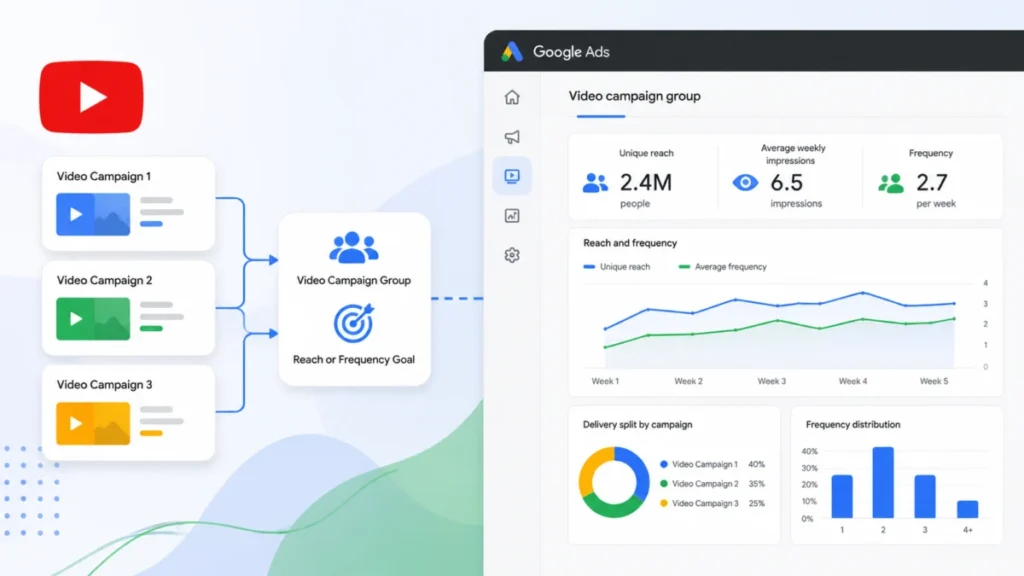

Google Ads has officially launched video campaign groups for YouTube reach and frequency campaigns, a strategic update designed to streamline how advertisers manage large-scale video initiatives. This new feature allows digital marketers to coordinate delivery across multiple video campaigns while optimizing toward a unified reach or frequency objective. By centralizing the management of these variables, Google aims to provide a more sophisticated toolset for brands looking to maximize their impact on the world’s largest video-sharing platform without the administrative burden of manual, campaign-by-campaign adjustments.
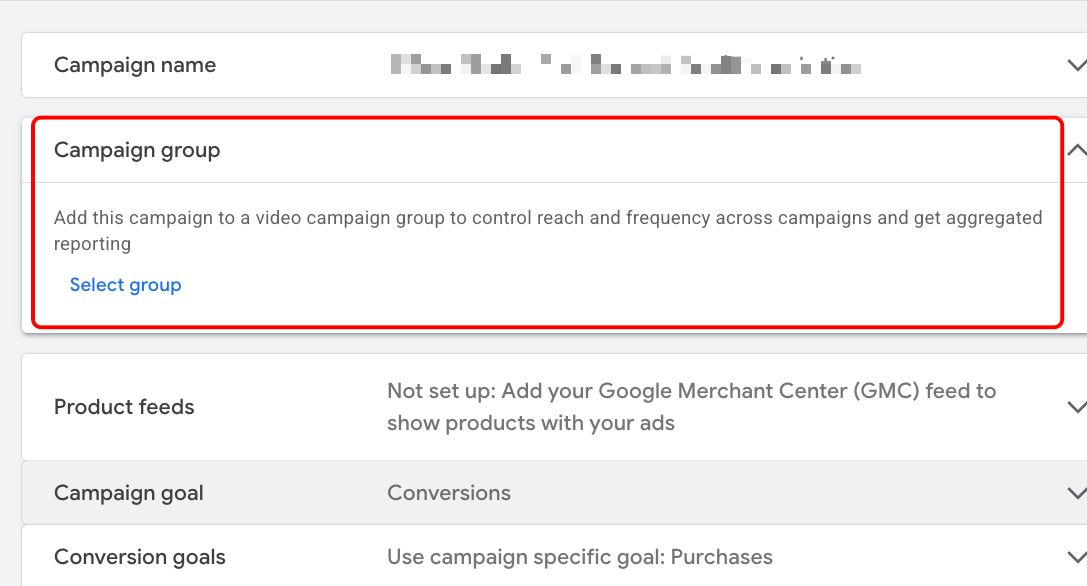
The introduction of video campaign groups marks a significant shift in the Google Ads architecture. Previously, advertisers operating multiple campaigns—perhaps for different product lines or creative variations within a single brand umbrella—faced the challenge of "siloed" delivery. In the old model, individual campaigns often competed for the same audience or, conversely, over-saturated a specific demographic because they lacked a shared awareness of a user’s exposure history across the entire account. The new grouping feature resolves this by allowing multiple campaigns to work in tandem, ensuring that the total number of impressions a user receives is governed by a single, overarching frequency goal.
The Mechanics of Video Campaign Groups
Under this new framework, advertisers can bundle several video campaigns into a single group. This group then functions as a cohesive unit for the purposes of optimization. While the group shares a common reach or frequency target, advertisers do not lose the granular control they have come to expect from Google Ads. Individual campaigns within a group still maintain their unique budgets, specific creative assets, targeting parameters, and bidding strategies.
This hybrid approach offers the best of both worlds: the efficiency of automated, cross-campaign optimization and the flexibility of individual campaign management. For instance, a brand could run a "Reach" campaign focused on broad awareness alongside a "Frequency" campaign designed to reinforce a specific message, grouping them together to ensure that the total brand exposure remains within a healthy range. This prevents "ad fatigue," a common phenomenon where excessive repetition leads to diminishing returns and potential brand resentment among consumers.
Data-Driven Optimization: The 2.7 Frequency Benchmark
One of the most compelling aspects of this rollout is the data Google provided to justify the update. According to a study conducted using Meridian, Google’s open-source Marketing Mix Modeling (MMM) tool, finding the "sweet spot" for ad frequency is critical for Return on Investment (ROI). The study revealed that an optimal frequency of approximately 2.7 impressions per week resulted in a 19% increase in ROI compared to less controlled delivery.
This statistic highlights a long-standing debate in the advertising industry regarding "effective frequency." Traditionally, the "Rule of Seven" suggested that a consumer needs to see an advertisement seven times before taking action. However, in the fast-paced digital environment of YouTube, where content consumption is high-volume and highly personalized, the Meridian data suggests a more nuanced approach. By allowing advertisers to cap or target specific frequencies across a group of campaigns, Google is providing the technical infrastructure necessary to hit these high-performance benchmarks consistently.
Unified Reporting and Enhanced Analytics
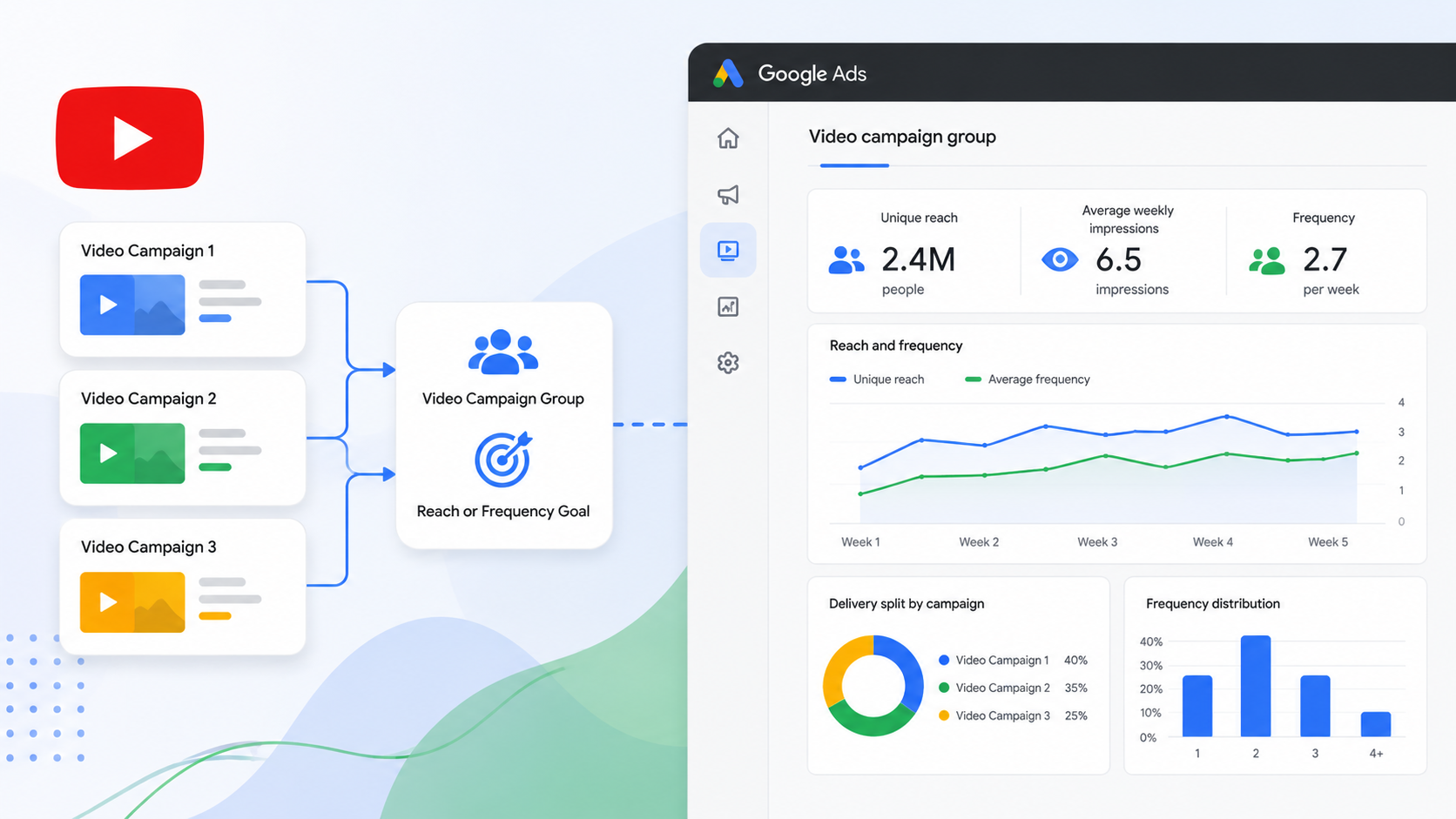
The rollout also introduces a centralized reporting interface for video campaign groups. In the past, measuring the cumulative reach of three separate campaigns required manual data export and deduplication—a process that was both time-consuming and prone to error. With unified reporting, advertisers can now view holistic metrics directly within the Google Ads dashboard.
These metrics include "Unique Reach," which filters out duplicate views to show exactly how many individual people saw the ads across the entire group, and "Average Impression Frequency per User." This level of transparency is vital for media planners who must justify spend by showing how effectively they are penetrating a market. Furthermore, the reporting tools provide insights into how different campaigns within the group are contributing to the overall goal, allowing for real-time adjustments to creative or budget allocation if one segment is underperforming.
Contextual Background: The Shift Toward Automation
The launch of video campaign groups is not an isolated event but rather a continuation of Google’s broader strategy to automate complex media planning decisions. Over the last several years, Google has transitioned from a manual "keyword and bid" platform to one driven by machine learning and high-level objectives. Features like Performance Max and Smart Bidding have paved the way for this update by demonstrating that Google’s algorithms can often balance delivery more efficiently than human operators.
This specific update was first brought to public attention by Arpan Banerjee, a prominent Paid Search Expert, who shared early sightings of the interface changes. The move reflects a response to the increasing complexity of the YouTube ecosystem. With the rise of YouTube Shorts, connected TV (CTV) viewing, and traditional long-form content, advertisers are now managing more formats than ever before. Coordinating these formats manually to ensure a consistent user experience has become nearly impossible without the aid of campaign grouping tools.
Industry Implications and Professional Reactions
The reaction from the digital marketing community has been largely positive, though it comes with a recognition of the changing role of the media buyer. Industry analysts suggest that this feature will be particularly beneficial for "always-on" brand awareness campaigns where the goal is to maintain a steady presence in the consumer’s mind.
By centralizing reach and frequency, Google is essentially taking over the "traffic cop" role of ad delivery. For agencies, this means a shift in focus from manual tactical adjustments to higher-level strategy. Instead of spending hours ensuring that Campaign A isn’t overlapping too heavily with Campaign B, strategists can focus on creative storytelling and audience segmentation, trusting the platform to handle the delivery logistics.
However, some experts caution that with increased automation comes a need for even more rigorous data auditing. As Google moves toward "black box" optimization models where the internal logic is not always transparent, the reliance on tools like Meridian for independent verification becomes paramount. The 19% ROI increase cited by Google serves as a powerful incentive, but brands will likely want to verify these results within their own specific market contexts.
A Timeline of YouTube Ad Evolution
To understand the significance of video campaign groups, one must look at the chronology of YouTube advertising:
- 2006-2010: Early experimental ad formats and the introduction of "In-stream" ads.
- 2010: The launch of TrueView, giving users the choice to skip ads and advertisers the benefit of only paying for engaged views.
- 2018: The introduction of "Outstream" ads and a heavier focus on mobile-first video.
- 2021-2022: The explosion of YouTube Shorts and the integration of video into Performance Max campaigns.
- 2024: The rollout of Video Campaign Groups, signaling a move toward cross-format, objective-based coordination.
This timeline shows a clear trajectory: from simple video placement to a complex, multi-format ecosystem that requires sophisticated cross-campaign management tools to remain effective.
Future Expansion: Display & Video 360 (DV360)
Google has confirmed that the functionality of video campaign groups will not be limited to the standard Google Ads interface for long. Plans are already in motion to expand these capabilities to Display & Video 360 (DV360), Google’s enterprise-level demand-side platform (DSP).
The expansion to DV360 is particularly significant for large global brands and programmatic advertisers. DV360 allows for more complex buying across a wider range of inventory beyond just YouTube. By bringing reach and frequency coordination to YouTube line items within DV360, Google is providing enterprise-level marketers with the tools to manage their massive video spends with the same level of precision as smaller, more agile advertisers. This move is expected to bridge the gap between "standard" digital advertising and the high-level programmatic strategies used by the world’s largest media agencies.
Analysis of Long-Term Impact
The long-term impact of video campaign groups will likely be seen in the improved "health" of the YouTube advertising ecosystem. Ad fatigue is one of the primary drivers of ad-blocker usage and general consumer dissatisfaction with digital platforms. By giving advertisers the tools to easily prevent overexposure, Google is indirectly protecting the user experience on YouTube.
Furthermore, this update reinforces Google’s position in the competitive landscape against Meta and Amazon. Both competitors have their own versions of reach and frequency controls, but Google’s integration of the Meridian MMM study data provides a scientific backing that appeals to data-driven CMOs. As the industry moves toward a "privacy-first" future where third-party cookies are deprecated, tools that optimize based on first-party platform data and sophisticated modeling like reach/frequency grouping will become the new gold standard for measurement and execution.
Conclusion
Video campaign groups represent a maturation of the YouTube advertising platform. By offering a centralized way to optimize reach and frequency across multiple campaigns, Google Ads is addressing a major pain point for modern marketers: the fragmentation of audience attention. The ability to maintain campaign-level flexibility while achieving group-level efficiency is a powerful combination that promises to improve media ROI, reduce creative wear-out, and simplify the increasingly complex task of digital video management. As this feature rolls out globally and moves into the DV360 space, it will likely become a foundational element of any sophisticated YouTube marketing strategy.