

A Chronology of May 2026 Browser Releases
The month began with a flurry of activity in the developer community as browser vendors aligned their release schedules. Chrome 148, released in the second week of May, focused heavily on performance optimization and developer experience. Shortly thereafter, Firefox 151 brought a suite of interoperability features that addressed long-standing requests for greater control over layout and hardware communication. Safari 26.5 rounded out the month, prioritizing stability and the finalization of CSS pseudo-class standards. This sequence of releases represents a coordinated effort to reach "Baseline" status for several critical web features—a designation used by the WebDX Community Group to indicate that a feature is supported across all major browser engines, thereby ensuring a predictable environment for web developers.
The Rise of Semantic Web Styling
One of the most consequential updates this month is the move of the :open CSS pseudo-class to Baseline. Historically, developers relied on attribute selectors like details[open] or complex JavaScript-based class toggling to handle the state of interactive elements. The introduction of :open provides a native, semantic method for styling elements such as <details>, <dialog>, and even native form controls like color and date pickers.
This transition is not merely cosmetic; it reflects an ongoing effort to simplify the DOM and reduce the reliance on external JavaScript frameworks for basic UI interactions. By moving state-management styling into the browser’s native engine, developers can achieve performance gains by reducing the overhead associated with script-based DOM manipulation.
Advancing Layout Architecture with Container Queries
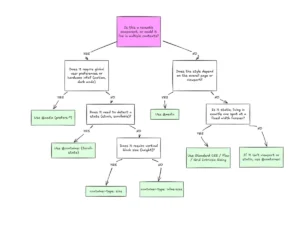
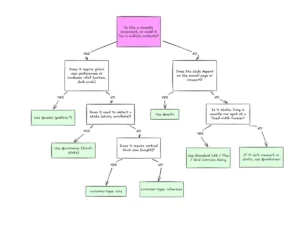
The release of Chrome 148 brings "name-only" container queries to the stable web. This update solves a specific pain point: the requirement to define a container-type on an ancestor element before a container query could be executed. By allowing developers to query a container by its name alone, the CSS specification becomes more flexible and modular.
Furthermore, Firefox 151 has introduced support for style() queries within the @container rule. While traditional container queries focused on size, style queries allow developers to query the computed value of CSS custom properties on a parent element. For instance, a developer can now create a theme-aware component that adjusts its internal styling based on the presence of a --theme: dark property on a parent container. This decoupling of layout from parent-child relationships is expected to drastically simplify the creation of design systems and component-based architectures, which are currently the industry standard for large-scale web applications.
Performance Enhancements and Native Media Handling
The introduction of native lazy loading for <video> and <audio> elements in Chrome 148 addresses a critical performance bottleneck. Previously, lazy loading was largely restricted to images and iframes, often forcing developers to implement custom, JavaScript-heavy solutions to delay the loading of media assets.
Data from web performance metrics suggest that media assets are frequently the primary culprits in high Largest Contentful Paint (LCP) times and excessive data consumption. By natively supporting the loading="lazy" attribute for media, browsers can now intelligently defer the loading of assets until they are near the user’s viewport. Preliminary analysis suggests this could reduce initial page load bandwidth consumption by as much as 15% to 20% for media-heavy sites, a significant improvement for users on low-bandwidth mobile networks.

Expanding the Horizon of Web APIs
Hardware and system integration remains a focal point for the Web Serial API, which has seen its platform reach extended this month. With Firefox 151 adding support on desktop and Chrome 148 extending it to Android, the web platform is increasingly becoming a viable environment for interacting with specialized hardware, such as 3D printers and microcontrollers.
Parallel to this, the Document Picture-in-Picture API’s arrival in Firefox 151 marks a shift in how browsers manage multi-window content. Unlike standard Picture-in-Picture, which is limited to video streams, the Document Picture-in-Picture API permits the display of arbitrary HTML content in an always-on-top window. This capability is poised to transform productivity applications, allowing users to keep dashboards, meeting grids, or timers visible while interacting with other browser tabs or applications.
Beta Previews: A Glimpse into the Future
As the industry looks toward the next cycle, Chrome 149 and Firefox 152 beta releases provide a window into the upcoming innovations for mid-2026. Chrome 149 is set to introduce CSS gap decorations, enabling developers to style the gutters between grid and flex items directly, a feature that has been highly requested in developer forums. Additionally, the improvement to programmatic scroll methods—specifically the promise-based resolution of scrollTo() and scrollBy()—will simplify the logic required to synchronize UI animations with scroll events.
Firefox 152, meanwhile, focuses on accessibility and form control improvements. The field-sizing property is perhaps the most anticipated feature, as it allows form controls to automatically adjust their dimensions to fit their content. This change is expected to significantly reduce the need for manual width calculations and CSS hacks that often break when localizing websites into languages with longer character counts.
Analysis of the Industry Landscape
The updates of May 2026 underscore a maturing web platform. The transition from "experimental" to "stable" for these features reflects a high level of inter-vendor cooperation, largely driven by the W3C and the ongoing efforts of the Baseline project. By standardizing features like container queries and native lazy loading, browser vendors are effectively lowering the barrier to entry for building high-performance, accessible, and responsive web applications.
From an economic perspective, these updates reduce the "maintenance tax" paid by companies. When browsers handle complex behaviors natively—such as media lazy loading or element resizing—developers spend less time writing and debugging boilerplate code. This shift allows teams to focus on business logic and user experience rather than troubleshooting cross-browser compatibility issues.
As the web platform continues to absorb functionality that was once the exclusive domain of native desktop applications, the role of the browser is fundamentally changing. The convergence of hardware access (Web Serial), advanced UI capabilities (Document Picture-in-Picture), and sophisticated styling (container style queries) suggests a future where the distinction between "web" and "native" applications will become increasingly irrelevant to the end user. For the development community, the challenge will shift from finding workarounds to mastering the robust, native tools provided by these modern browser releases.