
The landscape of online information discovery is undergoing a profound transformation, driven by the rapid adoption of artificial intelligence. A recent study reveals that approximately 58% of consumers now leverage AI answer engines for product research weekly, a figure that continues its swift ascent. This burgeoning reliance on AI-powered platforms such as ChatGPT, Perplexity, and Google AI Overviews is fundamentally reshaping how content is discovered and consumed, prompting a critical re-evaluation among content and SEO professionals: Is the traditional authority playbook, centered on backlinks, still relevant, or is a new strategy for Answer Engine Optimization (AEO) now paramount?
The Dawn of AEO: A Paradigm Shift in Search
For decades, search engine optimization (SEO) has revolved around algorithms designed to rank web pages based on relevance and authority, with backlinks serving as a foundational signal of trustworthiness and credibility. A backlink from a reputable domain was, and largely still is, a "vote of confidence," weighted by the linking domain’s authority, contextual relevance, and anchor text. However, the advent of sophisticated AI answer engines introduces a new layer of complexity. These systems do not merely rank pages; they synthesize information from various sources to generate direct, concise answers to user queries. This shift necessitates an evolution from merely ranking for clicks to being cited as a reliable source.
While the foundational logic of off-page SEO and the value of contextually relevant backlinks remain, they no longer tell the complete story for achieving visibility in AI-generated answers. The emerging field of AEO focuses on optimizing content not just for traditional search engine rankings, but specifically for citation and inclusion within AI answers. This involves a more holistic assessment of a brand’s digital footprint, moving beyond raw link volume to a nuanced understanding of semantic relevance, entity authority, and content structure. Tools like HubSpot AEO are emerging to help marketing teams navigate this new terrain, offering specialized tracking and improvement capabilities for brand visibility within AI environments.
Backlinks Reimagined: Quality Over Quantity for AI Visibility
In the traditional SEO paradigm, a robust backlink profile, characterized by a high volume of links from diverse, authoritative domains, was often a direct correlative to higher rankings. While this remains a significant factor for organic search visibility, AI answer engines interpret backlinks with a refined lens. They prioritize sources that can reliably "ground" an answer, meaning the linking domain’s authority is assessed alongside its thematic relevance to the content it links to.
Nathaniel Miller, Head of Marketing at Ashbrook Technologies, emphasized this distinction in a recent interview for the Found in AI podcast, stating, "The companies ranking highest across AI platforms tend to be ones with both strong authority and strong backlink profiles." He further clarified that if a link doesn’t generate "qualified traffic," its value diminishes to a mere "logo slap," underscoring that "the real value is in relevance and authority – not just size." This perspective highlights a critical divergence:
- High-DA, low-relevance links: While beneficial for classic SEO (domain authority boost), their influence in AEO is low due to a weak semantic signal.
- High-DA, high-relevance links: These remain paramount, offering very high influence in both classic SEO and AEO.
- Industry publication links: High influence in both, but especially potent for AEO if the publication is recognized as a grounding source for AI.
- Niche blog links with strong topical depth: Moderate for classic SEO, but high for AEO, as semantic adjacency reinforces entity authority.
- Directory or aggregator links: Low-to-moderate for classic SEO, but minimal for AEO due to their often generic nature.
- Co-citation in expert roundups: Indirect influence for classic SEO, but high for AEO, as it strategically positions a brand alongside recognized authorities.
This nuanced evaluation means that while a strong backlink profile is a necessary prerequisite, it is no longer a sufficient condition for achieving optimal AI visibility. The type of link, its contextual relevance, and the semantic alignment with the brand’s topic cluster matter far more than ever before.
Beyond the Link: Unlinked Mentions, Co-Citations, and Entity Clarity
The shift towards AEO compels marketers to consider signals beyond direct hyperlinks. Unlinked brand mentions and co-citations are emerging as equally crucial indicators of authority for AI systems. An unlinked brand mention – your brand name appearing in a credible source without a direct hyperlink – acts as a powerful signal for AI systems. These mentions help AI map a brand to specific topic clusters, building "entity authority" and increasing the likelihood of citation. The more frequently a brand is mentioned in relevant, authoritative contexts, the stronger its perceived association with that topic.
Co-citations further strengthen this semantic signal. When a brand is mentioned alongside other recognized authorities or sources within the same content, it suggests to answer engines that the brand belongs in that esteemed company. This is a particularly underutilized AEO tactic, providing strong indicators of expertise and credibility.
Crucially, "entity clarity" ties these signals together. An entity, in AI search, is a clearly defined and consistently described concept – be it a brand, a person, or a topic. As Lars Lofgren, SEO consultant, highlighted on the Found in AI podcast, AI engines are essentially mapping relationships between everything they crawl. Brands with strong entity clarity – characterized by consistent naming, structured data (e.g., Organization/Person schema), and a clear area of expertise across all channels – are far more likely to be cited. Conversely, "entity confusion," where a brand uses inconsistent terminology or lacks clear self-identification, can silently undermine AEO efforts. AI systems are hesitant to cite brands they cannot confidently identify or verify across multiple channels.
Charlie Graham, founder of RivalSee, shared a compelling statistic: roughly 85% of brands mentioned in ChatGPT responses have no citation link at all. This highlights a critical downstream effect where users, seeing a brand name repeatedly, remember it and initiate a direct search later. This "dark traffic" is a powerful authority signal that traditional analytics often miss, yet it is precisely what AEO seeks to influence.
Strategic Content for AI Visibility: Structure and Clarity are King
AI systems thrive on well-structured, unambiguous content that directly answers questions. Content that is easily parseable, clearly organized, and directly responsive to implied queries is systematically more likely to be extracted and cited by LLMs.

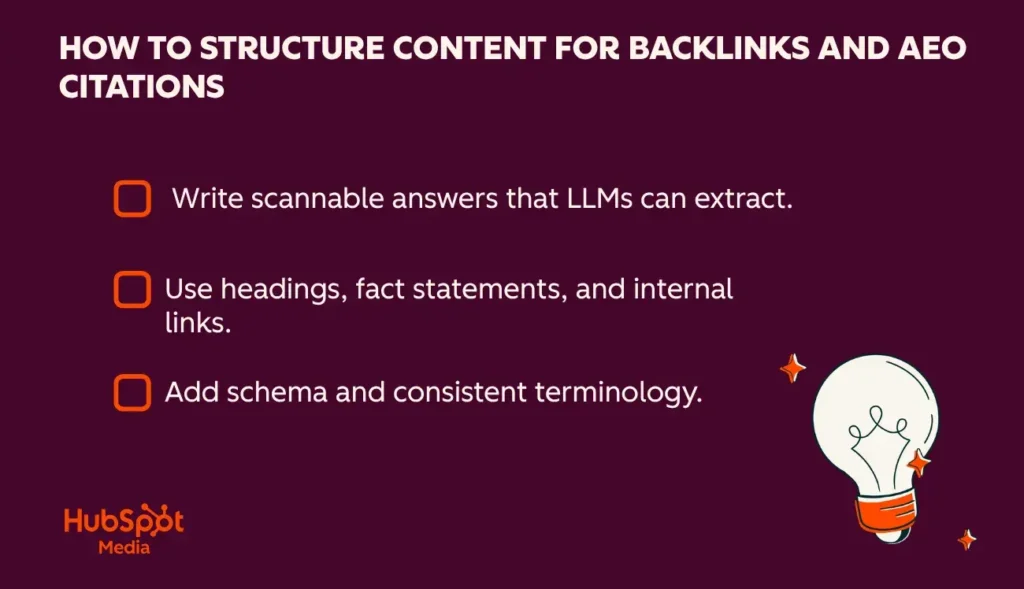
- Scannable, Answer-First Content: Every major section should begin with a direct, self-contained answer to the heading’s implied question, followed by supporting context, data, or examples. This "Answer first, evidence second" structure significantly enhances extractability and citation likelihood. For instance, using concise summaries, bulleted lists, and clear definitions at the beginning of sections makes content highly digestible for AI.
- Headings, Fact Statements, and Internal Links: Employing descriptive headings (H2, H3, etc.), clear fact statements, and a robust internal linking structure around topic clusters signals topical depth and authority to AI. This internal network helps AI systems understand the relationships between different pieces of content on a site, reinforcing the overall entity authority.
- Schema Markup and Consistent Terminology: Schema markup, machine-readable metadata, clarifies a page’s purpose and content structure for both search and AI systems. Valuable schema types for AEO include Organization, Person, Product, FAQPage, and HowTo. Equally important is consistent terminology. Brands should adopt canonical terms for key concepts and use them uniformly across all digital channels to prevent entity confusion.
Integrated Outreach: Building Backlinks and AEO-Salient Mentions
The most effective AEO strategies seamlessly integrate link-building and mention-building efforts. Every outreach action should be designed to generate both a structural link signal and a brand mention that AI systems can index.
- Prioritize AI-Friendly Content Formats: Certain content formats are disproportionately favored by AI for citation. These include original research and data reports, detailed how-to guides, comprehensive FAQ pages, and authoritative glossaries. When publishing original research, a "Key Findings" section at the top, featuring clearly labeled statistics, dramatically increases the likelihood of citation due to its high extractability.
- Original Research and Digital PR: Original research is arguably the most efficient way to earn both high-quality backlinks and co-citations. A well-executed study provides other publishers with a compelling reason to link to a brand as a primary source. Concurrently, media coverage of this research often mentions the brand alongside other respected voices, generating valuable co-citation signals. Digital PR, encompassing earned media placements, expert commentary, and podcast appearances, also serves as an excellent backlink strategy that simultaneously delivers both link authority and authentic brand mentions. As Miller noted, "Digital PR is the fastest way to start building momentum," as a single expert quote in an industry publication can yield a backlink, a brand mention, and a co-citation.
- Participate Where Answers Form: AI systems do not exclusively index brand-owned content; they also draw from authoritative conversations happening across various platforms. Active participation in channels like industry forums, Reddit, Quora, LinkedIn, and guest appearances on podcasts or webinars expands a brand’s footprint across sources AI systems are trained to trust. Tools like Qwoted and HARO are particularly valuable for securing third-party placements that can contribute to AI visibility.
Measuring Success in the AI Landscape: A Repeatable Loop
Effective AEO requires aggressive experimentation coupled with rigorous measurement. Without a clear feedback loop linking content publication, changes in authority signals, and AI citations, optimization remains speculative. HubSpot’s "Loop Marketing" framework offers a valuable lens: benchmark, tie changes to activity, and report what to scale.
- Benchmark AI Visibility and Citations: Establish a baseline by auditing current AI visibility, identifying frequently cited pages, and analyzing competitor performance in AI answers. This involves understanding which content types and domains are most often referenced by AI.
- Tie Changes to Content and Outreach Activity: Document content updates, new publications, link-building efforts, and earned media placements. Over time, this disciplined logging reveals patterns, such as which content formats drive the most citations or which outreach strategies yield the strongest AEO signals.
- Report What to Scale and What to Stop: On a regular cadence, evaluate which strategies are driving measurable improvements in AI citation frequency and brand mention share. This data-driven approach allows teams to prioritize effective tactics and discontinue unproductive ones, transforming AEO into a compounding strategy.
Conclusion: Backlinks Endure in a New Context
The future of SEO and AEO is not a zero-sum game; rather, they represent different, yet complementary, layers of the same authority infrastructure. Backlinks continue to provide the structural credibility essential for content to be indexed, trusted, and utilized as a grounding source by AI. However, the rise of AI answer engines demands a more sophisticated approach where backlinks are viewed in conjunction with unlinked brand mentions, co-citations, entity clarity, and meticulous content structure. These combined signals collectively inform AI systems that a brand is not merely present online, but genuinely authoritative and deserving of citation.
Content teams currently achieving measurable progress in AI visibility are those that have not abandoned their SEO programs. Instead, they have refined them, making them more precise, entity-aware, and consistently structured to meet the demands of this evolving search landscape. As AI continues to reshape information retrieval, the synergy between traditional SEO principles and the new tenets of AEO will define success for brands seeking to be found and trusted in the answers of tomorrow.