
The Context of a Declining Craft
The history of the book is currently undergoing a period of profound instability. For over five centuries, the codex remained the primary vessel for human knowledge, governed by established conventions of typography, paper quality, and binding. However, the rapid digitization of publishing—driven by economic pressures and the rise of e-books and web-based interfaces—has marginalized the role of the professional typographer.
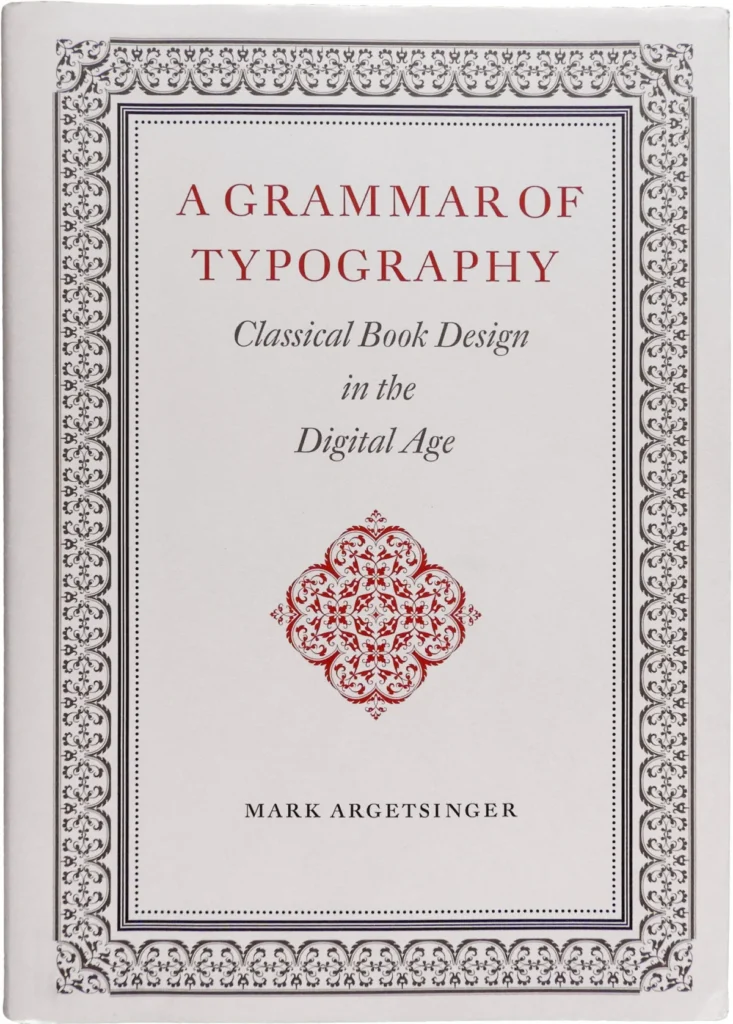
Industry data suggests that while the e-book market grew exponentially between 2010 and 2015, the "visceral experience" of the physical book has faced a renewed, albeit niche, appreciation. Despite this, trade and academic publishers increasingly prioritize speed and cost-efficiency over the meticulous design standards that defined the industry for generations. Argetsinger’s work emerges as a defiant response to this shift, positing that the "composing stick" has been improperly replaced by the "menu of swatches," and that modern practitioners have lost touch with the structural logic of the neoclassical and baroque eras.
A Chronology of Typographic Shift
To understand the significance of Argetsinger’s manual, one must look at the timeline of the trade:
- 1450s: The invention of the movable-type printing press by Johannes Gutenberg establishes the codex as the standard for information dissemination.
- 17th–18th Century: The height of the Baroque and Neoclassical periods, which Argetsinger identifies as the "gold standard" for typographic proportion, ornament, and layout.
- Late 20th Century: The advent of desktop publishing (DTP) democratizes type design but leads to a dilution of traditional standards as non-experts gain access to sophisticated software.
- 2020: Publication of A Grammar of Typography, coinciding with a global cultural moment of digital fatigue and a renewed interest in tactile, artisanal print media.
The Instructional Gap: Theory vs. Practice
A core critique of the book lies in its distribution of content. Spanning 514 pages, the volume devotes 135 pages to the historical and philosophical foundations of the craft, while allocating only 64 pages to actual instruction on working with type. For the target audience—likely designers already familiar with the basics of Adobe InDesign or similar software—this imbalance presents a missed opportunity. Readers seeking advanced, nuanced technical skills may find the text relies too heavily on introductory concepts, effectively functioning as "Typography 101" rather than an advanced guide for the modern digital-analog hybrid workflow.
Furthermore, the volume suffers from editorial lapses that undermine its authority. With an average of one typographical error every two pages—including misidentified typefaces such as the confusion between Garamond Premier and Adobe Garamond—the book struggles to embody the perfection it advocates. Such technical oversights are particularly glaring in a text that seeks to establish a definitive "grammar" for the craft.

The Philosophical Divide: Historical Binding vs. Evolution
Argetsinger’s preference for the aesthetic conventions of the 17th and 18th centuries has sparked debate among design historians. While he characterizes these periods as the pinnacle of typographic practice, critics like Alan Bartram have argued that the Baroque era represented an overcomplication of the cleaner, more harmonious High Renaissance aesthetic.
The most pressing question raised by the book is the tension between medium and style. Argetsinger advocates for using new digital tools to replicate old aesthetic outcomes. However, a significant portion of the design community argues that the potential of modern tools lies in their ability to facilitate new forms of expression. By focusing almost exclusively on digital revivals of historic typefaces, Argetsinger effectively excludes the innovation of the late 20th and early 21st centuries. Recent contributions from designers such as Mário Feliciano and Cristobal Henestrosa are notably absent, suggesting a worldview that views the history of typography as a closed book rather than a living, breathing discipline.
Implications for the Future of Publishing
The publication of A Grammar of Typography arrives at a critical juncture. As cultural critics begin to document a "digital backlash"—a movement toward physical, long-form reading—the need for a guide that upholds the sanctity of the codex is undeniable.
The broader implications of Argetsinger’s work are twofold:
- Cultural Advocacy: The book serves as a successful, if dogmatic, defense of the book as a "manifestation of human thought." It validates the work of the typographer as a vital cultural actor, capable of resisting the trend toward "digital ethereality."
- Pedagogical Limits: The book highlights a tension between the traditionalist approach and the pluralistic reality of modern design. For a contemporary typographer, the ability to work across historical and postmodern aesthetics is increasingly necessary. A designer who cannot adapt to a project that requires a modern, minimalist, or non-traditional approach is, by definition, limited in their utility.
Conclusion and Industry Reaction
While the professional design community acknowledges the necessity of Argetsinger’s passionate stance, there is a consensus that the work is hampered by its narrow scope. The text succeeds as an inspirational manifesto but falters as a comprehensive technical manual.
For the book to achieve its stated goal of training a new generation of designers, future editions or supplementary works would require a greater focus on the intersection of modern digital tools and diverse aesthetic approaches. As it stands, the book is a testament to the enduring power of the printed page, serving as a call to arms for those who believe the codex is not a relic of the past, but an essential component of a literate future. Whether Argetsinger’s specific "grammar" is the correct one for the 21st century remains a point of intense, necessary, and ongoing debate within the field.