
In the complex landscape of product development, a critical challenge persists: bridging the gap between what companies believe their users want and the intricate reality of user behavior. Many organizations operate under the assumption that they possess a clear understanding of user needs, preferences, and decision-making processes. However, these perceptions often amount to little more than educated guesses and ingrained hunches, frequently lacking substantial evidence. While surface-level observations might offer partial truths, they rarely illuminate the full, multi-layered picture of human interaction with products and services. To truly grasp the underlying drivers of user behavior, product teams must delve deeper, exploring hidden motivations, root causes, and the often-overlooked complexities that shape user actions. This profound inquiry is essential for creating truly impactful and user-centric designs, a principle underscored by initiatives like Vitaly Friedman’s "Measuring UX Impact" video course.
The Peril of Superficial Understanding
The illusion of understanding users is a common pitfall. Companies frequently rely on direct feedback mechanisms like surveys or focus groups, interpreting stated preferences as definitive truths. This approach, while seemingly logical, often fails to account for the inherent discrepancies between what people articulate, what they genuinely feel or think, and what they ultimately do. Research indicates that these four aspects – saying, thinking, feeling, and doing – are frequently misaligned, leading to flawed product strategies and wasted development efforts. For instance, a user might say they desire a complex feature comparison table, but their underlying need might simply be to make an informed purchase decision efficiently, a goal achievable through alternative, simpler design patterns. The financial implications of such misunderstandings are significant, contributing to high product failure rates and substantial resource misallocation in the tech industry. Studies by CB Insights, for example, consistently highlight "no market need" and "poor product-market fit" as leading causes of startup failure, directly stemming from an inadequate understanding of user requirements.
A Multi-Layered Approach to Customer Insight
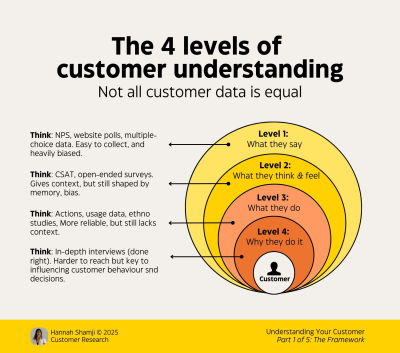
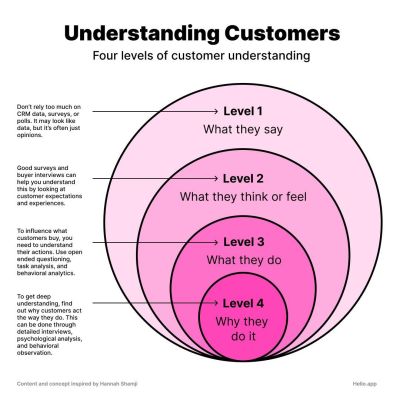
To navigate this intricate terrain, a more robust framework for customer understanding is imperative. Hannah Shamji’s "Four Levels of Customer Understanding" provides a powerful model, advocating for a triangulation across distinct layers of insight. This framework encourages teams to move beyond superficial interactions and probe the deeper, often messy and noisy realities that influence user behavior. By systematically examining these levels, organizations can cultivate a more realistic and less biased view of customer needs, thereby designing solutions that resonate authentically.
-
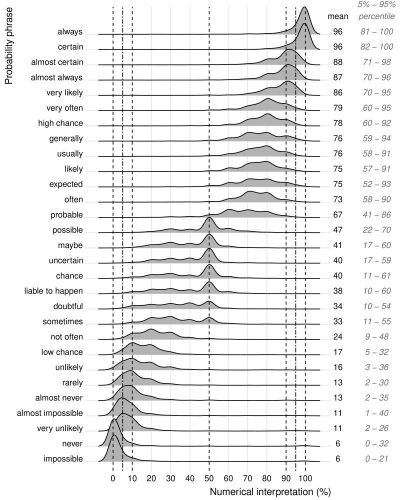
Level 1: What They Say: This outermost layer represents direct verbal feedback, survey responses, and stated preferences. While valuable for initial qualitative insights, it is crucial to recognize its limitations. As Erika Hall, a prominent voice in design research, cogently argues, directly asking users burning questions is often the "worst way" to elicit truly actionable answers. People may not fully understand their own motivations, might rationalize their behavior, or be influenced by social desirability bias. The nuances of language itself can also introduce significant ambiguity, as demonstrated by Thomas D’hooge’s observations on the subjective interpretation of probability phrases like "possible," "plausible," and "probable." A study on Dutch verbal probability terms further illustrates this, showing a wide spread of interpretations for terms like "maybe" or "likely," highlighting the unreliability of relying solely on spoken words.
-
Level 2: What They Think or Feel: This layer delves into users’ internal states, including their thoughts, beliefs, emotions, and attitudes. While still reported, these insights are closer to the user’s immediate psychological experience. Understanding this level requires techniques that encourage introspection and empathy, such as in-depth interviews, cognitive walkthroughs, and sentiment analysis. However, even here, cognitive biases like hindsight bias or framing effects can color users’ self-reporting. People often struggle to articulate their subconscious motivations or the precise emotional impact of an experience, leading to generalized or incomplete responses.
-
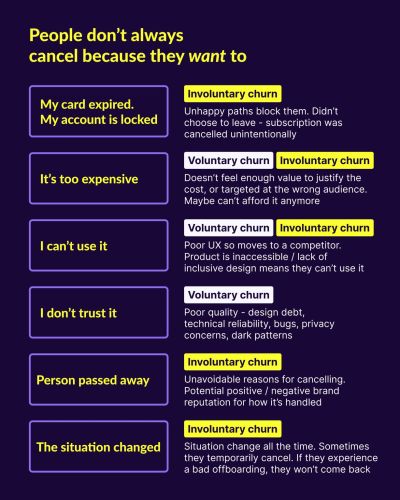
Level 3: What They Do: This critical layer focuses on observed behavior – the actual actions users take when interacting with a product or service. This data is often more objective and less prone to self-reporting biases. Techniques like usability testing, A/B testing, analytics tracking, and session recordings provide invaluable insights into how users navigate interfaces, complete tasks, and encounter friction points. For instance, observing where users hesitate, repeatedly click, or abandon a task offers concrete evidence of usability issues that might never be articulated in a verbal interview. Emily Anderson’s analysis of subscription churn reasons, differentiating between voluntary (e.g., product not meeting needs) and involuntary (e.g., payment failure), highlights how observed behavior provides a more accurate picture of underlying issues than mere stated reasons for cancellation.
-
Level 4: Why They Do It: This innermost and most profound layer seeks to uncover the fundamental motivations, goals, and underlying needs that drive user actions. This is where true understanding resides, moving beyond what and how to why. This level requires sophisticated qualitative research methods such as ethnographic studies, contextual inquiries, and the Jobs-to-be-Done (JTBD) framework. By immersing researchers in the user’s environment and understanding their broader context, it becomes possible to identify unmet needs, pain points, and aspirations that influence their choices. This deep understanding allows product teams to innovate at a foundational level, designing solutions that address core human desires rather than just superficial feature requests.
The Nuance of Emotion in UX Research
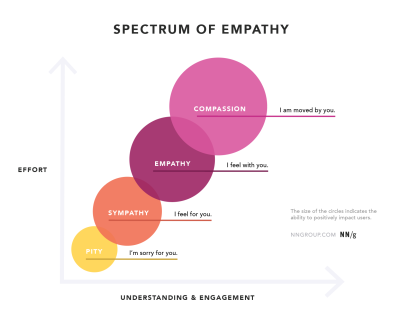
Emotions are an undeniable component of user experience, acting as powerful signals of engagement, frustration, satisfaction, or confusion. Capturing these emotions accurately presents a unique challenge. Sarah Gibbons of Nielsen Norman Group illustrates a "Spectrum of Empathy," highlighting the progression from pity to sympathy, empathy, and ultimately compassion. Moving towards compassion in design signifies a deeper, more actionable understanding of user struggles.
Traditional "speak-aloud" protocols in usability testing, where users vocalize their thoughts while performing tasks, have been a common method. However, this approach can be disruptive, as the cognitive load of speaking and task completion simultaneously can obscure genuine emotional responses. A more effective strategy involves observing users without interruption during tasks, paying close attention to non-verbal cues: mouse movements (hesitations, aimless circling), scrolling patterns, facial expressions, and body language (e.g., scratching the neck indicating confusion, raised eyebrows suggesting surprise). Questions are then posed after a task is completed or when a user indicates they are stuck, allowing for a more natural expression of their experience.
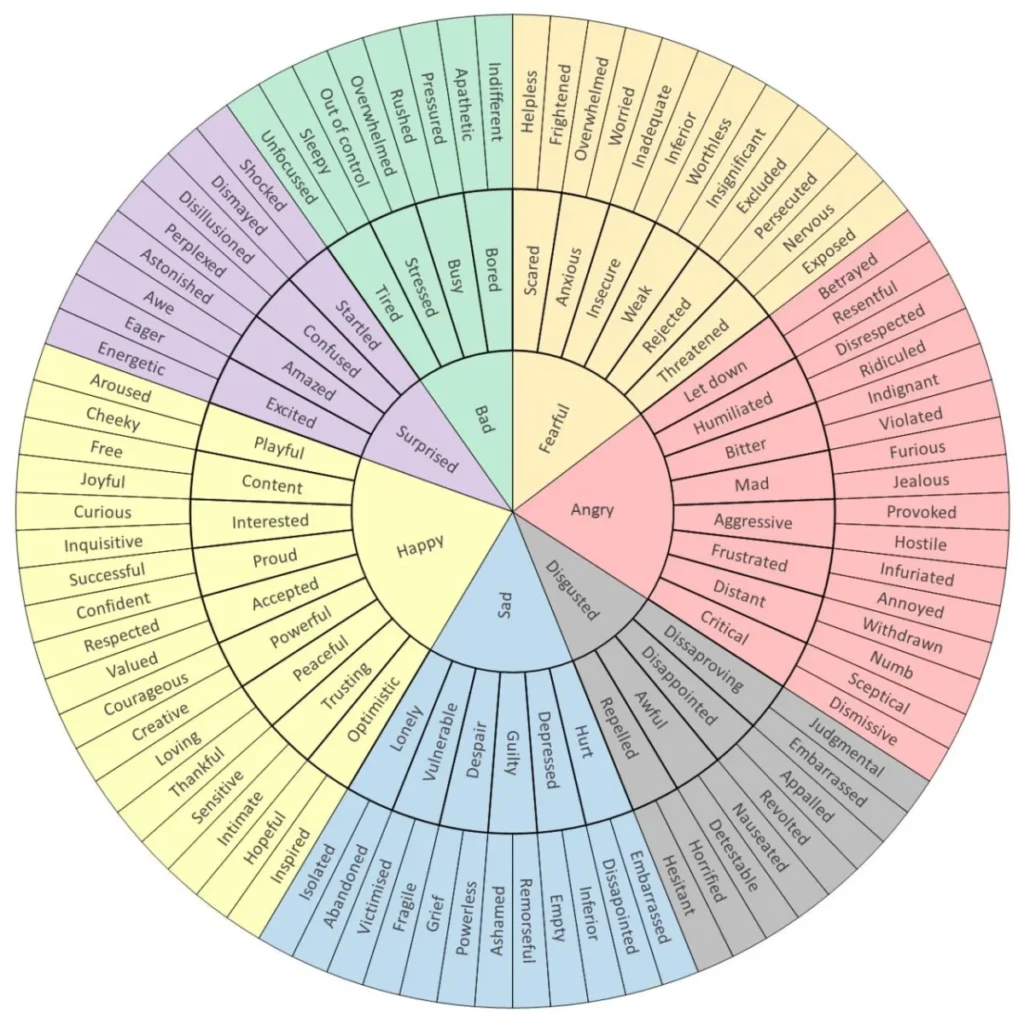
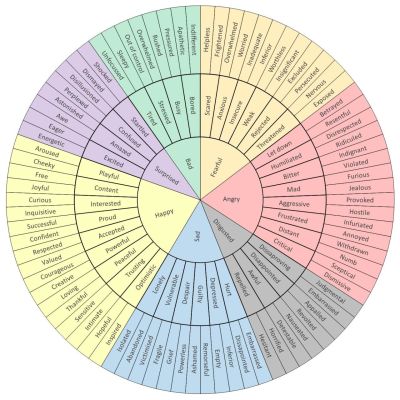
To articulate emotions more precisely during post-task interviews, tools like Geoffrey Roberts’ Emotion Wheel can be invaluable. This circular chart helps users and researchers move beyond simplistic "good" or "bad" descriptors to identify specific feelings like "frustrated," "overwhelmed," "inspired," or "content." Techniques like "mirroring" (repeating what a user has said) or paraphrasing questions can also encourage users to elaborate, providing richer context and uncovering details initially unexpressed.
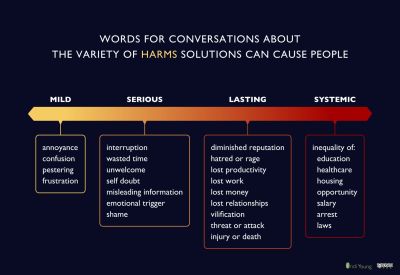
However, the role of emotion in product design is not without debate. Alin Buda, a critical voice in the field, argues against an over-reliance on emotional absorption, stating, "Our work is about others – their problems, their pain, their mess. Our job is to make sense of it and then do something about it. Not to emote or perform but to act on and solve it." Buda emphasizes that while emotional responses are signals, the ultimate goal is to solve problems, not merely to feel them. This perspective is reinforced by Indi Young’s work on categorizing potential harms of solutions, which can range from mild emotional discomfort to serious, lasting, or even systemic negative impacts, far exceeding the scope of simple emotional distress. This highlights the need for designers to transcend pure empathy and focus on measurable, actionable outcomes that mitigate harm and foster genuine utility. User emotional responses, therefore, should be viewed as diagnostic indicators that point towards deeper functional or contextual issues requiring practical solutions.
From Validation to Genuine Research
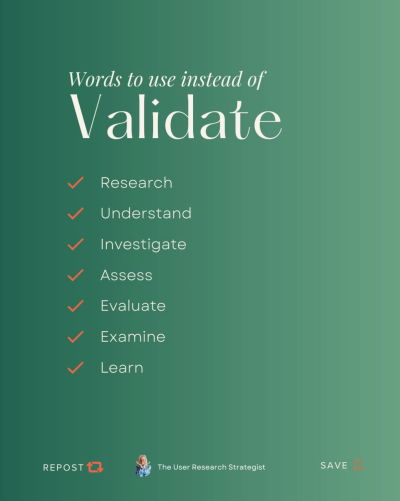
A pervasive misconception in product development is the idea of "validating" ideas through user testing. Often, this translates into seeking confirmation for existing assumptions rather than genuinely exploring user behavior without bias. Nikki Anderson effectively highlights this linguistic trap, advocating for a shift from "validate" to terms like "research," "understand," "investigate," "assess," "evaluate," or "examine." True user research is a diagnostic process, an open-ended inquiry into existing behavior, free from preconceived notions or affiliations. It aims to uncover not just what works, but also risks, doubts, concerns, worries, and potential harms.
The imperative is to build sincere, honest, and trustworthy relationships with users. When customers feel truly heard and valued, they are more likely to offer genuine insights, fostering an environment where a real understanding can flourish. This relationship-building transcends transactional interactions, evolving into a collaborative effort to improve the product experience.
Practical Strategies for Uncovering User Needs
Uncovering profound user needs does not necessarily demand prohibitively expensive tools or elaborate setups. David Travis provides an extensive overview of practical strategies that extend far beyond traditional focus groups or surveys. These initiatives are designed to expose customer struggles and make them visible across an entire organization, fostering a shared understanding and driving collective action.
-
Observational Research:
- Contextual Inquiry/Field Studies: Observing users in their natural environment provides rich, unvarnished insights into how they perform tasks, the tools they use, and the challenges they face. This can be as simple as shadowing a user for a few hours.
- Guerilla Usability Testing: Quick, informal tests conducted in public spaces with target users can rapidly uncover major usability issues.
- Diary Studies: Users record their experiences, thoughts, and feelings over an extended period, providing longitudinal data on habits and evolving needs.
- Session Replays/Heatmaps: Tools that record user interactions on a website or app, showing mouse movements, clicks, and scrolls, revealing areas of confusion or engagement.
-
Interview-Based Research:
- In-depth Interviews: One-on-one conversations to explore motivations, experiences, and pain points in detail.
- Customer Journey Mapping: Collaboratively mapping out the entire user experience from initial awareness to post-purchase, identifying touchpoints, emotions, and pain points.
- Jobs-to-be-Done (JTBD) Interviews: Focusing on the "job" a user is trying to accomplish, rather than just the product features they desire, to uncover deeper motivations.
-
Analytical Research:
- Analytics Review: Analyzing quantitative data from web analytics (Google Analytics, Adobe Analytics) to understand user flows, drop-off points, and popular features.
- Search Log Analysis: Examining what users search for on a website can reveal unmet needs or poorly discoverable content.
- Support Ticket Analysis: Categorizing and analyzing customer support inquiries to identify recurring problems and pain points.
-
Collaborative/Internal Initiatives:
- Customer Visits: Sending product team members to visit customers in their workplaces or homes to gain first-hand experience.
- "Eat Your Own Dog Food" (Internal Use): Encouraging internal teams to regularly use the product themselves to identify usability issues and experience it from a user’s perspective.
- Sharing User Insights: Disseminating short video clips of user sessions, monthly newsletters summarizing key learnings, or regular "Voice of the Customer" presentations to make user struggles visible across departments (marketing, engineering, sales).
The core philosophy behind these approaches is to democratize user understanding. By creating accessible spaces and channels for customer struggles to be exposed and communicated across the entire company, organizations can foster a collective empathy. This shared awareness of user pain points can rally diverse teams, ensuring that user needs remain a constant consideration throughout the product lifecycle, influencing everything from strategic planning to iterative development.
Strategic Implications and Business Impact
The commitment to deep user understanding yields significant business advantages. Products designed with a profound grasp of user motivations are more likely to achieve product-market fit, leading to higher adoption rates, increased user engagement, and improved customer satisfaction. This translates directly into tangible business outcomes: reduced customer churn, higher conversion rates, and ultimately, a stronger return on investment (ROI). For instance, a nuanced understanding of why users cancel subscriptions, beyond their stated reasons, allows companies to address underlying issues effectively, preventing costly customer attrition.
Furthermore, a culture of continuous user research fuels innovation. By consistently uncovering latent needs and unresolved pain points, companies can develop truly novel solutions that differentiate them in competitive markets. It moves product development from a feature-driven approach to a problem-solving one, where every design decision is rooted in a clear understanding of user value.
Conclusion
To truly make an impact in product design and development, it is imperative to move beyond superficial user feedback. Relying solely on surveys or direct questions provides an incomplete, often misleading, picture. Instead, organizations must commit to observing actual customer behaviors, building authentic relationships, and triangulating insights across multiple layers of understanding – what users say, think, feel, do, and crucially, why they do it. This involves adopting a diagnostic approach to research, questioning assumptions, and systematically uncovering the true motivations, risks, and concerns that shape user interactions.

The objective is not merely to "validate" pre-conceived ideas but to rigorously research and understand the unknown. Without this deep, multi-faceted inquiry, product strategies remain built on hunches and assumptions that are often incorrect and ultimately expensive. Investing in robust user research methodologies and fostering a company-wide culture of customer understanding is not just good practice; it is a strategic imperative for sustainable growth and delivering truly impactful experiences. For organizations seeking to systematically track and visualize the incredible impact of their UX work on business, resources like Vitaly Friedman’s "Measure UX & Design Impact" offer practical guidance for designers and UX leads navigating this complex but rewarding journey.