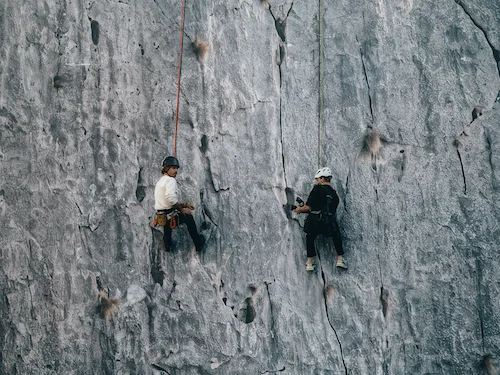

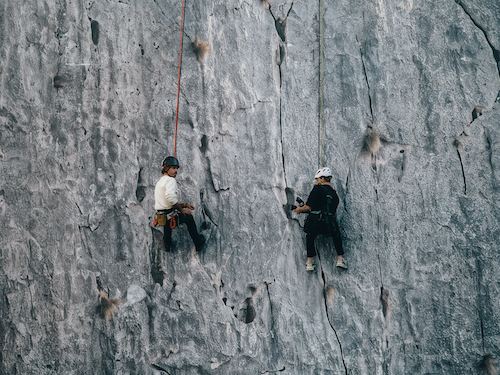
Commuters traveling along the heavily congested A12 motorway near Utrecht experienced an unusual spectacle when a professional climber was spotted abseiling directly off a towering roadside advertising billboard high above the Dutch asphalt. Rather than scaling a rugged alpine rock face or navigating the dense forests of the Ardennes, the urban explorer treated the concrete and steel infrastructure of the Netherlands as an extreme sports playground. This high-impact, out-of-home (OOH) marketing stunt served as the official launch vehicle for Garmin Netherlands and its newly introduced fēnix 9 series smartwatches. Designed to challenge perceptions of urban monotony, the campaign underscores a central philosophical question: does true adventure require traveling to remote corners of the globe, or can it be found by simply altering one’s perspective of the everyday environment?
The breathtaking roadside activation was orchestrated by sports marketing agency Capital Sports, marking the local introduction of Garmin’s broader global campaign titled Play Harder. By transforming a mundane highway landmark into a vertical adventure zone, the agency sought to inspire consumers to recognize the micro-adventures hidden in plain sight. In a society where modern routines are increasingly engineered around comfort, predictability, and digital convenience, the campaign provides a jolting reminder that rugged outdoor pursuits do not always demand vast geographical displacement. Instead, the initiative suggests that adventure is a state of mind defined by curiosity, resilience, and the willingness to look differently at the familiar architecture of daily life.
The Evolution of Outdoor Wearable Marketing
For years, the marketing playbook for high-end sports watches and rugged outdoor technology has relied heavily on exhaustive spec sheets, durability metrics, and technical feature lists. Brands routinely inundate consumers with data regarding barometric altimeters, multi-band GPS tracking, satellite communication capabilities, and military-grade thermal resistance. While these technical specifications remain crucial for elite mountaineers, ultra-marathoners, and endurance athletes, Garmin Netherlands recognized that a purely feature-driven narrative risks alienating a broader demographic of consumers who lead active, dynamic lives within urban and suburban settings.
The strategic objective handed to Capital Sports was clear yet formidable: move beyond the traditional paradigms of tech marketing to embody the core philosophy of the brand. Rather than merely telling consumers what the fēnix 9 series can do through static specifications, the creative team needed to bring the intrinsic ethos of the brand to life. They had to demonstrate that the spirit of exploration is not exclusively reserved for remote wilderness expeditions, but can be ignited right in the middle of a typical Dutch commute. This realization formed the bedrock of the Utrecht billboard stunt, shifting the marketing focus from hardware capabilities to experiential storytelling.
Anatomy of the Utrecht Billboard Stunt
Executing a live stunt on a major European motorway requires meticulous logistical planning, rigorous safety protocols, and close coordination with municipal and highway authorities. The A12 corridor is one of the busiest arterial routes in the Netherlands, carrying hundreds of thousands of vehicles daily between major economic hubs. Consequently, the operational window for the live abseiling performance had to be managed with surgical precision to capture commuter attention without compromising traffic safety.
Early in the morning of October 29, 2026, professional rope-access technicians and climbers scaled the rear of the designated advertising mast along the A12 near Utrecht. As morning peak-hour traffic began to accumulate, the climber descended slowly down the face of the massive Garmin fēnix 9 billboard, outfitted in professional climbing gear and wearing the flagship smartwatch. The visual juxtaposition was striking: high-alpine mountaineering equipment suspended against a backdrop of commuter traffic, overcast Dutch skies, and modern industrial architecture.
Motorists and passengers caught in the routine morning crawl were jolted out of their transit stupor by the unexpected sight. Within minutes, photographs and videos of the stunt began circulating across social media platforms, amplifying the physical OOH activation into a digital phenomenon. By anchoring the physical stunt to a high-visibility media structure, Garmin successfully bridged the gap between traditional roadside advertising and modern experiential marketing.
Strategic Insights and Campaign Framework
The Play Harder campaign is structured around a multi-tiered media strategy that combines high-impact physical activations with cinematic digital content. Alongside the Utrecht billboard drop, Capital Sports produced a flagship campaign film designed to reinforce the overarching narrative. The video explores the psychological boundaries of modern routines, depicting individuals breaking away from predictable schedules to inject elements of challenge and discovery into their immediate surroundings.
Industry analysts note that modern consumers—particularly Millennials and Generation Z—place a high premium on authentic brand experiences over traditional promotional messaging. Brands that successfully champion lifestyle transformations rather than mere utility tend to build deeper emotional connections with their target audiences. By framing the fēnix 9 series not just as a tool for tracking physical metrics, but as a catalyst for a daring mindset, Garmin positions its hardware as an essential companion for those who refuse to let modern comfort dull their sense of exploration.
The creative challenge addressed by Capital Sports reflects a broader shift within the outdoor and fitness technology sector. As smartwatches become more ubiquitous, differentiation based solely on battery life or sensor accuracy has diminished. Brands are increasingly forced to compete on cultural relevance, emotional resonance, and lifestyle alignment. The Utrecht intervention demonstrates how physical infrastructure can be repurposed as a canvas for brand storytelling, turning a static billboard into an active theater of human capability.
Market Context and the Garmin fēnix 9 Series
The launch of the fēnix 9 series arrives at a crucial juncture in the global wearable technology market. Garmin has long maintained a dominant position in the premium multisport watch segment, catering primarily to serious athletes, aviators, mariners, and outdoor adventurers. However, the boundaries between dedicated sports tech and mainstream lifestyle wearables have blurred significantly in recent years. Competitors in the smartwatch sector have aggressively targeted the fitness market with advanced health monitoring sensors and polished consumer interfaces.
To maintain its competitive edge, Garmin must continually reinforce the rugged, uncompromising identity of its flagship product lines. The fēnix series represents the pinnacle of the brand’s engineering capabilities, combining aerospace-grade materials with ultra-precise navigation and comprehensive training analytics. By pairing this high-end hardware release with a campaign that champions mental resilience and physical daring, Garmin reassures its core base of hardcore enthusiasts while simultaneously inviting urban professionals to elevate their everyday fitness journeys.
Economic and Cultural Implications of OOH Activations
Out-of-home advertising has undergone a profound renaissance in the digital age. Far from being rendered obsolete by online marketing, physical billboards and urban installations have evolved into powerful catalysts for digital engagement. When executed with high creative ambition, OOH stunts generate significant earned media value, driving organic shares, news coverage, and social media commentary that extends far beyond the physical location of the advertisement.
The decision by Garmin Netherlands and Capital Sports to utilize an unconventional OOH activation highlights the growing importance of experiential marketing within the Benelux advertising landscape. Urban centers and major transport corridors are saturated with visual noise, making it increasingly difficult for traditional promotional imagery to cut through the clutter. By introducing an element of surprise, vertical movement, and dramatic spatial recontextualization, the campaign captured the elusive attention of consumers who have become adept at tuning out standard advertising formats.
Furthermore, the choice of the Dutch landscape—renowned for its flat topography, engineered polders, and dense urban planning—adds a layer of ironical brilliance to the campaign. In a country famously devoid of natural mountains, vertical adventure must be manufactured through imagination and daring. By scaling an advertising billboard along the A12, the climber symbolically conquered the flatness of the Dutch terrain, proving that the barrier to adventure is not geographical, but psychological.
Future Outlook for Experiential Fitness Marketing
As the Play Harder campaign rolls out across the Netherlands and broader European markets, industry observers will be monitoring how consumer engagement translates into hardware adoption for the fēnix 9 series. The success of the Utrecht activation sets a high benchmark for future brand interventions, proving that creative risk-taking can yield substantial returns in brand visibility and cultural conversation.
The collaboration between Garmin Netherlands and Capital Sports signals a maturation in how sports technology brands communicate with their audiences. By stepping off the digital screen and into the physical environment of the daily commute, the campaign successfully transformed a standard product launch into a memorable cultural moment. Whether navigating an alpine ridge or breaking up the monotony of a morning highway commute, the message remains resolute: adventure is always within reach for those willing to change their perspective and play harder.