
A major supply-chain security incident has impacted webmasters and digital marketers globally after malicious actors successfully compromised the domain name system (DNS) records of DebugBear, a popular Real User Monitoring (RUM) and Core Web Vitals optimization platform. The cyberattack, which came to light in late October, allowed unauthorized parties to inject malicious JavaScript into scripts utilized by high-profile websites. The breach has triggered urgent warnings from cybersecurity analysts, urging digital teams and system administrators to immediately purge monitoring scripts and audit their infrastructure for signs of unauthorized activity.
The incident underscores the growing vulnerabilities associated with third-party web dependencies. Modern websites routinely load dozens of external scripts—ranging from analytics and performance monitoring tools to advertising trackers and customer support widgets. When a trusted vendor’s infrastructure or domain registrar account is compromised, it creates a powerful vector for malicious actors to execute code directly within the browsers of unsuspecting end-users.
Chronology of the Attack and Immediate Response
The security crisis began unfolding on October 29, when DebugBear detected anomalous behavior linked to its domain infrastructure. According to subsequent updates published by the company, the breach originated at the domain registrar level, where unauthorized individuals successfully hijacked DebugBear’s DNS records. By manipulating these settings, the attackers were able to redirect traffic and serve malicious payloads through legitimate script URLs utilized by DebugBear customers.
Recognizing the severity of the threat, DebugBear issued an immediate public advisory on October 29, instructing all customers to instantly remove its Core Web Vitals monitoring script from their web applications. The standard embed code targeted by the directive follows this structure, with unique script identifiers varying by deployment:
<script async src="https://cdn.debugbear.com/YOUR_SCRIPT_ID.js"></script>
As the incident escalated, DebugBear reported that its primary communication channels, including corporate email systems hosted on the affected domain, were temporarily disabled. The company directed customers and concerned webmasters to monitor its verified social media profiles on platforms like X (formerly Twitter) and LinkedIn for real-time recovery updates and technical guidance.
The Polymarket Breach and Real-World Impact
While initial corporate assessments suggested a targeted scope, independent analysis by cybersecurity firm Hudson Rock revealed the gravity of the malicious payload. On October 29, researchers identified malicious JavaScript actively being served via a DebugBear script URL utilized by Polymarket, a major decentralized prediction market and international trading platform.

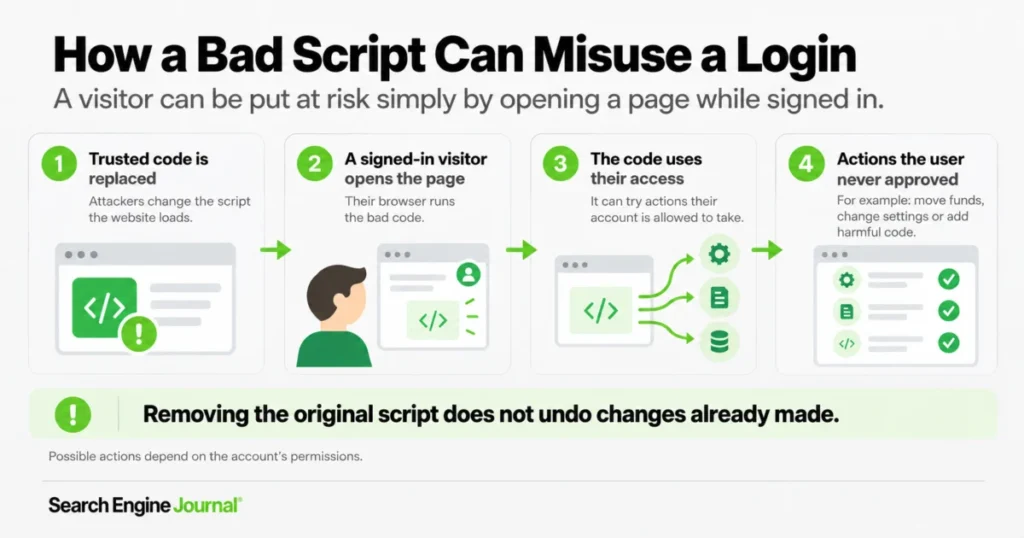
According to Polymarket’s subsequent incident report released on October 30, the injected script was designed to target active browser sessions. Specifically, the malicious code scanned for open trading client sessions and leveraged the existing permissions of logged-in visitors. Without requiring user passwords or multi-factor authentication bypasses, the exploit successfully liquidated positions and unauthorizedly drained funds from specific user wallets.
This mechanism highlights a critical vulnerability class in modern web architecture: session hijacking via third-party code execution. When a user logs into a web application, their browser maintains an active session authenticated by cookies, local storage, or browser tokens. If a compromised third-party script is loaded within that same context, it inherits the same Document Object Model (DOM) access and permissions as the user. Consequently, the script can interact with application APIs, read sensitive data on the page, and execute unauthorized transactions on behalf of the victim.
Broader Implications for Web Security and SEO Teams
The DebugBear incident has far-reaching implications for search engine optimization (SEO) professionals, web developers, and corporate security officers. Historically, SEO teams and performance engineers have held considerable influence over website performance stacks, frequently deploying third-party monitoring scripts to measure metrics such as Largest Contentful Paint (LCP), Interaction to Next Paint (INP), and Cumulative Layout Shift (CLS)—all of which are critical components of Google’s Core Web Vitals algorithms.
However, the intersection of performance optimization and cybersecurity has rarely been more pronounced. While SEO practitioners prioritize site speed and user experience metrics, the inclusion of external JavaScript tags introduces inherent supply-chain risks. Security experts emphasize that simply removing a compromised monitoring script is merely a triage step; it prevents further script execution but does not remediate damage already inflicted while the malicious code was active.
Digital marketing and IT departments must now reevaluate their governance of third-party tags. Best practices moving forward include:
- Immediate Script Auditing: Regularly cataloging and reviewing every external script embedded in production environments.
- Implementing Subresource Integrity (SRI): Utilizing cryptographic hashes in script tags to ensure that browsers only execute files that match expected, verified code signatures.
- Strict Content Security Policies (CSP): Deploying robust CSP headers to restrict the domains from which scripts can be loaded and executed, thereby mitigating the impact of DNS hijacking or server compromises.
- Comprehensive Forensic Audits: Conducting deep log analysis and permission reviews to detect unauthorized account modifications, database changes, or unauthorized API calls executed during the window of vulnerability.
Industry Analysis and Future Outlook
The attack on DebugBear joins a growing list of high-profile supply-chain compromises where adversaries bypassed traditional perimeter defenses by targeting trusted third-party service providers. As web applications increasingly rely on modular, cloud-based microservices and specialized analytics tools, the attack surface expands exponentially.
For website owners, the incident serves as a stark reminder that third-party trust must be continuously verified rather than assumed. Regulatory bodies and cybersecurity frameworks are expected to place increased scrutiny on vendor risk management, compelling SaaS providers to adopt heightened security postures, including multi-factor authentication enforced registry locks, DNSSEC implementation, and continuous monitoring of domain infrastructure.
As DebugBear continues its internal investigation and works to fully restore its operational capabilities, the broader digital community is left assessing the collateral damage. For SEO teams and developers alike, the event marks a definitive shift toward a security-first approach in performance management, where the speed of a website must never outpace the safety of its users.