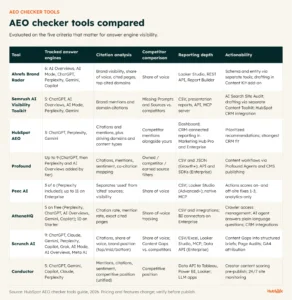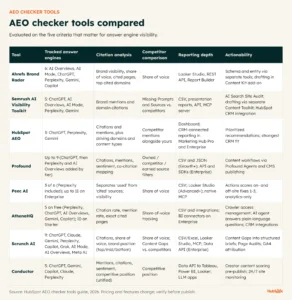

The rapid evolution of generative artificial intelligence has ushered in a new era of digital discovery, fundamentally reshaping how consumers and businesses interact with information online. As AI-powered answer engines like ChatGPT, Perplexity, and Gemini become increasingly prominent, the traditional paradigms of search engine optimization (SEO) are expanding to encompass Answer Engine Optimization (AEO). This shift has led to the emergence of specialized tools designed to track, analyze, and optimize brand visibility within AI-generated responses. Among the leading contenders in this nascent but critical field are Scrunch, Ahrefs Brand Radar, and HubSpot AEO, each offering distinct approaches to mastering the AI answer landscape.
The advent of large language models (LLMs) and their integration into mainstream search and information retrieval has created an imperative for brands to understand their presence in AI-generated answers. Unlike traditional search results, where brands aim for top rankings in a list of links, AI answers often synthesize information, directly citing sources or integrating brand mentions into comprehensive summaries. This necessitates a different strategy for brand visibility, moving beyond keyword rankings to focus on citation patterns, sentiment analysis, and the very "crawlability" of digital assets by AI bots. The market has responded with a new generation of platforms tailored to these demands, addressing challenges that conventional SEO tools, while powerful for web search, were not originally designed to tackle.
The Rise of Answer Engine Optimization (AEO) and Its Tools
The journey towards AEO began in earnest with the widespread adoption of AI chatbots in late 2022 and early 2023. As users increasingly turned to these conversational interfaces for quick answers, product recommendations, and research, marketers recognized a significant new channel for brand exposure. However, monitoring and influencing this channel proved challenging. Traditional SEO platforms, rich in data on organic search rankings, backlinks, and keyword performance, lacked the specific functionalities to track AI citations, analyze sentiment within AI responses, or optimize content for AI bot consumption.
This gap spurred innovation, leading to the development of purpose-built AEO platforms like Scrunch, or the integration of AI visibility features into existing SEO ecosystems, as seen with Ahrefs Brand Radar and HubSpot’s AEO offerings. These tools represent the market’s initial response to a fundamental change in how information is accessed and consumed, emphasizing metrics like brand share of voice in AI answers, citation frequency, and the direct impact of AI-driven recommendations on purchasing decisions.
Scrunch: A Purpose-Built Platform for AI Visibility and Optimization
Scrunch distinguishes itself as a platform purpose-built from the ground up for AEO. Its core mission revolves around providing granular insights into a brand’s presence within AI answers and offering actionable tools for optimization. Scrunch tracks a comprehensive array of metrics, including brand share of voice across various AI platforms, the sentiment surrounding brand mentions in AI-generated content, and the specific domains and pages most frequently cited by LLMs. Beyond passive monitoring, Scrunch delves into active optimization, offering features to audit AI crawlability and influence how AI bots perceive and process a brand’s digital assets.
A key capability of Scrunch is its tracking of AI search trends, analyzing prompt volumes and product-level shopping visibility. This allows brands to understand not just if they appear in AI answers, but how they rank in AI-driven purchase recommendations, a critical insight for e-commerce and product-focused businesses. Scrunch’s methodology for data collection combines browser automation with official platform APIs, leveraging machine learning and natural language processing (NLP) to extract brand mentions, sentiment, and citation patterns. Prompts are initially run daily for the first two weeks post-setup, then shift to a 72-hour refresh cadence, with the option for manual refreshes at any time.
A notable aspect of Scrunch’s prompt architecture is its conversion of keyword data into prompts, rather than sampling actual user queries from live AI traffic. This approach offers precise control for teams monitoring specific brand-relevant questions, ensuring that the prompts align directly with their strategic objectives. For enterprise clients, Scrunch offers an advanced AI-Optimized Experience (AXP) solution. This feature integrates at the edge of a website’s content delivery layer, serving AI-optimized, token-light versions of pages to bots. This dual-delivery architecture ensures that AI agents can efficiently parse complex website markup, reducing token loads by up to 26%, while human users continue to interact with the traditional CMS-driven site. This innovative approach underscores Scrunch’s commitment to active AEO beyond mere reporting.
Ahrefs Brand Radar: Integrated AI Visibility within an SEO Ecosystem
In contrast to Scrunch’s specialized focus, Ahrefs Brand Radar is presented as an add-on module within the broader Ahrefs SEO platform. This integration is a significant advantage for existing Ahrefs users, providing AI visibility data alongside traditional SEO metrics such as search demand, web mentions, video performance, and Reddit activity, all within a unified dashboard. Brand Radar’s design caters to SEO-led teams seeking a holistic view of their brand’s performance across all discovery channels, including the emerging AI landscape, without the need to manage separate vendor relationships or interfaces.
Ahrefs Brand Radar boasts an impressive data scale, drawing from a pool of over 406 million monthly prompts derived from real user keywords. This extensive dataset allows brands to benchmark their AI visibility against a broader, more representative signal of actual user queries. Users can build custom queries to filter data by prompt type, brand, and AI platform, enabling tailored insights. The platform covers key LLMs like ChatGPT, Perplexity, Google AIO, Copilot, and includes Grok, reflecting its commitment to tracking emerging AI conversational agents.
However, the integration approach also presents certain limitations. While Ahrefs aims for comprehensive coverage, third-party reviews have occasionally highlighted accuracy gaps in its ChatGPT and Perplexity tracking. Furthermore, Claude, a significant player in professional research AI, is not currently covered by Brand Radar, which could be a drawback for teams whose target audience heavily utilizes that platform. Ahrefs Brand Radar’s development roadmap is intrinsically linked to the broader Ahrefs platform’s priorities, meaning that specific AI visibility features might evolve at a pace dictated by overall product strategy rather than solely by the rapid shifts in the AI landscape.
HubSpot AEO: Accessible Benchmarking and Entry-Level Insights
HubSpot, a veteran in marketing and sales technology, has also entered the AEO space with offerings designed for accessibility and foundational benchmarking. Its free AEO Grader provides a one-time scored snapshot of a brand’s representation across ChatGPT, Perplexity, and Gemini, requiring no account. This tool serves as an excellent, low-risk entry point for brands to assess their initial AI visibility before committing to a paid platform. Complementing this, the AEO Sensor offers ongoing industry-level AI visibility and citation trends, also free, allowing teams to establish meaningful benchmarks and track broader market shifts.
For teams ready for more robust, yet still accessible, AEO solutions, HubSpot AEO offers paid plans starting at $50/month. These plans provide actionable recommendations, citation analysis, and a competitive visibility score. HubSpot’s approach emphasizes empowering marketers with foundational insights and practical guidance, bridging the gap between identifying visibility issues and implementing corrective actions. This makes HubSpot AEO particularly appealing for smaller teams, startups, or those in the initial stages of exploring their AEO strategy, offering a cost-effective path to understanding and improving AI presence.
Data Methodology and the Quest for Trustworthy Insights
The reliability and actionability of AI visibility data are directly tied to the underlying methodology used for data collection and analysis. Both Scrunch and Ahrefs employ distinct approaches that warrant careful consideration.
Scrunch’s method, combining browser automation, official APIs, and advanced machine learning, aims for depth and control. Its conversion of keyword data into prompts, while offering precision for specific queries, introduces a nuance: it models what could be asked rather than exclusively tracking what is being asked by real users. This can be an advantage for highly targeted AEO campaigns but might present a gap for teams seeking to understand broader, organic user query patterns.
Ahrefs Brand Radar, conversely, prides itself on leveraging a vast pool of over 406 million monthly prompts derived from real user keywords. This scale and authenticity in data source provide a broader signal for benchmarking, reflecting actual user behavior. However, its documented limitations regarding accuracy in specific LLMs and the absence of certain platforms like Claude are critical factors. The trade-off often lies between the controlled, deep dive offered by Scrunch and the broad, real-world sampling of Ahrefs.
For any team evaluating these platforms, a crucial first step is to validate the data. With Scrunch, tools like Agent Traffic (tracking AI bot visits) and Site Maps (interpreting site structure for AI agents) provide a ground-level picture of AI crawlability. Before any platform purchase, teams should rigorously ask vendors about their data sources, refresh rates, and the specific LLMs covered, ensuring alignment with their target audience’s AI usage patterns. Critically, AI visibility reporting should emphasize directional trends over single-point metrics, acknowledging the inherent variability of AI responses.

Pricing, Coverage, and Strategic Fit
The investment required for AEO tools varies significantly, as does the scope of coverage provided.
Scrunch’s pricing structure starts with its Brand Core plan at $250/month, offering 125 unique tracked prompts, 5 site audits, 1 brand workspace, 5 user licenses, and coverage across ChatGPT, Perplexity, Google AIO, and Copilot. Enterprise plans unlock more extensive features, including AXP, custom prompts and audits, API/SSO integration, and expanded LLM coverage to 9 models (adding Claude, Gemini, Meta AI, Grok, and Google AI Mode).
Ahrefs Brand Radar offers more flexible entry points. It can be purchased as a standalone product starting at $199/month, or bundled with Ahrefs SEO plans (starting at $129/month). The standalone tiers escalate based on prompt database access, with the "All Platforms" plan at $699/month granting access to the full 406M+ prompt database and 2,500 custom checks, including Grok. Custom prompts are also available as separate add-ons.
The decision criteria for coverage should hinge on the specific LLMs used by a brand’s target audience and the strategic importance of each platform. For instance, if a brand’s buyers rely heavily on Claude for professional research, then Scrunch’s Enterprise offering or an alternative with Claude coverage becomes essential. Conversely, if a broad view across consumer-facing AI (ChatGPT, Perplexity, Gemini) is the priority, then both Scrunch’s core plan and Ahrefs Brand Radar offer viable starting points.
Implementation, Integration, and the Dual Nature of AEO
Getting to value quickly is a key consideration. Ahrefs Brand Radar offers a streamlined implementation for existing Ahrefs users, activating as a module within their current account. This eliminates the need for new installations or vendor relationships. Its MCP Server allows for direct data pulling into Claude or ChatGPT for in-workflow analysis, and it includes Bot Analytics and IndexNow integration.
Scrunch’s implementation involves building a prompt library and running Site Maps to understand AI agent perception. Core plans include Google Single Sign-On, while Enterprise plans offer SAML/OIDC SSO, Looker Studio integration, and extensive API access for custom dashboarding. The enterprise-only AXP feature, implemented at the edge, represents a more complex integration, requiring teams to evaluate the technical strategy and risk tolerance of maintaining a dual-delivery architecture (human-facing site vs. AI-optimized bot site).
This concept of dual delivery underscores a critical understanding in AEO: it complements, rather than replaces, SEO. Both Scrunch and Semrush (a broader SEO platform) explicitly state this. The traditional human-facing site remains paramount for SEO, while the AI-optimized experience caters specifically to bots. Brands that neglect their SEO foundation in pursuit of AI visibility risk losing out on both fronts.
Strategic Use Cases and Target Audiences
The choice between Scrunch, Ahrefs Brand Radar, and HubSpot AEO largely depends on a team’s primary objectives and existing digital marketing infrastructure.
Scrunch is the stronger fit for:
- AEO-focused marketing teams: Those whose core mandate is to actively optimize for AI visibility, sentiment, and direct influence on AI answers.
- Enterprise brands with dedicated AI visibility programs: Organizations requiring deep customization, advanced optimization features like AXP, and comprehensive API integrations.
- Teams prioritizing content optimization for AI: Those seeking specific recommendations on how to create or modify content to become a trusted source for AI.
Ahrefs Brand Radar is the stronger fit for:
- SEO-led teams already embedded in the Ahrefs ecosystem: Those who want to integrate AI visibility seamlessly into their existing SEO workflows and dashboards.
- Teams seeking a unified view of all discovery channels: Brands that need to analyze AI performance alongside traditional search, web mentions, and social media in one place.
- Teams prioritizing broad market intelligence: Those benefiting from benchmarking against a massive pool of real user prompts.
HubSpot AEO is the stronger fit for:
- Teams new to AEO or with limited budgets: Those needing a low-risk way to benchmark AI visibility and gain actionable insights without a significant investment.
- Marketers seeking foundational understanding: Individuals or teams looking to establish initial AEO strategies and track directional trends.
- Brands needing accessible tools with clear recommendations: Those who value guided insights and practical steps over complex data analysis.
From Visibility to Action: The ROI of AEO
Ultimately, the value of any AI visibility tool lies in its ability to translate data into actionable strategies that drive business outcomes. Merely tracking citation counts can be a vanity metric; the real challenge is converting visibility into content and, subsequently, into pipeline.
Scrunch addresses this through its Insights feature, which pairs diagnoses of low visibility with specific recommended actions. For example, if a competitor dominates AI answers for a key category, Scrunch might suggest creating content highlighting a unique product feature to differentiate the brand in AI responses. Its Agent Traffic and Shopping features provide concrete ROI signals: Agent Traffic demonstrates which AI bots are consuming site content, while the Shopping feature tracks products winning AI-driven commerce recommendations, linking content investment directly to commercial outcomes.
Semrush, in its broader SEO and AI discovery framework, aims to combine AI visibility scores with traditional SEO metrics, traffic data, and Google Analytics conversions to offer a comprehensive ROI view. This holistic approach emphasizes the interconnectedness of all digital discovery channels.
The practical workflow for turning AI visibility into action often begins with identifying prompts where competitors are gaining traction. By analyzing the sources cited by AI models in response to these prompts, brands can identify target pages, publications, or platforms. The goal is not just to rank, but to become a trusted source for the sources that AI itself trusts, a subtle yet profound shift in content strategy.
The Evolving Landscape: A Continuous Endeavor
The AI answer landscape is characterized by rapid evolution. LLMs are constantly updated, new platforms emerge, and user interaction patterns shift. This dynamic environment necessitates continuous monitoring rather than periodic audits. Tools like Scrunch’s AI Search Trends, which track momentum shifts in AI topics, empower brands to adapt their content strategies in real-time. Similarly, Semrush’s daily data updates and SEO Content Toolkit are designed for ongoing content refreshment and optimization for AI systems.
AEO is not a one-time project but an ongoing commitment to understanding and influencing how AI perceives and presents a brand. The decision to invest in Scrunch, Ahrefs Brand Radar, HubSpot AEO, or a combination thereof, hinges on a clear understanding of a brand’s strategic goals, budget, existing technological infrastructure, and the specific problems it aims to solve in this exciting, yet complex, new frontier of digital discovery.