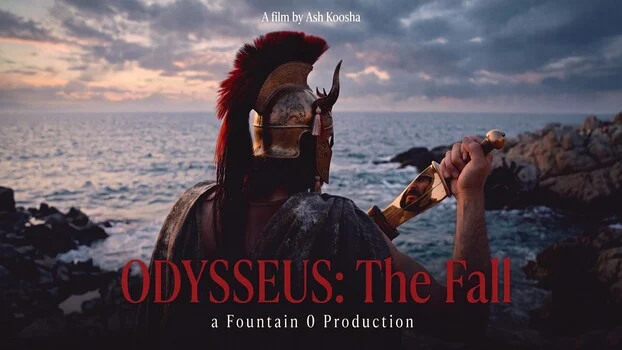

The global film industry is witnessing a localized but significant cultural collision as two diametrically opposed visions of Homer’s ancient epic, The Odyssey, arrive in the public sphere simultaneously. On one side stands Christopher Nolan’s The Odyssey, a $250 million cinematic behemoth filmed entirely on 15-perforation IMAX 70mm film, representing the zenith of traditional, high-budget, tactile filmmaking. On the other side is Odysseus: The Fall, a 135-minute feature produced by the London-based AI studio Fountain 0. While Nolan’s production required thousands of technicians, years of planning, and the physical transport of massive cameras to remote locations, Fountain 0’s version was completed in approximately 90 days by a primary creator for a budget in the mid-five figures. This juxtaposition serves as a landmark moment in the ongoing debate regarding the role of generative artificial intelligence in the creative arts, highlighting a widening chasm between the labor-intensive traditions of Hollywood and the burgeoning "democratization" of content creation through automation.
The High-Stakes Artistry of Nolan’s Odyssey
Christopher Nolan’s adaptation of The Odyssey marks a return to the director’s preference for practical effects and large-format celluloid. With a reported production budget of $250 million, the film is one of the most expensive ventures in recent years, rivaling the scale of his previous historical and science-fiction epics like Oppenheimer and Interstellar. The decision to shoot entirely on IMAX 70mm film is a logistical feat; these cameras are famously heavy, noisy, and difficult to maneuver, yet they provide an image resolution estimated at 18K, far exceeding any current digital standard.
For Nolan, the medium is essential to the message. The director has long argued that the "theatrical experience" is defined by the physical presence of the image and the authenticity of the performance. To capture the maritime trials of Odysseus, Nolan’s crew reportedly filmed in treacherous open-water locations, eschewing the "volume" or green-screen environments that have become industry standards for big-budget spectacles. This commitment to physical reality is designed to create a visceral connection with the audience, a sense of "being there" that Nolan contends cannot be replicated by digital synthesis.
The AI Counter-Narrative: Fountain 0 and Ash Koosha
Three days before Nolan’s film reached theaters, Fountain 0, a studio branding itself as the world’s leading AI movie house, announced its own feature-length adaptation. Directed by Ash Koosha, Odysseus: The Fall represents the current frontier of generative cinema. Koosha, a multi-disciplinary artist and technologist, utilized the Kling AI video generation model to render the film’s imagery.
Unlike the massive crews required for the Nolan production, Odysseus: The Fall was largely the work of one person. Koosha performed the lead role himself, casting his own face as the protagonist and sourcing twelve additional human likenesses from his personal network to populate the world of the film. This method effectively bypasses the traditional casting, makeup, and costume departments, replacing them with digital likeness rights and algorithmic rendering.
The film is scheduled to rent for $9.99 on Fountain 0’s proprietary platform later this summer. By opting for a direct-to-consumer digital release rather than a theatrical run, Fountain 0 is positioning itself as a disruptor of the traditional distribution model, targeting a niche audience interested in the evolution of technology as much as the narrative itself.
Chronology of a Creative Disruption
The timeline of these two productions illustrates the drastic difference in the speed of creation between traditional and AI-driven workflows:
- 2021–2022: Initial development and scriptwriting for Christopher Nolan’s The Odyssey begin. Extensive location scouting occurs across the Mediterranean.
- Early 2023: Principal photography for Nolan’s film commences. The production employs thousands of extras, maritime experts, and specialized IMAX technicians.
- Late 2023: Post-production for Nolan’s film begins, involving traditional editing, sound design, and a complex chemical development process for the 70mm film stock.
- March 2024: Ash Koosha begins the production of Odysseus: The Fall using generative AI tools.
- June 2024: After only three months of production, Koosha completes the 135-minute feature.
- July 2024: Nolan’s The Odyssey premieres in theaters worldwide. Fountain 0 releases its announcement teaser, inviting direct comparisons between the two works.
Technical Specifications and Economic Divergence
The economic disparity between the two projects is staggering. Nolan’s film costs roughly $1.85 million per minute of screen time. In contrast, Koosha’s five-figure budget—estimated at approximately $50,000—results in a cost of roughly $370 per minute.
The technical tools employed are equally disparate. Nolan utilizes the Panavision and IMAX MSM 9802 cameras, which are mechanical marvels of the 20th century. Koosha utilizes Kling, a high-fidelity video generation model capable of producing clips from text prompts or still images. While Nolan’s film relies on the physics of light hitting silver halide crystals, Koosha’s film relies on probability distributions and neural networks trained on vast datasets of existing human imagery.
Critical Reception and the "Uncanny Valley"
The public response to Fountain 0’s teaser has been polarized, reflecting a broader cultural anxiety regarding AI. Critics on social media and within the film community have used terms like "rancid slop" and "AI parasite" to describe the visual output of Odysseus: The Fall. The primary technical criticisms center on the "uncanny valley" effect—the unsettling feeling produced by human-like figures that do not quite move or emote realistically.
Common complaints regarding the AI-generated footage include:
- Lack of Interiority: Critics argue that the AI-generated faces lack the "interior life" and subtle micro-expressions that human actors bring to a role.
- Stilted Dialogue: The linguistic output of AI scripts often feels formulaic or lacking in subtext.
- Texture and Consistency: Despite the high resolution of modern AI models, the imagery often has a shimmering, inconsistent texture where objects and backgrounds may shift slightly between frames.
However, Koosha defends the project not as a replacement for human artistry, but as a liberation of it. He argues that AI is a "threat to nothing except distance"—the distance between an individual with a creative vision and the capital-intensive means required to realize it. Koosha’s previous work, The Fermi Paradox, was the first fully AI-generated film to screen at the Tribeca Film Festival, suggesting that his approach is grounded in a desire to explore new aesthetics rather than merely capitalizing on a trend.
Official Responses and Industry Context
The release of these two films occurs against a backdrop of significant labor unrest in Hollywood. The 2023 strikes by the Writers Guild of America (WGA) and the Screen Actors Guild (SAG-AFTRA) were driven in large part by concerns over AI’s potential to replace human writers and actors. The emergence of Fountain 0 and the ability of a single individual to produce a feature-length film for a nominal cost validates some of the fears expressed by union members.
While Christopher Nolan has not commented specifically on Koosha’s film, he has been a vocal advocate for the preservation of traditional filmmaking. In various interviews, Nolan has expressed skepticism about the longevity of digital-only media, emphasizing that the physical film print is the only truly archival medium.
Koosha, for his part, has expressed a respectful stance toward Nolan. He has stated that he hopes Nolan’s film is a success and that the existence of his own version might even encourage viewers to see the IMAX production. This suggests a vision of a future where high-budget human epics and low-budget AI experiments coexist as different tiers of the same cultural ecosystem.
Implications for the Future of Cinema
The "uncomfortable question" raised by this cinematic showdown is not necessarily whether the current iteration of AI film is "good." Most critics agree that Odysseus: The Fall lacks the emotional resonance and technical polish of a Nolan masterpiece. The real question for the industry is what happens when the technology advances from "poor" to "mediocre," and eventually to "good."
If a filmmaker can produce a "mediocre" epic for $50,000 that performs reasonably well on streaming platforms, the traditional studio model—which relies on massive returns to offset $250 million budgets—faces a structural threat. The democratization of the "means of production" could lead to a saturated market where the sheer volume of AI content makes it difficult for high-craft, high-cost films to gain visibility.
Furthermore, the "Odyssey" comparison highlights a shift in the value of human labor. In Nolan’s film, the value is derived from the difficulty of the task: the physical danger, the years of training, and the coordination of thousands of people. In the AI model, the value is derived from the "urgency" of the creator’s idea, with the machine handling the "drudgery" of execution.
As Odysseus: The Fall prepares for its summer release, it stands as a provocative experiment. It challenges the definition of a "real" movie and asks audiences to decide if the soul of cinema lies in the story being told or in the physical, human effort required to tell it. For now, the thunderous response to Nolan’s IMAX visuals suggests that the public still craves the tactile and the authentic. However, the silent, rapid rise of generative studios like Fountain 0 ensures that the battle for the future of the epic has only just begun.