
The traditional news cycle has been effectively replaced by real-time updates breaking on social media, fundamentally altering how corporations, public figures, and institutions manage their public image. According to the Q1 2026 Pulse Survey, social media has solidified its position as the primary source of news for the global population, surpassing traditional broadcast and digital journalism. This shift indicates that headlines no longer follow a linear path from newsrooms to the public; instead, they surface spontaneously across a fragmented digital landscape, ranging from viral short-form videos on TikTok to breaking updates on X, professional discourse on LinkedIn, and granular community debates on Reddit.
For modern enterprises, this environment presents a double-edged sword. Conversations regarding brand identity, product efficacy, and corporate ethics are occurring simultaneously across multiple platforms, often feeding into one another in a cross-pollination of data that can amplify a narrative within minutes. Brands are currently mentioned in more digital spaces and at a significantly higher volume than at any point in the history of the internet. Consequently, the legacy approach of monitoring direct mentions or relying on retrospective press clippings is no longer sufficient to safeguard a brand’s reputation.
The Paradigm Shift in Media Intelligence
In the current information ecosystem, public perception can pivot in a matter of minutes. When a localized complaint on a niche forum can escalate into a global trending topic before a communications team even begins their workday, the need for a comprehensive, proactive monitoring and listening strategy becomes a business imperative. Organizations that fail to adopt a unified approach risk missing vital customer feedback or, more critically, being blindsided by a burgeoning public relations crisis that has already gained significant momentum.
Cross-network brand monitoring has emerged as the definitive solution to this volatility. It is defined as the practice of tracking, aggregating, and analyzing mentions of a brand, its products, services, and its executive leadership across the entire digital spectrum simultaneously. By synthesizing data from social networks, discussion forums, review sites, blogs, and digital news outlets into a single, cohesive view, companies can transform fragmented online chatter into actionable business intelligence.
A Chronology of Media Monitoring: From Clippings to AI Agents
To understand the necessity of today’s "agentic" monitoring, one must look at the evolution of the industry over the last several decades:
- The Manual Era (Pre-2000s): Media monitoring was largely a physical task, involving the literal clipping of newspaper articles and the manual tracking of radio and television segments. Feedback loops were measured in weeks.
- The Digital Aggregation Era (2000s–2010s): The rise of the internet introduced RSS feeds and basic keyword alerts. Monitoring moved to the desktop, but data remained siloed between traditional news and the burgeoning "blogosphere."
- The Social Listening Era (2010s–2022): The explosion of platforms like Twitter and Facebook led to the creation of dashboards. Marketing teams could see volume spikes and sentiment graphs, but the process remained reactive, requiring human analysts to log in and interpret static data.
- The Agentic Era (2023–Present): With the integration of generative AI and autonomous "agents," monitoring has shifted from passive observation to proactive intelligence. Systems now "understand" context, predict trends, and deliver insights directly to stakeholders without human intervention.
The Strategic Importance of Unified Monitoring
Implementing a unified cross-network strategy is no longer a luxury for the marketing department; it is a foundational requirement for corporate stability. Paul Quigley, the GM of Listening at Sprout Social, emphasizes the breadth of the current challenge. "Today, narratives—both opportunities and threats—can kick off anywhere," Quigley stated. "From a news story, a discussion on Reddit, a TikTok, or a Substack post, brands risk exposure and missed opportunities if their listening focuses too heavily on just a couple of sources. They need nothing less than the full media landscape at their fingertips."
The data supports this urgency. Industry reports suggest that nearly 70% of corporate crises in 2025 originated on social platforms before being picked up by mainstream media. By the time a story reaches the front page of a major news site, the "narrative cement" has often already dried in the minds of the digital-native consumer.
Establishing a Unified Data Foundation
Building a robust brand monitoring program requires a two-phase approach: mapping channels and categorizing objectives. Without a strategic framework, the sheer volume of internet data—estimated to be several zettabytes annually—becomes overwhelming and unusable.
Centralizing the Digital Stream
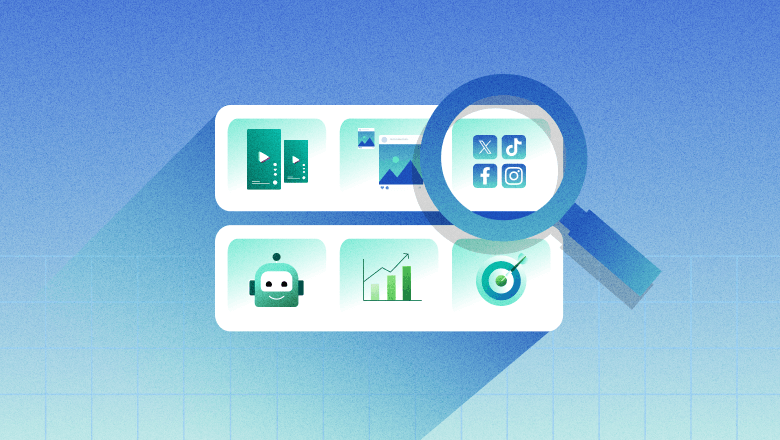
The first step involves identifying every digital network relevant to a brand’s specific audience. While the pillars vary by industry, a comprehensive strategy typically includes:
- Social Platforms: TikTok, Instagram, X, and LinkedIn for real-time engagement.
- Community Forums: Reddit and Discord for deep-dive sentiment and "early warning" signals.
- Review Sites: G2, Yelp, or Glassdoor for product and employer branding.
- Digital News and Newsletters: Traditional outlets and the growing influence of Substack.
Aggregating these streams into a single dashboard eliminates organizational silos. This "social intelligence" is increasingly moving beyond the marketing department, influencing product development, customer care, and even C-suite decision-making regarding mergers, acquisitions, and ESG (Environmental, Social, and Governance) commitments.
Setting Strategic Objectives
Once the foundation is laid, organizations must set specific tracking targets. Effective monitoring focuses on:
- Brand Health: Tracking sentiment fluctuations and share of voice.
- Competitive Intelligence: Monitoring rival product launches or customer dissatisfaction with competitors.
- Executive Reputation: Protecting the personal brands of CEOs and key leadership.
- Crisis Detection: Identifying anomalous spikes in negative mentions before they reach a tipping point.
Transitioning to Proactive Agentic Monitoring
The most significant technological advancement in this field is the shift from reactive dashboards to proactive agentic monitoring. Traditional monitoring relied on personnel manually checking graphs—a process that introduces delays and human error. In contrast, agentic monitoring utilizes AI agents that continually scan networks in real-time, 24/7.
Quigley notes that the era of "checking things" is effectively over. "Now 94% of NewsWhip data is consumed off-platform—pushed to teams by monitoring agents, predictive alerts, and other formats, and landing into the right inboxes, Microsoft Teams channels, and Slack groups," he explained.
These AI agents, such as Sprout Social’s Trellis, are integrated with a company’s strategic goals. They do not merely report keyword volume; they analyze engagement and sentiment to determine why a shift is occurring. If a sudden drop in sentiment is detected on a specific platform, the agent can automatically investigate the origin, analyze the spread, and alert the relevant team with a summary of the situation and a recommended course of action.
Extracting Business Answers Through Conversational AI
The integration of conversational AI layers has transformed how analysts interact with data. Rather than spending hours building complex queries, teams can now use natural language to interrogate billions of data points. A social media manager can ask, "What are the primary drivers behind yesterday’s sentiment drop on Reddit?" or "Summarize our competitors’ product flaws based on this week’s reviews," and receive immediate, executive-ready insights.
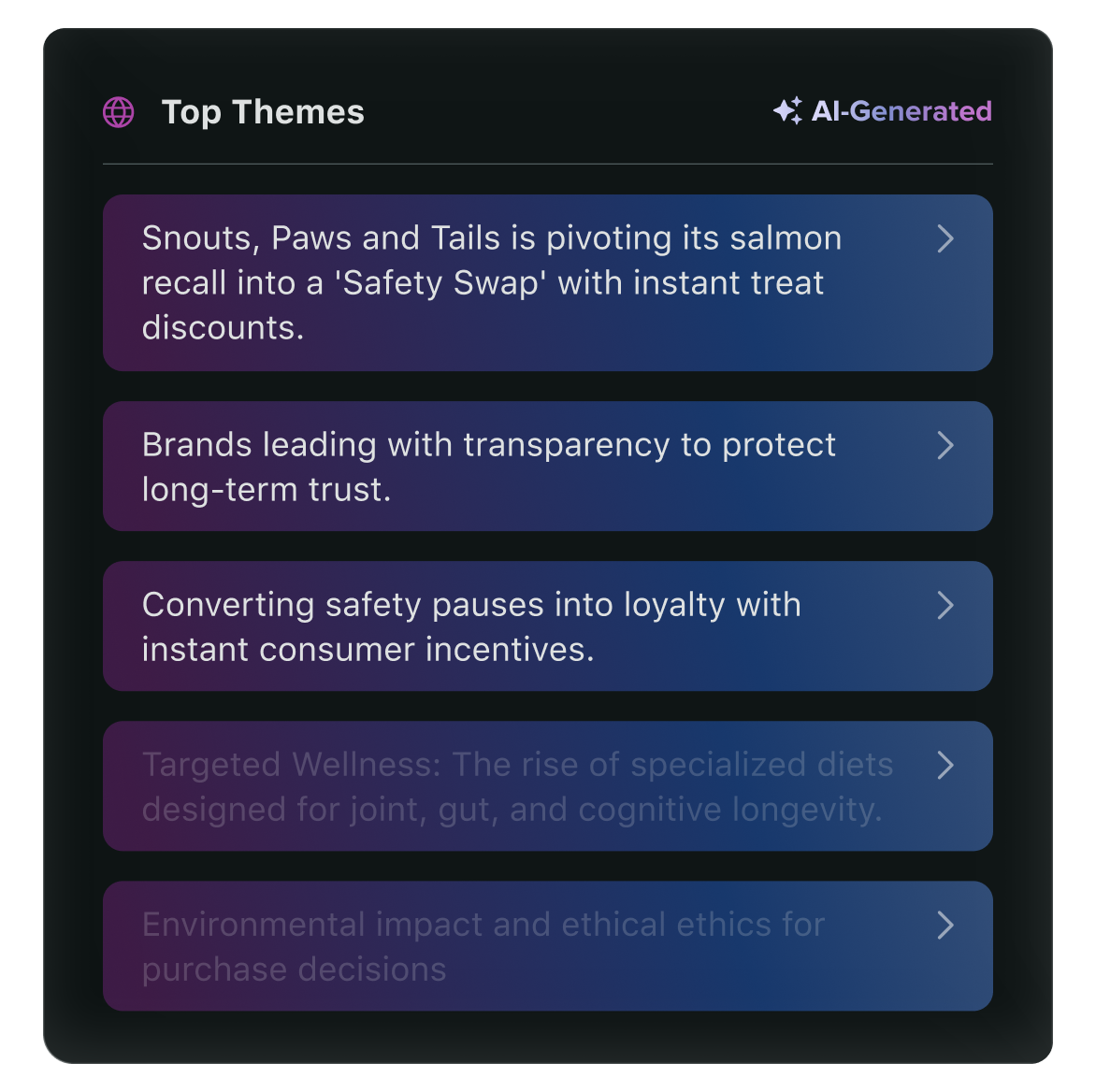
This capability closes the gap between raw data and strategic action. By allowing autonomous agents to handle the heavy lifting of data synthesis, human teams are freed to focus on high-level tasks that require judgment and empathy, such as crafting nuanced crisis communication plans or refining brand messaging to align with shifting cultural trends.
Building Escalation Pathways and Overcoming Silos
Data is only valuable if it reaches the person capable of acting on it. A recurring software bug mentioned on a niche forum is a technical issue, not just a PR one. Therefore, modern monitoring strategies must include customized intelligence pathways.
Automated workflows can now funnel specific insights to the appropriate departments:
- Product/Engineering: Automatically receive feature requests or bug reports.
- Customer Care: Escalation of high-priority complaints or systemic service failures.
- Communications/Legal: Instant flagging of potential regulatory issues or reputational threats.
However, these pathways require strict guardrails and compliance parameters to ensure that automation does not lead to brand misalignment or unnecessary internal panic.
Broader Implications for the Future of Business
The transition toward agentic, cross-network monitoring represents a fundamental shift in how businesses interact with the world. In an era where "digital noise" is at an all-time high, the ability to filter that noise into a strategic advantage is what will separate market leaders from their competitors.
As we move further into 2026, the reliance on AI-driven insights will likely become the standard for any organization operating at scale. The proactive detection of narrative shifts and the ability to respond with precision in real-time is no longer just a tactical advantage—it is the cornerstone of modern corporate resilience. Organizations that embrace these autonomous systems will find themselves not just reacting to the news, but effectively navigating the complex digital currents that define the modern age.