
The current fervor surrounding the integration of Artificial Intelligence (AI) into the corporate landscape bears a striking resemblance to the digital transformation wave that crested in the early 2010s. Organizations across the globe are rushing to deploy AI tools, often treating the shift as a purely technical procurement exercise rather than a fundamental restructuring of business operations. History, however, suggests that this narrow focus on technology at the expense of human-centric change management is a blueprint for organizational stagnation. By revisiting the core failures of the digital transformation era, particularly those outlined in foundational industry analyses like Paul Boag’s 2014 work Digital Adaptation, it becomes clear that modern AI adoption requires a pivot toward culture, employee autonomy, and iterative experimentation.
A Chronology of Technological Hype
To understand the current state of AI deployment, one must look at the historical trajectory of enterprise technology. The digital transformation era, roughly spanning 2010 to 2018, was characterized by a massive migration toward cloud-based infrastructures, mobile-first design, and the integration of sophisticated Content Management Systems (CMS) and Customer Relationship Management (CRM) platforms.
During this period, many organizations measured "success" by the number of licenses purchased or the completion of system installations. According to data from the Project Management Institute (PMI) during that decade, nearly 70% of digital transformation initiatives failed to meet their stated objectives. The primary culprit was rarely the software itself; rather, it was the failure to integrate the technology into the existing workflow of the human workforce. Today, the "AI gold rush" follows a nearly identical timeline: initial excitement, rapid procurement of Large Language Model (LLM) interfaces, and a subsequent plateau in productivity as employees struggle to bridge the gap between abstract AI capabilities and their specific, daily professional obligations.
The Human-Centric Deficit
A core issue in both the 2014 digital transformation era and the 2024 AI boom is the tendency to prioritize technological capability over human adaptability. In 2014, IT departments were often criticized for deploying complex systems that lacked user-centric design, forcing employees to adapt to the software rather than tailoring the software to the workflow.
Today, a similar dynamic is occurring with enterprise-wide AI rollouts. Senior management frequently announces that a company has "adopted AI" simply because they have purchased corporate licenses for tools like Microsoft Copilot or OpenAI’s Enterprise tier. However, this top-down approach fails to account for the "procedural knowledge" that employees have cultivated over decades. When a staff member is expected to fundamentally alter their workflow to accommodate a new tool without adequate training, psychological safety, or clear incentives, they often experience what organizational psychologists call "technostress"—a condition characterized by anxiety and a sense of inadequacy in the face of rapid technological change.
The Productivity Paradox and Economic Incentives
Data from the World Economic Forum and various labor market analyses indicate that while AI holds the potential to increase global GDP by trillions of dollars through productivity gains, the internal distribution of these gains remains a point of friction. For the individual worker, the immediate prospect of AI adoption is often perceived as a threat rather than an opportunity.
The "productivity paradox" arises here: if an employee uses AI to complete a task in 30 minutes that previously took three hours, the organization gains 2.5 hours of productivity. However, unless the organization provides a mechanism for the employee to benefit—such as reduced workload, skill development, or tangible compensation adjustments—the worker has no rational incentive to embrace the technology. In fact, many employees view AI-driven productivity not as a way to work smarter, but as a path to being "managed out" of their roles. Consequently, without explicit communication from leadership regarding how AI serves the employee’s professional growth, the adoption rate remains tepid and performative.
The Rise of Shadow AI
A predictable consequence of overly rigid IT governance is the emergence of "Shadow AI." Just as employees in the 2010s bypassed cumbersome internal portals to use more efficient, albeit less secure, tools like Dropbox or Google Docs, modern employees are increasingly accessing personal AI accounts to perform their duties.
Industry analysts estimate that nearly 30% of employees at large enterprises are currently using unauthorized AI tools to complete work tasks. This practice creates significant data security risks, as proprietary information, sensitive code, and internal strategy are fed into public models that may retain data for training purposes. Instead of viewing Shadow AI as a disciplinary issue, experts argue that it should be treated as a diagnostic tool. If an employee is willing to risk their reputation to use a specific tool, it serves as an empirical indicator that the organization’s "official" software suite is failing to meet basic functional requirements.
Cultivating a Culture of Safe Experimentation
The most successful organizations in the modern era are those that foster a "safe to fail" environment. The traditional corporate structure often penalizes errors, but learning a paradigm-shifting technology like generative AI necessitates a period of trial and error.
If an employee is held to rigid Key Performance Indicators (KPIs) while simultaneously being forced to adopt an experimental tool, the result is inevitable: they will prioritize the KPIs and abandon the tool. To mitigate this, forward-thinking enterprises are adjusting performance metrics to include "experimentation time." This allows staff to explore AI use cases without the immediate pressure of output targets, effectively lowering the barrier to entry and reducing the fear of failure.

Governance via Principles, Not Restrictions
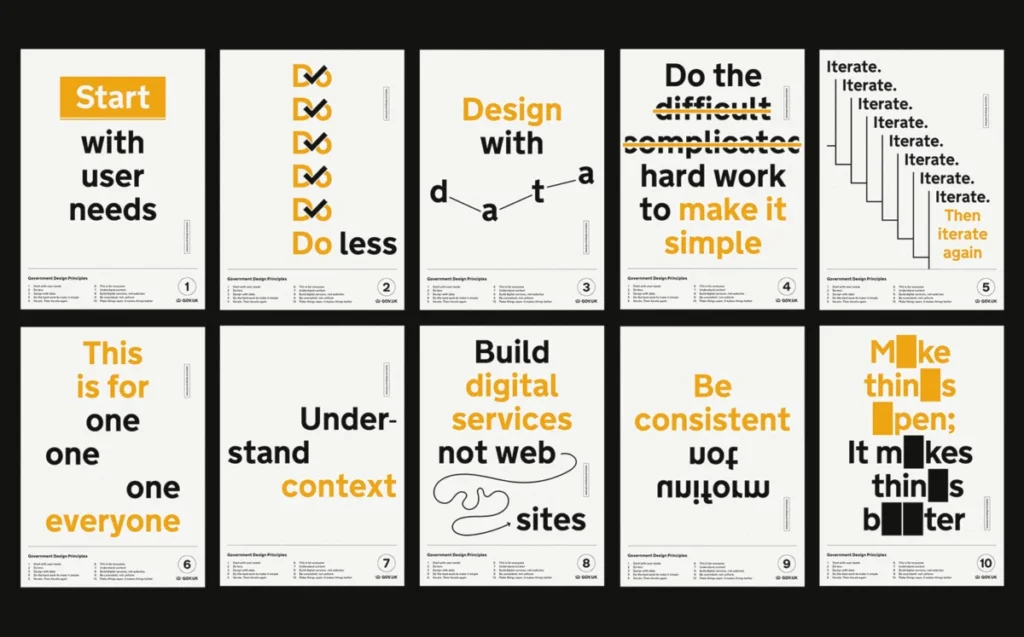
Effective governance in the digital age requires a shift from "command and control" to "principles and trust." The UK Government’s design principles, which emphasize simplicity and user needs, offer a template for this. Rather than issuing 50-page manuals on what an employee cannot do with AI, organizations are finding more success with a concise set of ethical and operational guidelines. This approach empowers employees to use their professional judgment, which is generally more effective at preventing misuse than blanket bans that inevitably drive innovation underground.
The Role of Internal Advocates
Data from organizational change management studies consistently show that peer-to-peer influence is more effective than top-down directives. Every organization possesses a cohort of "early adopters"—individuals who, out of curiosity or personal interest, have already mastered AI tools in their niche.
Leveraging these individuals through internal summits or cross-departmental "AI guilds" creates social proof. When a member of the accounting team sees a colleague in the marketing department using an AI tool to automate report synthesis, the perceived risk of the technology drops significantly. This bottom-up adoption strategy bypasses the skepticism usually reserved for executive mandates and replaces it with tangible evidence of value.
Long-Term Implications for the Enterprise
The long-term implication of these findings is clear: the success of AI in the workplace will not be determined by the sophistication of the models themselves, but by the maturity of the organization’s culture. Enterprises that treat AI as a purely technological challenge will likely repeat the high failure rates of the digital transformation era.
Conversely, companies that view AI as a catalyst for a human-centric organizational redesign—prioritizing training, psychological safety, and the elimination of tedious manual tasks—will be the ones to reap the competitive advantages. As we move further into this decade, the distinction between successful adopters and failing organizations will be defined by their ability to harmonize the speed of innovation with the human reality of the workforce. The technology is already here; the challenge remains, as it has for decades, in the people who must learn to wield it.