


The rapid integration of artificial intelligence into corporate workflows has fundamentally shifted the digital publishing landscape. While generative AI tools have democratized the mechanics of writing—allowing organizations to produce vast volumes of material with unprecedented speed—they have simultaneously triggered a crisis of homogenization. As enterprises increasingly rely on large language models to draft blogs, articles, and marketing collateral, the internet risks drowning in what industry observers frequently term "average information."
This technological saturation has forced content strategists, marketers, and publishers to reevaluate a central question: In an era where AI can synthesize existing human knowledge in seconds, what forms of content remain fundamentally beyond its reach?
The Roots of Content Differentiation
Long before the commercialization of generative AI platforms like ChatGPT, industry analysts recognized the traits that distinguished high-performing digital content from ordinary web pages. A benchmark report published years ago by Steve Rayson, founder of BuzzSumo, analyzed the performance metrics of one million articles to determine which formats successfully generated organic backlinks and social shares. Rayson’s findings indicated that content consistently fell into two high-performing categories: opinion-forming, authoritative journalism on current topics, and well-researched, evidence-backed publications.
These historical observations have gained renewed urgency. Industry analysts note that while AI excels at summarization, restructuring, and rephrasing, its core architecture is inherently backward-looking. Large language models operate by predicting subsequent tokens based on vast corpuses of previously published text. Consequently, they inherently gravitate toward consensus, effectively averaging the collective insights of the internet rather than generating novel perspectives.

The Mechanics of AI Limitation
To understand why certain content formats remain immune to automated generation, experts point to two primary categories of input that are entirely absent from standard AI training datasets: subjective human experience and proprietary primary data.
First, artificial intelligence possesses no lived experiences, emotional context, or genuine worldview. While prompt engineering can instruct a model to adopt a contrarian persona, the resulting output typically reflects safe, generalized assertions designed to avoid friction. True thought leadership, by contrast, relies on calculated tension. According to marketing strategist Seth Godin, effective thought leadership requires making assertive claims and accepting the risk of being incorrect. It necessitates taking a position that knowledgeable peers could plausibly debate. Because AI models are mathematically optimized to minimize variance and appease users, they cannot authentically champion a controversial or boundary-pushing professional thesis.

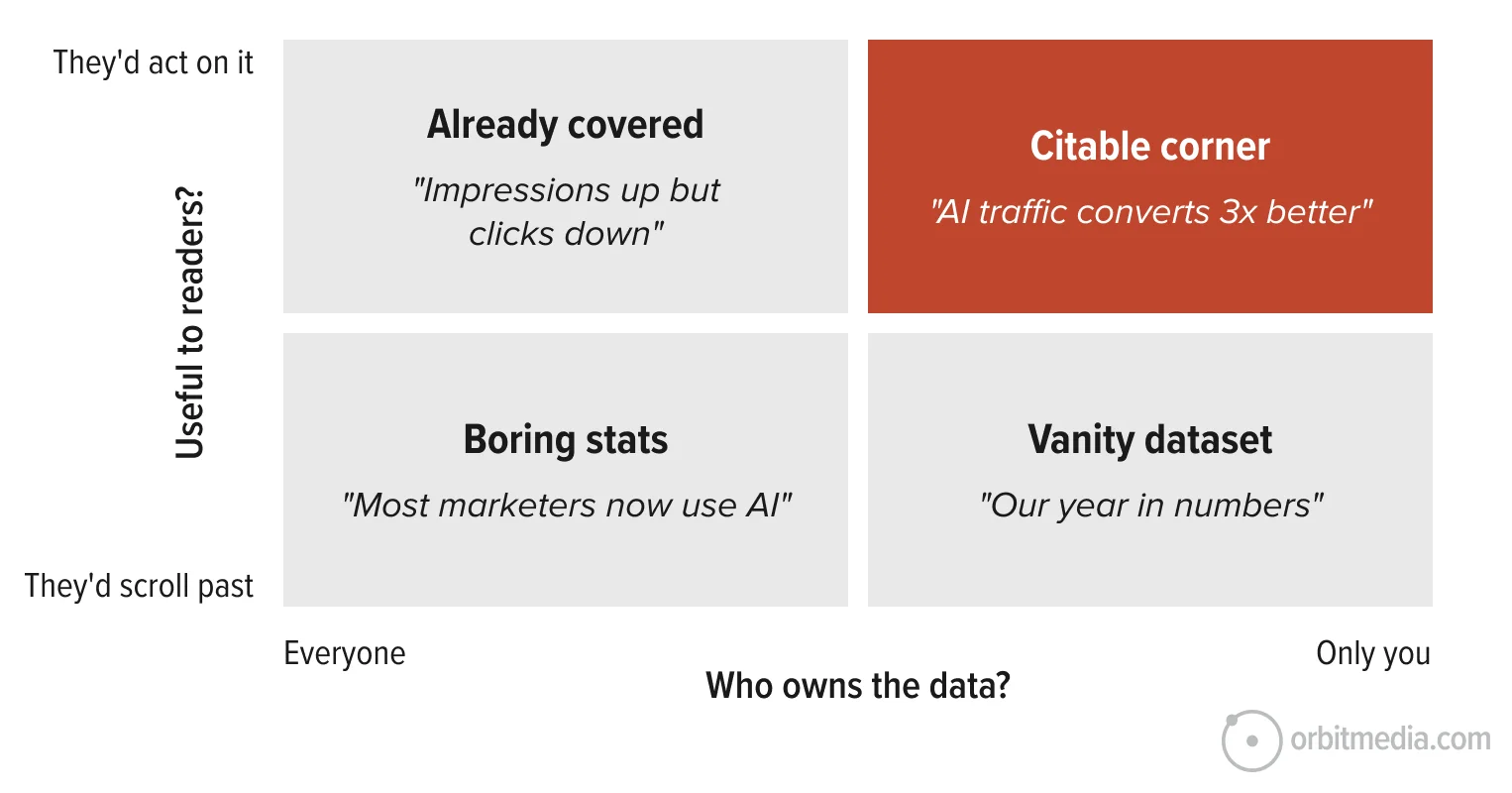
Second, AI cannot manufacture original data. While an automated tool can visualize datasets provided to it, it cannot independently conduct a survey, execute a market experiment, or harvest proprietary enterprise metrics. Content anchored in original research fills critical data gaps across industries, establishing a primary source that other publishers must cite. This dynamic not only elevates a brand’s authority and search engine optimization (SEO) performance through high-value backlinks, but it also ensures sustained visibility as users increasingly turn to AI search engines that rely on verifiable citations.
Strategic Shifts in Corporate Publishing
Faced with the proliferation of automated text, forward-thinking organizations are recalibrating their editorial strategies to emphasize human-centric formats. Rather than attempting to mask AI-generated drafts with stylistic adjustments—such as modifying sentence structures or omitting specific punctuation—industry leaders emphasize the necessity of producing material that machines cannot replicate.
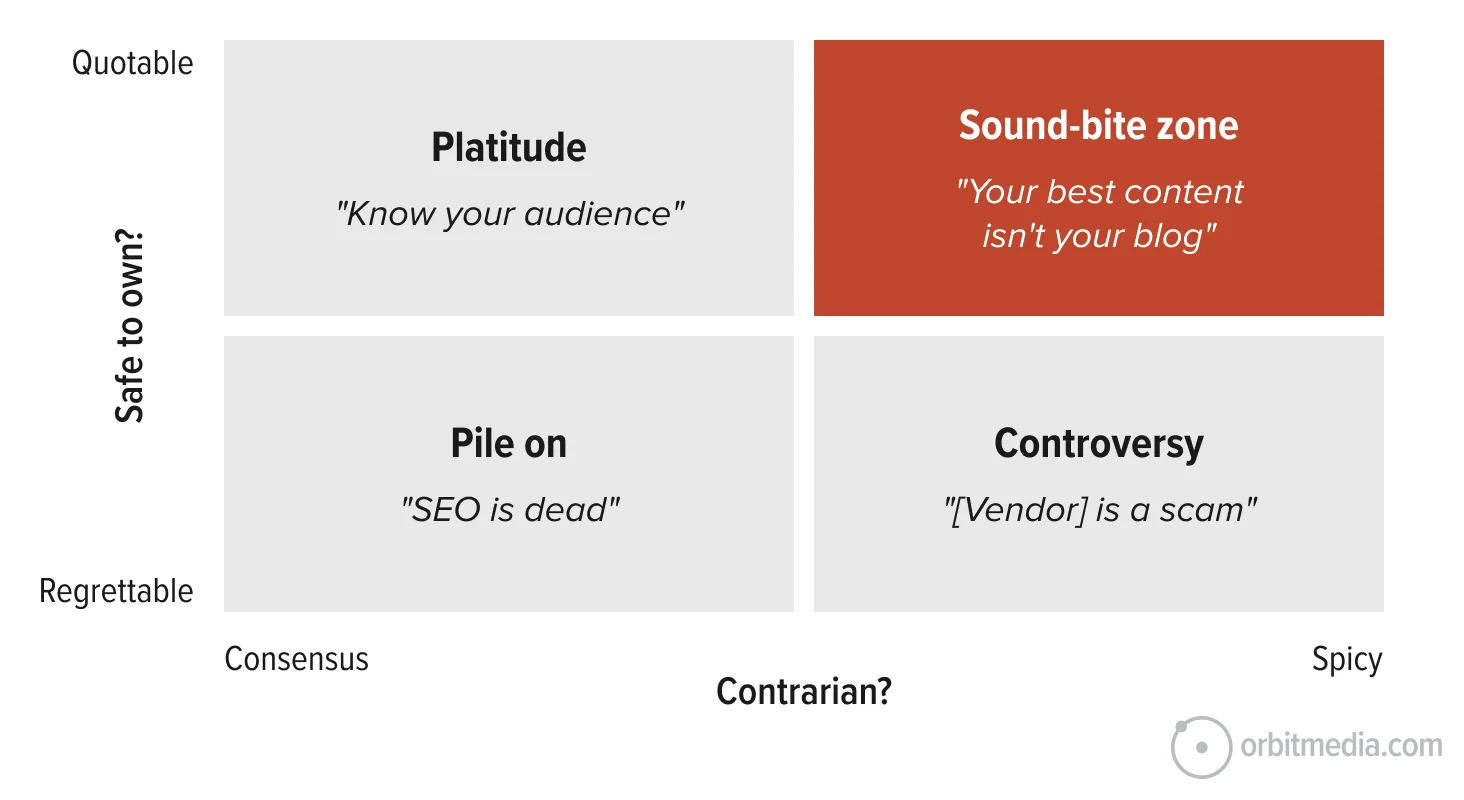
Content formats such as executive keynotes, live interactive webinars, deeply reported investigative journalism, first-person case studies, and proprietary quantitative research reports represent the most defensible assets in modern publishing. As veteran speaker and advisor Jay Acunzo has noted, a professional’s ability to articulate complex ideas clearly through verbal presentations and nuanced written commentary remains exceptionally rare and difficult to automate.
Furthermore, industry veterans emphasize that the overarching challenge facing digital communicators is not that AI can replicate human output, but that organizations frequently delegate tasks to AI that fail to leverage uniquely human faculties. As author and speaker Jay Baer observes, the fundamental risk lies in marketers continuously replicating workflows that machines can easily execute, rather than investing in distinct, high-value intellectual property.
Implications for the Future of Search and Media
The widespread adoption of generative AI is expected to accelerate a bifurcated internet ecosystem. On one side, low-effort informational queries will increasingly be satisfied directly within AI interfaces, reducing traditional referral traffic for generic, aggregated articles. On the other side, websites that serve as repositories for original empirical research and authoritative, opinion-driven commentary will retain significant valuation, as both human readers and AI retrieval systems seek verified, primary sources.
For publishers and content strategists, navigating this transition requires moving away from volume-based metrics and toward defensible asset creation. By anchoring editorial calendars in proprietary data collection and courageous, well-reasoned professional perspectives, organizations can ensure their communications remain relevant, authoritative, and fundamentally human.