

The global luxury and premium business sectors are undergoing a profound structural transformation, one where traditional heritage and historical exclusivity are no longer sufficient guarantees of market dominance. In the contemporary marketplace, the true currency of high-end business is the generation of innovative ideas and, more critically, their seamless translation into measurable financial outcomes. Industry analysts point to a fundamental shift in corporate strategy: creativity is no longer viewed merely as an aesthetic afterthought or an expressive finishing layer applied at the conclusion of a product cycle. Instead, it is increasingly recognized as an essential upstream function that actively dictates corporate decision-making, operational systems, and long-term economic performance.
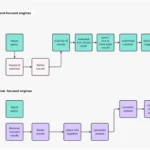
This evolution challenges long-held industry definitions, particularly the distinction between creativity and innovation. While these terms have historically been used interchangeably within corporate boardrooms, market experts emphasize that they operate at entirely different levels of the business ecosystem. Creativity serves as the cognitive and strategic system through which novel ideas are generated, categorized, and structured to align with cultural aspirations. Innovation, by contrast, represents the physical execution and scaling of those ideas. On their own, ideas remain inert; they acquire economic value only when integrated into robust operational processes that render them tangible, repeatable, and culturally relevant to an increasingly discerning global consumer base.
The Chronology of Modern Luxury Transformation
To understand how creativity became infrastructural within the premium sector, market historians trace a multi-decade evolution in consumer behavior and corporate strategy.
During the late 20th century, the luxury market was largely defined by pedigree, material scarcity, and tangible craftsmanship. Brands relied heavily on their archives and historical lineage to justify premium pricing. However, the turn of the millennium and the subsequent digital revolution upended these traditional paradigms. The proliferation of e-commerce and digital media democratized access to information, forcing brands to compete not just on physical quality, but on narrative resonance and digital agility.
By the 2010s, premium brands began experimenting with direct-to-consumer (DTC) models and digital engagement, yet many treated these initiatives as secondary marketing channels rather than core business drivers. It was not until the post-pandemic economic landscape of the early 2020s that industry leaders recognized the necessity of systemic integration. Brands realized that sporadic creative campaigns were failing to secure sustainable margins in an inflationary environment. Consequently, the period from 2023 to 2026 marked a definitive turning point: luxury conglomerates and emerging direct-to-consumer powerhouses alike began embedding creative direction directly into supply chain logistics, data analytics, and overall business model architecture.
Three Structural Mechanisms for Brand Value Creation
Market data and industry observations highlight three recurring operational mechanisms through which leading premium brands consistently convert abstract ideas into tangible enterprise value.
1. Pricing Power and Perceived Value
In the traditional economic sense, pricing is often cost-led. In the luxury sector, however, price is anchored entirely in perceived value. Creativity acts as the primary architect of this perception, shaping not only the physical attributes of a product, but its symbolic meaning in the eyes of the consumer.
Established legacy houses, such as Italian menswear authority Zegna, have demonstrated how unified creative direction can sustain robust pricing power across diverse product categories, materials, and narratives. For instance, the industry-wide adoption of lower-impact, sustainable materials does not inherently generate commercial value. It gains economic relevance only when seamlessly woven into a broader corporate identity that communicates responsibility, uncompromising quality, and alignment with shifting global values. When creativity successfully aligns product design with cultural sentiment, it expands the consumer’s willingness to pay, allowing brands to drive margin growth without relying solely on aggressive volume expansion.
2. Demand Architecture and Consumer Behavior
The second mechanism operates at the intersection of demand generation and customer psychology. Modern market leaders—exemplified by disruptive entities like SKIMS—have redefined how consumer desire is cultivated. Rather than merely reacting to existing market trends, these brands engineer demand through controlled scarcity, strategic product drops, and highly optimized digital ecosystems.
This approach transcends traditional marketing communications; it functions as a comprehensive operating system. By analyzing real-time digital interactions and community feedback, these brands structure how demand is generated, concentrated, and monetized. What appears externally to the consumer as a sleek, aesthetically driven collection is, in reality, the output of a deeply calculated, data-informed demand architecture.
3. Business Model Design and Operational Scalability
The third mechanism redefines the fundamental business model. Creativity increasingly dictates how premium organizations design their operational infrastructure—spanning production methods, distribution channels, and hybrid retail environments.
Technology plays a critical enabling role within this framework. Industry executives emphasize that technology does not create value in a vacuum; rather, it serves as the execution layer that allows creative concepts to be tested rapidly, distributed precisely, and scaled globally. Brands that succeed in the modern landscape are those that translate creative ideas into repeatable, measurable systems that retain their core identity across multiple touchpoints and geographic regions.
Industry Perspectives and Market Implications
The ongoing convergence of creativity, data, and operations has prompted widespread commentary from corporate leaders, retail analysts, and brand strategists.
According to recent retail insights from major financial institutions, premium brands that fail to integrate their creative and operational functions risk losing market share to agile digital-first competitors. Industry observers note that organizations structured around rigid departmental silos—where design teams operate independently of data analytics and supply chain logistics—struggle to adapt to the compressed timelines of the modern consumer economy.
"In contemporary business, creativity is no longer a superficial polish applied at the end of a long production line," notes a leading retail strategist. "It must function upstream, guiding how a company approaches sustainability, customer acquisition, and technology integration. When creativity, data, and operations reinforce one another, the brand establishes a continuous feedback loop that secures long-term relevance."
Corporate governance structures within top-tier luxury groups are gradually reflecting this reality. Chief Executive Officers are increasingly empowering creative directors to collaborate directly with chief technology officers and supply chain directors, ensuring that aesthetic vision is tethered to operational feasibility from the inception of a project.
Fact-Based Analysis of Economic Implications
An objective analysis of this paradigm shift reveals several critical implications for the future of the global premium sector:
- Organizational Restructuring: Companies are dismantling traditional corporate silos. Cross-functional alignment between creative, technical, and financial teams is no longer optional; it is a prerequisite for survival in a volatile economic climate.
- Quantifiable Creativity: While certain dimensions of luxury, such as emotional resonance and brand heritage, resist immediate quantification, executive boards increasingly demand that creative initiatives link demonstrably to pricing power, customer retention, and margin efficiency.
- Technology as Infrastructure: Advanced data analytics, artificial intelligence, and digital supply chain tracking are shifting from experimental tools to foundational execution layers. These technologies compress the distance between creative concept and market outcome, enabling real-time product iteration.
- Cultural Responsiveness: The erosion of purely legacy-based prestige means that brands must maintain active, authentic dialogues with contemporary cultural movements, integrating accountability and transparency into their core operational identity.
As the global premium landscape continues to mature through 2026 and beyond, the defining characteristic of market leaders will be their ability to treat creativity as an infrastructural asset. By fusing imaginative vision with rigorous operational systems, successful brands will continue to transform abstract ideas into enduring economic value, ensuring both sustained profitability and cultural resonance in an increasingly competitive world.