

In the contemporary digital economy, brand protection extends far beyond traditional trademark monitoring and intellectual property law. Modern organizations and public figures face an increasingly complex matrix of algorithmic vulnerabilities, ranging from automated search manipulation and traditional domain spoofing to sophisticated artificial intelligence hallucinations. Today, safeguarding a brand means ensuring that human users and autonomous systems alike can accurately identify official entities, parse verified data, and seamlessly distinguish legitimate corporate channels from malicious impersonators, unauthorized intermediaries, and infrastructural anomalies.
While traditional online reputation management has historically focused on consumer sentiment and brand perception, digital brand protection operates on a more fundamental level. It addresses systemic discoverability and architectural integrity—determining whether individuals and algorithms can correctly locate official channels, verify source provenance, and avoid fraudulent touchpoints. As search architectures evolve into conversational, generative engines, the threat landscape has expanded from simple lookalike websites to systemic supply chain vectors, exposing brands to unique technological risks that demand structured, proactive countermeasures.
The Evolving Threat Matrix: From Slopsquatting to Generative Hallucinations
The mechanics of brand abuse have fundamentally shifted alongside the maturation of software development toolkits and generative artificial intelligence. A prominent illustration of this architectural vulnerability is "slopsquatting"—a phenomenon wherein malicious actors register software packages under names that AI coding assistants are statistically prone to hallucinate.
Recent cybersecurity analyses have documented multiple instances of this vector in action. In one notable case, an unused identifier was intentionally claimed as a malicious repository package on a prominent open-source registry, masquerading as a legitimate plug-in frequently referenced by automated developer tools. In a separate incident, a large language model synthesized an entirely fictional package name by concatenating two distinct, legitimate developer utilities. Although immediate exploitation was averted, the generated command rapidly propagated across hundreds of public software repositories containing AI-generated agent skills. Had a malicious actor preemptively registered the hallucinated string, the integrity of downstream development environments could have been severely compromised.

These episodes underscore a critical paradigm shift: brand misuse is no longer restricted to fraudulent social media handles or deceptive landing pages. Product designations, corporate nomenclature, and proprietary terminology can be intercepted directly within the underlying technological infrastructure trusted by developers and autonomous software agents.
When digital threats compound, the consequences accelerate rapidly. A deceptive customer support portal may initially capture top-tier visibility on a major search engine results page. Unsuspecting third-party directories frequently scrape and replicate these fraudulent contact details, feeding erroneous data into the training and retrieval loops of conversational AI systems. Consequently, an autonomous assistant may ultimately present false telephone numbers or phishing URLs as definitive answers to user inquiries, transforming a localized indexing anomaly into a widespread security breach.
Comprehensive Brand Auditing: Methodology and Market Segmentation
Defending an organization against decentralized digital exploitation requires a rigorous, systematic auditing framework. Brand protection specialists emphasize that protecting a corporate entity begins with exhaustive documentation. For corporate entities, this foundational inventory must encompass legal names, alternative monikers, historical designations, primary and secondary domains, mobile applications, verified social media handles, executive leadership identities, commercial product lines, designated target markets, and official customer support vectors. For individuals—particularly public figures and executives—audits must account for professional name variants, linguistic transliterations, current and legacy professional titles, and disambiguation from namesakes.
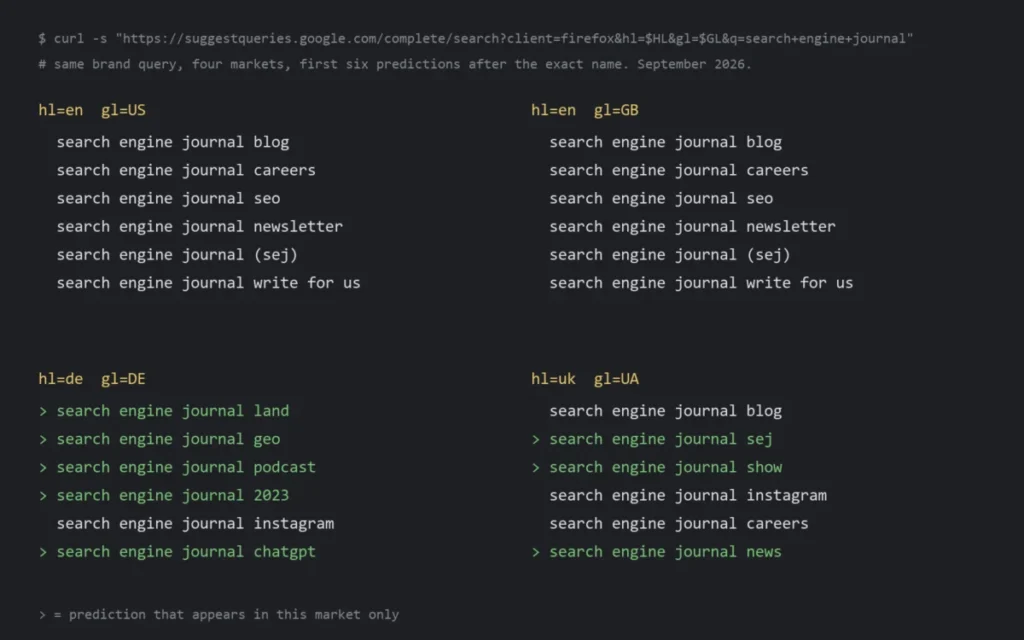
Crucially, brand visibility is rarely uniform across international borders. A thorough audit must be executed independently for every geographic market and linguistic audience served by the organization. A brand operating across five distinct country-language combinations must undergo five distinct diagnostic evaluations.
Furthermore, these audits must be conducted under strictly controlled observational conditions. Investigators avoid utilizing personalized, logged-in administrative profiles, relying instead on clean, unauthenticated browser environments that mirror real-world user experiences. Because search engines and generative models heavily tailor output based on localized IP addresses, device types, and linguistic parameters, digital auditors systematically record environmental variables—such as whether a residential proxy or Virtual Private Network (VPN) was employed during testing—to ensure diagnostic accuracy.

Cross-Platform Search and Autocomplete Vulnerabilities
Evaluating a brand’s digital footprint requires analyzing multiple search engines, including Google, Bing, Brave, and DuckDuckGo, alongside vertical search environments such as video repositories, image indexes, mapping services, and regional discovery platforms. Image search anomalies, in particular, frequently expose unauthorized merchandise distribution or spoofed brand assets that remain entirely invisible on primary text-based results pages.
Particular attention must be dedicated to predictive autocomplete interfaces, which proactively frame user intent before a query is even completed. Security researchers have documented underground black-hat optimization services explicitly dedicated to manipulating autocomplete predictions through artificial query inflation. Because automated safety filters frequently struggle to preempt these manipulations—particularly during politically sensitive election cycles or periods of intense public scrutiny—organizations must maintain continuous oversight of predictive search strings.
Monitoring unauthorized monetization of brand equity requires utilizing native verification mechanisms, such as public advertising transparency registries. These repositories allow organizations to independently audit precisely which third-party entities are purchasing sponsored ad placements against specific brand keywords, ensuring that rogue affiliates or outright imposters are not intercepting branded traffic via paid search channels.
Algorithmic Vulnerabilities and Generative AI Evaluation
As user migration toward conversational search accelerates, auditing artificial intelligence systems has transitioned from an experimental exercise into an operational necessity. Security teams now routinely test brand representation across a diverse suite of conversational interfaces, including generative search summaries, specialized assistant models, and decentralized web-search agents.
Diagnostic protocols involve two distinct categories of prompts: direct inquiries—which assess brand ownership, legitimacy, and official contact channels—and decision-based prompts, which evaluate comparative positioning, consumer sentiment, and commercial alternatives. To ensure statistical validity, prompts must be executed across fresh conversational sessions with persistent memory disabled, as iterative interactions within a single session can artificially skew algorithmic responses.

Empirical evaluations of conversational search systems indicate that a substantial percentage of factual inaccuracies stem from retrieval failures rather than intrinsic reasoning flaws within the underlying language models. When an AI system references an outdated news article, a compromised forum post, or a malicious impersonator, the root vulnerability typically lies in the upstream indexing ecosystem. Consequently, organizations must actively verify whether their official web properties are fully accessible to the specific web-crawling user agents deployed by artificial intelligence vendors, ensuring that proprietary corrections can be successfully ingested and parsed by automated retrieval systems.
Structured Defense and Remediation Protocols
Once an audit is complete, effective brand protection requires matching the appropriate defensive response to the specific nature of the infraction. Analysts categorize digital anomalies into distinct tiers: harmless indexing errors, genuine commercial disputes, and malicious abuse.
While outdated directory listings or ambiguous namesake associations require editorial correction or direct outreach, overt impersonation—such as lookalike domains, fraudulent mobile applications, deceptive support portals, and unauthorized trademark bidding within paid advertising channels—demands immediate legal and technical intervention. Before initiating takedown procedures, organizations must meticulously preserve forensic evidence, capturing comprehensive URL paths, timestamped full-window screenshots, redirect chains, and specific telemetry parameters.
The remediation hierarchy generally follows a four-stage progression:
- Internal Remediation: Correcting canonical pages, structured data schemas, and proprietary assets under direct administrative control.
- Cooperative Correction: Submitting verified primary evidence to third-party directories, legacy profile hosts, and platform administrators to rectify outdated or misleading representations.
- Formal Enforcement: Executing legal and administrative takedowns, including Uniform Domain-Name Dispute-Resolution Policy (UDRP) filings for bad-faith domain registrations, digital copyright removal requests for content scraping, and formal trademark infringement complaints submitted through standardized platform reporting channels.
- Defensive Dissemination: In scenarios where immediate removal is legally or logistically unfeasible, organizations must publish unequivocal, authoritative first-party declarations across owned channels to intercept and neutralize misleading traffic before financial or reputational damage occurs.
Proactive Infrastructure Hardening and Threat Monitoring
Mitigating digital brand risk is fundamentally more efficient than managing active exploitation. Organizations can dramatically reduce their exposure surface by proactively securing intellectual property assets across global registries. This includes acquiring relevant country-code and generic top-level domains, claiming official social media handles across emerging platforms, and registering exact-match software namespaces to prevent speculative squatting.

Technical hardening extends to foundational web infrastructure. Securing domain registrar accounts with mandatory multi-factor authentication, strictly auditing administrative access permissions for former employees and third-party vendors, and deploying Certificate Transparency log monitoring allow security teams to detect unauthorized TLS certificate issuances for lookalike domains the moment they are generated.
Ultimately, maintaining digital sovereignty requires an ongoing, institutionalized commitment to brand visibility management. By continuously auditing search surfaces, monitoring algorithmic retrieval patterns, securing underlying digital infrastructure, and establishing rapid-response remediation workflows, organizations can effectively insulate their intellectual property against the multifaceted threats of the modern search and artificial intelligence era.