
The Paradigm Shift in Local Discovery
For years, the "Local Pack"—the block of three business listings accompanied by a map—was the gold standard for local visibility. Securing a spot in these top three results was the primary objective of local SEO strategies, focusing heavily on Google Business Profile (GBP) optimization, proximity, and review management. However, the integration of generative artificial intelligence into Google’s core search results has introduced a new layer of complexity.
AI Overviews, powered by Google’s Gemini large language model, do not merely list businesses; they synthesize information from across the web to provide conversational, multi-faceted answers. While the local pack is a directory-style feature, the AI Overview acts as a digital concierge, often recommending businesses based on nuanced criteria found in website content, third-party reviews, and structured data that traditional algorithms might have overlooked.
Data Analysis: The Rise of AI Dominance
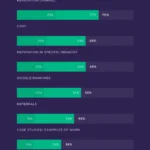
The statistics highlighting the 68% prevalence of AI Overviews in local searches suggest that Google is prioritizing synthesized answers for queries like "best Italian restaurant with outdoor seating near me" or "emergency plumbers open now." The discrepancy between AIO appearance (68%) and Local Pack appearance (39%) indicates that AI is filling a gap for queries that are local in nature but perhaps too complex or descriptive for a simple map listing to satisfy.
Further analysis of search behavior suggests that users are increasingly using natural language and long-tail queries. These "conversational" searches are precisely what AI Overviews are designed to handle. By pulling data from location pages, blog posts, and customer testimonials, the AI creates a summary that often pushes the traditional organic results and even the Map Pack further down the page, effectively making "AI Citation" the new "Rank #1."
A Chronology of Google’s AI Integration in Search
The transition to an AI-first search experience has been a multi-year journey for Google, marked by several key milestones:
- The Hummingbird Update (2013): This laid the groundwork for semantic search, allowing Google to understand the intent behind words rather than just matching keywords.
- The Introduction of BERT (2019): This neural network-based technique for natural language processing helped Google understand the context of words in search queries.
- The Announcement of SGE (May 2023): At the Google I/O conference, the company introduced the Search Generative Experience (SGE), the precursor to AI Overviews, as an experimental feature in Search Labs.
- The Public Rollout of AI Overviews (May 2024): Google officially integrated AI Overviews into the general US search results, later expanding to more countries and languages.
- The Local Integration Surge (Late 2024 – 2025): Recent observations show a massive uptick in AI Overviews specifically for local intent queries, signaling that Google’s AI has reached a level of confidence required to recommend physical business locations.
How to Rebuild Location Pages for AI Citations
To be cited within an AI Overview, a business’s website must provide "data-rich" environments that an LLM can easily parse and verify. Traditional SEO focused on keywords; AI-focused SEO focuses on "entities" and "proof points."
Implementing Advanced Schema Markup
Structured data (Schema.org) is the primary language through which AI systems understand the specific details of a business. To move beyond basic NAP (Name, Address, Phone) data, businesses must implement advanced schema types. This includes LocalBusiness, ProfessionalService, or Restaurant schema, but it should be enriched with menu URLs, servesCuisine, areaServed, and knowsAbout properties. By explicitly defining services and service areas, businesses provide the AI with the factual backbone needed to generate a citation.

Shifting to Entity-Based Content
AI models categorize the world into entities—specific things with defined attributes. A location page should not just say "We provide dental services." It should define the entity by detailing specific procedures (e.g., "Invisalign provider," "emergency root canals"), the qualifications of the staff, and the specific geographic landmarks the business is near. This helps the AI connect the business to a broader web of local information.
Prioritizing Conversational FAQs
Since AI Overviews often respond to questions, location pages should feature a Frequently Asked Questions (FAQ) section that mirrors natural user queries. Using "Who," "What," "Where," and "How" headers followed by concise, factual answers makes it easier for Gemini to extract that content for an AIO snippet.
Strengthening Third-Party Verifiability
Google’s AI does not rely solely on a business’s own website. It cross-references information with third-party sites like Yelp, TripAdvisor, industry-specific directories, and news outlets. To be cited, a business must have a consistent "digital footprint." If the AI finds a recommendation on a local news site and matches it with technical data on the business’s location page, the likelihood of a citation increases significantly.
Industry Reactions and Expert Analysis
Digital marketing experts have noted that the rise of AIOs represents a shift from "search engine optimization" to "generative engine optimization" (GEO). Adam Heitzman, a prominent voice in the SEO industry and managing partner at HigherVisibility, emphasizes that the "old ways" of local SEO—keyword stuffing and simple backlink building—are no longer sufficient.
Industry analysts suggest that this shift will create a "winner-take-all" environment. While a traditional search page might show ten blue links and three map results, an AI Overview might only cite two or three businesses as the definitive answers. This puts a premium on high-quality, authoritative content that proves a business’s relevance to a specific local query.
"The AI isn’t just looking for a business that exists," says one industry analyst. "It’s looking for the business that best answers the user’s specific problem. If the user asks for a ‘kid-friendly mechanic with a waiting room,’ the AI will scan website text for those specific attributes. If your location page doesn’t mention the waiting room or the kid-friendly atmosphere, you won’t get the citation, even if you are the closest mechanic."
Broader Implications for Small Businesses
The dominance of AI Overviews in local search has several long-term implications for the digital economy:
- The Decline of the "Zero-Click" Search for Information: For simple queries (e.g., "What time does the grocery store close?"), users will get their answer directly from the AI and never click through to a website. This means businesses must find ways to provide value that requires a visit, such as online booking or exclusive offers.
- Higher Quality Leads: Conversely, when a user does click through from an AI Overview, they are likely much further down the sales funnel. The AI has already "vetted" the business for them, meaning the traffic arriving at the site is higher intent.
- The Necessity of Technical Agility: SMBs that rely on "set it and forget it" websites will likely see a decline in traffic. Constant monitoring of how AI summarizes a business will be required to ensure accuracy and to correct "hallucinations" or outdated information the AI might present.
- Hyper-Local Competitiveness: AI has the capability to be more granular than traditional algorithms. It can distinguish between neighborhoods and even city blocks with greater precision. This allows smaller, niche businesses to compete with larger chains if their local content is superior.
Conclusion
The fact that AI Overviews now answer 68% of local searches is a clear signal that the era of traditional search is ending. Google is no longer just a portal to other websites; it is becoming an answer engine. For local businesses, the path forward involves a rigorous commitment to technical SEO, structured data, and high-quality, descriptive content that defines their unique value proposition. By rebuilding location pages to be "AI-ready," businesses can secure their place in the next generation of local discovery, ensuring that when the AI speaks, it speaks of them.