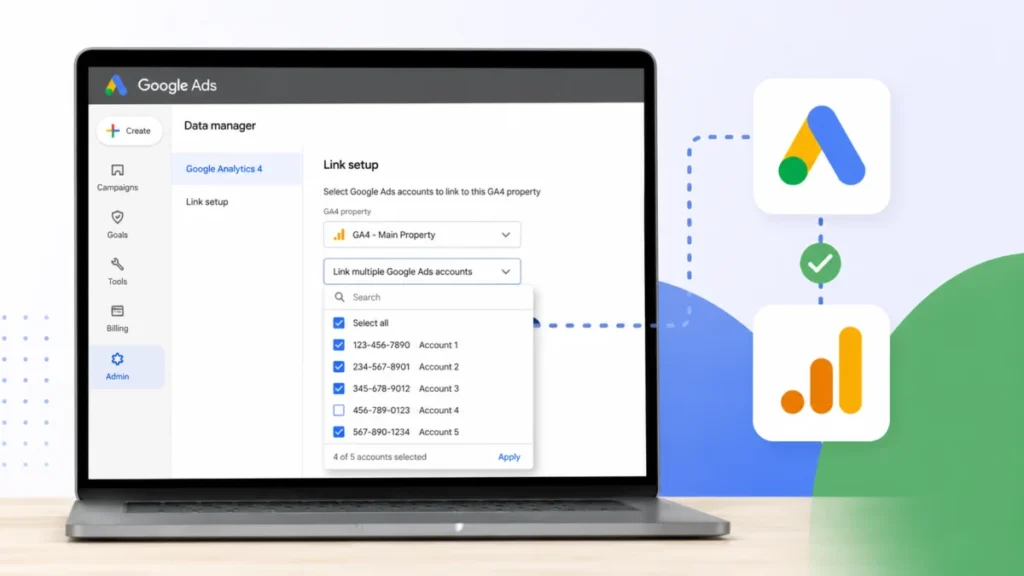

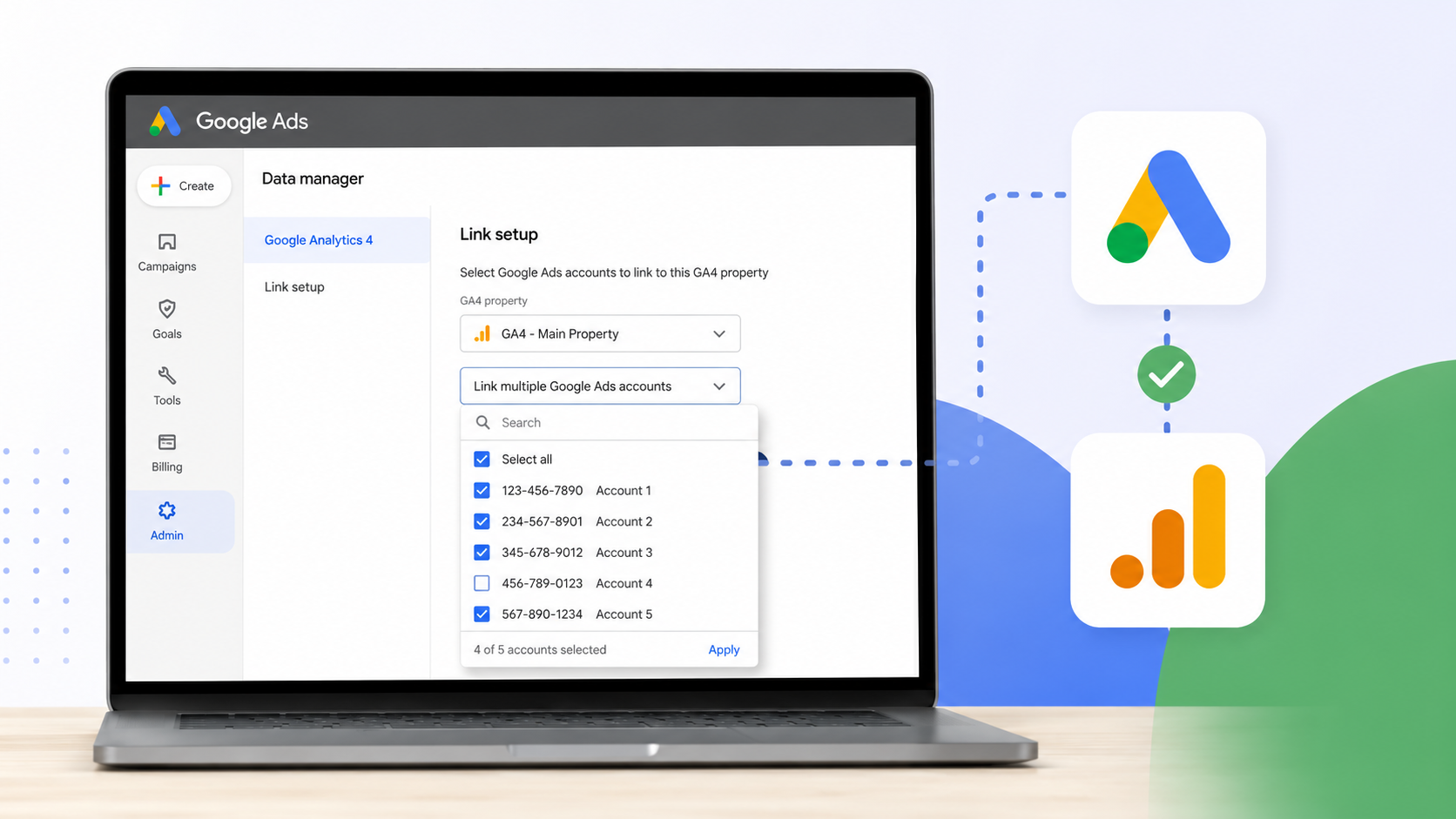
The update, which is currently being rolled out globally, introduces a new bulk linking option located within the Google Ads "Data Manager" interface. Specifically, users can navigate to the "Google Analytics 4" section and find the "Link Setup" tab to access these new capabilities. This interface allows advertisers to utilize a multi-select drop-down menu, enabling the simultaneous selection or deselection of multiple Google Ads accounts for connection to a specific GA4 property. This is a departure from the previous requirement where each account often necessitated individual attention, a process that was not only time-consuming but also prone to human error, such as overlooking specific accounts during a large-scale setup or migration.
Technical Evolution and the Role of Data Manager
The introduction of bulk linking is a component of Google’s broader effort to centralize data management through its "Data Manager" hub. Launched to simplify the way advertisers bring first-party data into Google’s advertising ecosystem, the Data Manager serves as a bridge between various data sources and marketing actions. By placing the GA4 linking process within this hub, Google is signaling that the integration of analytics and advertising is no longer just a secondary setup task, but a core strategic function of modern digital marketing.
Under the new system, once the desired accounts are selected through the drop-down menu, the data-sharing permissions are applied across the board. This includes the sharing of key metrics such as conversions, audience lists, and site engagement data. For agencies managing dozens or even hundreds of client accounts under a single Manager Account (MCC), this update transforms a task that once took hours into one that takes minutes. It ensures that when a new account is onboarded or an old one is retired, the connection to the central GA4 property can be updated with minimal friction.
The Chronology of the GA4 Transition
To understand the impact of this update, it is essential to look at the timeline of Google’s measurement evolution. The transition from Universal Analytics (UA) to Google Analytics 4 has been one of the most significant shifts in the history of digital marketing.
- October 2020: Google officially launches Google Analytics 4 as the new default for all new properties, moving away from the session-based tracking of UA to an event-based model.
- March 2022: Google announces the sunset of Universal Analytics, setting a hard deadline for standard properties to stop processing new hits by July 1, 2023.
- July 2023: Standard Universal Analytics properties cease data processing. This period saw a massive rush for advertisers to link their Google Ads accounts to new GA4 properties to maintain historical data continuity.
- July 2024: Universal Analytics 360 properties reach their sunset date.
- Mid-2024: Google introduces the enhanced Data Manager interface, followed by the current rollout of the bulk linking feature, aimed at refining the user experience for those who have completed the migration but are struggling with the complexities of managing multiple accounts at scale.
This timeline illustrates that while the initial push was about migration and adoption, the current phase of Google’s strategy is focused on optimization and ease of use. The bulk linking feature is a direct response to feedback from the professional community regarding the "friction" of the GA4 interface compared to its predecessor.
Supporting Data and Industry Efficiency
While Google does not frequently release internal metrics regarding the number of clicks saved by specific UI updates, industry benchmarks from major digital agencies suggest that administrative tasks account for approximately 15% to 20% of a junior account manager’s weekly workload. For an agency managing 50 accounts, the manual linking of GA4 properties—including the verification of conversion imports and audience synchronization—could represent a significant portion of that time.
Furthermore, data from various marketing technology audits indicates that "data gaps" in reporting are most frequently caused by misconfigured links between platforms. In a study of over 1,000 Google Ads accounts, it was found that roughly 12% had at least one missing or broken link to an analytics property, leading to under-reported conversions. By allowing for bulk management, Google is effectively reducing the "surface area" for these errors, ensuring that measurement setups remain consistent across entire portfolios.
Strategic Implications for Smart Bidding and AI
The importance of this update extends beyond mere convenience; it has profound implications for the performance of Google’s AI-driven features. Google Ads relies heavily on "Smart Bidding" strategies, such as Target CPA (Cost Per Acquisition) and Target ROAS (Return on Ad Spend). These strategies are only as effective as the data they receive.
When multiple Google Ads accounts are linked to a single GA4 property, the AI can draw from a more comprehensive pool of conversion data. For enterprise companies with different accounts for different regions or product lines, bulk linking ensures that every account is contributing to and benefiting from the shared conversion signals. This centralized data flow allows Google’s machine learning algorithms to identify patterns and optimize bids with greater precision. If an account is left unlinked due to administrative oversight, it misses out on these signals, potentially leading to higher costs and lower efficiency.
Industry Reaction and Discovery
The update was first highlighted by Thomas Eccel, a recognized expert in Paid Search and a frequent commentator on Google Ads updates. Eccel shared his discovery on LinkedIn, noting the addition of the "Link Setup" option within the Data Manager. His observation quickly gained traction among the PPC (Pay-Per-Click) community, where professionals noted that such features have been requested since the early days of the GA4 rollout.
The consensus among industry experts is that this update is a "quality of life" improvement that reflects Google’s recognition of the agency workflow. Agencies often deal with "link fatigue," where the sheer number of manual steps required to set up a client correctly becomes a barrier to scaling services. By simplifying the connection between the most used advertising platform and the most used analytics platform in the world, Google is removing one of the final hurdles in the post-Universal Analytics era.

Broader Impact on Enterprise and Franchise Models
Beyond agencies, this update is a boon for franchise businesses and large-scale enterprises. Consider a national franchise with 500 individual locations, each having its own Google Ads account to manage local budgets, but all feeding into a single corporate GA4 property for national performance tracking. Previously, managing these links required either complex API scripts or a grueling manual process. With bulk linking, a corporate marketing team can ensure that every local branch is correctly aligned with the national data strategy with just a few clicks.
Similarly, for enterprises undergoing mergers or acquisitions, the ability to quickly integrate a newly acquired company’s Google Ads accounts into the parent company’s GA4 property is essential for immediate visibility into the new asset’s performance. This level of agility is increasingly necessary in a business environment where data-driven decisions must be made in real-time.
Final Analysis: A Move Toward Unified Measurement
The rollout of bulk linking for Google Ads and GA4 is more than a simple UI update; it is an acknowledgment of the complexity of the modern digital advertising ecosystem. As the industry moves toward a privacy-first future—characterized by the phase-out of third-party cookies and the rise of modeled conversions—the integrity of the link between the ad platform and the analytics platform becomes the bedrock of successful marketing.
By making it easier to manage these links at scale, Google is helping to ensure that its users stay within its ecosystem, providing them with the tools necessary to maintain a "single source of truth" for their data. This update reinforces the idea that GA4 is not just a reporting tool, but a foundational data layer that powers the entire Google Ads engine. As advertisers continue to adapt to the event-based tracking and machine-learning-heavy environment of GA4, tools that simplify the administrative burden will be essential in helping them focus on what truly matters: strategy, creative, and driving business growth.
Looking ahead, it is likely that Google will continue to expand the capabilities of the Data Manager, potentially adding more bulk actions for audience sharing and conversion adjustments. For now, the introduction of bulk linking stands as a significant improvement for the professionals who navigate the intersection of advertising and analytics every day, providing a more robust and efficient way to manage data integration at scale.