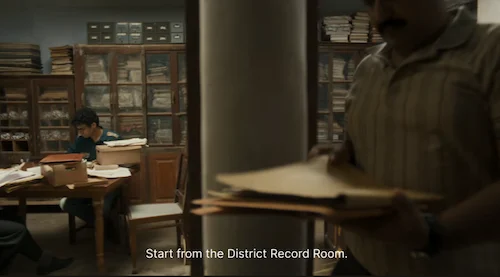

OpenAI has officially launched its latest localized advertising campaign in India, leveraging cinematic storytelling and cultural resonance to introduce its new Hindi-language voice assistants, Neer and Leher. Marking a significant shift from traditional tech marketing, the artificial intelligence research and deployment company has released a four-and-a-half-minute short film titled The Notice, directed by acclaimed filmmaker Reema Kagti and produced by Tiger Telly.
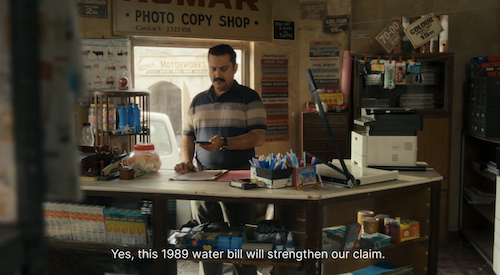
The campaign centers on the Kumar family, who find themselves facing imminent eviction after a property developer disputes their ownership of their ancestral home and surrounding farmland. Amidst mounting tension, the family utilizes ChatGPT as a dynamic guide to help track down their elusive title deed, while individual family members simultaneously turn to the AI tool for deeply personal, everyday advice. By embedding advanced conversational AI into a distinctly Indian narrative filled with familial warmth, high-stakes drama, and gentle humor, OpenAI aims to transition ChatGPT from an abstract utility tool into an indispensable, familiar companion in everyday household life.
The strategic rollout in the South Asian market represents a broader global trend by tech conglomerates to localize artificial intelligence products not merely through linguistic translation, but through emotional and cultural integration. Following successful campaigns in the United States and the United Kingdom that highlighted the witty personalities of older demographics using ChatGPT Voice, the Indian campaign addresses one of the world’s most competitive and digitally dynamic consumer bases.
The Narrative Framework of The Notice
The Notice leverages a high-stakes domestic crisis—a trope deeply embedded in popular Indian cinematic and literary traditions—to demonstrate the multifaceted utility of conversational artificial intelligence. The plot revolves around the Kumar family receiving a legal notice of eviction from a predatory real estate developer claiming rights over their ancestral estate. In panic and desperation, the household turns to ChatGPT, not just as a cold legal database, but as an interactive interlocutor capable of parsing complex bureaucratic jargon, suggesting logical steps for archival searches, and offering emotional reassurance during a period of acute stress.
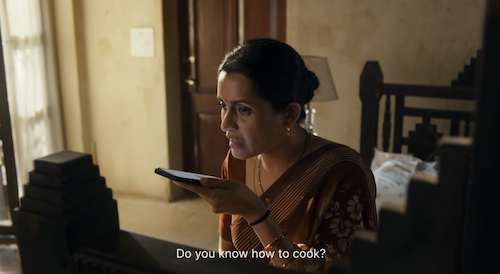
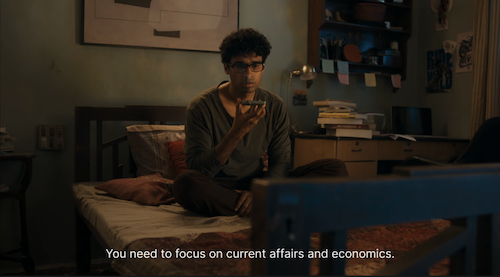
Beyond the overarching property dispute, the short film weaves in subplots involving individual family members. Younger and older generations alike consult Neer and Leher—the newly minted Hindi voices of ChatGPT—for matters ranging from career guidance and interpersonal relationship advice to culinary tips and health queries. This multi-layered storytelling approach underscores OpenAI’s strategic objective: demonstrating that AI can cater to diverse demographics within a single household, bridging generational divides through intuitive voice technology.
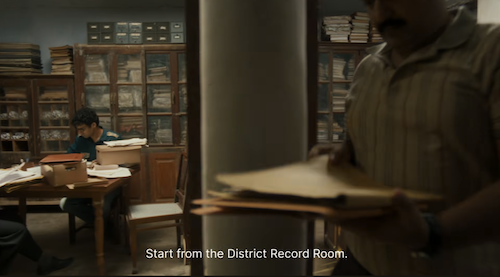
The production value of the campaign reflects a deliberate investment in authentic regional storytelling. By partnering with Reema Kagti, a prominent figure in the Indian independent and mainstream film industry known for her nuanced character-driven narratives, OpenAI sidestepped standard corporate advertising tropes. The resulting film mirrors the visual and emotional language of contemporary Indian cinema, allowing viewers to see their own domestic realities reflected on screen.
Strategic Localization and the Introduction of Neer and Leher
The introduction of Neer and Leher is a critical milestone in OpenAI’s international expansion strategy. India, characterized by its linguistic diversity, digital-first consumer base, and massive smartphone penetration, presents both immense opportunities and unique challenges for artificial intelligence developers. Voice interaction is increasingly recognized as the primary gateway for digital inclusion in developing economies, bypassing literacy barriers and complex keyboard interfaces.
Mili Kapoor, consumer marketing lead at OpenAI, emphasized the philosophy behind the campaign in a public statement released via LinkedIn. Kapoor noted that India is defined by "a million little moments, quirks, conversations, and relationships that make everyday life so wonderfully unique." She added that OpenAI’s aspiration is for ChatGPT to belong within those spaces—not merely as a utilitarian technology, but as a familiar, relevant presence naturally woven into daily routines.
According to company disclosures, The Notice is only the inaugural installment in a broader multimedia campaign. OpenAI has confirmed plans to release subsequent short films focusing on individual members of the Kumar family and their specific personal and professional goals, further illustrating the adaptability of the AI platform across different use cases.
Background Context and Market Dynamics
The launch of localized Hindi voices and culturally tailored marketing in India occurs against a backdrop of hyper-competitive market dynamics within the global artificial intelligence sector. Major technology firms, including Google, Microsoft, Meta, and various domestic Indian startups, are aggressively vying for dominance in the world’s most populous nation. With hundreds of millions of internet users accessing online platforms primarily via mobile devices, vernacular accessibility has transitioned from a value-added feature to a baseline business requirement.
Historically, English-centric models limited the adoption of advanced generative AI among regional language speakers, who form the vast majority of India’s demographic profile. By introducing native-sounding Hindi voices with regional cadence, inflection, and cultural context, OpenAI is directly addressing the linguistic friction that has historically hindered technological penetration in tier-2 and tier-3 cities across India.
Furthermore, property disputes, bureaucratic hurdles, and ancestral land management—the central plot devices of The Notice—are highly relatable themes within the Indian socio-legal landscape. Land records and property titles have traditionally been subjects of complex historical documentation, making legal navigation a universal pain point. By positioning ChatGPT as an accessible navigational tool through bureaucratic labyrinths, OpenAI is tapping directly into a pervasive public anxiety while showcasing the practical utility of generative AI in everyday civic life.
Industry Implications and the Future of AI Advertising
The strategy employed by OpenAI in The Notice marks a significant evolution in how artificial intelligence capabilities are communicated to the general public. For years, tech marketing relied heavily on abstract demonstrations of computational power, algorithmic efficiency, and futuristic enterprise applications. However, as generative AI transitions into a mass-market consumer product, companies are increasingly recognizing the necessity of emotional branding.
By framing AI through the lens of domestic drama, family preservation, and emotional support, OpenAI is attempting to demystify the technology and mitigate public anxieties regarding automation, job displacement, and privacy. The use of narrative-driven short films allows viewers to comprehend complex technological capabilities—such as real-time voice translation, contextual reasoning, and personalized problem-solving—within a familiar, non-threatening context.
Industry analysts note that this approach could establish a new benchmark for tech advertising in emerging markets. Rather than selling software features, companies are selling solutions to human problems, utilizing local cultural signifiers to build trust and brand loyalty. As competition intensifies, the success of campaigns like The Notice will likely be measured not just by download metrics or subscription conversions, but by the degree to which artificial intelligence becomes culturally naturalized within diverse global communities.
As OpenAI continues to roll out subsequent phases of the campaign featuring the Kumar family, the broader market will be watching closely to see whether emotional storytelling can successfully drive sustained user engagement and loyalty in one of the most fiercely contested technology markets in the world.