

Artificial intelligence (AI) is rapidly transforming how businesses operate and how consumers discover information. A critical, yet often overlooked, aspect of this transformation is how AI models learn about brands and subsequently direct potential customers to them. AI agents, the sophisticated algorithms powering chatbots and generative AI tools, are increasingly "reading" websites to build their knowledge bases. This learning process is then translated into action when these AI systems cite webpages in their responses, effectively acting as digital conduits for traffic. However, for many marketers, this process has largely been a blind spot, leaving them with crucial unanswered questions: Which of my pages does AI visit most? Where does it send visitors?
A recent analysis, dubbed "The AI Crawl vs. Traffic Report," delves into these questions by examining data from bot-tracking services like Cloudflare. This comprehensive study, which analyzed reports from 74 distinct accounts, aimed to shed light on the often-opaque interactions between AI crawlers and marketing websites. The findings offer significant insights into how AI prioritizes content, which pages are most effective at attracting AI-driven referrals, and how website structure might influence AI visibility.
AI’s Voracious Appetite for Homepages
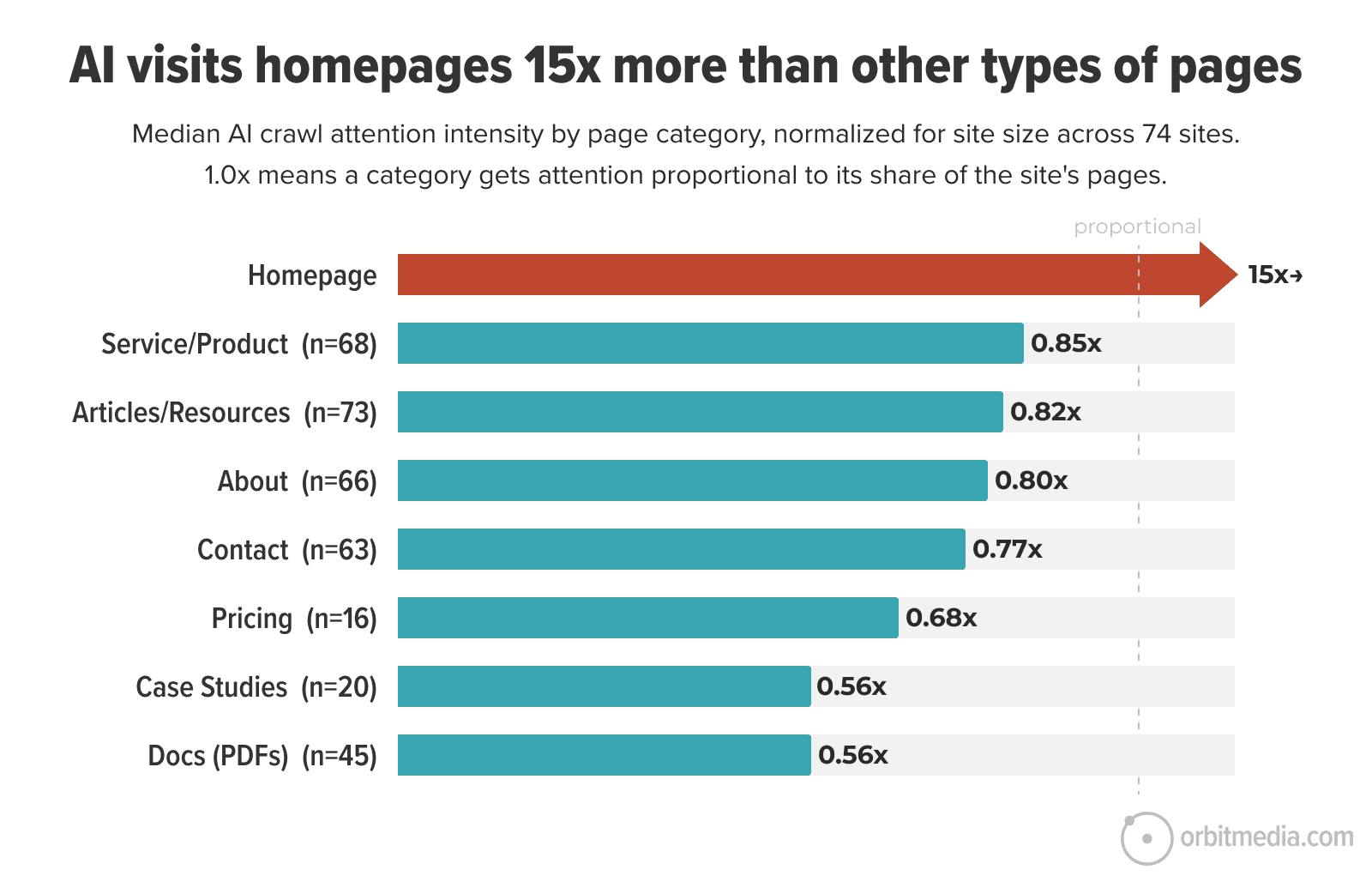
One of the most striking revelations from the study is the disproportionate attention AI gives to website homepages. The data indicates that homepages are crawled approximately 15 times more frequently by AI bots than any other type of page on a website. This figure dramatically outpaces what would be expected if AI requests were evenly distributed across all URLs.
To contextualize this, if a website has 100 pages, and its homepage constitutes just 1% of its total URLs, one might expect it to receive roughly 1% of AI crawl requests. However, the study found that homepages often capture a significantly larger share. This phenomenon was observed across a diverse range of websites, from small businesses to larger enterprises. Even when compared to other crucial page types such as service/product pages, articles, "About Us" sections, contact pages, pricing pages, and case studies, the homepage stands out as the undisputed favorite of AI crawlers.
The implication for marketers is clear: if the goal is to ensure AI systems understand and represent a brand accurately, the homepage is paramount. The study suggests that the location of content on a website may be more influential than the content itself when it comes to AI learning. As Cyrus Shepard, Founder at Zyppy, noted regarding the findings, "This data suggests that many publishers may be sleeping on the potential of their homepages. Makes sense, but you have to wonder how many brands really pay attention to what their homepage says about them, or if they are offloading this valuable information space to about, support, and article pages." This underscores the need for marketers to meticulously curate their homepage content, ensuring it encapsulates the core value proposition and key offerings of their brand.
The Correlation Between Website Size and AI Attention
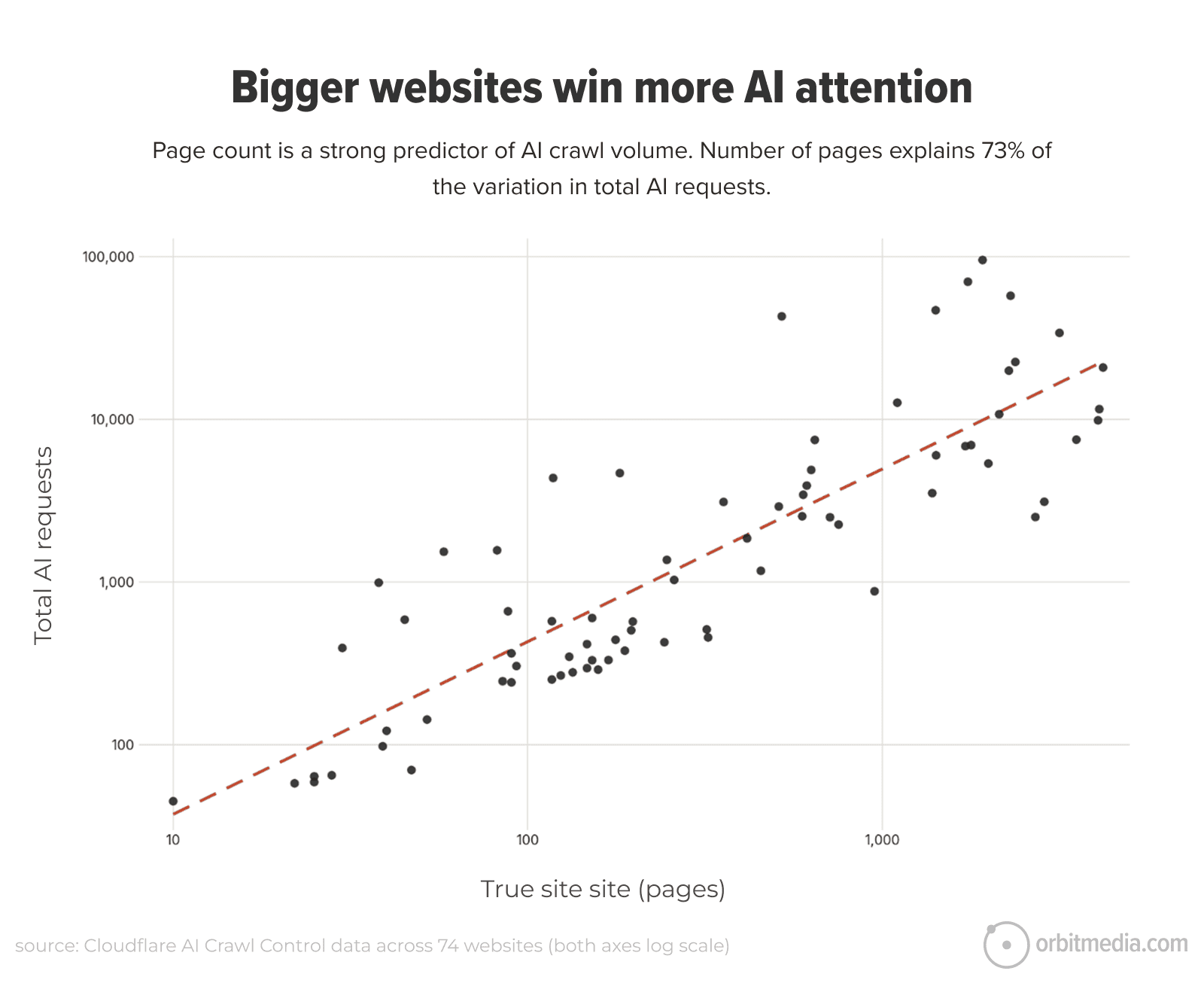
Beyond page type, the sheer scale of a website also plays a significant role in the amount of attention it garnims from AI bots. The analysis revealed a strong, almost perfectly proportional correlation (0.86) between a website’s total number of URLs and the volume of AI crawl requests it receives. In essence, larger websites with more pages tend to attract more AI attention. This is logically consistent with the nature of web crawling; more pages provide a broader surface area for AI bots to discover and index. Each additional page represents a potential entry point for AI to gather information or to be referenced in AI-generated content.
However, the correlation is not absolute. The study highlighted instances where smaller websites, despite having fewer pages, attracted a volume of AI attention comparable to much larger sites. These outliers suggest that factors beyond sheer size are at play. Websites with exceptionally high-quality, well-optimized content, or those with a strong, recognizable brand presence that is heavily featured in AI’s foundational training data, may disproportionately capture AI interest. This could also be a testament to superior marketing strategies that make specific pages more discoverable or appealing to AI systems.
The takeaway for marketers is twofold: while a larger website naturally offers more opportunities for AI discovery, the quality and optimization of individual pages remain critical. For smaller sites aiming to maximize their AI visibility, focusing on creating exceptional content on key pages, particularly the homepage and service/product pages, is crucial.

AI Referral Traffic: Where AI Sends Visitors
While AI crawling indicates what bots are "reading," AI referral traffic reveals where AI is actually sending human visitors. This distinction is vital, as a mere citation in an AI response doesn’t guarantee a click-through. The study utilized Cloudflare’s data, which sits "upstream" of typical analytics platforms like Google Analytics, offering a more accurate picture of traffic sources.
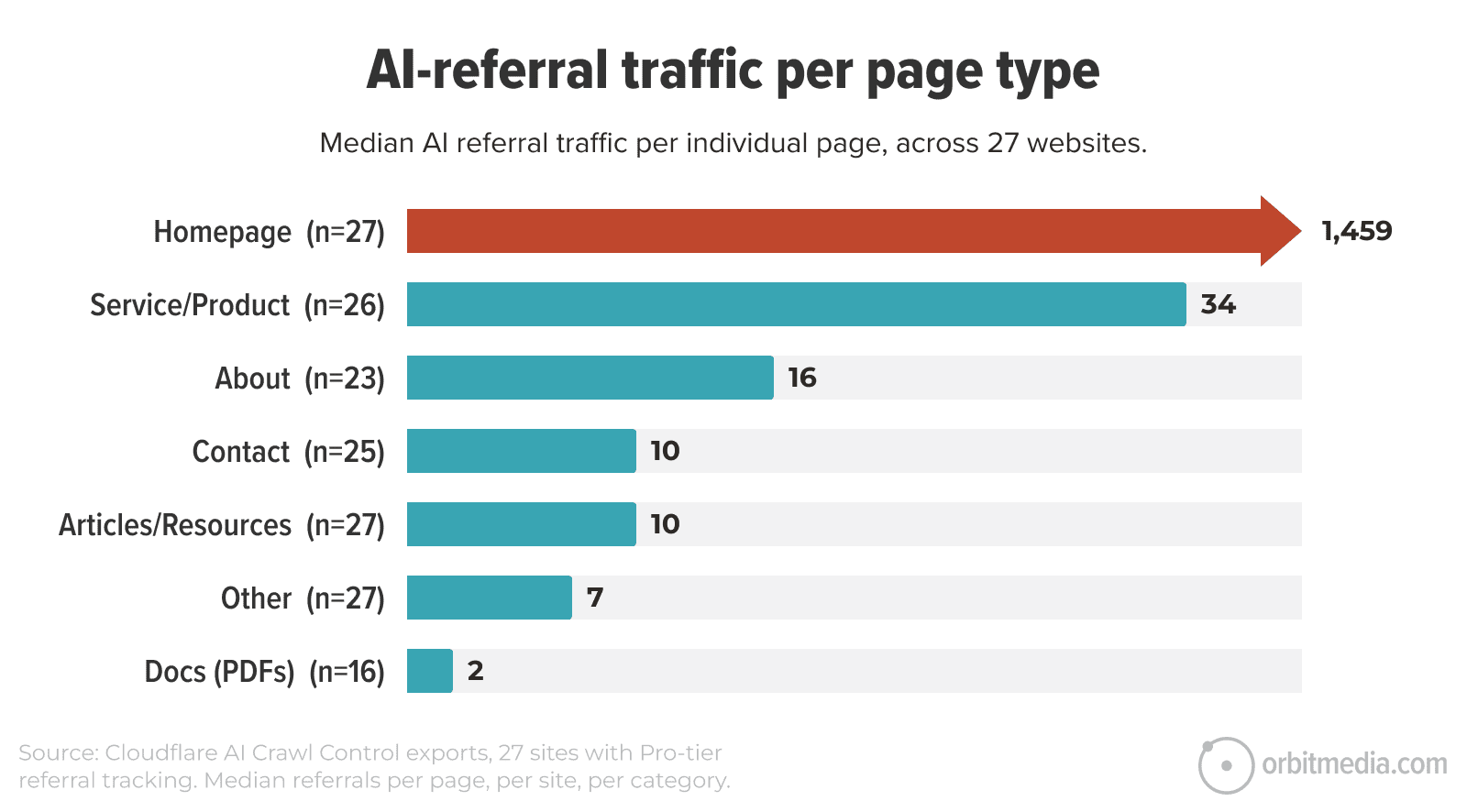
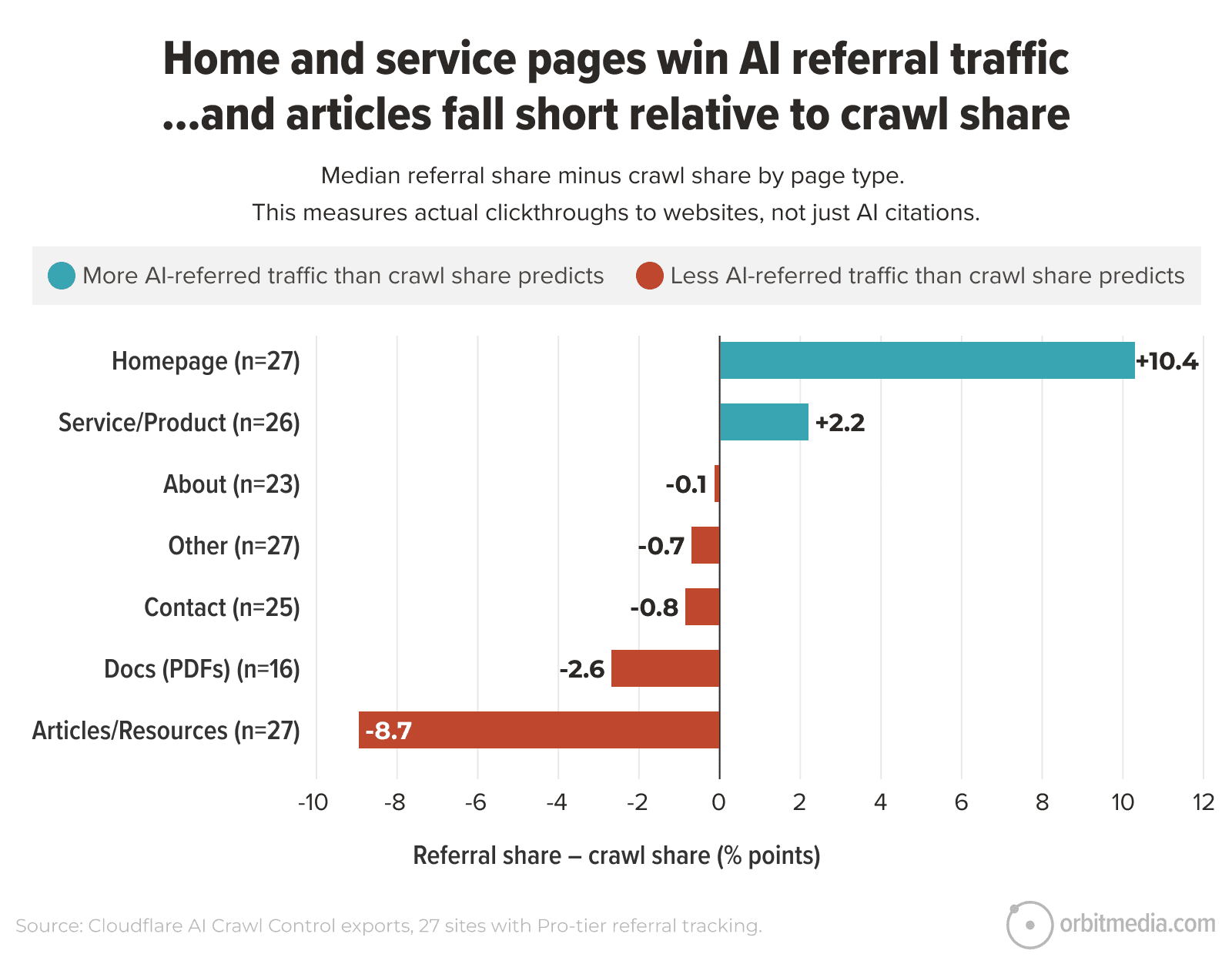
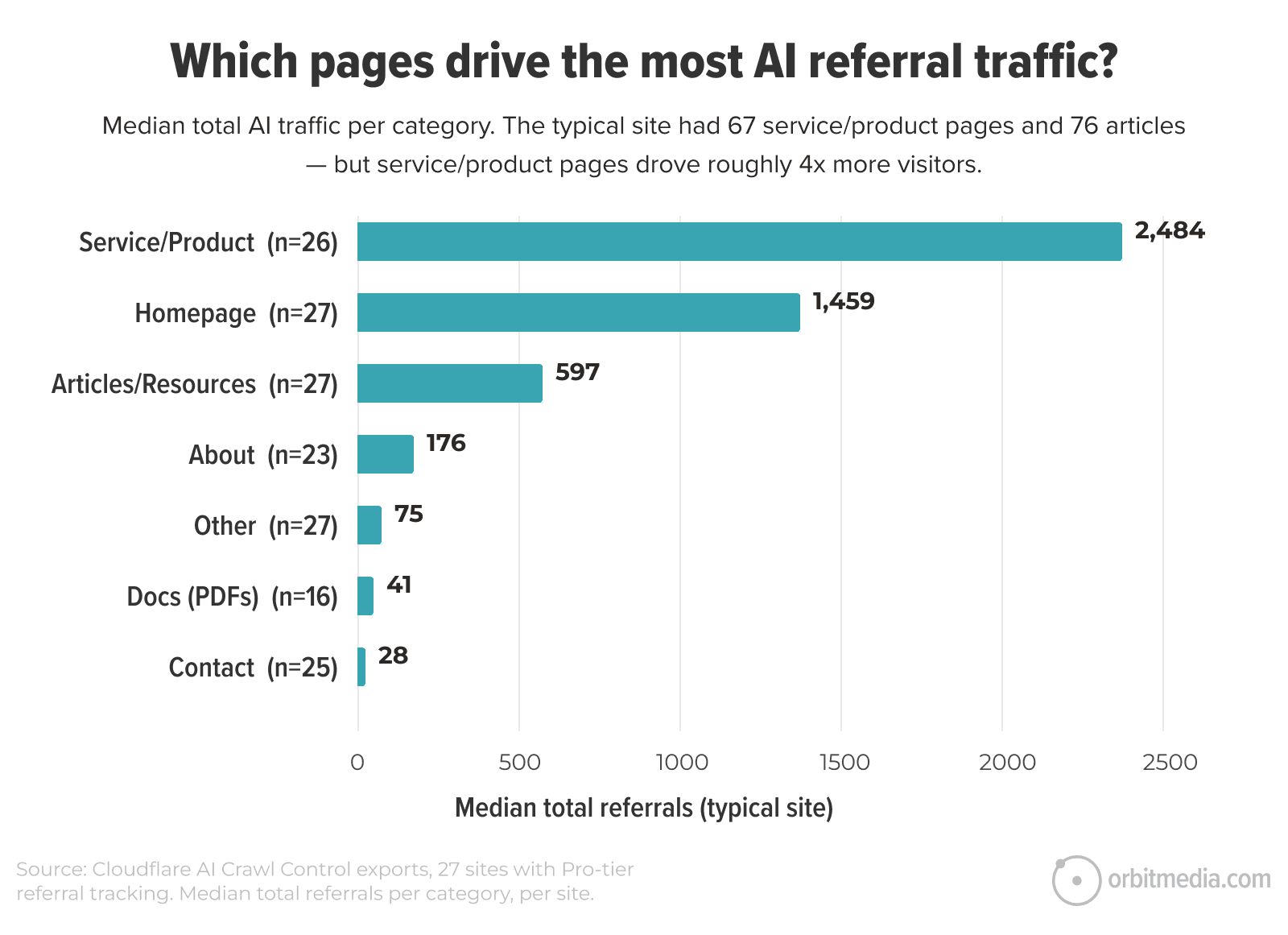
The analysis categorized webpages into several types: service/product pages, homepages, articles/resources, about pages, contact pages, pricing pages, and case studies. The findings showed that homepages and service/product pages were the most successful at converting AI crawls into actual visits. While articles and resource pages were frequently crawled by AI – a phenomenon the report terms the "Dark Library Effect" – they significantly underperformed in generating referral traffic. This suggests that AI models often absorb the information within articles, using it to answer user queries directly, but are less likely to direct users to these pages compared to more commercially oriented content.
This pattern is reminiscent of the "zero-click" phenomenon observed in traditional search engine optimization (SEO), where users can find answers directly within search engine results pages without needing to click through to a website. Similarly, AI models appear to be summarizing and synthesizing information from articles, providing immediate answers without necessarily driving traffic to the original source. Service and product pages, conversely, tend to be more effective at converting AI interest into tangible website visits. The data indicates that these pages earn roughly three times more total AI-referral traffic per page than a typical article.
The Impact of URL Depth on AI Referrals
The structure of a website’s URLs and the depth at which pages are located also influence AI’s behavior. Cloudflare’s "Most Crawled Paths" report allowed researchers to analyze the URL structure of visited pages. The study found that AI bots are generally willing to crawl pages located several folders deep within a website’s hierarchy. However, a stark contrast emerged when examining referral traffic: AI is significantly less likely to send visitors to pages buried deep within a folder structure.
The "crawl vs. referral" chart illustrates this point clearly. While AI bots may discover pages at depths of three or four folders, the likelihood of these pages generating referral traffic diminishes sharply. A page three folders deep might receive only a quarter of the AI traffic its crawl rate would predict, with pages four folders deep receiving almost no referral traffic. This suggests an "architecture tax" associated with deep URL structures, where pages are discoverable by AI but less likely to be recommended.
While this data doesn’t necessitate immediate site restructuring, it offers valuable guidance for new website builds or re-organizations. Placing important pages closer to the root directory may improve their chances of being cited and driving traffic. The study cautions against moving pages solely for this reason, emphasizing that content quality and relevance remain primary drivers of AI engagement.
Implications for Marketers and the Future of AI Interaction
The findings of "The AI Crawl vs. Traffic Report" provide a much-needed roadmap for marketers navigating the evolving landscape of AI. The insights suggest a strategic shift in how businesses approach their online presence in the age of artificial intelligence.
Firstly, prioritizing and optimizing the homepage is crucial. This is the primary gateway for AI learning about a brand. Ensuring it clearly communicates the brand’s identity, offerings, and value proposition is essential for effective AI representation.
Secondly, while comprehensive content marketing remains vital for various benefits beyond direct traffic (such as thought leadership, sales support, and brand building), marketers should temper expectations regarding AI referral traffic from blog posts and articles. The "Dark Library Effect" indicates that AI is more likely to consume and summarize this content than to direct users to it. Instead, the focus for driving AI referrals should be on service/product pages and the homepage.
Thirdly, website architecture matters. While AI can crawl deep into a site, its propensity to refer traffic diminishes significantly with URL depth. Strategic URL structuring, especially for new projects, can enhance AI-driven discoverability and traffic generation.
Finally, the report encourages a more proactive engagement with AI. By understanding how AI interacts with websites, marketers can leverage this knowledge to "train" AI to better represent their brands. Tools like Cloudflare’s AI Crawl Control offer a pathway for businesses to analyze their own data and identify areas for improvement. The prompt provided in the study offers a structured approach to analyzing this data with AI assistance, enabling marketers to gain personalized insights.
The proliferation of AI means that websites are no longer just destinations for human users; they are also crucial learning resources for sophisticated algorithms. By understanding these dynamics, businesses can ensure their online presence is optimized not only for human engagement but also for effective AI discovery and recommendation, ultimately driving more qualified leads and strengthening their brand’s digital footprint in an increasingly AI-driven world. The study’s conclusion emphasizes this point: "Your site is your best (and most direct) hope of training an AI to recommend your brand."