
The traditional social media playbook that prioritized follower accumulation as the primary metric of corporate success has officially expired. For over a decade, marketing budgets hinged on a linear equation: more followers yielded higher reach, which drove engagement, sales, and ultimately, larger financial allocations for digital teams. Today, however, that model has been fundamentally upended by the rise of algorithmic recommendation engines, transforming social media ecosystems from static subscriber lists into dynamic, relevance-driven distribution networks.
Modern platforms such as TikTok’s For You page and Instagram’s Reels tab no longer prioritize existing audience sizes. Instead, they serve content dynamically based on immediate context, user behavior, and topical resonance. Industry data highlights this seismic shift: internal and third-party metrics demonstrate that over 70% of total video views on major recommendation feeds originate from non-followers roughly 60% of the time. Consequently, the pursuit of vanity metrics has given way to an intense corporate focus on discoverability, search optimization, and authentic community engagement.
The Mechanics of Algorithmic Reach and Social Search
The transition from follower-based distribution to algorithmic discovery has radically altered how brands conceptualize their digital footprint. When social platforms rely on machine learning models to assess user interest, content longevity changes entirely. A single post can now accumulate thousands of views from individuals who have no prior connection to the publishing account, often eclipsing the visibility offered by a stagnant follower base.
This shift coincides with a broader change in consumer search habits. According to comprehensive market data gathered in a third-quarter survey by Panoplai—encompassing over 2,200 consumers across the United States, the United Kingdom, and Australia—social media has firmly entrenched itself as the second most commonly utilized search platform across all demographics. While traditional search engines still hold the top spot, social channels consistently outperform chat-based artificial intelligence tools and direct peer recommendations. Among younger demographics, particularly Generation Z, the gap between traditional search engines and social platforms continues to narrow rapidly.
To capture this traffic, digital strategists are deploying social media search optimization, commonly known as SOSEO. Unlike traditional search engine optimization, which focuses primarily on website text and metadata, social optimization requires platforms to parse complex multimedia elements. Recommendation algorithms actively index spoken audio, on-screen text overlays, closed captions, and engagement velocity to determine a post’s topical relevance. A video that addresses a high-demand topic but lacks optimized textual and auditory cues will invariably underperform compared to one engineered for maximum algorithmic readability across every layer of the asset.
The Rise of Micro-Influencers and the Power of Niche Communities
As the reliance on massive follower counts wanes, corporate marketing departments are reevaluating their criteria for influencer partnerships. Consumer trust has fragmented, moving away from mega-influencers who operate like traditional broadcast megaphones toward specialized micro-influencers and niche creators who maintain deep connections with smaller, highly focused communities.
Survey insights illustrate this behavioral change: only 17% of consumers report checking an influencer’s total follower count before deciding to follow them or trust their recommendations. Furthermore, when evaluating purchase intent, consumers demonstrate a distinct preference for specialization. Approximately 21% of buyers indicate they are more likely to complete a purchase based on a recommendation from a niche creator, compared to just 15% who favor mega-influencers, while roughly a third express no preference.
Authenticity has emerged as the central currency of digital commerce. Modern audiences increasingly demand transparency, with 80% of consumers believing that influencers should actively use the products they endorse. Furthermore, 44% prefer that creators be long-term, genuine users before entering into sponsored agreements. For brands, this realization necessitates a fundamental pivot in partner selection. Rather than prioritizing reach, successful organizations now vet potential partners using engagement rates, content quality, and topical authority, ensuring that promotional messaging feels organic rather than transactional.
Frontline Employees as the New Corporate Discovery Engine

Beyond external creators, brands are discovering that their most potent marketing assets are already on the payroll. Employee-generated content has quietly transformed into a primary driver of product discovery. Data shows that 40% of consumers—a figure that surges to 62% among Generation Z—discover new products through employee-created social content on a monthly basis.
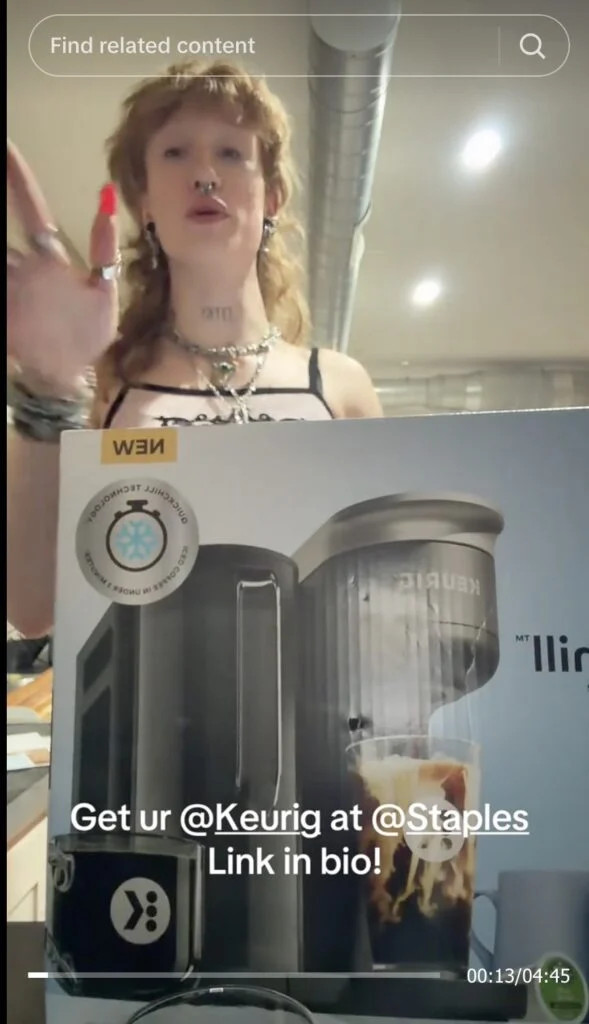
This phenomenon gained widespread visibility through viral cultural touchstones like the digital content produced by retail workers, notably exemplified by viral employee accounts such as the "Staples Baddie," whose candid depictions of daily life within an office supply retail environment garnered massive national attention and mainstream profiles. Consumers consistently express a preference for unpolished, authentic perspectives from frontline workers—such as a stockroom associate detailing logistics or a barista explaining beverage preparation—over highly curated campaigns engineered by central marketing departments or executive leadership teams.
However, the rapid formalization of employee advocacy presents logistical and ethical challenges. A clear majority of consumers—61%—believe that employees should receive distinct financial compensation if promotional duties extend beyond their standard daily job descriptions. In response to these dynamics, major corporate entities including Gap Inc. and Starbucks have begun formalizing structured employee creator programs. These initiatives establish clear operational guidelines while offering fair compensation and creative autonomy, allowing staff members to express their individuality within defined brand boundaries.
The Multichannel Impact of SEO, SOSEO, and Answer Engines
The implications of modern discoverability extend far beyond the native boundaries of individual social networks. Traditional search engines have adapted to shifting consumer habits by integrating short-form video tabs directly into their primary results pages, pulling seamlessly from platforms like Instagram Reels, TikTok, and YouTube Shorts. Consequently, rigorous social search optimization efforts now yield secondary benefits across traditional web search results.
Concurrently, the rapid proliferation of artificial intelligence answer engines—including OpenAI’s ChatGPT, Anthropic’s Claude, and Google’s Gemini—has accelerated the longevity of social content. These generative systems routinely index public social commentary, discussions, and professional posts from networks like LinkedIn and Reddit to formulate comprehensive responses to user queries.
This convergence of SEO, social search optimization, and answer engine optimization has fundamentally altered the lifecycle of digital content. Historically, social posts operated on a compressed 24-to-48-hour shelf life before vanishing into the archival depths of a feed. Today, optimized assets frequently experience multiple waves of organic discovery across disparate digital environments over extended periods, provided their underlying themes remain relevant to ongoing public discourse.
Strategic Implications for the Post-Follower Era
The systemic transition away from audience size as a foundational Key Performance Indicator marks a mature phase in digital media evolution. Brands that continue to optimize primarily for follower accumulation risk misallocating capital in an ecosystem governed by algorithmic recommendations and decentralized search.
Sustained success in the current digital landscape requires a synchronized approach to discoverability. Forward-thinking organizations are harmonizing three distinct pillars: rigorous optimization of native content across audio, text, and visual metadata; targeted partnerships with credible niche creators who command genuine community trust; and structured, fair employee advocacy programs that leverage authentic internal voices.
As follower counts continue their inevitable decline as meaningful indicators of market penetration, the enterprises that adapt to these multidimensional discoverability frameworks will secure compounding visibility, translating algorithmic reach into measurable engagement, sustained traffic, and resilient long-term brand equity.