
B2B SaaS businesses achieve an average ROI of 702% from SEO, yet many marketing teams continue to operate with a SaaS SEO tool stack designed for a past iteration of the search engine landscape. This disparity highlights a critical gap between potential and performance, particularly as search itself undergoes a profound transformation driven by artificial intelligence. The tools and strategies that delivered growth just a few years ago are rapidly becoming obsolete in an environment where visibility in AI-generated answers is becoming as crucial as, if not more important than, securing a first-page ranking in traditional search results.
This comprehensive guide delves into 13 essential SaaS SEO tools, meticulously selected for their ability to address the multifaceted demands of modern search. These tools span critical workflows, including in-depth research and technical audits, sophisticated content optimization, strategic AI search visibility, efficient internal linking, and robust performance reporting. By adopting an updated and integrated toolkit, SaaS companies can not only sustain but accelerate their growth trajectory in a fiercely competitive digital arena.
The Strategic Imperative for SaaS SEO in a Maturing Market
The argument for substantial investment in SaaS SEO has never been more compelling. Organic search stands as one of the few marketing channels that offer a compounding return over time, a characteristic that makes it exceptionally valuable for SaaS companies under constant pressure to optimize customer acquisition costs (CAC). Unlike paid advertising, where traffic ceases the moment spending pauses, organic traffic, once established, continues to flow, building a sustainable asset for the business. Industry analyses consistently position SEO among the highest-leverage investments available for SaaS growth strategies, underpinning long-term customer acquisition and brand authority.
However, simply allocating resources to SEO is no longer sufficient. The distinction between high-growth SaaS entities and their stagnant counterparts often lies in the systematic and intelligent deployment of the right technological tools. In the absence of dedicated SEO tooling, teams frequently resort to content creation based on intuition, manual auditing processes that are prone to error and inefficiency, and an ongoing struggle to definitively link organic traffic to tangible revenue outcomes. A robust and integrated SEO platform eliminates this guesswork, replacing it with data-driven automation and streamlined workflows that empower every team member to contribute effectively.

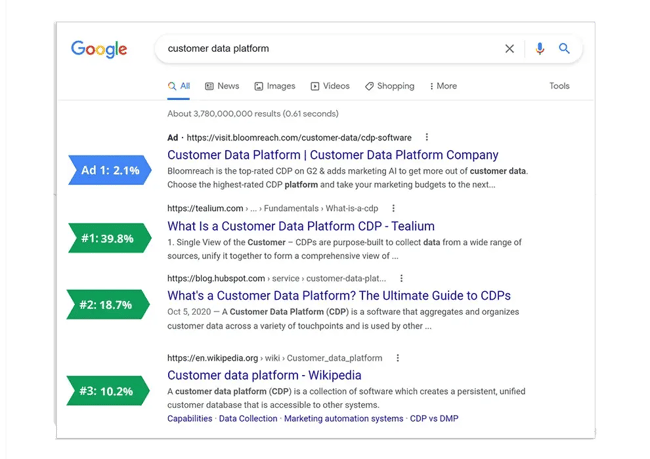
The contemporary search reality further underscores this urgency. Data from First Page Sage reveals that beyond the top three organic results on Google’s Search Engine Results Page (SERP), the click-through rate (CTR) precipitously drops into single digits. This statistic implies that for the majority of SaaS categories, ranking outside the top three positions is functionally equivalent to not ranking at all, significantly limiting visibility and potential customer engagement. SaaS teams equipped with the appropriate tools can more effectively secure and maintain these coveted top spots. Crucially, these tools also enable optimization for emerging AI-generated answers, which are increasingly reshaping the SERP experience, especially during the early discovery phases of the buyer journey when prospects often leverage AI to identify and evaluate SaaS solutions.
Navigating the New Search Frontier: AI Overviews and Answer Engine Optimization (AEO)
The advent of AI search tools such as Google’s AI Overviews (formerly SGE), ChatGPT, Perplexity, and Gemini marks a seismic shift in how users interact with search engines. These platforms are increasingly capable of answering complex queries directly, often synthesizing information from multiple sources and presenting it without requiring users to click through to individual websites. This evolution necessitates a new approach to digital visibility: Answer Engine Optimization (AEO).
AEO extends beyond traditional on-page SEO, focusing on structuring content in a way that allows AI models to accurately parse, understand, and cite it. This includes meticulous implementation of structured data (schema markup), clear and concise language, and comprehensive coverage of topics that directly address user intent. SaaS brands with strong traditional rankings can experience a sudden and significant decline in traffic if their content isn’t optimized for this AI environment, as AI Overviews begin to preempt clicks that would have previously gone to organic listings. The strategic implication is clear: optimizing for AI search is not merely an advantage but a growing necessity to maintain competitive edge and ensure brand presence in the generative search era.
Essential Pillars of a Modern SaaS SEO Strategy and Tool Selection
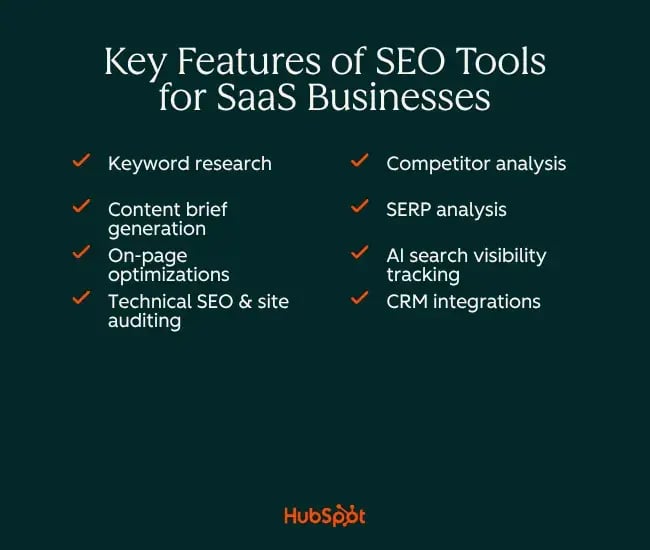
Before committing to a specific SEO tech stack, SaaS teams must first identify the core features required to support their unique workflows and objectives. While individual needs will vary, five fundamental capabilities should guide any strategic tool selection process.
1. Foundational Research: Keywords and Competitive Intelligence
For SaaS companies, keyword research transcends the mere identification of high-volume terms. It’s about uncovering keywords that signal strong commercial intent and meticulously mapping this search intent across the entire buyer journey—from initial awareness to final decision-making. The most effective SaaS SEO tools offer granular insights not only into what people are searching for but also why they are searching, what keywords competitors are successfully ranking for, and where untapped market gaps exist. This necessitates tools capable of providing detailed competitive intelligence, semantic keyword grouping, and sophisticated intent analysis. As an expert noted, winning SaaS SEO strategies prioritize specific, high-intent queries that attract qualified traffic, rather than solely chasing high-volume, generic terms. Google Search Console (GSC), a non-negotiable first-party data source, complements third-party tools by revealing actual search queries driving traffic, including often overlooked "zero search volume" keywords that can be highly converting for niche SaaS offerings.
2. Technical Excellence: Building a Robust Digital Foundation
Technical SEO forms the bedrock upon which all other SEO efforts rest. A website plagued by crawl errors, sluggish page speeds, broken internal links, duplicate content, or indexation issues will fail to gain traction, regardless of how compelling its content strategy might be. SaaS websites, due to their often expansive nature and frequent product updates, are particularly susceptible to technical debt. The continuous multiplication of product pages, the sprawl of subdomains, and development cycles that may not always prioritize SEO hygiene can quickly accumulate structural problems. A robust SEO SaaS platform must offer automated site crawling, intelligent issue prioritization, and clear, actionable guidance for remediation. Prioritizing tools with strong technical auditing capabilities is paramount, as establishing a clean technical foundation is essential before attempting to scale content production, preventing future complications and ensuring long-term site health.
3. Content Mastery: Optimization for Engagement and Authority
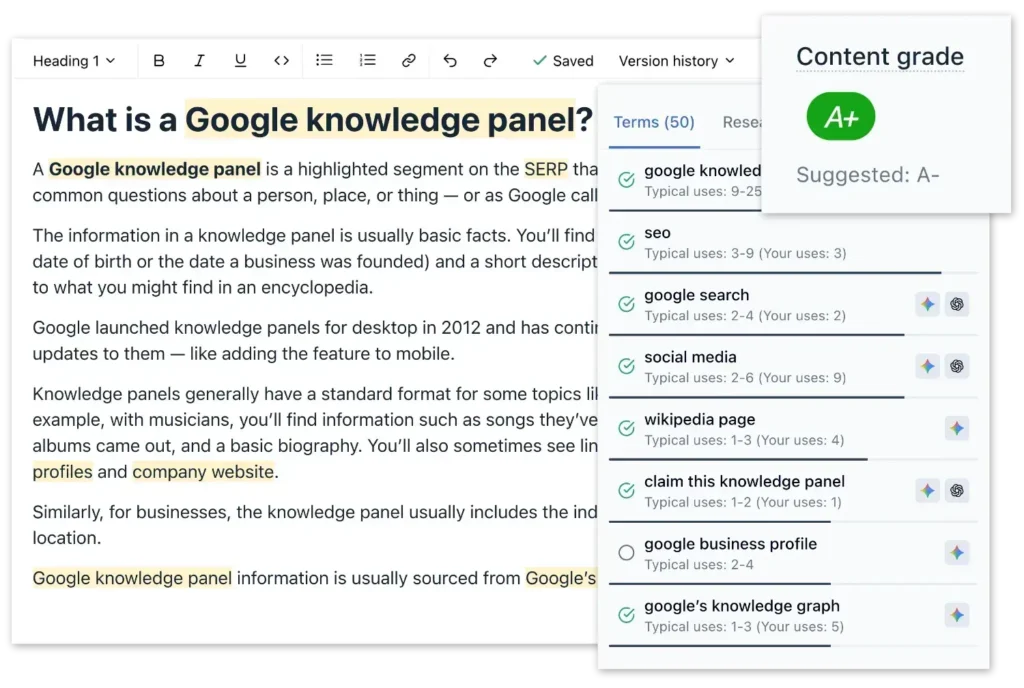
Content optimization tools are indispensable for modern SaaS SEO. They empower teams to systematically analyze their pages against top-ranking competitors, providing specific, data-backed recommendations to enhance relevance, comprehensive coverage, and structural integrity. For SaaS teams managing a high volume of content production, often involving multiple writers, freelancers, and AI-assisted workflows, these tools ensure a consistent quality benchmark. They offer real-time content scoring, semantic term suggestions, readability assessments, and the ability to generate detailed, structured content briefs. This efficiency significantly reduces editing costs and accelerates the path from first draft to publishable content, ensuring each piece has the strongest possible chance to rank from its inception.
4. AI Search and AEO Visibility
With AI search tools increasingly answering queries without traditional clicks, SaaS brands need advanced tools to measure and optimize their presence within these new environments. This means going beyond traditional ranking metrics to assess how well content is formatted for direct citation by AI models. Answer Engine Optimization (AEO) is emerging as a critical counterpart to on-page SEO, and tools that support both give SaaS teams a distinct competitive advantage. Such tools help identify how AI systems characterize a brand, which third-party sources influence these characterizations, and how to structure content (e.g., through structured data) to maximize its potential for AI citation and summary inclusion.
5. Measuring Impact: Reporting, Attribution, and CRM Integration
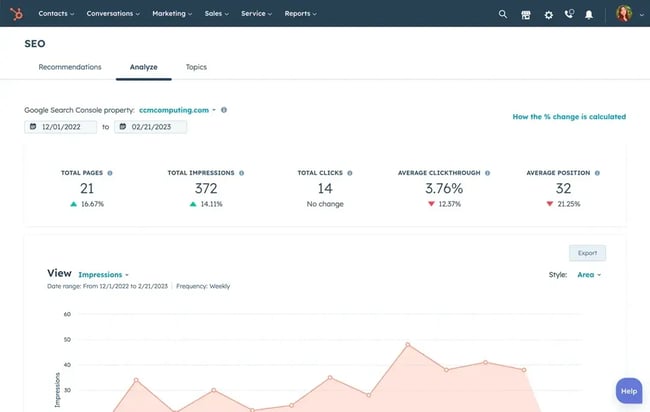
SEO investment is justified by demonstrable revenue impact. For SaaS companies, this means seamlessly connecting organic traffic to key business metrics: pipeline generation, trial sign-ups, and ultimately, closed revenue. Essential tools in this category offer customizable dashboards, historical keyword tracking, deep integration with Google Analytics and Google Search Console, and, ideally, native CRM connectivity. This integration enables marketing teams to directly attribute leads and customers to specific content assets and SEO efforts. The ability to articulate SEO performance in quantifiable business terms—rather than just rankings and impressions—is what elevates an SEO program from a perceived cost center to a strategic revenue driver, a necessity made even more urgent by the potential impact of AI Overviews on traditional click metrics.
A Curated Toolkit for SaaS SEO Success: 13 Essential Platforms
The following 13 SaaS SEO tools represent a modern tech stack, selected for their efficacy across diverse SEO workflows. Each tool offers distinct advantages, contributing to a holistic and data-driven SEO strategy.
SaaS SEO Tools for Briefing, Content Writing, and On-page Optimization
1. HubSpot Marketing Hub
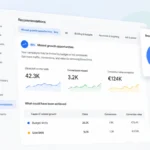
For SaaS teams seeking a unified platform for SEO management, comprehensive reporting, and direct CRM attribution, Marketing Hub offers a robust suite of built-in SEO tools. These features cover the entire content lifecycle, from initial topic planning to ongoing performance analysis, eliminating the need for fragmented point solutions. Its SEO recommendations feature is particularly valuable, scanning entire websites (even pages hosted outside HubSpot) to identify and prioritize issues across technical SEO, on-page optimization, and accessibility. By categorizing issues by potential impact and technical difficulty, it provides clear guidance for both content teams and developers. Marketing Hub’s native CRM integration is a significant differentiator, addressing a common pain point for SaaS marketers by enabling direct attribution of organic traffic to contacts, deals, and closed revenue. Furthermore, its structured data recommendations and schema guidance are vital for AEO, ensuring content is formatted for AI systems to parse and cite effectively.

- Best for: SaaS teams prioritizing SEO, CRM, and content performance data within a single, integrated platform.
- Pricing: Free edition available; paid plans start at $10/month per seat for Starter, $890/month (3 Core Seats) for Professional, and $3,600/month (5 Core Seats) for Enterprise.
- Pro Tip: Implement the SEO recommendations scan on a recurring monthly basis to proactively identify and address technical issues introduced by new content or product updates.
2. HubSpot Content Hub
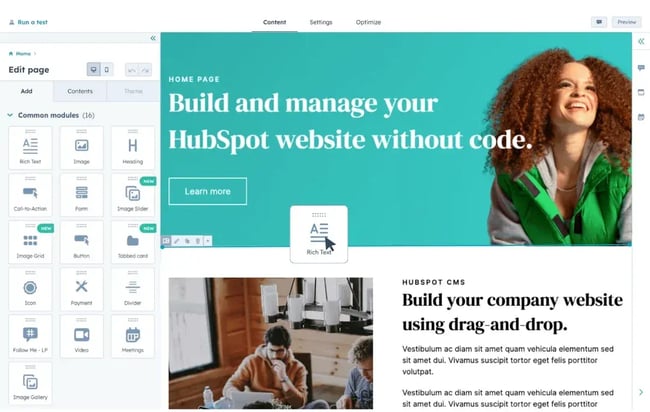
Content Hub supports SaaS SEO workflows by embedding SEO guidance directly within the CMS, streamlining content creation, management, and optimization. It offers a seamless content workflow, providing real-time, contextual SEO suggestions within the editor, thereby eliminating context-switching for writers. The integrated AI content writer assists with drafting and generation, maintaining alignment with SEO requirements—a significant efficiency gain for scaling content output. Its strong support for structured data and schema markup is crucial for AEO, allowing teams to implement JSON-LD schema directly within templates and modules. This ensures content is schema-ready from the outset, a critical factor for AI systems in accurately parsing and citing content in generative answers.
- Best for: SaaS content teams seeking embedded SEO guidance within their writing workflow and the ability to build schema-ready content at scale without constant developer intervention.
- Pricing: Free edition available; paid plans start at $10/month per seat for Starter, $500/month (3 seats) for Professional, and $1,500/month (5 seats) for Enterprise.
- Pro Tip: Utilize Content Hub’s modular schema approach for diverse content types (blogs, case studies, product pages) to apply appropriate schema (Article, FAQPage, Product, SoftwareApplication) without developer dependency.
3. Surfer SEO
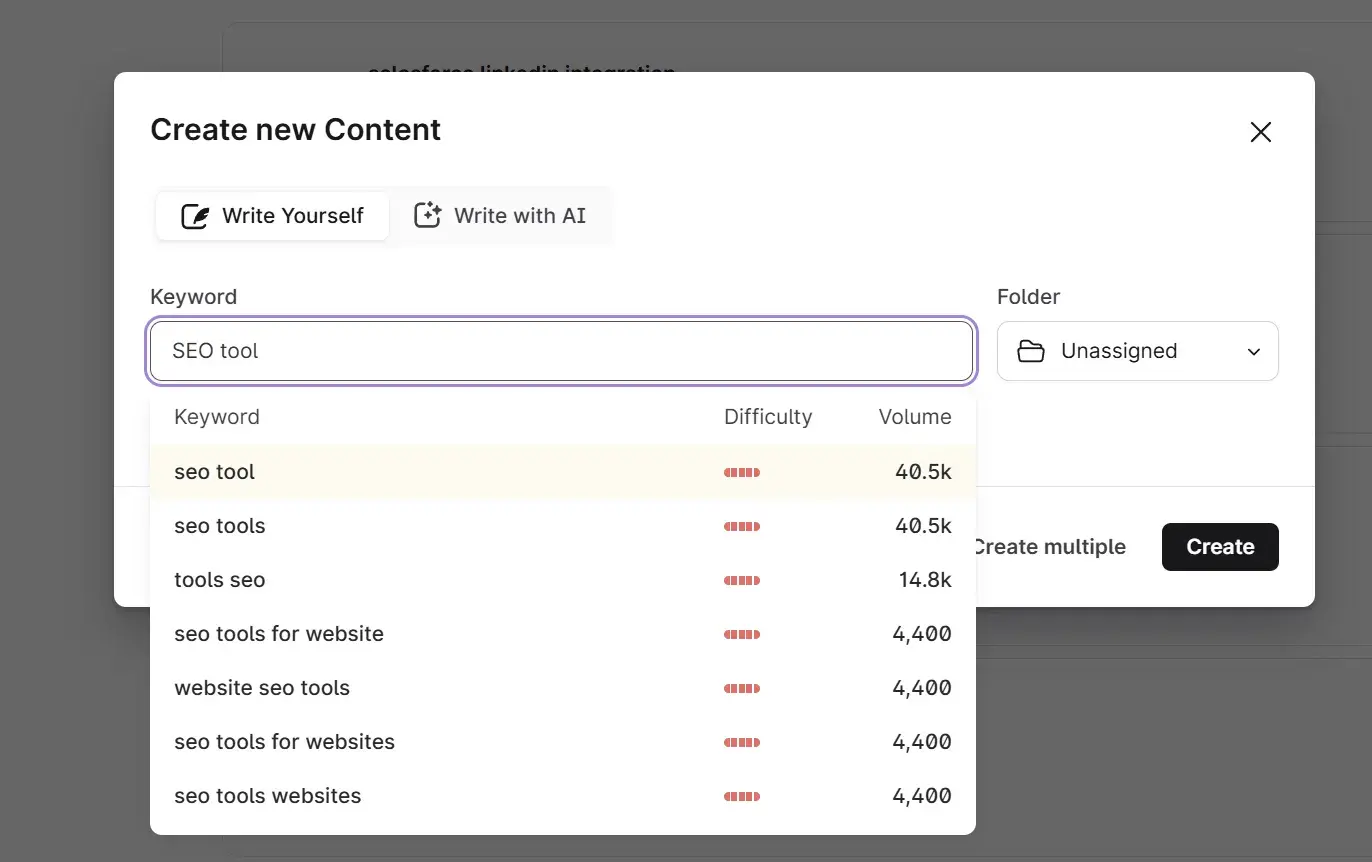
Surfer SEO is a powerful tool for on-page content optimization and brief generation, favored by SaaS content teams for its data-driven framework. By analyzing top-ranking pages for specific keywords, Surfer generates a comprehensive content score and actionable term-based recommendations, significantly reducing editorial guesswork. It aids in creating structured, data-backed briefs and offers real-time on-page guidance to enhance content quality and ranking potential at scale. Manea Stefania, Account & Content Manager at dslx, highlights Surfer SEO’s practicality for aligning content teams on SEO goals without micromanaging. She emphasizes its utility for keyword research to inform briefs and its auto-outline generation feature as a significant time-saver for scaling content output.
- Best for: Content writers and SEO managers needing structured, data-backed briefs and real-time on-page guidance for scalable content production.
- Pricing: Standard plan starts at $99/month (billed yearly).
4. Clearscope
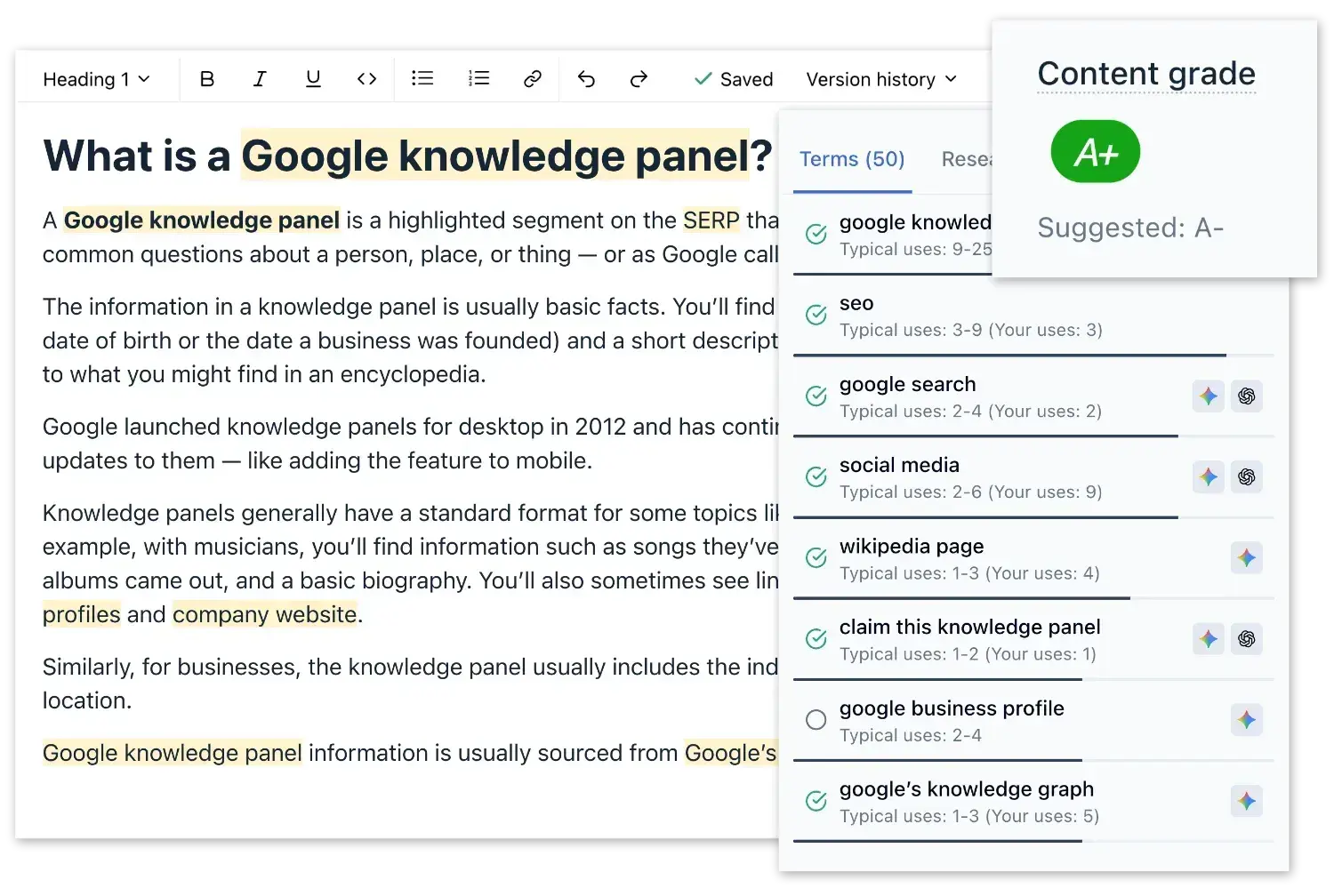
Clearscope specializes in content optimization and term coverage checks, helping SaaS teams ensure their pages comprehensively address all relevant terms and topics for a given keyword. It offers a clean, user-friendly interface for content grading and provides clear recommendations to improve content depth and relevance. Its long-standing presence in the SEO landscape suggests a depth of experience that translates well into AEO performance, as understanding search engine interpretation of content is analogous to how AI models interpret it.
- Best for: SaaS content teams and editors who require a straightforward optimization workflow focused on term coverage and content grading across a large content library.
- Pricing: Plans start at $129/month for Essentials, $399/month for Business, with custom Enterprise pricing.
5. Enfra Chrome Extension
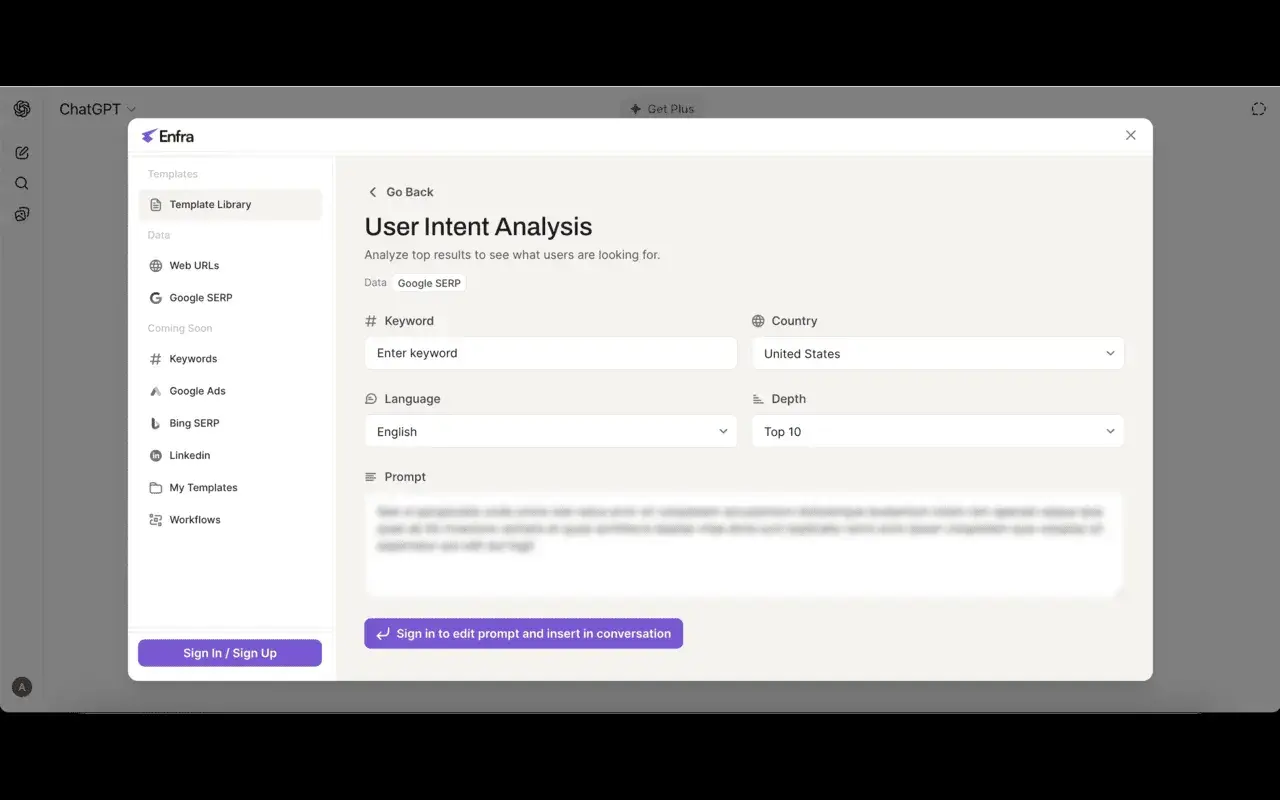
For SaaS teams leveraging AI tools like ChatGPT, Claude, or Gemini in their content production, Enfra acts as a crucial bridge between these AI workflows and real-time search data. This practical Chrome extension injects live SERP data and Google Search Console metrics directly into the AI interface, grounding AI-generated content in current search realities rather than relying solely on static training data. Liz Bowers, SEO Manager at Mosaic eMarketing, praises Enfra for eliminating hours of manual research and for its ability to optimize for the Generative Search era. She specifically recommends combining "Compare Content to Top 10" with "Content Plan for ChatGPT" to identify information gaps and user questions asked in AI tools, ensuring a brand appears as a definitive answer across AI platforms.
- Best for: SaaS content teams using AI writing tools who need to integrate live SERP data and GSC metrics into their AI workflows.
- Pricing: Public pricing not listed; often part of custom solutions.
SaaS SEO Tools for SEO Management and Attribution
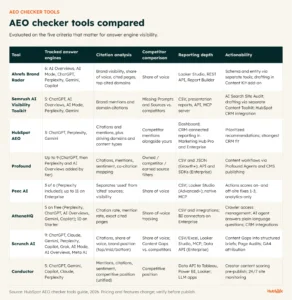
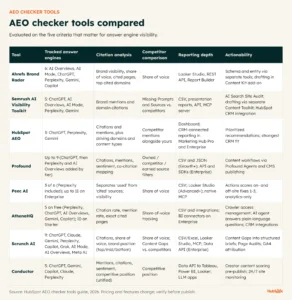
6. HubSpot AEO Grader
HubSpot’s free AEO Grader is specifically designed to help SEO teams analyze their website’s performance in AI search environments like ChatGPT, Perplexity, and Gemini. It provides a clear, actionable snapshot of AI search visibility by running automated queries that simulate real prospect research patterns. A key strength is its competitive analysis capability, allowing marketers to benchmark their brand’s AI representation against competitors. This free tool offers invaluable share-of-voice intelligence in AI search, a feature rarely available without cost. It also assesses source credibility, revealing which third-party publications influence AI models’ characterization of a brand, offering critical insights for digital PR and link-building strategies.
- Best for: SaaS marketers aiming to understand and improve their brand’s visibility in AI-generated search results and benchmark against competitors across major AI platforms.
- Pricing: Free for one-time diagnostics; HubSpot AEO for ongoing tracking starts at $50/month.
- Pro Tip: Run the AEO Grader for top competitors to establish benchmarks and identify messaging or content themes to integrate into your AEO strategy.
SaaS SEO Tools for Research and Website Analysis
7. Semrush
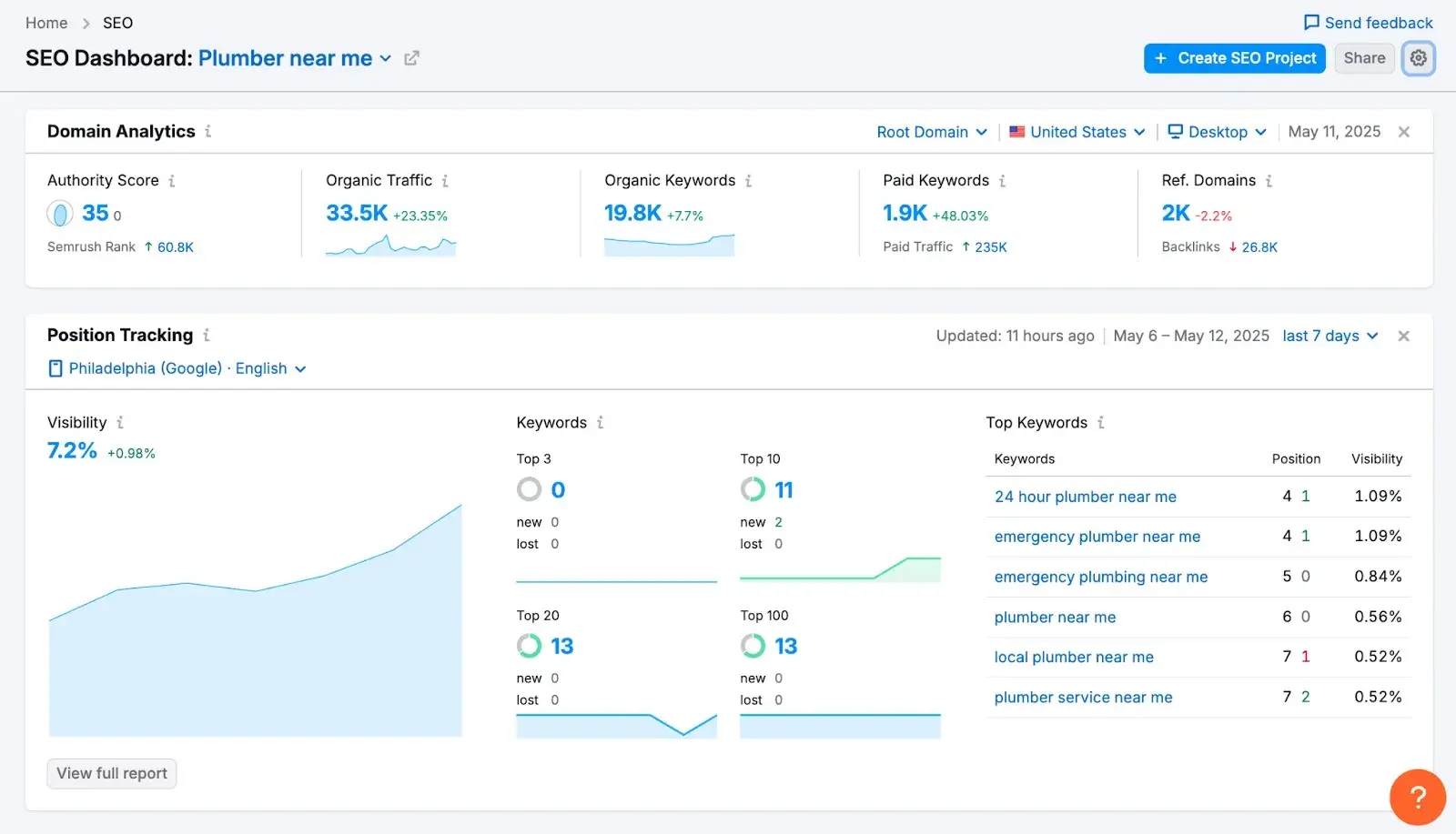
Semrush stands as one of the most comprehensive SaaS SEO platforms, offering an all-in-one solution for keyword research, competitor analysis, site audits, and increasingly, AEO features. Its extensive toolkit covers content, backlinks, and technical SEO, making it a versatile choice for teams requiring a broad spectrum of SEO capabilities. Semrush has consistently evolved with the search landscape, integrating AI-assisted features to maintain its relevance in the generative search era.
- Best for: SaaS marketing teams requiring an all-encompassing research and auditing platform that spans keyword strategy, competitive intelligence, and technical site health.
- Pricing: SEO plans start at $117.33/month (billed annually); AI-enhanced plans may have separate pricing.
8. Ahrefs
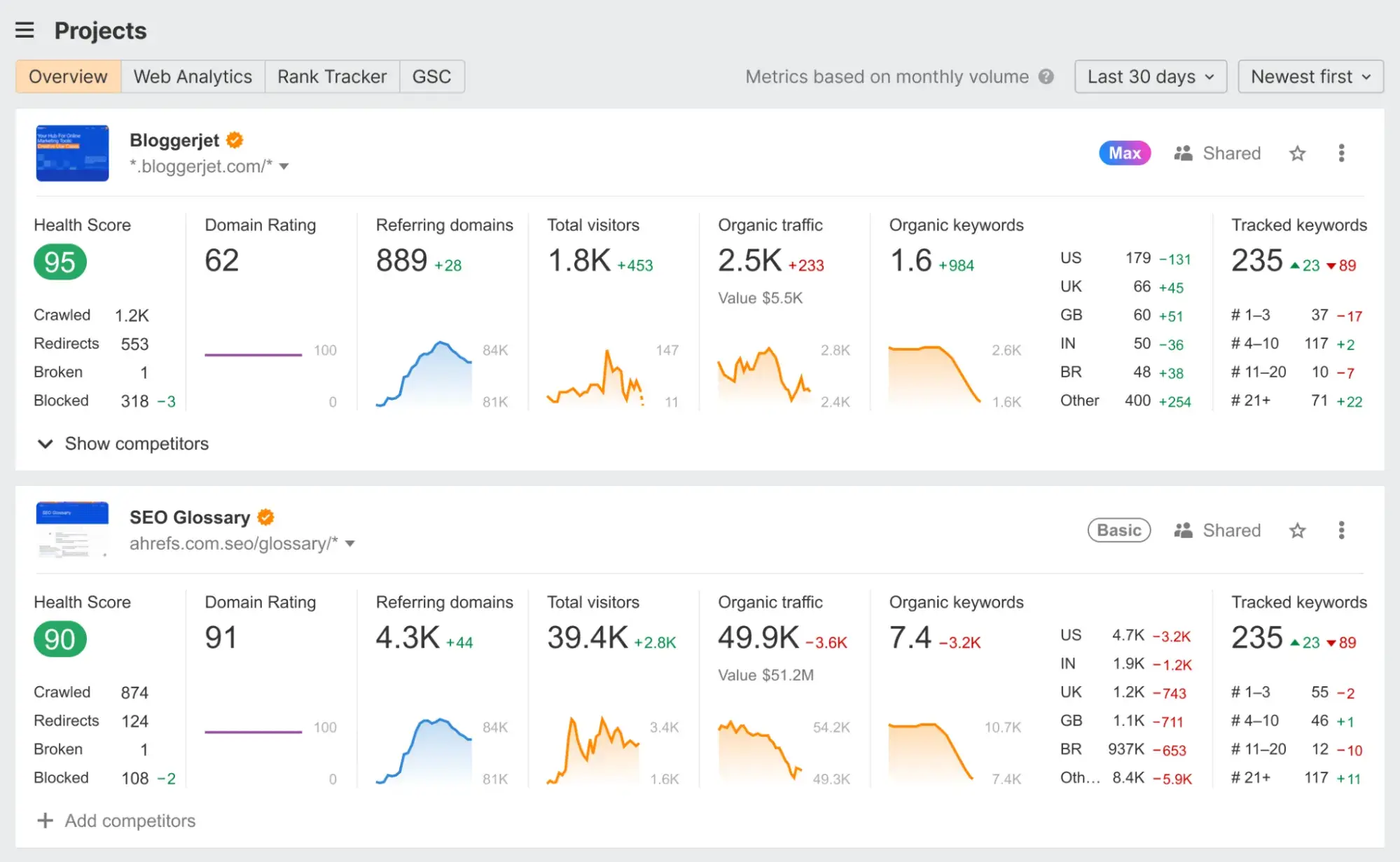
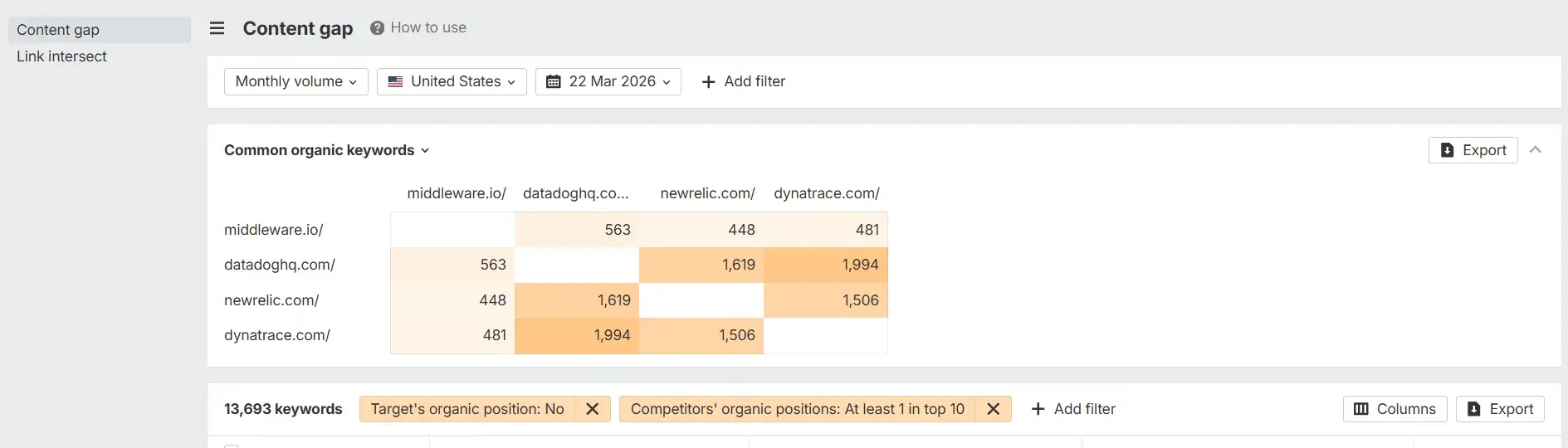
Ahrefs is renowned for its deep backlink intelligence and competitor analysis, making it the preferred tool for SaaS teams needing a granular view of their own and competitors’ link profiles. Its vast crawling infrastructure provides highly reliable backlink data and accurate organic traffic estimations. Ahrefs excels in uncovering content gaps and identifying new keyword opportunities by analyzing competitor performance, directly informing content strategy and scaling operations with measurable results. Ila Bandhiya, Senior Digital Marketer at Middleware.io, praises Ahrefs for its comprehensive data and intuitive interface, making complex SEO tasks manageable and enabling quick identification of growth opportunities.
- Best for: SaaS marketing teams focused on in-depth backlink analysis, competitor research, and organic traffic estimation.
- Pricing: Lite starts at $129/month, Standard at $249/month, Advanced at $449/month.
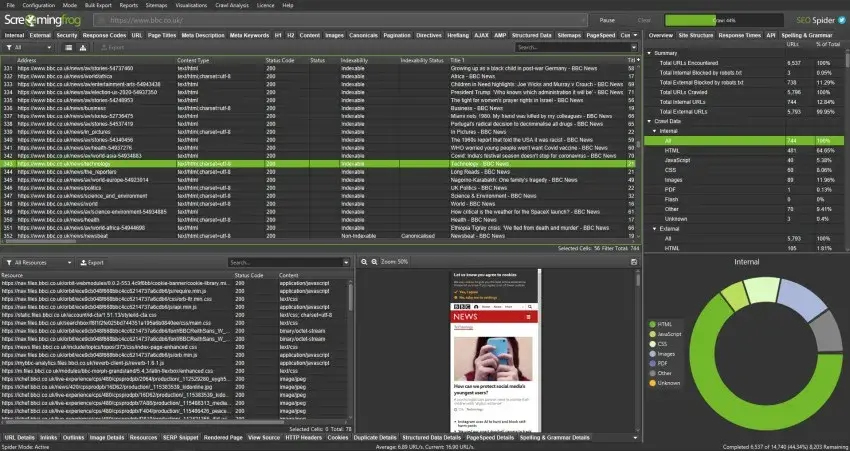
9. Screaming Frog
Screaming Frog is widely regarded by SEO professionals as the definitive tool for granular technical crawling and on-site issue discovery. It crawls every URL on a site, providing raw, unfiltered data essential for thorough technical audits. This desktop-based tool offers unparalleled depth in identifying and diagnosing site-wide technical issues such as crawl errors, redirect chains, broken links, and indexation problems.
- Best for: SaaS developers, technical SEO specialists, and agencies requiring deep, granular crawl data for rapid and accurate diagnosis of complex technical issues.
- Pricing: Free version with a 500-URL limit; paid license costs $279/year.
- Pro Tip: Regularly crawl your site and filter by 3XX and 4XX status codes to quickly identify and rectify redirect chains and broken links, which can significantly impact site performance.
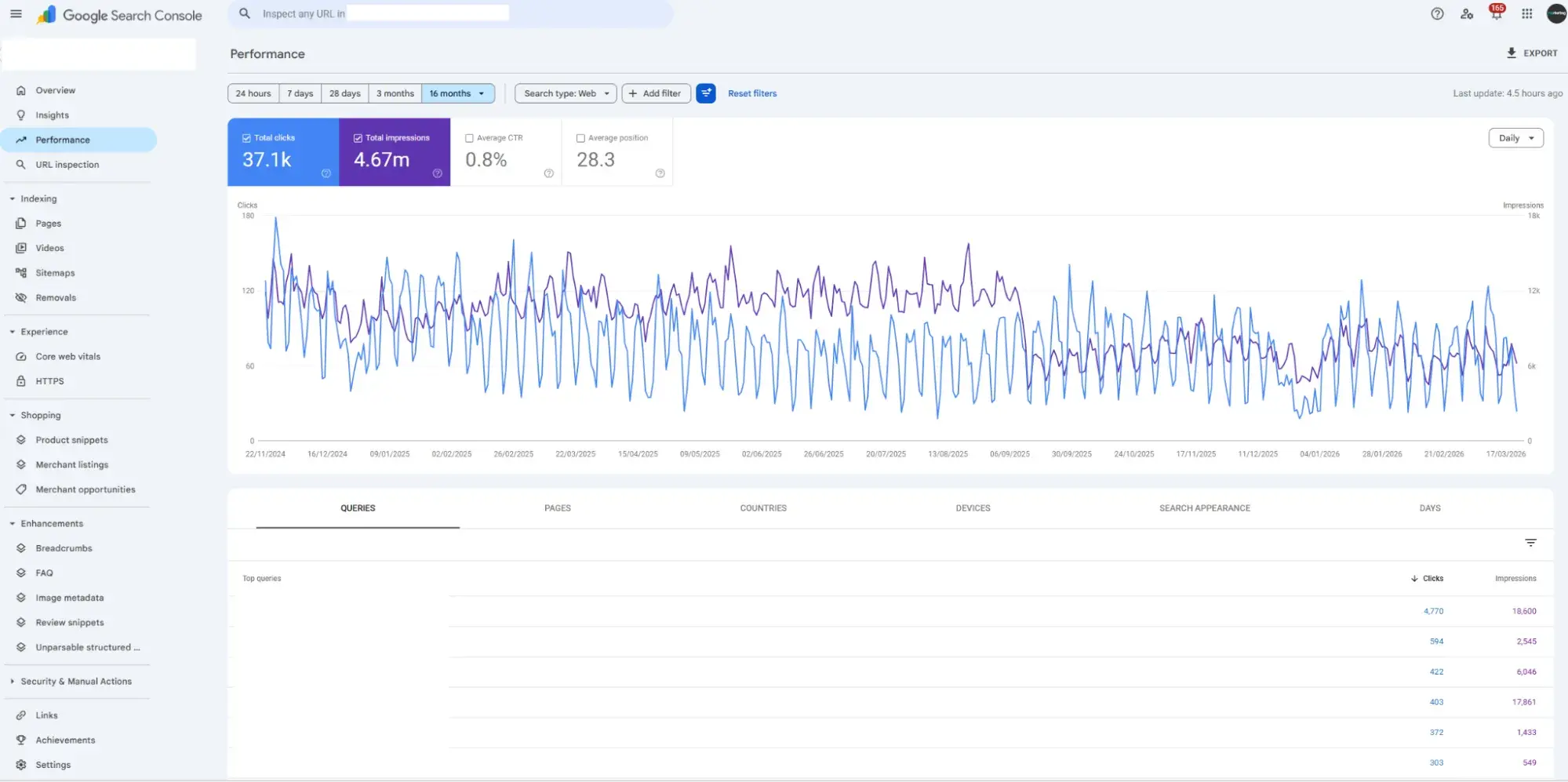
10. Google Search Console (GSC)
Despite being a free tool, Google Search Console remains an indispensable component of any SaaS SEO stack. As the direct communication channel between a website and Google, its data on search performance, index coverage, and core web vitals is unparalleled in accuracy and authority. GSC is invaluable for identifying keywords a site already ranks for, including "zero search volume" terms often missed by third-party tools, which can be highly converting for niche SaaS offerings.
- Best for: Every SaaS team, regardless of size or budget, as the foundational tool for understanding direct interaction with Google search.
- Pricing: Free.
- Pro Tip: Filter queries by high impressions and low CTR to identify quick wins where a minor title tag tweak could substantially increase clicks.
11. Bing Webmaster Tools
Bing Webmaster Tools provides essential site monitoring for Bing search and has become increasingly relevant due to its expanded AI features. It offers first-party data on indexation, crawl errors, and search performance specific to Bing. Crucially, its AI Performance dashboard provides insights into how AI-generated answers cite your content, making it a valuable free resource for understanding AI search visibility, particularly within Microsoft’s ecosystem.
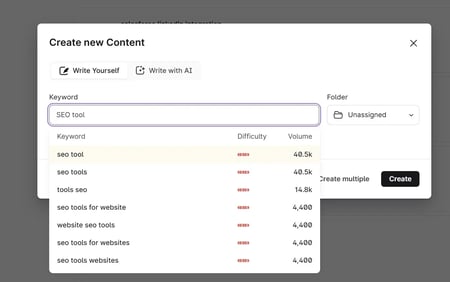
- Best for: SaaS SEO teams monitoring site health and indexation on Bing and gaining first-party data on AI citation activity.
- Pricing: Free.
- Pro Tip: Import your GSC account with a single click to instantly access Bing data, then leverage the AI dashboard to identify citation gaps and opportunities.
SaaS SEO Tools for Internal Linking
12. Link Whisper
For SaaS sites with extensive content archives, internal linking is a perpetual opportunity for improvement. Link Whisper, a WordPress plugin, automates the most time-consuming aspects of internal linking by suggesting relevant links across existing content. This helps content teams build a stronger site architecture, improve the distribution of link equity, and detect orphaned pages without manually trawling through hundreds of pages. It offers a fast way to achieve significant ranking improvements without creating new content.
- Best for: WordPress-based SaaS teams requiring automated internal link suggestions, orphaned page detection, and internal link reporting.
- Pricing: Billed annually, starting at $97/year.
- Pro Tip: Run the orphaned pages report and add 2-3 internal links to each flagged page to quickly boost their visibility and ranking potential.
13. Yoast SEO
For SaaS teams operating their content hub or blog on WordPress, Yoast SEO provides a robust, user-friendly foundation for on-page SEO and internal linking. This plugin offers real-time analysis and recommendations for improving content readability, keyword usage, metadata, and schema markup. It scans existing content and suggests relevant pages for internal linking during the writing process, contributing to a stronger site architecture over time. Yoast’s comprehensive approach, covering multiple SEO tactics within a single plugin, simplifies management compared to juggling several specialized tools.
- Best for: WordPress-based SaaS teams seeking a reliable, easy-to-use plugin for on-page SEO fundamentals, metadata management, and basic internal linking suggestions.
- Pricing: Free version available; Premium costs $9.90/month (billed annually at $118.80).
- Pro Tip: Enable internal linking suggestions and prioritize implementing them on your 10 most critical pages first to quickly improve link equity distribution.
Tailoring Your SaaS SEO Stack: Strategies by Team Size
Not every SaaS team requires every tool on this comprehensive list. The optimal stack is dictated by factors such as team headcount, budgetary constraints, and specific content output goals.
Solo to 2 Marketers:
A lean SaaS marketing operation should prioritize free, first-party data sources, a streamlined core optimization workflow, and a clear method for connecting SEO activities to business outcomes. Essential tools include Google Search Console, Bing Webmaster Tools, and the HubSpot AEO Grader for initial AI visibility analysis. An integrated platform like HubSpot Marketing Hub provides a cost-effective solution for managing SEO alongside CRM and reporting, avoiding the complexities and costs of stitching together multiple point tools.
Team of 3 to 5:
A small SaaS marketing team typically requires more structured support across research, content briefing, publishing, optimization, internal linking, and reporting. This scale benefits from robust all-in-one platforms like Semrush for comprehensive research and auditing. Content optimization tools such as Surfer SEO become critical for maintaining quality and efficiency in content production. For WordPress sites, Link Whisper can automate internal linking, saving valuable time. The integrated ecosystem of HubSpot Marketing Hub and Content Hub further streamlines workflows and enhances attribution capabilities.
Team of 10+:
Larger SaaS teams necessitate a shared SEO system capable of supporting multiple contributors, delivering clearer, more detailed reporting, and facilitating frequent technical and content refresh cycles. At this scale, a full suite of specialized tools often becomes justifiable. This includes industry leaders like Ahrefs for deep backlink analysis, Screaming Frog for extensive technical audits, and Clearscope for advanced content optimization across a large library. The comprehensive integration offered by HubSpot’s full suite (Marketing Hub, Content Hub, and HubSpot AEO) provides the centralized control and attribution critical for enterprise-level operations, ensuring that SEO efforts are seamlessly aligned with broader business objectives and measurable revenue impact.
Addressing Key Challenges: Frequently Asked Questions About SaaS SEO Tools
What’s the best way to track AI search visibility for a SaaS brand?
To accurately track AI search visibility, begin with the free HubSpot AEO Grader. This tool provides an immediate snapshot of how major AI platforms like ChatGPT, Perplexity, and Gemini interpret and represent your SaaS brand, including whether it’s mentioned, how it’s described, and how its visibility compares to competitors. For ongoing monitoring, supplement this with the AI Performance dashboard in Bing Webmaster Tools and traditional SEO data from Google Search Console. This combination offers a holistic view of both conventional search visibility and crucial AI citation activity, enabling a proactive approach to Answer Engine Optimization.
How should a small SaaS team prioritize SEO tools on a tight budget?
For small SaaS teams with limited budgets, prioritizing free, high-value tools is paramount. Google Search Console, Bing Webmaster Tools, and the HubSpot AEO Grader offer accurate, first-party data without cost. Following these foundational tools, an integrated platform like HubSpot Marketing Hub presents a highly efficient investment. By consolidating SEO, CRM, and reporting functionalities, it eliminates the need for expensive custom integrations and reduces the overall cost and complexity of managing multiple disconnected point solutions. This strategy ensures core SEO needs are met while maintaining a strong focus on budget efficiency and direct attribution.
Which SaaS SEO tools integrate best with a CRM for attribution?
HubSpot Marketing Hub stands out as the strongest option for CRM-connected SEO reporting. Its native integration with HubSpot Smart CRM allows marketing teams to directly attribute organic traffic to specific contacts, deals, and ultimately, closed revenue. This seamless connection eliminates the need for complex custom integrations or manual data stitching, providing a clear and undeniable line of sight between SEO efforts and business outcomes. This level of direct attribution is critical for demonstrating SEO’s value and securing ongoing investment.
How often should a SaaS company refresh high-intent content?
High-intent content, such as comparison pages, alternative solution pages, and bottom-of-funnel category terms, should be reviewed and refreshed at least every 3 to 6 months. These content types are particularly susceptible to frequent shifts in competitor content, product updates, and evolving SERP features (e.g., new AI Overviews, featured snippets). Regular refreshes ensure the content remains accurate, competitive, and optimized for current search intent, maintaining its critical role in the buyer journey.
Do I need both a content optimizer and a brief generator?
Initially, smaller SaaS teams may not require separate tools for content optimization and brief generation. Platforms like Surfer SEO effectively handle both functions, providing data-backed briefs and real-time on-page optimization guidance within a single interface. This consolidated approach makes it a practical and efficient investment for teams with fewer resources. However, larger SaaS teams with higher content velocity or more complex editorial workflows may eventually benefit from splitting these jobs across dedicated tools to accommodate more detailed briefs, specialized editorial processes, or more stringent content governance requirements.
The Right SaaS SEO Tools Make the Difference Between Guessing and Growing.
The tools outlined in this guide collectively address every stage of a modern SaaS content operation. From meticulous research and structured briefs to efficient content creation, continuous optimization, strategic refreshing, robust internal linking, and insightful reporting, the right tech stack ensures that data, rather than intuition, informs every decision.
For SaaS teams embarking on or refining their SEO journey, starting with an integrated platform is highly recommended. HubSpot’s ecosystem, comprising Marketing Hub, Content Hub, and the HubSpot AEO Grader, exemplifies this approach. Marketing