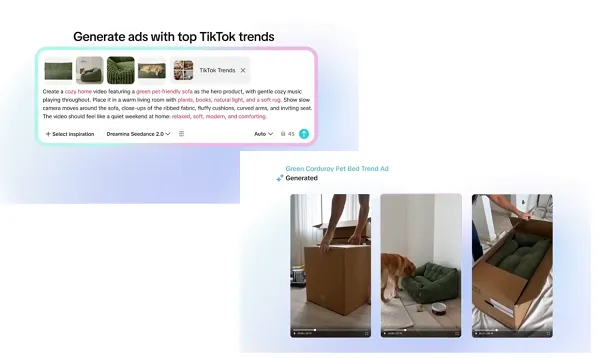

TikTok has officially introduced a robust suite of upgrades to its artificial intelligence-powered advertising ecosystem, known as the Symphony ad creation suite. The platform announced significant integrations featuring the latest Dreamina Seedance visual generation models, an enhanced Symphony Application Programming Interface (API), and broader international availability of BytePlus usage tokens. These strategic updates are designed to provide global brands, marketing agencies, and enterprise advertisers with unprecedented creative control, deeper multimodal referencing capabilities, and extended video durations just as retailers prepare for peak seasonal shopping periods.
The evolution of generative artificial intelligence within commercial advertising has accelerated dramatically over the past two years. Platforms are no longer relying solely on static imagery or basic text-to-video conversions; instead, they are pushing toward sophisticated, context-aware digital media production. By integrating advanced video generation models directly into the Symphony Agent tool, TikTok aims to streamline the ad production pipeline. Advertisers can now bypass traditional, resource-intensive video shoots, leveraging cutting-edge machine learning to construct hyper-targeted, high-fidelity ad creatives tailored specifically to the fast-paced consumption habits of TikTok’s massive global user base.
Chronology and Evolution of TikTok Symphony
The journey of TikTok’s advertising technology transformation reflects a broader industry-wide push toward democratizing high-end content creation. ByteDance, TikTok’s parent company, has steadily built out its proprietary artificial intelligence architecture, transitioning from internal experimentation to consumer-facing applications, and finally to enterprise-grade marketing solutions.
The initial rollout of the Symphony suite established a baseline for automated scriptwriting, translation, and basic asset generation. However, early iterations faced technical limitations regarding video length, visual consistency, and the integration of multiple reference materials. Advertisers frequently encountered hurdles when trying to maintain brand guidelines across dynamically generated video frames, often resulting in flickering lighting, distorted character models, or unnatural transitions.
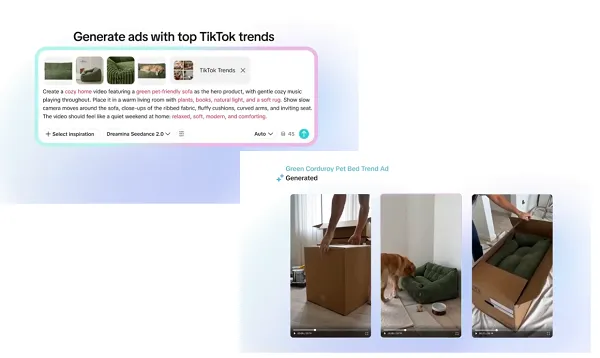
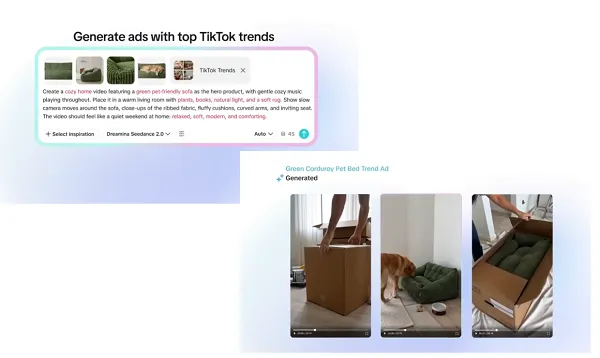
Recognizing these bottlenecks, TikTok initiated a phased rollout of advanced foundational models. The incorporation of the Dreamina Seedance models marks a major milestone in this chronology. Earlier this year, iterative updates allowed for limited multimodal inputs—primarily text and a handful of images. The latest announcement dramatically expands these boundaries, offering capabilities that rival dedicated standalone AI video production software. By expanding multimodal inputs to 50 distinct references and doubling the maximum output duration to 30 seconds per prompt, TikTok has positioned Symphony as a serious contender in professional digital media asset generation.
Technical Enhancements and Capabilities of the Updated Symphony Suite
At the core of the latest update is the integration of the Dreamina Seedance visual generation models into the Symphony Agent tool. This technical upgrade introduces several critical improvements designed to address historical complaints regarding the quality and utility of AI-generated advertising content.
Most notably, the capacity for multimodal referencing has experienced a fivefold increase. Advertisers can now upload up to 50 distinct reference files—including complex combinations of high-resolution images, pre-existing video footage, and audio tracks—into the Symphony interface. This allows the underlying model to analyze brand aesthetics, color palettes, product angles, and auditory cues with granular precision, ensuring the generated output aligns seamlessly with established campaign guidelines.
Furthermore, the maximum duration for a single generated video clip has been extended from 15 seconds to 30 seconds. In the context of digital advertising, where viewer retention drops precipitously after the first few seconds, a 30-second window provides brands with the necessary temporal space to introduce a problem, demonstrate a product feature, and deliver a compelling call to action within a single cohesive asset.
Visual fidelity has also received a substantial upgrade. The updated Dreamina Seedance models utilize advanced neural architectures capable of producing sharper, more photorealistic imagery. Improvements in lighting calculation engines and character consistency algorithms ensure that subjects maintain stable facial features, clothing, and spatial positioning across multiple video frames, significantly reducing the uncanny valley effect that has historically plagued generative video.

The Symphony API and Enterprise Integration via BytePlus
Beyond front-end improvements within the TikTok native advertising interface, the company has launched an updated Symphony API. This developer-focused tool is engineered to bridge the gap between TikTok’s proprietary AI engine and external enterprise workflows.
Through the new API, brands and creative agencies can integrate Symphony’s generation capabilities directly into their own internal creative management tools, customer relationship management (CRM) platforms, and enterprise resource planning (ERP) software. This enables large-scale production houses to automate the creation of hundreds of localized ad variants simultaneously, without requiring creative teams to constantly navigate back and forth between disparate software environments.
Simultaneously, TikTok has expanded access to its BytePlus tokens, facilitating broader utilization of the platform’s visual generation features. BytePlus, operating as the enterprise technology subsidiary of ByteDance, manages the robust cloud infrastructure and machine learning systems that power these advanced tools.
Starting November 9, advertisers operating outside of North America gained the ability to purchase BytePlus tokens specifically to unlock the full potential of Dreamina Seedance models within Symphony. According to official communications from the company, this token-based access model is engineered to deliver faster video generation speeds, higher-resolution output options, and compatibility with a wider array of aspect ratios and video formats, accommodating everything from traditional horizontal placements to immersive full-screen vertical ads.
Industry Implications and Strategic Considerations for Advertisers
The timing of these updates is strategically significant. Rolling out advanced creative automation tools immediately ahead of the peak holiday shopping season provides retailers with a vital tactical advantage. As marketing budgets shift heavily toward digital channels during the fourth quarter, brands face immense pressure to produce fresh, engaging creative assets at scale to combat ad fatigue among consumers.
However, industry analysts emphasize that the viability and effectiveness of AI-generated video will vary significantly depending on the vertical, the product, and the sophistication of the prompts provided by human marketers. While tools like Symphony can drastically reduce production costs and accelerate time-to-market, they cannot entirely replace strategic oversight. Successful campaigns will likely rely on a hybrid model, where human creative directors utilize AI platforms to rapidly prototype, test, and iterate variations of a core concept, scaling up the top-performing assets with targeted media spend.
Moreover, the expansion of API access and token availability signals a broader maturation of the creator economy and digital advertising sectors. As machine learning models become deeply embedded in enterprise infrastructure, the competitive barrier to entry for high-end video production continues to lower. Smaller direct-to-consumer brands can now theoretically compete with multinational conglomerates in terms of visual polish and creative output velocity.
As these tools roll out globally, regulatory scrutiny and platform governance regarding synthetic media will remain critical factors to monitor. Advertisers utilizing automated generation tools must navigate platform-specific disclosure requirements regarding AI-generated content to maintain consumer trust and comply with regional advertising standards.
TikTok’s comprehensive enhancement of the Symphony ad suite underscores the platform’s long-term commitment to positioning itself not merely as a distribution channel for media, but as an end-to-end infrastructure provider for digital creativity. By combining state-of-the-art visual generation models, expanded multimodal inputs, robust API connectivity, and scalable enterprise token systems, the company has established a new benchmark for how artificial intelligence can be practically applied within modern commercial advertising workflows.