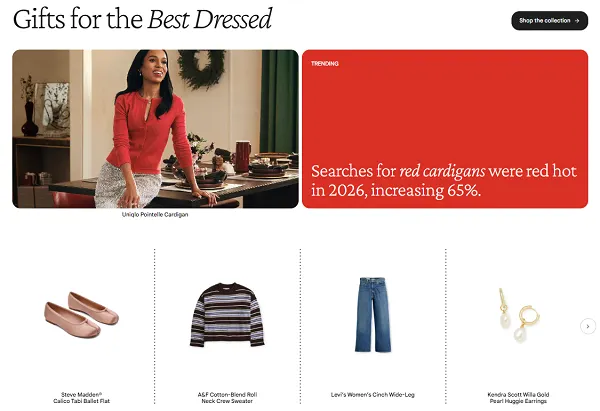

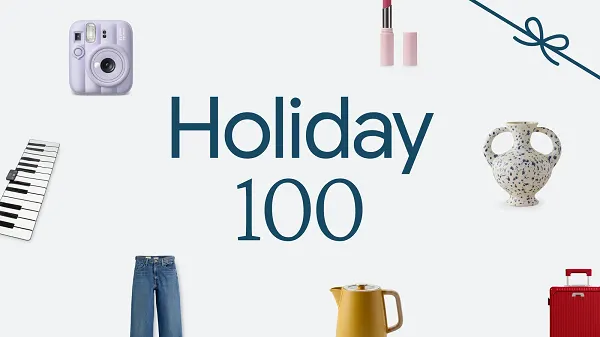
Google has officially published its highly anticipated annual Holiday 100 gift guide, shedding light on the products and related search terms that have experienced the most significant surges in consumer interest over the past year. Released on a Monday, the comprehensive guide serves a dual purpose for both the general public and the commercial sector. While consumers can utilize the curated selection for holiday gift inspiration, brand marketers, retail analysts, and industry experts view the release as a valuable barometer of broader economic sentiment, shifting consumer tendencies, and emerging market trends heading into the critical year-end shopping season.
The launch of the Holiday 100 is accompanied by a dedicated interactive mini-site featuring categorized lists designed to help shoppers navigate an expansive universe of retail options. By analyzing petabytes of search data, Google has segmented the items into logical groups, allowing users to explore trending products across various sectors. Furthermore, each category overview is paired with granular data detailing the specific search trajectory of the items, alongside product highlights that seamlessly link to Google’s advanced AI Mode overview. This technological integration demonstrates how search behavior is evolving, enabling consumers to gather synthesized information about products instantly rather than navigating through traditional, static web pages.
Background and Evolution of the Google Holiday 100
To understand the significance of Google’s Holiday 100, one must examine the evolution of how retail discovery has transformed over the past two decades. As the dominant global search engine, Google sits at the epicenter of consumer intent. Long before a shopper visits a brick-and-mortar storefront or clicks "add to cart" on an e-commerce platform, their journey typically begins with a query in a search bar.
In response to this immense data advantage, Google began curating annual predictive and reflective shopping lists to capture the zeitgeist of consumer desires. What started as basic holiday gift lists have evolved into sophisticated data-driven projects. The Holiday 100 aggregates trillions of historical and real-time search queries, isolating anomalies and steady upward trajectories that signal cultural shifts. Over successive years, these guides have grown from simple URL collections into immersive digital ecosystems featuring interactive modules, video integrations, and now, generative artificial intelligence summaries.
Chronology of the 2026 Shopping Season Preview
The rollout of the Holiday 100 aligns with a carefully orchestrated timeline designed to assist marketers and holiday shoppers alike:
- Early Year Analysis (January – April): Google’s data science teams begin tracking post-holiday behavior, identifying early indicators of sustained consumer interest in niche categories such as sustainable goods, home automation, and wellness technology.
- Mid-Year Review (May – August): As macroeconomic pressures fluctuate—including adjustments in inflation rates, employment figures, and supply chain stabilizations—analysts observe shifts in consumer spending priorities, pivoting between luxury indulgence and value-seeking behaviors.
- Fall Aggregation (September – October): Algorithms process the inflection points where search volumes for specific items outpace historical seasonal averages, laying the foundation for the final selection of the Holiday 100.
- Official Launch (November): The release of the Holiday 100 gift guide and its accompanying mini-site, providing the market with actionable insights just weeks ahead of Black Friday, Cyber Monday, and the peak winter holiday shopping rush.
Data-Driven Insights and Category Breakdown
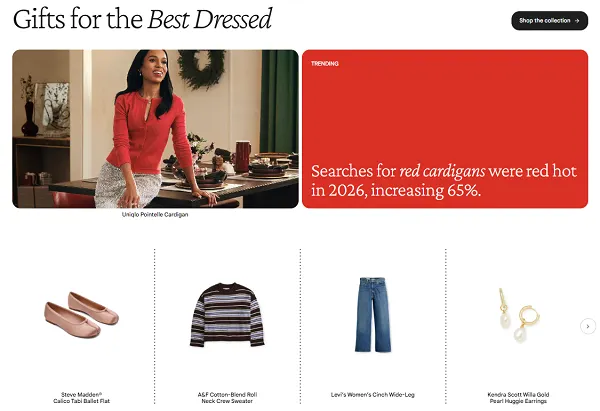
The core utility of the Holiday 100 lies in its quantitative foundation. By isolating products that have demonstrated exponential growth in search queries year-over-year, Google provides a macro-level view of retail health. The curated lists span multiple categories, including apparel, electronics, home goods, beauty, and fitness.
Within these categories, the data reveals fascinating nuances in consumer demand. For instance, rather than focusing purely on brand-name ubiquity, the search trends highlight functional utility, aesthetic specialization, and technological integration. Products that solve specific domestic problems or enhance personal efficiency consistently rank higher in search velocity than generic novelty items.
By integrating AI Mode overviews into the product highlights, Google is transforming how shoppers interact with commercial data. When a user clicks on a highlighted product within the Holiday 100 mini-site, they are not merely directed to a retail landing page; instead, they receive an artificial intelligence-generated synthesis of reviews, pricing comparisons, specification breakdowns, and availability metrics. This capability drastically reduces the friction inherent in modern e-commerce research.
Rising Trends Shaping the Market
Beyond individual products, Google’s release highlights 10 overarching rising trends for the year. These trends are distilled from massive volumes of search data and act as a compass for brands attempting to future-proof their inventory and advertising strategies.
Retail experts note that these trends reflect a more mindful, intentional consumer base. Shoppers are increasingly researching the longevity, ethical sourcing, and practical utility of products before making a financial commitment. Consequently, brands that align their marketing narratives with these behavioral shifts are significantly more likely to capture market share during high-stakes retail windows.
Implications for Marketers and Retail Strategists
For marketing professionals, the Holiday 100 is far more than a consumer-facing catalog; it is an invaluable strategic asset. In an era where digital advertising costs continue to rise and consumer loyalty is notoriously fickle, understanding where search interest is organically migrating provides a distinct competitive advantage.
- Keyword and Content Optimization: Digital marketers can analyze the terminology driving the Holiday 100 search surges to refine their SEO and SEM strategies. By incorporating high-intent keywords identified by Google, brands can optimize their visibility precisely when consumer interest peaks.
- Product Development and Inventory Planning: Retail buyers and manufacturers utilize these trend analyses to forecast demand for upcoming production cycles. Aligning product offerings with validated search momentum minimizes the risk of overstocking stagnant inventory.
- Adopting AI-Driven Discovery: With Google incorporating AI Mode overviews into its shopping ecosystem, brands must ensure their digital footprints are structured to be easily parsed and accurately represented by artificial intelligence models. Traditional keyword stuffing is increasingly ineffective; instead, comprehensive, fact-based product data, clear customer reviews, and authoritative technical specifications are paramount.
Broader Economic and Industry Impact
The release of the Holiday 100 arrives at a crucial juncture for the global retail economy. As consumer confidence adapts to shifting economic landscapes, spending patterns are closely monitored by economists, financial institutions, and retail executives alike.
Data from search engines has historically served as a leading economic indicator. Because search intent precedes financial transactions by days, weeks, or even months, aggregated search trends offer an early glimpse into retail sector performance. A surge in searches for home improvement items, budget-friendly tech, or experiential gifts provides tangible clues regarding consumer priorities long before quarterly earnings reports are published.
Furthermore, the integration of generative AI into the shopping experience marks a permanent shift in consumer behavior. Shoppers are increasingly bypassing traditional search engine result pages in favor of direct, conversational, and synthesized product recommendations. Google’s inclusion of AI Mode overviews within the Holiday 100 mini-site underscores this transition, signaling to the entire retail ecosystem that the future of discovery is conversational, automated, and deeply personalized.
As brands digest the insights provided in the latest Holiday 100 guide, the overarching takeaway is clear: success in the modern retail marketplace requires agility, a deep understanding of data-driven consumer intent, and a willingness to embrace technological advancements in search and discovery.