
The prevailing assumption among many technology companies and AI leaders is that the general populace eagerly anticipates new AI features, products, and workflows, envisioning a future where artificial intelligence seamlessly replaces existing practices and rectifies operational inefficiencies. However, a closer examination of user behavior and sentiment reveals a significant divergence from this optimistic outlook. The reality is that most people do not inherently desire "more AI" in their lives, at least not in the intrusive, workflow-disrupting manner often envisioned by developers. Instead, there is a clear preference for AI that is subtle, reliable, and deeply integrated, serving to augment human capabilities by automating mundane tasks rather than demanding a fundamental shift in user behavior or replacing human-centric experiences. This distinction underscores a critical gap between technological ambition and practical user needs, leading to low adoption rates, high development costs, and potential reputational damage for companies that misinterpret market desires.
The Rise of AI and the Disconnect with User Expectations
The rapid advancements in artificial intelligence, particularly in generative AI capabilities epitomized by models like ChatGPT, have fueled an unprecedented wave of innovation and investment across industries. Companies, eager to capitalize on this technological frontier, have rushed to integrate AI into existing products and develop entirely new AI-centric solutions. This drive is often predicated on the belief that AI inherently offers a superior, more efficient alternative to traditional methods. The narrative frequently spun by tech giants suggests that AI will unlock magical productivity gains, streamline complex processes, and usher in an era of effortless digital interaction.
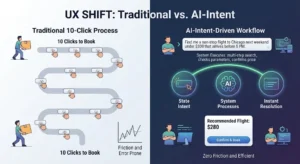
However, the real-world deployment of many AI features has been met with lukewarm reception, if not outright resistance. Studies, including one by IBM referenced in industry discussions, indicate a significant "AI adoption gap" with low retention rates for many AI functionalities. This gap is not merely a reflection of technological immaturity but points to a fundamental misunderstanding of user psychology and workflow integration. When AI features are presented as "bolt-ons" or separate tools, they often extract users from their established, familiar ways of working, introducing friction rather than fluidity. This disruption can negate the perceived benefits, as users are forced to adapt to new interfaces and paradigms, often with little tangible reward.
AI as an Amplifier: Exposing Systemic Weaknesses
One of the less-discussed consequences of hastily implemented AI is its tendency to amplify existing shortcuts and shortcomings within organizations. AI systems are inherently dependent on the quality and consistency of the data they process and the underlying organizational structures they operate within. Years of accumulated technical debt, fragmented data silos, inconsistent decision-making processes, and internal political dynamics are not magically resolved by the introduction of AI. On the contrary, these issues often become more pronounced and directly exposed to the end-user. Inconsistencies or conflicting priorities, once perhaps masked by human adaptability, are brought to the forefront by AI’s logical, albeit sometimes rigid, processing, leaving users to decipher and rectify the ensuing "mess."
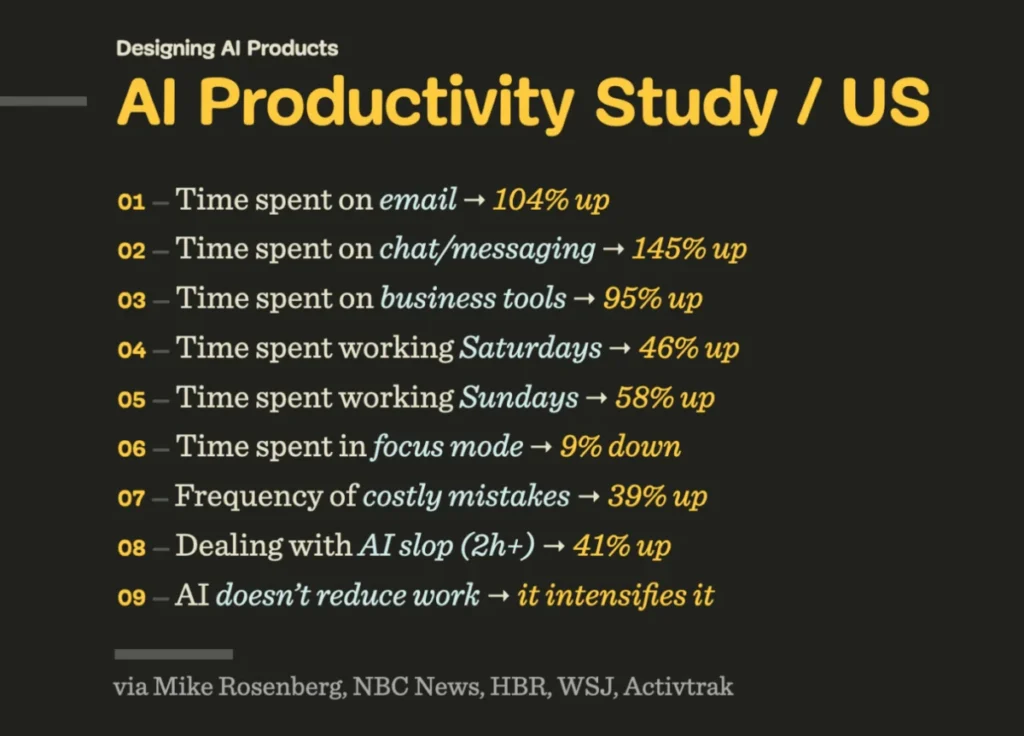
Consider a typical organizational workflow that involves navigating multiple disconnected systems. The introduction of a new AI tool, rather than simplifying this landscape, often adds yet another system to the mix. Users find themselves hopping on and off yet another platform, potentially increasing their cognitive load and overall workload. The promise of reduced effort frequently translates into more effort, particularly when the AI’s output requires extensive verification or correction.
The Hidden Costs of AI: Hallucinations and Verification Burden

A significant factor contributing to user dissatisfaction is the acknowledged phenomenon of "AI hallucinations"—instances where AI generates plausible but incorrect or fabricated information. While asking an AI to generate a response might initially "feel easier" than crafting one from scratch, this perceived ease comes with a substantial hidden cost: the time and mental effort required to find and fix errors. Users are increasingly aware that AI output, particularly for critical tasks, cannot be trusted implicitly. This necessitates a rigorous process of fact-checking, editing, and often rewriting, which can erode any time savings gained from the initial generation. Studies, such as those from the Nielsen Norman Group, highlight how AI chatbots can actually discourage error-checking in users, leading to higher rates of uncorrected mistakes when users over-rely on the system.
Furthermore, the introduction of AI is often perceived by employees not as a helpful assistant, but as an uninvited guest, dictated by management and arriving at an inconvenient pace. This perception is compounded by widespread media narratives that amplify fears about AI replacing jobs. The resulting anxiety and resistance to change are natural human responses. Instead of excitement, many users experience caution, doubt, and a healthy dose of skepticism. In some cases, AI is viewed as a direct threat or a significant liability, primarily because, unlike other software features, its behavior can be unpredictable and its reliability inconsistent. This stands in stark contrast to the human expectation for consistent, reliable tools that perform as advertised.
Beyond the Hype: What Users Truly Need from AI
The discourse surrounding AI often falls into the trap of comparing AI’s capabilities against human fallibility. However, users do not typically compare software to other people. They compare features within software to other features. If one product’s AI-powered feature is unreliable, while a similar non-AI feature in a competitor’s product works flawlessly, the choice is clear. The criterion for success is not whether something is "AI" or "not AI," but whether it functions consistently and reliably to meet a specific need.

Moreover, the emphasis on increasing the "speed of delivery" through AI often misses a crucial human element: the desire to do things well, with sufficient time for thoughtful decision-making, and to enjoy the process of work itself. There is a profound sense of reward and achievement derived from skillful execution, which risks being diminished by a relentless push for speed at the expense of quality and engagement.
What people genuinely seek from technology, regardless of whether it’s branded as "AI," "smart," or "automation," are features that are fast, accessible, reliable, predictable, and genuinely useful. Crucially, these features should augment existing ways of working, not replace entire workflows. The ideal AI takes over the most mundane, annoying, and boring tasks—those from which humans derive little pleasure or intellectual stimulation.
This approach aligns with findings from organizations like GovAI and the Brookings Institution, as highlighted by The Washington Post, which map jobs least and most vulnerable to AI automation. While many jobs are exposed to AI, there often exists a rewarding, unique, creative component that demands taste, a distinct point of view, and human intuition. If AI can effectively automate the tedious, repetitive, or mentally exhausting aspects of these roles, it presents a significant advantage for everyone involved, enhancing productivity and injecting more joy into daily work life.
The "AI-Second" Paradigm: Seamless Integration and Subtlety

For AI to truly deliver value, it must be deeply integrated into people’s existing workflows, rather than existing as a separate, supplementary tool. It must also align with and adapt to the mental models that users have developed and refined over years or even decades. The technology should conform to how people think and make decisions, not the other way around. The branding of such features as "AI" is secondary; what matters is their efficacy and usability. Users need to be clearly aware of the specific use cases where AI genuinely assists them, and ideally, be inspired to discover further applications on their own.
Ironically, the most effective AI tools in this context are not "AI-first" but "AI-second." This philosophy dictates that AI should be subtle, humble, calm, and ambient, taking a supportive, background role. It should operate almost invisibly, enhancing work that would otherwise be remarkably dull and unnecessary, thereby fading into the background of a user’s experience.
As articulated by Bo Young Lee, a powerful sentiment emerges: "I don’t want to read books written by AI. I don’t want to gaze upon paintings by AI. I don’t want AI to teach my children. I don’t want to have an AI therapist. I don’t want AI making my medical decisions. I want AI to do all the physical and mental labor that taxes me so I can read books written by humans and go to art galleries to engage with art made by humans. I want AI that makes my life easier rather than forces me to change myself." This statement perfectly encapsulates the user’s true desire: AI as an enabler of human flourishing, not a replacement for human creativity, connection, or critical decision-making.
Broader Implications for Businesses and the Future of Work

The implications of this user perspective are profound for businesses investing heavily in AI. A strategic shift is required, moving away from a novelty-driven "AI-first" approach to one that prioritizes genuine user needs and workflow integration. Companies must conduct thorough user research to identify real pain points and mundane tasks that AI can alleviate, rather than simply grafting AI onto existing products for the sake of it. Failing to do so risks significant wasted investment, low return on innovation, and potential damage to user trust and brand reputation.
For employees, this means AI has the potential to transform job satisfaction by liberating them from tedious, repetitive tasks, allowing them to focus on more creative, strategic, and intrinsically rewarding aspects of their roles. However, successful implementation requires careful change management, comprehensive training, and transparent communication to address anxieties about job displacement and to demonstrate the tangible benefits of AI as a supportive tool.
The future of work, therefore, is not one where humans are supplanted by AI, but rather one characterized by a more nuanced and symbiotic human-AI collaboration. AI is poised to become a powerful assistant, seamlessly integrated into our tools and environments, quietly handling the computational and repetitive burdens. This frees up human time, cognitive capacity, and emotional energy for what humans do best: innovate, create, connect, and engage in meaningful relationships.
Ultimately, people do not need more AI in their lives in the sense of more complex, disruptive, or demanding AI interfaces. They need AI to intelligently automate the boring, time-consuming, and mentally taxing aspects of their daily routines. This allows them to reclaim valuable time and headspace, not to spend more time interacting with technology, but to dedicate it to pursuits they genuinely love and enjoy – especially spending more quality time with other people. This human-centric vision of AI is the path to its true value and widespread adoption.