
July 21, 2026
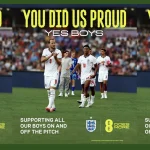
EE is taking a leading role in redefining masculinity for young men across the United Kingdom with a powerful Out-of-Home (OOH) and social media campaign that directly addresses England’s recent World Cup quarter-final exit at the hands of Argentina. The campaign, crafted by Saatchi & Saatchi, features a simple yet impactful message: “You did us proud. Yes boys.” This slogan serves as a poignant display of sportsmanship, a demonstration of solidarity, and a profound reminder that the true strength of any team lies in its unity, irrespective of the outcome of a match.
This timely and reactive campaign aligns perfectly with EE’s established role as the lead partner of the Home Nations Football Associations. It represents a significant continuation of EE’s broader “Yes Boys” initiative, a nationwide campaign initially launched in May 2026 in anticipation of the World Cup. The “Yes Boys” initiative is fundamentally designed to safeguard teenage boys from the detrimental effects of negative online influences and the pervasive “manosphere” content, while simultaneously championing a more positive and inclusive vision of masculinity, deeply rooted in the sport of football.
The genesis of the “Yes Boys” campaign can be traced to extensive research commissioned by EE in collaboration with Professor Ben Hine from the University of West London. This research unveiled a concerning reality for young men in the UK. The findings indicated that a significant 42% of boys aged between 11 and 16 encounter content on a weekly basis that promotes harmful stereotypes, such as the assertion that “men shouldn’t show emotions” or the directive that “boys need to toughen up.” Such messages contribute to a restrictive and often damaging understanding of what it means to be male, fostering emotional suppression and discouraging vulnerability.
Conversely, the research also illuminated the profoundly positive influence of football on the development of young men. A substantial 65% of parents surveyed reported that the sport has had a demonstrably positive impact on their son’s confidence and sense of identity. Furthermore, the study highlighted the significant role of coaches, with 71% of parents believing that a coach holds an equal or even greater influence over their son’s perception of masculinity compared to the online content he consumes. This underscores the potential for positive role modeling within the sporting environment. The research also revealed a notable shift in emotional expression among young players, with 69% of boys indicating they feel more comfortable discussing their emotions after observing professional football players openly sharing their experiences with pressure and vulnerability. This suggests that visible emotional honesty from admired figures can create a ripple effect, normalizing such expressions for younger audiences.
The World Cup Journey and Its Aftermath
England’s journey in the 2026 FIFA World Cup, while ultimately falling short in the quarter-finals against a formidable Argentinian side, captured the nation’s attention and generated immense public interest. The team’s performance, characterized by moments of brilliance and unwavering determination, had galvanized supporters across the country. Their eventual defeat, though disappointing, was met with a widespread acknowledgment of their efforts and the competitive spirit they displayed on the global stage.
The tactical prowess of Argentina, coupled with moments of individual brilliance, proved to be a formidable challenge for the Three Lions. The match, played under intense scrutiny and with significant national expectations, ultimately ended in a narrow defeat, concluding England’s hopes for World Cup glory in 2026. The emotional investment of millions of fans meant that the outcome resonated deeply, leading to a period of reflection and a desire to offer support to the young squad who had carried the nation’s aspirations.
EE’s "Yes Boys" Campaign: A Strategic Response
The "Yes Boys" campaign, spearheaded by EE, is not merely a post-match consolation; it is a strategic and long-term commitment to fostering positive masculinity. The reactive OOH and social media elements, featuring the message “You did us proud. Yes boys,” serve as an immediate testament to this commitment. This message is designed to counter any potential feelings of failure or inadequacy that the young players might experience, reinforcing the idea that their effort and dedication are valued regardless of the final scoreline.
The broader "Yes Boys" initiative, launched prior to the tournament, aims to create a supportive ecosystem for teenage boys. By partnering with football associations and leveraging the sport’s inherent appeal, EE seeks to redirect young men away from potentially harmful online spaces. The "manosphere" is often characterized by extremist ideologies, misogyny, and rigid, often toxic, definitions of manhood. The "Yes Boys" campaign offers a compelling alternative, demonstrating that strength can be found in empathy, communication, and mutual support.
The Research Foundation: Understanding the Challenges
The research conducted by EE and Professor Ben Hine provides crucial context for the "Yes Boys" campaign. The statistics highlight a significant societal challenge: the perpetuation of outdated and harmful stereotypes about male emotional expression. The finding that 42% of boys aged 11-16 regularly encounter messages discouraging emotional openness is a stark indicator of the pressures young men face. These messages can lead to internalized shame, difficulty in forming healthy relationships, and an increased risk of mental health issues.
The research’s emphasis on the positive impact of football is particularly significant. Football, at its best, is a team sport that requires collaboration, communication, and mutual respect. It provides a platform for boys to learn valuable life skills, develop resilience, and build a sense of belonging. The data suggesting that coaches can be as influential, if not more so, than online content underscores the importance of investing in positive role models within sports. The research also points to the powerful effect of visible vulnerability from professional athletes, demonstrating that open discussion of emotions is not a sign of weakness but rather a facet of genuine strength.
Broader Implications and Future Outlook
The "Yes Boys" campaign represents a forward-thinking approach by a major brand to address a critical societal issue. By aligning with the values of sportsmanship and positive role modeling, EE is not only enhancing its brand image but also contributing to the well-being of young men in the UK. The campaign’s success will likely be measured not just by its reach and engagement, but by its tangible impact on how teenage boys perceive themselves and their emotions.
The implications of this campaign extend beyond the immediate context of the World Cup. By fostering a more inclusive and emotionally intelligent understanding of masculinity, EE is contributing to a cultural shift. This shift is vital in creating a society where young men feel empowered to express themselves authentically, seek support when needed, and build healthy, respectful relationships. The campaign’s long-term success hinges on sustained effort and a continued commitment to challenging harmful stereotypes and promoting positive role models.
The collaboration with Saatchi & Saatchi and other agencies highlights the integrated approach required to tackle complex social issues. The creative execution of the campaign, from the powerful OOH messaging to the strategic deployment on social media, plays a crucial role in resonating with the target audience. The involvement of agencies like Digitas for digital strategy and Pitch PR for public relations further demonstrates a comprehensive effort to amplify the campaign’s message and impact.
As the football season continues and other sporting events unfold, the principles championed by the "Yes Boys" campaign can serve as a blueprint for other organizations seeking to promote positive social change. The understanding that sports can be a powerful vehicle for education and personal development is a key takeaway. EE’s initiative, rooted in research and executed with a clear purpose, stands as a commendable example of corporate social responsibility in action, demonstrating that brands can play a vital role in shaping a more positive and supportive future for young men.
Credits
Client: EE
- Brand & Communications Director: Kelly Engstrom
- Head of Brand Advertising: Jules Wilkin
- Brand Campaign Manager: Simon Reynolds
- Media Manager: Laura Stone
- Sponsorship Managers: Gary Bansor & Olivia Worth
Creative Agency: Saatchi & Saatchi
- Chief Creative Officer, Publicis Groupe UK: Ben Mooge
- Executive Creative Director: William John
- Associate Creative Directors: George Coyle, Sam Simmonds, Josh Steele
- Head of Integrated Production: Rachel Solomon
- Associate Executive Producer: Rosie Nolan
- Junior Producer: Josh Clark, Jessica Watkins Homeyard
- Managing Partner: Eilidh McGregor
- Business Lead: Dyfed Thomas
- Account Manager: Ciara McCarthy
- Head of Strategy: Will Moore
- Senior Planner: Bridget Moyle
Digital Agency: Digitas
PR Agency: Pitch PR
Media Agency: OpenConnect, WPP Media