
The Getty Center in Los Angeles is currently hosting a comprehensive survey of the visual and political intersections that defined a pivotal era in American history. Titled Photography and the Black Arts Movement, 1955–1985, the exhibition features over 150 works that trace the evolution of Black identity, liberation, and creative expression. Curated by Philip Brookman of the National Gallery of Art and Deborah Willis of New York University, the collection examines how the camera served as both a witness to social upheaval and a primary tool for cultural self-determination.
The exhibition spans three decades of profound transformation, beginning with the nascent stirrings of the Civil Rights Movement in the mid-1950s and concluding with the established institutional legacies of the mid-1980s. By centering photography within the broader context of the Black Arts Movement (BAM)—often described as the "aesthetic sister" of the Black Power Movement—the curators highlight how lens-based media challenged prevailing stereotypes and constructed a new visual language for the African diaspora.
The Curatorial Vision and Theoretical Framework
The collaboration between Philip Brookman and Deborah Willis represents a multi-year effort to recontextualize the role of the image-maker. Willis, a leading historian of African American photography, and Brookman, a seasoned curator of social documentary, aimed to move beyond the idea of photography as mere documentation. Instead, they present the medium as a proactive force that helped shape political reality.

Mazie Harris, assistant curator at the Getty, notes that the exhibition functions as a "collage," much like many of the physical artworks included in the show. This approach allows for a non-linear exploration of themes such as Black beauty, political organizing, and "self-fashioning." The selection includes iconic photojournalism alongside experimental fine art and vernacular images that were never originally intended for museum walls. This mixture emphasizes that the Black Arts Movement was not a monolithic entity but a vibrant, often decentralized network of artists, activists, and thinkers.
A central motif of the exhibition is found in Darryl Cowherd’s 1960s photograph, The Time is Now. The image depicts a graffitied door bearing that specific phrase, which curators suggest serves as an enduring call to action. It reflects the urgency of the 1960s while maintaining a direct dialogue with contemporary social justice movements.

Chronology of a Movement: 1955–1985
The exhibition’s timeframe is intentionally broad, allowing for a deep dive into the shifts in Black visual culture.
1955–1964: The Era of Witness
The starting point of 1955 coincides with the brutal murder of Emmett Till and the subsequent publication of his open-casket photographs in Jet magazine—a moment widely credited with galvanizing the modern Civil Rights Movement. Works from this period, such as those by Harry Adams and Moneta Sleet Jr., focus on the collective power of protest. Adams’ Protest Car (1962) captures the physical presence of dissent in the urban landscape, while Sleet’s images of the Selma march document the human toll and resilience of voting rights advocates.

1965–1975: The Rise of the Black Arts Movement
Following the assassination of Malcolm X in 1965, the Black Arts Movement gained formal momentum. Artists began to turn inward to define Blackness on their own terms. This era saw the rise of collectives like the Kamoinge Workshop in New York. Photographers such as Ming Smith and Gordon Parks began to experiment with more subjective, atmospheric styles. Parks’ 1963 portrait of Ethel Sharrieff highlights the dignified, disciplined imagery of the Nation of Islam, countering the chaotic depictions often found in mainstream white media.
1976–1985: Legacy and Expansion
The final decade of the exhibition’s scope explores how the radical innovations of the 1960s were synthesized into fine art and academic spheres. Carrie Mae Weems’ Mom at Work (1978–1984) represents a shift toward the personal and domestic, examining the intersections of race, gender, and labor. During this period, the movement’s influence expanded globally, incorporating perspectives from the Caribbean, Britain, and Africa, as seen in the diverse array of works curated into the Getty’s installation.

Analysis of Key Works and Artistic Contributions
The exhibition highlights several trailblazing artists whose work redefined the boundaries of the medium.
Ernest C. Withers and the Memphis Strike
Withers’ photograph I Am a Man, Sanitation Workers Strike, Memphis, Tennessee (1968) is perhaps one of the most recognizable images in the collection. It depicts a sea of protesters holding identical placards. The image is a masterclass in how photography can amplify a political message through repetition and clarity, turning a local labor dispute into a universal statement on human dignity.

Ming Smith’s Afrofuturist Vision
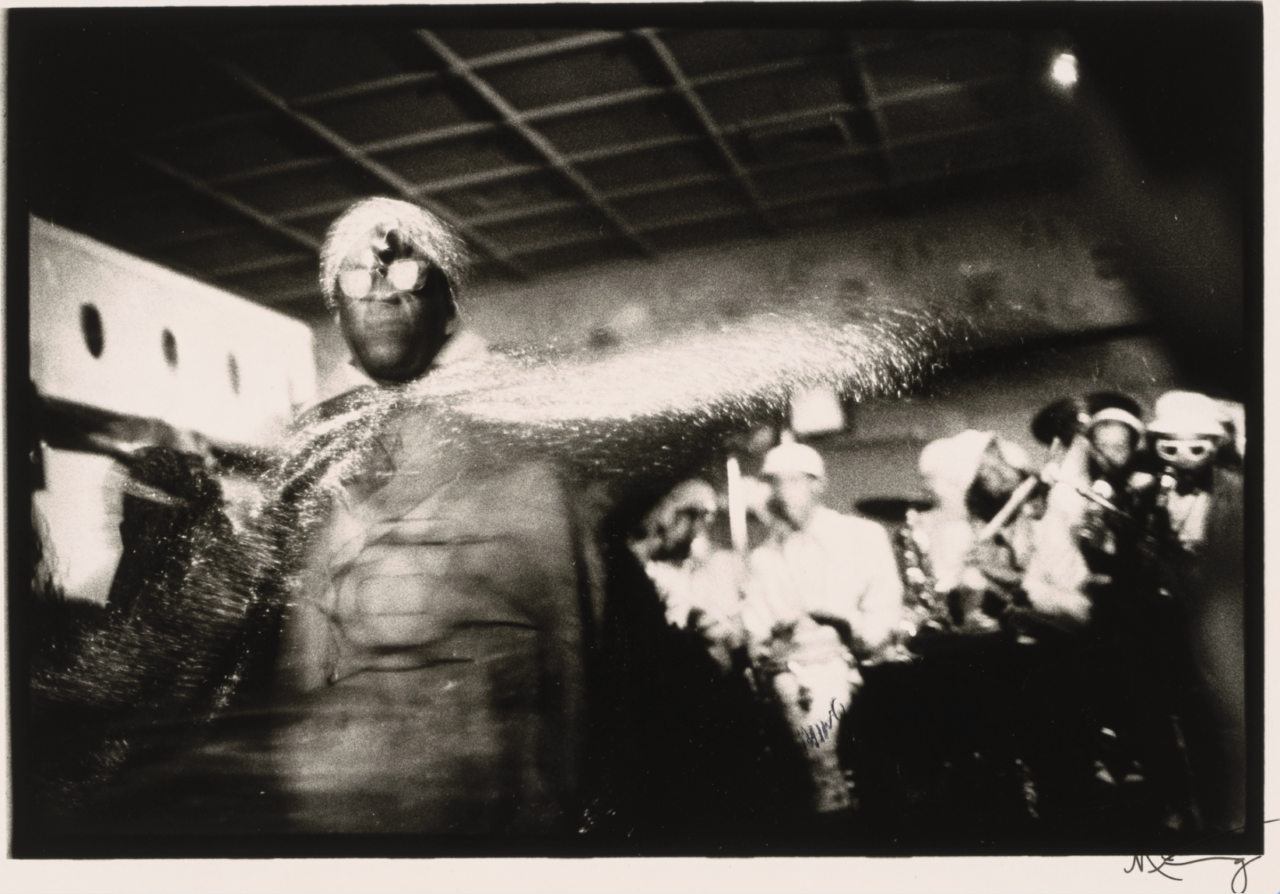
Ming Smith’s Sun Ra Space II, New York, New York (1978) offers a departure from strict documentary. Using an extended exposure, Smith captures the jazz visionary Sun Ra in a way that feels ethereal and timeless. The image suggests a "liberatory futurism," aligning with the movement’s interest in imaginative cosmologies and the rejection of a purely traumatic historical narrative.
The Multimedia Approach of David Clyde Driskell and Barbara McCullough
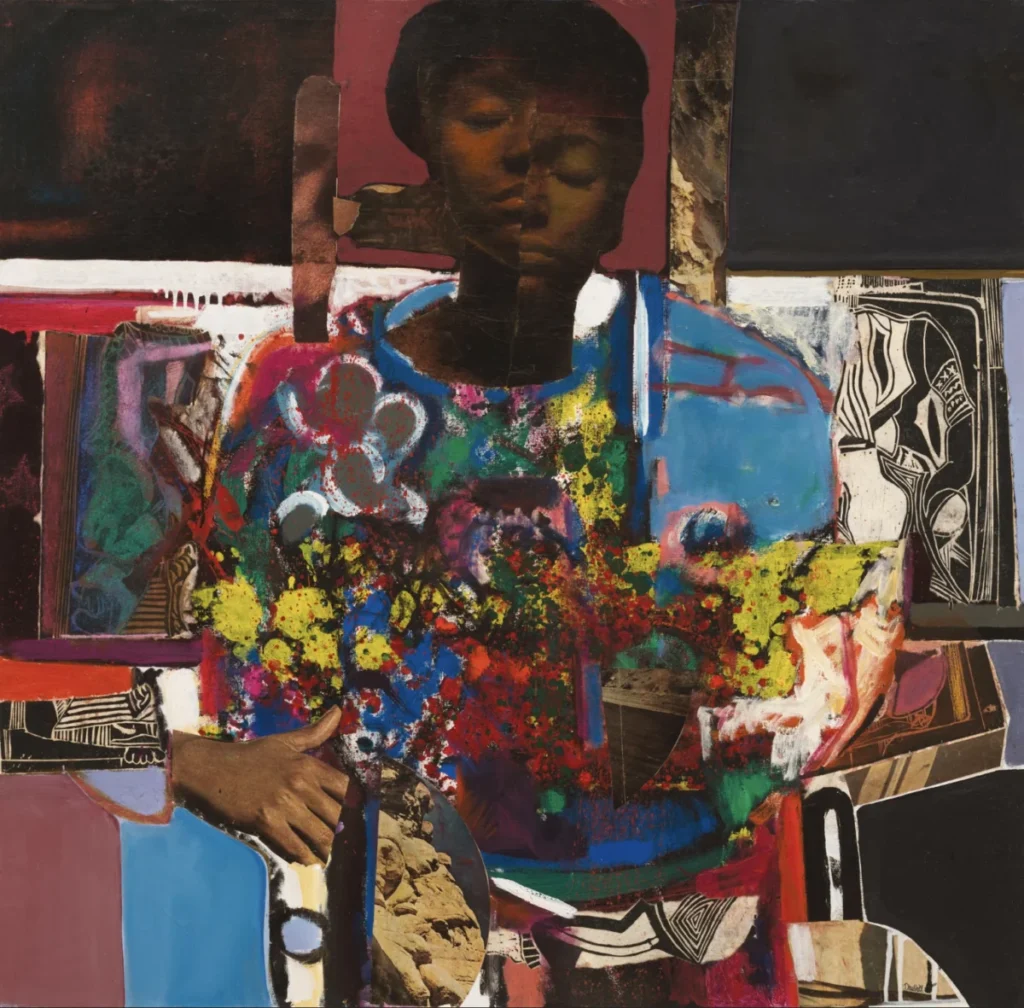
The exhibition acknowledges that photography did not exist in a vacuum. David Clyde Driskell’s Woman with Flowers (1972) incorporates collage and oil on canvas, demonstrating how photographic elements were integrated into traditional fine arts to create layered meanings. Similarly, Barbara McCullough’s film Shopping Bag Spirits and Freeway Fetishes (1980) uses digital video to explore ritual spaces, showing how the "lens-based" philosophy of the movement transitioned into moving images and performance documentation.

The Role of Media and Dissemination
A critical component of the exhibition is the exploration of how these images reached the public. In the 1960s and 70s, publications like Ebony, Jet, and the Black Panther newspaper were essential conduits for Black visual culture. These outlets provided a platform for photographers to share images that mainstream publications like Life or Time might overlook or misinterpret.
Mazie Harris notes that the impact of these photographs was magnified by their reproduction. The ability to see oneself reflected with dignity and power in a mass-produced magazine was a radical act in mid-century America. This historical context provides a direct parallel to the modern era, where social media serves as a similar, albeit more rapid, tool for the dissemination of visual activism. However, the exhibition argues that while the technology has changed, the need for "powerful visions and strong voices" to cut through media noise remains constant.

Institutional Response and Broader Implications
The hosting of this exhibition at the Getty—an institution traditionally associated with the Western canon—signifies a continuing shift in the art world toward recognizing the foundational contributions of Black artists. By presenting these 150 works, the Getty and the National Gallery of Art acknowledge that the Black Arts Movement was not a peripheral event but a central pillar of 20th-century American modernism.
The exhibition also serves as a reminder of the fragility of civil rights. The curators have noted that the material is especially resonant today as debates over racial justice, voting rights, and representation return to the forefront of national discourse. The photographs act as both a roadmap of past struggles and a mirror for current challenges.

Exhibition Logistics and Tour Information
Photography and the Black Arts Movement, 1955–1985 will remain on view at the Getty Center in Los Angeles through mid-June. Following its California residency, the exhibition is scheduled to travel to the Mississippi Museum of Art, where it will be on display from July 25 to November 8, 2026.
The accompanying catalog and educational programs aim to further the research initiated by Willis and Brookman, ensuring that the legacy of these photographers is preserved for future scholarship. The collection stands as a testament to the enduring power of the camera to promote dignity, foster solidarity, and demand social change. As visitors exit the gallery, the message of the Darryl Cowherd photograph remains: the work of the artists featured is not just a record of the past, but a prompt for the present, reinforcing the idea that for the pursuit of equity and creative freedom, the time is always now.