
In the contemporary digital landscape, artificial intelligence has quietly assumed a myriad of roles, ranging from personal productivity assistant to sounding board for existential inquiries. Among the most striking trends of the mid-2020s is the reliance on automated systems for matters of the heart. Recent digital usage data indicates that more than 300 million messages are transmitted to artificial intelligence platforms every week, specifically concerning relationships, emotional guidance, and the complexities of romance. Young adults and teenagers, navigating the labyrinth of modern dating, increasingly turn to algorithms to decode mixed signals, resolve lover’s quarrels, and seek blueprints for affection. Yet, despite the staggering processing power of modern computing, the fundamental nature of human attachment remains stubbornly unquantifiable. Love resists optimization, defying calculation through its inherent unpredictability, vulnerability, and depth.
Recognizing this cultural paradox, creative agency la comunidad and renowned wine brand Alma Mora have launched an innovative cross-generational campaign designed to pull modern romantics away from glowing screens and reconnect them with tangible human wisdom. Titled A Conversation between generations about love, the initiative bridges the gap between younger generations grappling with the anxieties of digital-age dating and older adults whose insights have been forged through decades of lived experience. Rather than relying on cold data sets culled from the internet, the campaign champions the messy, beautiful reality of human trial and error—loving, losing, recovering, and starting anew.
Background Context and the Rise of AI Intimacy
The phenomenon of turning to machines for emotional support is not happening in a vacuum. Over the past several years, the proliferation of generative AI tools has democratized access to instant conversational partners. For a generation that came of age during periods of prolonged social isolation and digital immersion, chatbots offer a low-stakes environment to practice vulnerability. They provide immediate responses without judgment, rejection, or the awkward pauses characteristic of face-to-face interaction.
However, psychologists and sociologists have raised growing concerns regarding the outsourcing of emotional intelligence to machines. Algorithms are designed to predict patterns based on historical data, whereas human relationships are defined by novelty, friction, and emotional evolution. An AI can synthesize relationship advice derived from centuries of literature and psychological studies, but it cannot authentically say, "I have lived through this exact heartbreak, and you will survive it." It is this critical deficit that inspired the partnership between Grupo Peñaflor’s subsidiary, Alma Mora, and la comunidad. By juxtaposing the sterile efficiency of algorithms with the rich, weathered perspectives of older generations, the campaign highlights a timeless truth: emotional resilience cannot be downloaded; it must be lived.
The Campaign Architecture and Implementation
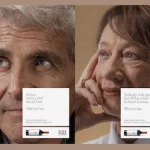
At the core of A Conversation between generations about love is a multifaceted multimedia rollout designed to engage audiences across traditional broadcast channels, street-level activations, and digital social media ecosystems. The centerpiece of the campaign features intimate, unscripted dialogues where younger participants pose their most pressing, anxious questions about romance, commitment, and heartbreak to older mentors. The resulting exchanges capture raw vulnerability, humor, and profound perspective shifts.
Unlike conventional advertising campaigns that rely on polished actors and scripted dialogue, la comunidad chose an authentic documentary approach. Production company La Industria Cine, under the direction of Pucho Mentasti, captured genuine interactions that emphasize facial expressions, hesitant pauses, and the palpable warmth of human connection. The visual narrative is supported by a sensitive musical score from Papamusic and expert color grading by Roy Bermudez, creating an intimate cinematic atmosphere that mirrors the emotional weight of the conversations.
The campaign’s footprint extends far beyond traditional film spots. Creators and influencers have taken to urban streets to intercept younger pedestrians, collecting their burning relationship questions and carrying them directly to older adults residing in retirement communities and neighborhoods. Furthermore, digital users participating via social media platforms can submit their personal dilemmas online, bridging the gap between virtual curiosity and real-world wisdom. This interactive layer transforms a standard advertising broadcast into an ongoing public forum on the nature of human relationships.
Corporate Perspectives and Brand Alignment
For Grupo Peñaflor and its wine brand Alma Mora, the campaign represents a natural extension of brand ethos. Alma Mora has long positioned its products around the concept of gathering, sharing, and savoring moments in real time. In an era defined by digital fragmentation, the brand seeks to champion physical presence and authentic conversation—ideally facilitated over a shared glass of wine.
Pablo Moraca, global marketing director at Grupo Peñaflor, emphasized the philosophical underpinning of the initiative during the launch. "In a world where artificial intelligence seems to have all the answers, Alma Mora reminds us that when it comes to love, there are other sources of wisdom," Moraca stated. "They may be less precise and not backed by mountains of internet data, but they are grounded in something essential: life itself."
Echoing this sentiment, Rosario Garré, marketing manager for Finca Las Moras at Grupo Peñaflor, noted the irreplaceable value of physical proximity. "At a time when everything is evolving at an overwhelming pace, there is still something magical that happens when two people sit face to face and share a glass of wine," Garré observed. "That spirit has always been at the heart of Alma Mora, and this is our way of bringing it to life today."
Creative Leadership and Agency Execution
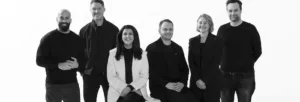
The conceptualization and execution of the campaign required a delicate balance of modern cultural observation and timeless storytelling. Headquartered in the region, creative agency la comunidad brought together a diverse team of strategists, creatives, and production specialists to bring the vision to life.
Joaquín Mollá, founder and global chief creative officer of la comunidad, alongside EVP Regional Managing Director Latam Julieta Rey and General Manager Ramiro Gonzalez Venzano, spearheaded the strategic direction. The creative execution was guided by Executive Creative Director Lisandro Cardozo and Creative Director Ignacio Grosman, with art direction led by Raúl Vassena and Fernando Reis. Senior strategist Mariana Bua provided the underlying cultural insights regarding digital isolation and the algorithmic search for intimacy.
In a joint statement accompanying the release, the agency elaborated on the creative rationale: "This campaign turns the spotlight on people who have already lived through much of life and have learned that love can only be understood by experiencing it. Men and women who fell in love, built relationships, broke up, made mistakes, and started all over again. They’re front and center here, offering answers shaped by the experience that only comes from having truly loved."
Comprehensive Production Credits
The realization of such an ambitious campaign demanded a robust collaboration between agency talent, corporate stakeholders, and top-tier production crews. Below is the complete roster of professionals who contributed to the realization of A Conversation between generations about love:
Client Team:
- Alejandro Helou
- Pablo Moraca
- Rosario Garre
- Victoria Vallone
- Delfina Gadda
Agency Team (la comunidad):
- Founder, Global Chief Creative Officer: Joaquín Mollá
- EVP Regional Managing Director Latam: Julieta Rey
- General Manager: Ramiro Gonzalez Venzano
- Executive Creative Director: Lisandro Cardozo
- Creative Director: Ignacio Grosman
- Head of Art: Raúl Vassena
- SVP, Head of Art & Design [Creative Support]: Fernando Reis
- Creative and Design Team: Agustina Olea, Melina Villaruel, Nía Martínez
- Senior Strategist: Mariana Bua
- Head of Client Services: Sol Blanco
- Account Director: Catalina Gay
- Account Executive: Lucia Restuccia
- Social Media Team: Josefina Sanchez, Cesira Elizalde
- Production Manager: Ramiro Capisto
- Production Team: Florencia Hernandez, Juan Cruz Ardanaz
Production Company (La Industria Cine):
- Director: Pucho Mentasti
- Co-Director: Hernan Jauregui
- Executive Producers: Rai Bassano, Franco Sintoff, Ivan Buldrini, Andres Kosovsky
- Director of Photography: Santiago Conde
- Photographer: Mechi Bassano
- Digital Direction: Gaspimenta
- Editor: Camila Muhafra
- Colourist: Roy Bermudez
- Armaleo Color Producer: Santiago Burgos
- Music: Papamusic
Broader Societal Implications and Analysis
The cultural resonance of Alma Mora’s campaign touches upon broader sociological shifts regarding technology, isolation, and intergenerational communication. As digital natives age into primary relationship-forming demographics, the boundary between automated convenience and genuine human engagement continues to blur. While artificial intelligence offers undeniable utility in parsing logistical or informational queries, the emotional domain remains fraught with ambiguity that algorithms are fundamentally unequipped to resolve.
By facilitating a direct dialogue between the elderly and the young, the campaign addresses a parallel modern crisis: the societal segregation of generations. Modern urban living frequently isolates older populations from active community life, depriving younger generations of the mentorship and historical perspective that previous centuries took for granted. In substituting algorithmically generated aphorisms with the hard-won wisdom of octogenarians and septuagenarians, Alma Mora and la comunidad advocate for a return to narrative continuity.
Ultimately, the campaign does not merely critique technological reliance; it offers a compelling, human-centric alternative. It suggests that while the questions young people ask about love may evolve with every technological revolution, the answers remain anchored in the universal realities of human endurance, forgiveness, and shared vulnerability. Through the simple act of listening across generational divides, modern society may rediscover that the most profound relationship guidance cannot be computed—it must be lived, shared, and toasted over a glass of wine.