


In modern digital marketing analytics, few terms generate as much quiet confusion as "Direct traffic." Often dismissed by performance-driven analysts as a catch-all bucket for broken tracking parameters or unidentified user behavior, recent data analysis reveals a vastly different reality. Far from being a mere technical anomaly or a failure of attribution, direct traffic represents the single largest source of user acquisition across enterprise websites, serving as a powerful, undisrupted indicator of brand strength and long-term customer loyalty.
A comprehensive multi-account data study examining millions of sessions over recent years highlights the paradoxical nature of this metric. While performance marketers historically prioritize channels that offer granular, click-by-click attribution—such as paid search and targeted social campaigns—brand strategists recognize that direct traffic operates on an entirely different plane. As search landscapes shift and reliance on third-party intermediaries grows increasingly volatile, direct traffic stands out as the only major acquisition channel that major technology platforms cannot monetize, alter, or take away from an organization.
The Anatomy of Direct Traffic in GA4
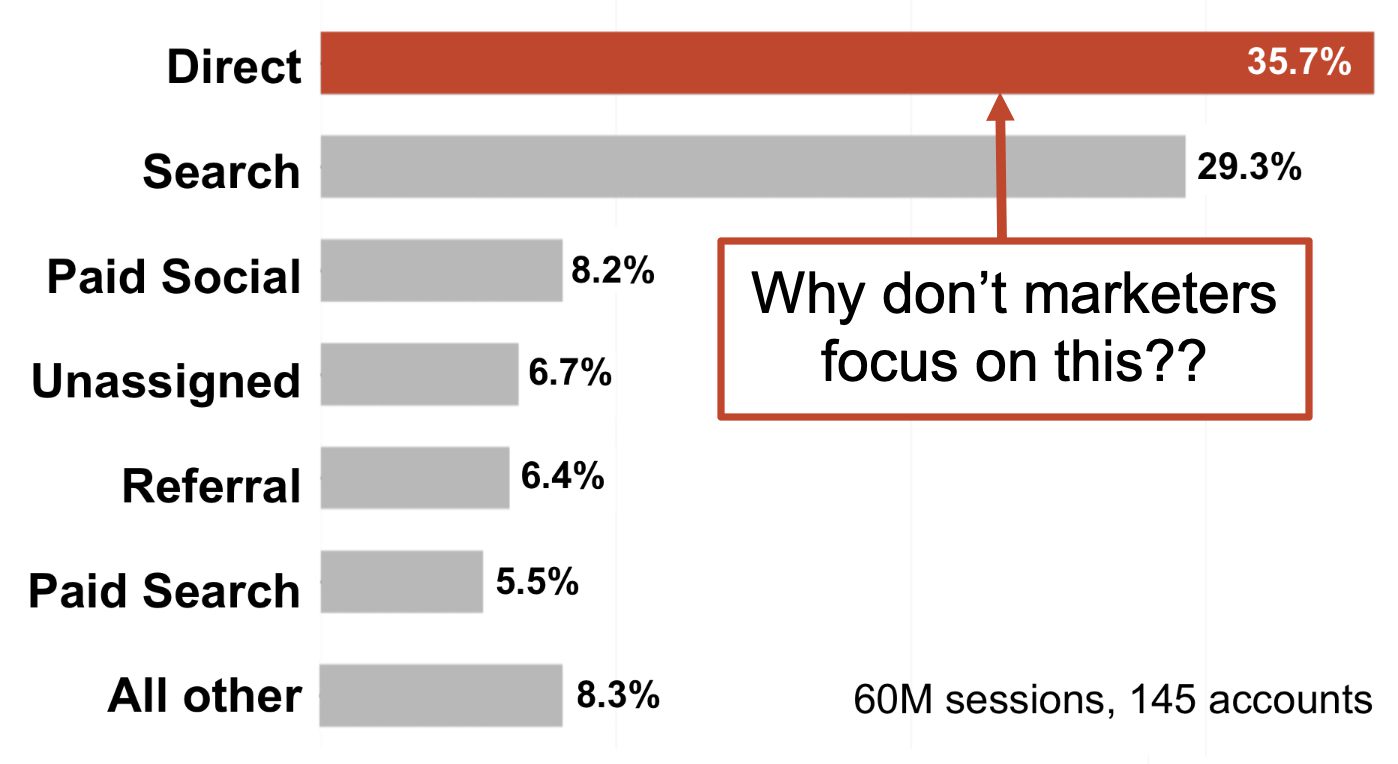
To understand the true significance of direct traffic, it is first necessary to examine how platforms like Google Analytics 4 (GA4) categorize incoming visitors. In the hierarchical decision-making tree utilized by modern analytics engines, direct traffic functions as the final fallback. When an analytics platform cannot identify a referring source, a recognizable campaign tag, or an organic search engine pathway, the visit defaults to the direct channel.
Historically, this has led to widespread misconceptions. Traditional digital marketing training teaches that direct traffic consists exclusively of users typing a uniform resource locator (URL) directly into a browser address bar or clicking a saved browser bookmark. However, technical audits reveal a much broader spectrum of user behaviors and tracking limitations that funnel traffic into this category.
Untagged links shared across secure messaging applications, mobile app environments, offline interactions such as physical QR codes, and botched UTM parameter implementations all contribute significantly to the volume of direct traffic. Furthermore, security protocols, browser privacy settings, and technical redirects frequently strip referrer data, causing legitimate visits from social networks, email campaigns, or external referrals to be misclassified as direct.
Rather than viewing these classifications solely as a technical nuisance, industry analysts suggest reframing the perspective. When the actions behind direct traffic are inverted, the category transforms from an attribution failure into a clear measure of audience awareness, market reputation, and word-of-mouth advocacy.
Empirical Evidence and Industry Benchmarks
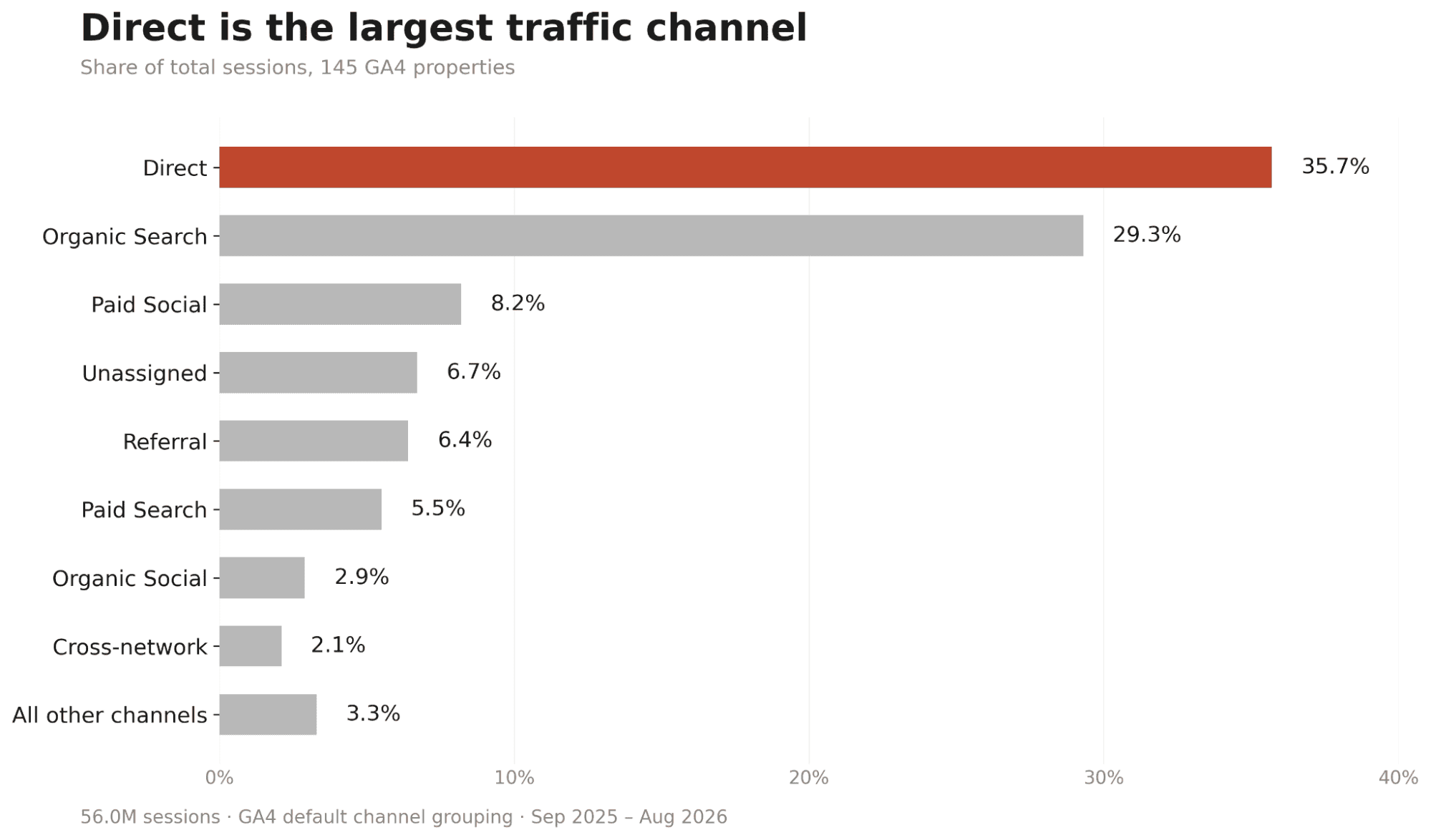
Recent empirical studies underscore the sheer volume and economic value of direct traffic within the digital ecosystem. An analysis of 145 distinct Google Analytics accounts encompassing more than 56 million sessions demonstrated that direct traffic ranked as either the number one or number two acquisition channel for 92 percent of the evaluated properties. Overall, direct traffic accounted for roughly 36 percent of all recorded sessions, outperforming traditional pillars like organic search, paid advertising, and social media referrals.
This dominance becomes even more pronounced among enterprise-level organizations and globally recognized brands. According to comparative benchmark reports from Similarweb, websites with the highest overall traffic volumes frequently see up to 65 percent of their total sessions categorized as direct. This direct correlation between brand prominence and direct traffic volume reinforces a core principle of modern commerce: as brand equity increases, the necessity for paid intermediaries declines. Consumers who already trust an organization bypass traditional search engines and AI discovery tools, navigating directly to the source.
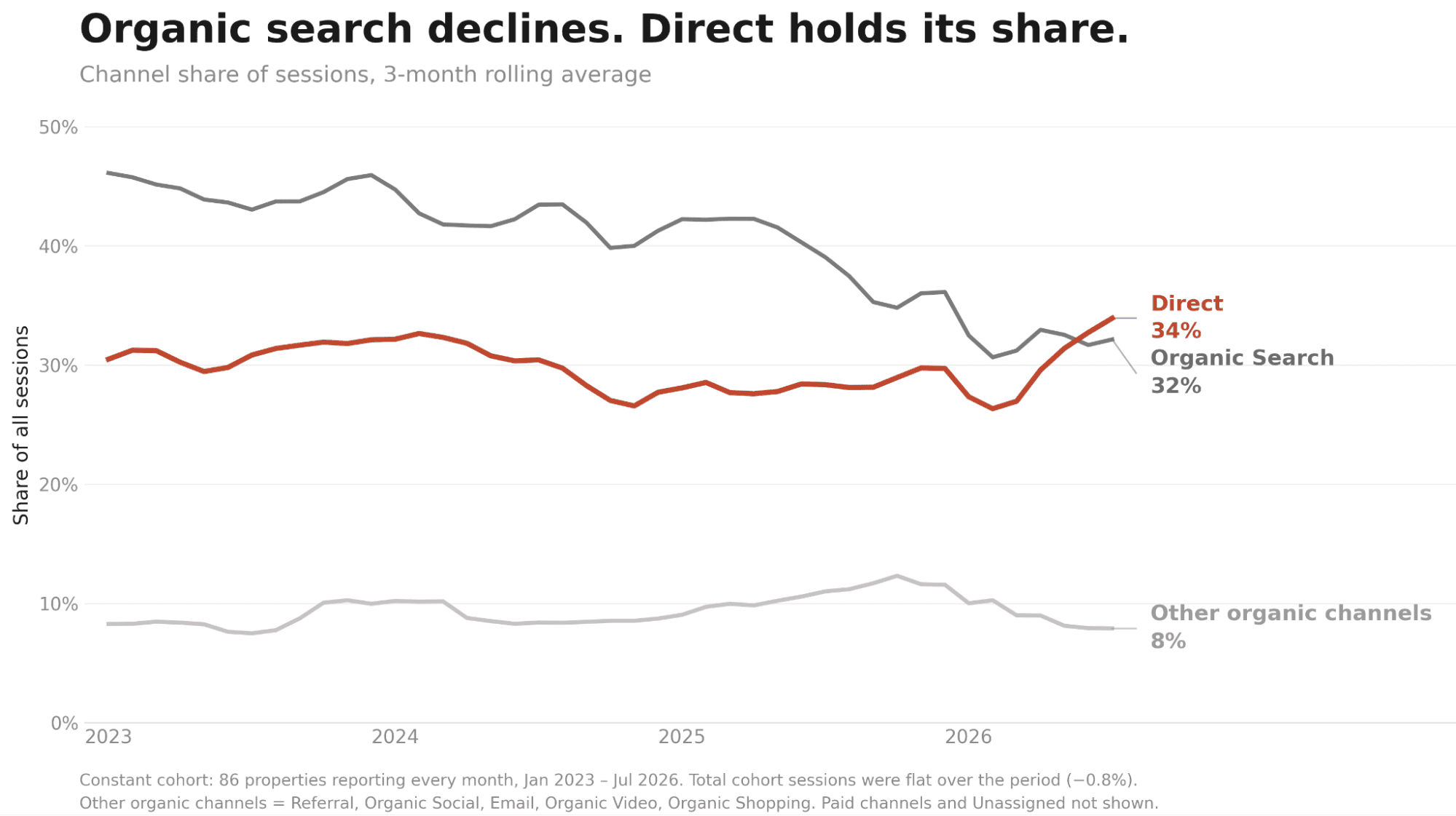
Furthermore, longitudinal data tracking website performance across multi-year cycles demonstrates the remarkable resilience of direct traffic. While organic search traffic volumes have experienced fluctuations driven by algorithmic updates, shifting search engine results pages (SERPs), and the rise of zero-click search environments, direct traffic has maintained a remarkably steady baseline. Across extended analyses of millions of visits, direct traffic has held its ground as a stabilizing force for enterprise web properties, proving impervious to external platform disruptions.

Conversion Efficiency and Demand Generation
Beyond mere volume, the quality of direct traffic visitors remains a critical factor for business growth. A widespread misconception among digital marketers is that direct traffic visitors consist primarily of accidental clicks or low-intent users who bounce immediately. However, conversion tracking data paints a distinctly different picture.
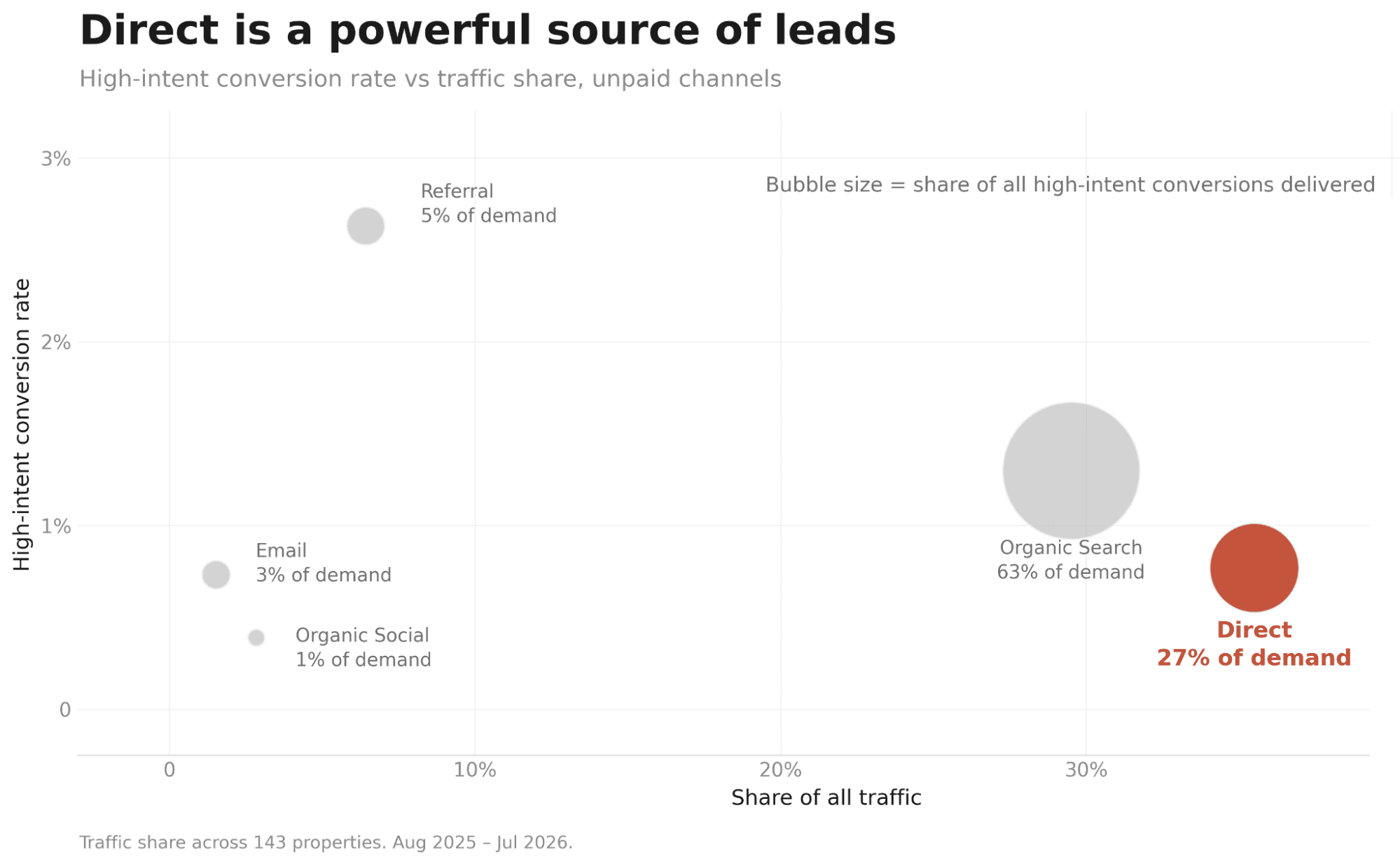
An evaluation of high-intent conversion pathways across numerous web properties indicates that direct traffic is consistently the second-largest generator of qualified leads and demand, accounting for approximately 27 percent of total conversions. While specialized channels such as high-intent organic search and targeted email campaigns may yield higher proportional conversion rates on a per-session basis, the sheer mass of direct traffic ensures it remains a primary engine for business growth.
Industry leaders emphasize that this high conversion rate is a natural byproduct of established trust. When prospective buyers arrive directly at a website, they have typically already completed the research, comparison, and consideration phases through external touchpoints, word-of-mouth recommendations, or sustained brand exposure. They arrive with pre-existing intent, making them exceptionally receptive to conversion actions such as form submissions, product inquiries, and direct sales.
Strategic Implications and the Shift in Marketing Perspectives
The divergence in how direct traffic is perceived highlights a broader philosophical split within the marketing industry: the tension between performance marketing and brand marketing.
Performance marketers, trained to demand precise attribution for every allocated dollar, often view direct traffic as a black box that frustrates return-on-investment (ROI) calculations. Because direct traffic cannot be easily tied to a specific ad click or keyword bid, it resists optimization through traditional conversion rate optimization (CRO) tactics. Consequently, budgets are frequently skewed toward channels that offer immediate, trackable attribution, even as those channels become more expensive and congested.
Conversely, brand marketers view direct traffic as the ultimate lagging indicator of successful long-term brand building. Industry experts note that robust branding initiatives—ranging from public relations campaigns and thought leadership to community building and offline events—consistently manifest as surges in direct and returning traffic. Because these trust-building channels operate outside the parameters of traditional digital tracking, their true impact is absorbed entirely by the direct traffic metric.
As digital ecosystems evolve, the strategic importance of direct traffic is projected to grow. Two primary trends are currently shaping the future of analytics and acquisition:
-
The Devaluation of Traditional Search: As search engine results pages become increasingly saturated with sponsored listings, aggregator sites, and AI-generated overviews, users are experiencing search fatigue. To bypass friction and secure reliable information, consumers are increasingly relying on direct navigation to trusted domain names.
-
The Rise of Dark Social and Decentralized Sharing: The growing reliance on private messaging platforms, community Slack groups, newsletter networks, and secure communication apps—collectively known as dark social—means that a significant portion of human-to-human link sharing is un-trackable by standard analytics tools. As users shift toward private recommendation channels, direct traffic naturally absorbs this organic advocacy.
Conclusion: Valuing the Undervalued Metric

Ultimately, direct traffic serves as empirical evidence that an organization’s broader marketing ecosystem is functioning effectively. It is neither a problem to be solved nor a technical glitch to be eliminated through aggressive campaign tagging. Instead, it represents an engaged, loyal audience that requires no technological intermediary to find what they are looking for.
For enterprise leaders and analytical teams alike, shifting the perception of direct traffic from an attribution nuisance to a core brand metric offers a clearer, more accurate picture of market health. In an era defined by algorithmic uncertainty and platform dependence, cultivating the kind of brand equity that drives direct traffic remains the most reliable strategy for sustained digital success.