
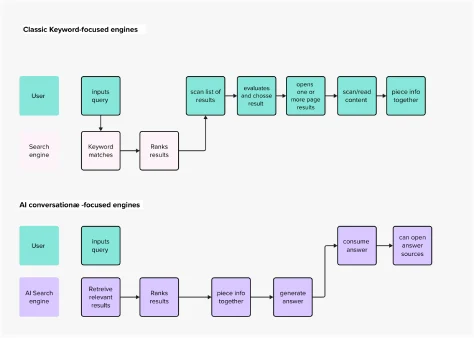

The digital landscape is undergoing its most significant shift since the advent of the web browser. As of early 2024, the search paradigm—long dominated by the classic Google-style "ten blue links" model—is being challenged by conversational AI search engines. Powered by Large Language Models (LLMs), these platforms move beyond mere indexing to synthesize, summarize, and present information in a natural, dialogue-driven format. This technological pivot, fueled by the rapid mainstream adoption of tools like ChatGPT, is forcing a re-evaluation of how users interact with information, the reliability of digital content, and the future of web traffic.
The Evolution of the Search Paradigm
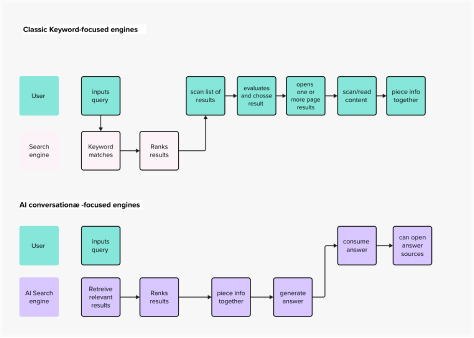
The history of search has historically been one of refinement. In the late 1990s and early 2000s, search engines functioned as massive, indexed libraries. Users provided keywords, and the engine provided a list of potential locations for that information. This model required the user to perform the "heavy lifting"—navigating to external sites, evaluating credibility, and extracting the relevant data.
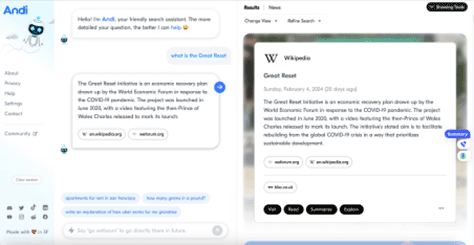
By February 2024, the industry hit a critical inflection point. As reported by Fast Company, the proliferation of conversational AI search tools—such as Perplexity AI and Andi—has introduced a "technology push" that is fundamentally altering the user interface (UI) and user experience (UX) of the web. Unlike traditional engines, these tools act as intermediaries. They retrieve data from multiple sources in real-time, process it through an LLM, and output a concise, human-like answer. This shift mirrors a broader trend toward generative AI, where the system itself performs the synthesis previously expected of the human researcher.

Chronology of the Shift
- Late 2022: The public release of ChatGPT triggers an unprecedented surge in interest regarding Generative AI, setting the stage for conversational interfaces to become the expected standard.
- Mid-2023: Research published in Nature identifies a rapid explosion in the number of AI-powered scientific search engines, noting both high user enthusiasm and significant concerns regarding data accuracy.
- February 2024: Mainstream media outlets begin reporting on the potential for these tools to displace traditional search incumbents, sparking debates over the "death" of the publisher-based traffic model.
- March 2024: Focus shifts toward the ethical and regulatory implications of AI-driven search, specifically concerning the "black box" nature of how these models select and prioritize source material.
Usability Heuristics and the Conversational Model
From a design perspective, conversational AI search engines offer a more intuitive Q&A pattern, aligning closely with human communication styles. This aligns with Jakob Nielsen’s classic usability heuristics, which emphasize user control, consistency, and efficiency. By providing the answer directly, these tools reduce the cognitive load on the user. The "evaluation phase"—where a user clicks through multiple links to verify an answer—is largely bypassed.
However, this efficiency comes at a cost. The mental model of the traditional search engine is transparent; the user chooses the link, the user visits the site, and the user builds their own understanding. The conversational model, by contrast, presents a pre-digested narrative. This creates a "black box" effect where the underlying logic of the AI remains opaque. The user is asked to trust the summary without understanding the weighting mechanisms the AI used to prioritize one source over another.
The Crisis of Trust and Explainability
The central challenge for AI search is explainability. As IBM’s Global Ethics Leader, Francesca Rossi, has noted, AI systems must be aligned with human values and capable of explaining their reasoning. In the context of search, this means providing clear citations and, more importantly, a transparent justification for why specific information was deemed authoritative.
Currently, these systems struggle with "hallucinations"—instances where the AI generates plausible-sounding but factually incorrect information. While Retrieval-Augmented Generation (RAG) techniques have been developed to force models to ground their answers in specific, real-time documents, the risk of misinterpretation remains. If a user is searching for a pair of jeans, the consequences of a hallucination are trivial. If the user is researching public policy, medical advice, or scientific literature, the risk is severe.
The Economic and Societal Implications
Beyond usability, the rise of AI search poses an existential threat to the digital content economy. The current model of the internet relies on a "click-through" economy, where publishers monetize the traffic sent to their sites by search engines. If a conversational AI effectively answers a user’s question without them ever visiting the source website, the incentive for publishers to create high-quality content diminishes.
As Kevin Roose of The New York Times succinctly asked, "If AI search engines can reliably summarize what’s happening in Gaza or tell users which toaster to buy, why would anyone visit a publisher’s web site ever again?" This concern is not merely theoretical; it is an impending economic reality that could lead to a decline in original reporting and specialized research.
Human Agency in an AI-Driven World
There is a valid concern that the convenience of AI-summarized search may atrophy the critical thinking skills required to verify information. Sociologist Roberta Katz has pointed out that the architecture of our digital tools shapes our behaviors—a concept often summarized as "we shape our tools, and thereafter our tools shape us."
If users grow accustomed to a single, authoritative-sounding answer, the habit of cross-referencing, investigating primary sources, and questioning biases may weaken. The traditional, "tedious" process of sifting through multiple search results is, in a sense, a form of intellectual exercise. It forces the user to encounter diverse perspectives and evaluate the credibility of different outlets. Replacing this with a single, AI-generated summary risks creating a "siloed" reality where the AI’s training data becomes the definitive, unchallenged source of truth.
The Future: Toward a Trustworthy Standard
The path forward for AI search engines is not necessarily to halt development, but to prioritize "trustworthy AI." This requires several fundamental changes to the current deployment strategy:
- Full Transparency in Citation: AI search engines must not only provide links but also clearly display how those sources were utilized.
- Explainability Layers: Future iterations should allow users to "drill down" into the AI’s reasoning, seeing the path of evidence that led to a specific conclusion.
- Regulatory Oversight: As governments move to regulate AI, search engines will likely face requirements regarding accuracy, bias mitigation, and data usage, similar to the regulations already being discussed in the European Union and the United States.
- Hybrid Models: As seen in the design of the Andi search engine, there is potential for a hybrid model that utilizes AI for synthesis while maintaining a UI that encourages users to visit primary sources, ensuring the survival of the content ecosystem.
Ultimately, while the transition to conversational AI search seems inevitable, the "right" search experience is not merely the fastest or the most conversational one. It is one that maintains the user’s agency, protects the underlying web economy, and upholds the highest standards of accuracy. As designers and developers continue to iterate on these tools, the focus must shift from the novelty of the interaction to the long-term impact on the collective human understanding of truth. The success of AI search will not be measured by how well it simulates human conversation, but by how well it empowers users to navigate a complex, information-rich world without sacrificing their critical faculties.