
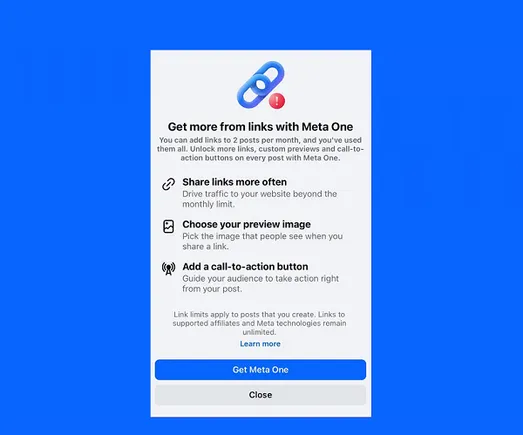
The digital landscape for social media management is undergoing a significant transformation as Meta broadens its monetization efforts for commercial accounts. Following the recent rollout of the Meta One for Business subscription packages, numerous professional Facebook Page managers have reported a restrictive new policy: accounts without a paid tier are being limited to publishing a maximum of just two link posts per month. This move signals an acceleration of tests first initiated in late 2025 and directly aligns with the tech giant’s long-term commercialization strategy. While publisher accounts remain exempt to sustain platform content flow, other brands and businesses face potential overhauls to their digital outreach strategies.
The Evolution of Meta’s Link-Sharing Restrictions
The restriction on unpaid link-sharing is not entirely unprecedented, but its integration with the newly minted Meta One for Business subscription structure marks a critical escalation. In December 2025, Meta launched a localized and heavily restricted pilot program that capped certain business pages at two outbound link posts per month. At the time, the company framed the test as an exploratory mechanism to evaluate whether a higher volume of outbound links genuinely adds measurable value for active users and commercial partners.
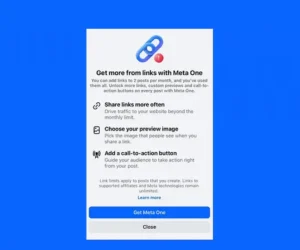
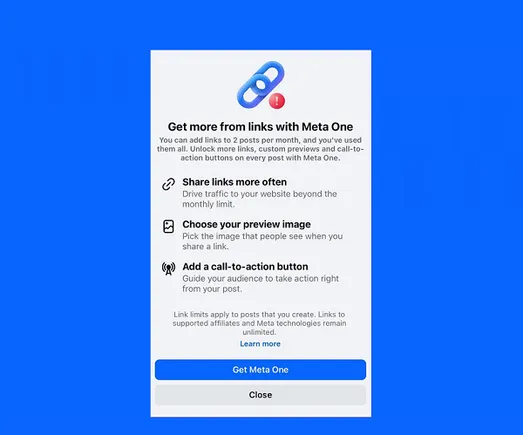
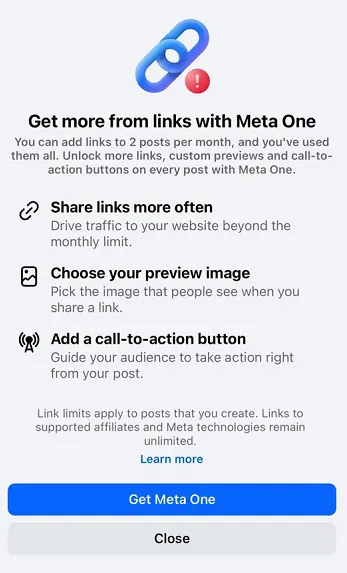
However, the debut of Meta One for Business has shifted this trial from an isolated experiment to a core feature of a tiered monetization model. The subscription packages—which also encompass features such as enhanced link-customization options for Instagram posts and Reels—now utilize link limitations as a primary incentive for businesses to upgrade. While Facebook-specific link quotas were not initially advertised as a foundational component of the introductory tier, pop-up notifications observed by page administrators this week confirm that the restriction is actively rolling out to a broader segment of the platform’s business user base.
Chronology of Meta’s Commercialization Strategy
To understand the current shift toward charging for basic platform functionalities, industry analysts frequently look back at Meta’s historical framework for app development and monetization. At an annual stockholder meeting in 2016, CEO Mark Zuckerberg outlined a definitive three-stage monetization playbook for the company’s family of apps.
The first phase focuses entirely on building utility and attracting a massive user base by offering services completely free of charge. The second phase involves organically introducing businesses and commercial entities to the ecosystem, encouraging them to build audiences, cultivate brand awareness, and utilize foundational posting tools at no initial cost. The third and final phase revolves around opening up substantial monetization avenues, where native business tools, premium placement, and expanded distribution capabilities are shifted behind paywalls.
The rollout of Meta One for Business represents the mature execution of this third phase. For years, businesses enjoyed unrestricted access to organic reach via link-sharing, enabling them to drive traffic directly to external e-commerce sites, blogs, and landing pages without incurring direct platform fees. By gradually restricting these organic avenues, Meta is systematically shifting professional users toward an ecosystem where commercial utility requires financial investment.
Platform Data: The Declining Organic Value of Outbound Links
Despite the operational friction this policy introduces for digital marketers, platform metrics suggest that the practical impact on overall visibility may be less severe than anticipated. According to Meta’s Widely Viewed Content report for the first quarter of 2026, outbound link posts receive remarkably low exposure across the Facebook ecosystem.
The data reveals that 98.7% of all content views in the United States during that specific reporting period did not include a link directing users to a source outside of the Facebook platform. This figure represents the culmination of a multi-year decline in organic reach for outbound links. When Meta first began publishing transparency insights regarding widely viewed content in 2022, approximately 9.8% of viewed content included an external link. Over the subsequent four years, algorithmic shifts prioritizing native video, native images, and intra-platform engagement steadily eroded that share down to a historic low of 1.3%.

Because the platform’s algorithm heavily favors content that keeps users inside the Facebook application—such as Watch videos, Marketplace listings, Groups interaction, and direct image posts—outbound link posts have long ceased to be primary drivers of organic discovery for the vast majority of pages. Consequently, industry analysts note that while a two-post monthly cap may feel restrictive from a planning perspective, the actual traffic loss resulting from the limitation may be negligible for brands that rely on organic rather than paid distribution.
Exemptions and Strategic Implications for Publishers
A critical element of Meta’s ongoing rollout is the exemption of verified publisher pages from the link-posting cap. By ensuring that news organizations and major media outlets can continue to share external reporting without incurring penalties or subscription fees, Meta preserves the continuous stream of journalistic and informational content that keeps users engaged within the news feed.
For brands, small-to-medium enterprises, and non-publisher commercial pages, however, the adjustment requires a fundamental reassessment of social media marketing strategies. Digital strategists suggest that businesses may need to pivot away from traditional direct-response link posts toward alternative methods of driving traffic. These strategies include leveraging Facebook Stories, utilizing the platform’s native lead-generation forms, investing in paid advertising campaigns, or directing users to profile bio links rather than feed posts.
Furthermore, businesses must evaluate whether the cost of a Meta One for Business subscription is justified by their specific marketing return on investment. For brands where Facebook remains a vital conversion channel, paying the subscription fee to unlock higher link quotas may simply become a standard operational expense. Conversely, organizations with lower conversion rates on the platform are likely to adapt by shifting their content mix entirely toward native engagement formats.
Industry Reaction and Broader Market Context
The introduction of subscription tiers and functional limitations has drawn mixed reactions from the digital marketing community. While large enterprises and brands with dedicated advertising budgets view the subscription fees as a predictable cost of doing business on a major commercial network, smaller independent businesses and community managers have expressed frustration over what they perceive as a narrowing of free utility.
Critics frequently point out the cyclical nature of platform policies: businesses are initially encouraged to invest time and resources into building an audience on a social network, only to see organic access restricted over time until financial compensation becomes mandatory. Supporters of the platform model, however, argue that digital infrastructure requires substantial investment to maintain and secure, and that businesses utilizing social networks for commercial gain should reasonably expect to contribute to platform costs.
As Meta continues to refine and expand the testing phase of Meta One for Business, the long-term industry impact will depend heavily on user adoption rates and potential adjustments to the subscription tiers. For now, marketing teams are advised to audit their existing Facebook distribution strategies, monitor their account dashboards for restriction notices, and prepare for a digital environment where native content reigns supreme and outbound link placement is treated as a premium feature.