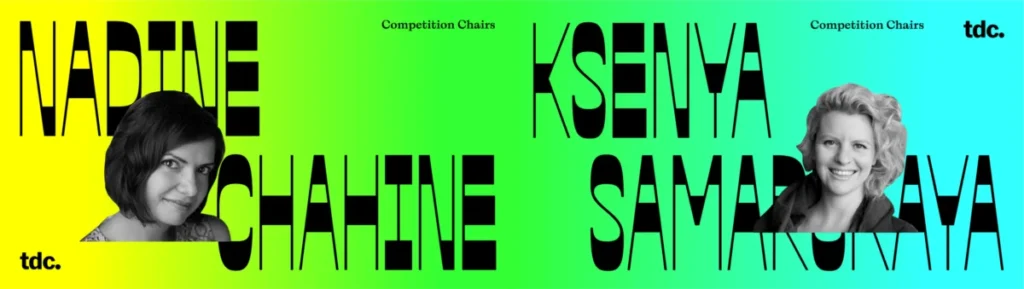

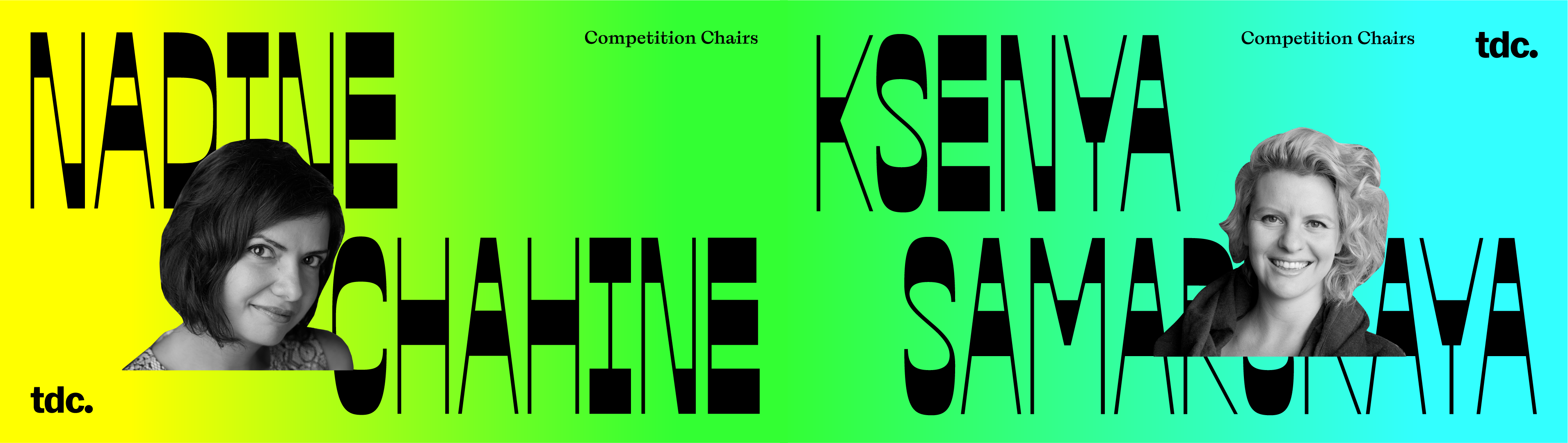
The Type Directors Club (TDC) is currently undergoing a significant institutional transformation, marked by the expansion of its prestigious Typeface Design Competition to better reflect the realities of a globalized design landscape. Historically regarded as a bastion of Western-centric design standards, the organization has faced increased scrutiny over the past several years regarding its inclusivity, financial transparency, and responsiveness to non-Latin typographic traditions. In response, the 25th annual competition—led by co-chairs Nadine Chahine and Ksenya Samarskaya—represents a strategic pivot toward a more decentralized, representative, and culturally sensitive model for evaluating global typography.
A Historical Context of Institutional Change
Founded in 1946, the New York-based TDC has long served as a primary arbiter of quality within the professional design industry. For decades, the organization’s annual competition functioned as a benchmark for excellence, yet it was frequently criticized for reinforcing established models of taste that favored Latin-script designs. The pressure for reform culminated in 2020 and 2021, a period characterized by internal leadership transitions, public accusations of systemic racism, and concerns regarding financial insolvency.

Following these revelations, the TDC began a rigorous period of self-reflection. This process included the implementation of an official Anti-Racism Pledge and a re-evaluation of its governance structure. The appointment of Nadine Chahine, a prominent voice in Arabic type design, to the board of directors and as co-chair of the 25th competition, was a watershed moment. Her collaboration with Ksenya Samarskaya, an experienced judge and advocate for diverse typographic practices, has shifted the organization’s focus from a monolithic judging process to one that actively incorporates regional expertise.
Restructuring the Judging Paradigm
A primary critique of historical type competitions is the "gatekeeping" effect, where judges unfamiliar with specific scripts—such as Devanagari, Arabic, or CJK (Chinese, Japanese, and Korean)—tend to favor conventional, "safe" designs that mimic Latin structural logic. This often resulted in the marginalization of innovative work that pushed the boundaries of non-Latin scripts.
The 25th edition of the competition introduces a structural change by establishing dedicated categories for Arabic, Indic, and CJK scripts, supported by expert panels specific to these domains. By including multiple experts for each script, the TDC is fostering a more robust, dialectical judging process. This shift is designed to ensure that technical nuances—such as the complex reordering requirements of certain Indic scripts—are evaluated by professionals who understand the functional and cultural imperatives of those systems.
Data indicates that the volume of non-Latin script entries has grown exponentially over the last two decades. In 2020 alone, the TDC received entries from 54 different countries, with 49 of those nations represented among the winners. By formalizing these categories, the organization is acknowledging the "renaissance" currently occurring in non-Latin type design, where the output of high-quality fonts has moved from a handful of releases per year to hundreds.
Financial Accessibility and Global Participation
The sustainability of the TDC is largely tied to its competition revenue, which funds the organization’s administrative costs, archival work, and international traveling exhibitions. Historically, entry fees and "hanging fees" for winners were viewed as barriers to entry for designers in developing economies. To address these inequities, Chahine and Samarskaya have spearheaded a revision of the fee structure.
The new policy includes significant discounts for approximately 138 countries identified as having lower per capita GDP. Furthermore, the organization has eliminated the "hanging fee," which previously required winners to pay additional costs to have their work featured in the traveling exhibition and the associated publication. The transition to a digital-only submission process further reduces the logistical and financial burden on international participants, who no longer face the prohibitive costs of printing and shipping physical specimens to New York.

Implications for the Future of Typography
The move toward a more inclusive competition carries significant implications for the global typography ecosystem. For independent designers and small foundries in emerging markets, recognition from an institution like the TDC acts as a critical credential that facilitates entry into international markets. When a high-profile institution validates work from non-Western regions, it provides a confidence boost for the designer and a form of "vetted" quality assurance for risk-averse corporate clients.
However, the organizers emphasize that the responsibility for building a truly global community does not lie solely with the TDC. Because the organization relies heavily on a volunteer-driven model—with only one paid executive director—the expansion of its influence depends on local engagement. Chahine notes that if designers in regions like the Middle East or South Asia wish to see the TDC’s influence grow, it is incumbent upon them to foster local discourse and organize, which in turn creates the necessary momentum for institutions to take notice.
Technological Adaptation and Future-Proofing
Looking forward, the TDC faces the challenge of adapting to rapid technological shifts, specifically the rise of variable fonts. While critics argue that traditional competition formats are ill-equipped to judge the dynamic nature of variable typography, the organizers maintain that the core principles of typeface design—quality of drawing, spacing, and system coherence—remain constant, regardless of the output technology.

The competition is currently exploring ways to better showcase the "variability" of entries through digital media, such as GIF and video integration. This is part of a broader commitment to remain a "living, breathing organization." By moving away from rigid, static standards and toward an iterative, dialogue-based model, the TDC hopes to ensure its relevance for a new generation of designers.
Conclusion: A Shift in Institutional Philosophy
The ongoing changes at the TDC represent a transition from an organization that merely "recognizes" excellence to one that actively "nurtures" the global field of typography. By creating spaces for nuanced debate among diverse experts and lowering the barriers to entry, the TDC is attempting to redefine what it means to be a professional institution in the 21st century.
While the organization faces the inherent challenges of being a volunteer-run entity, the structural changes implemented for the 25th competition suggest a genuine effort to align its practices with its stated mission of global advocacy. For the design community, the success of these reforms will likely be measured by the sustained diversity of its future winners and the ability of the organization to maintain its status as an objective, rigorous arbiter of quality in an increasingly fragmented digital landscape. As the TDC continues to evolve, the emphasis remains on fostering a culture of exchange—one where the "sun shines" on all scripts, and where the definition of excellence is expanded to include the diverse cultural outputs of a truly globalized world.