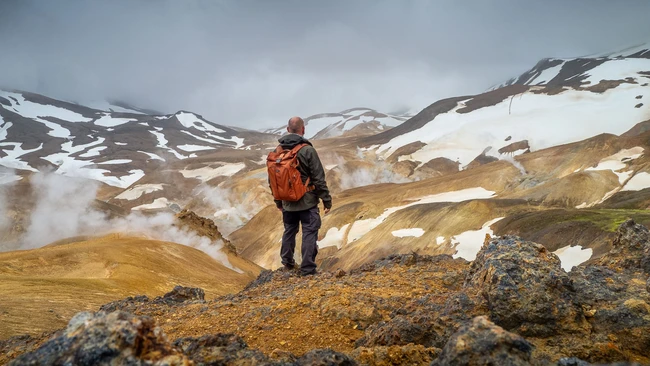

The landscape of travel photography is undergoing a significant shift as professionals and enthusiasts alike move toward minimalist, lightweight configurations. For decades, the industry standard for rugged expeditions involved oversized, heavy-duty backpacks designed to withstand extreme environments, often at the cost of portability and aesthetic appeal. However, the introduction of the Think Tank FocusPoint 30L represents a growing trend in the "urban-outdoor" crossover market—gear that promises the technical capabilities required for field work while maintaining a slim, stylish profile suitable for daily use and strict airline carry-on regulations. This evolution in gear design was recently put to a rigorous test during a multi-week photography expedition across the volatile terrains of Iceland, a region known for its unpredictable weather and demanding logistical requirements.
The Design Philosophy of the FocusPoint Series
Think Tank Photo, a company long recognized for its professional-grade camera bags, designed the FocusPoint 30L to bridge the gap between a traditional photography pack and a versatile daypack. The 30-liter capacity is strategically chosen; it sits in the "sweet spot" for travel, providing enough volume for a full-frame camera kit and personal essentials without the bulk of a 50-liter expedition pack.
The aesthetic of the FocusPoint 30L is a departure from the utilitarian, "tactical" look of many professional bags. Available in colors such as Urban Rust, Asphalt Black, Greenway, and Golden Hour, the bag utilizes a rolltop closure system. This design choice is not merely cosmetic; rolltops offer expandable volume, allowing photographers to increase the bag’s capacity for non-photographic items like clothing or rations. The inclusion of a magnetic flap on the rolltop and a high-quality metal buckle further emphasizes the blend of modern style and functional security.
Comparative Context: The Shift to Lightweight Carry
Before transitioning to the FocusPoint 30L, many photographers relied on larger systems like the Shimoda Action X50. While the X50 is a benchmark for rugged outdoor photography, its 50-liter volume and heavy-duty harness system can be cumbersome for shorter day trips or flights on regional carriers with strict weight limits. The primary motivation for adopting a smaller pack like the FocusPoint 30L is the reduction of physical fatigue and the simplification of the "carry-on" experience.
In addition to larger packs, many photographers utilize specialized daypacks such as the Think Tank Retrospective 15. While the Retrospective series is praised for its classic canvas look and internal protection, it often lacks the vertical space required for a diverse lens kit alongside personal weather protection gear. The FocusPoint 30L addresses this by providing a dedicated, rear-access camera compartment while reserving the upper rolltop section for a rain jacket, lunch, and a 16-inch laptop.
Technical Specifications and Internal Architecture
The FocusPoint 30L is engineered with several key features that cater to the modern digital creator:
- Access Points: The bag features dual access to the camera gear. The primary entry is through the back panel, a security feature that prevents unauthorized access while the bag is being worn. A secondary side-access portal allows for "swing-around" entry, enabling the photographer to grab a camera body without removing the pack entirely.
- Capacity and Dividers: The lower camera compartment is equipped with customizable, high-density foam dividers. Under standard configurations, it can house a professional mirrorless body with a 100-500mm telephoto lens attached, plus two additional large zooms.
- Personal Storage: The rolltop area provides a separate cavernous space for non-electronic items. It also houses a dedicated sleeve for a 16-inch laptop, making it a viable option for digital nomads.
- External Features: An expandable side pocket is designed to hold a water bottle or a travel-sized tripod, such as the Gitzo Traveler. The harness system includes an adjustable sternum strap and a removable waist belt, allowing the user to customize the load distribution based on the weight of their kit.
The Iceland Expedition: A Chronological Performance Review
The true measure of a camera bag is its performance in the field. Iceland, with its mixture of volcanic dust, salt spray, and horizontal rain, serves as one of the most demanding proving grounds for photography equipment.
Phase 1: Packing and Configuration
The initial plan for the Iceland tour involved a Canon-centric kit: the EOS R5 body, the RF 15-35mm f/2.8L, the RF 24-105mm f/4L, and the RF 100-500mm f/4.5-7.1L. This combination represents a "holy trinity" of focal lengths for landscape and wildlife photography. In the FocusPoint 30L, this kit fit with precision, utilizing the entirety of the padded compartment.
However, as is common in professional assignments, requirements shifted. The final loadout included the Canon EOS R5 with the 100-500mm lens, supplemented by a secondary system: an Olympus OM-D E-M1 Mark III with M.Zuiko 12-100mm f/4 and 7-14mm f/2.8 PRO lenses. This dual-system approach tested the bag’s organizational limits. While the primary gear fit in the lower compartment, the additional Olympus lens had to be stored in the rolltop section. This transition highlighted the bag’s versatility but also revealed the limitations of its internal volume when carrying multiple camera systems.
Phase 2: Ergonomics and On-Site Utility
Throughout two weeks of hiking to waterfalls and capturing gannets along the coastline, the FocusPoint 30L’s ergonomics remained a highlight. The slim profile prevented the "turtle-shell" effect, allowing for easier movement through narrow trails and crowded viewpoints. The adjustable sternum strap proved essential during steep ascents, keeping the weight centered.
The side access, while a popular feature in many modern bags, presented a minor logistical challenge. Because the dividers must accommodate the side opening, they cannot be permanently anchored to the side wall. For photographers who do not frequently use side access, this can lead to "divider drift," where smaller pieces of equipment may shift into the gaps if the bag is not packed tightly.
Phase 3: Environmental Challenges
Iceland’s weather is notoriously fickle. During a period of moderate rainfall, the FocusPoint 30L’s material demonstrated respectable water resistance, causing moisture to bead on the surface. However, the zippers—often the Achilles’ heel of any "water-resistant" bag—allowed for minor seepage during prolonged exposure.
Furthermore, the breathable foam mesh on the back panel, designed for ventilation during warm-weather hikes, acted as a sponge in the Icelandic dampness. Once the mesh became saturated, it remained damp for several hours, a common issue with "breathable" harness systems in high-humidity or rainy environments. These findings suggest that while the bag is "weather-resistant," it requires the consistent use of the included rain cover for anything beyond a light drizzle.
Fact-Based Analysis of Implications
The performance of the Think Tank FocusPoint 30L in Iceland carries several implications for the photography gear market. First, it underscores the reality that "urban" styling often involves trade-offs in extreme environmental protection. While expedition-grade bags like those from Shimoda or f-stop utilize weather-sealed YKK Aquaguard zippers and TPU-coated fabrics, the FocusPoint prioritizes weight and ease of use.
Second, the bag reflects the ongoing "mirrorless revolution." The compact nature of the FocusPoint 30L is perfectly matched for the smaller footprints of mirrorless systems like the Canon R-series or the Micro Four Thirds ecosystem. It would likely struggle to accommodate a traditional gripped DSLR with a 70-200mm f/2.8 lens, signaling a clear target demographic of modern, mirrorless-based travel photographers.
Broader Impact on Travel Photography
The FocusPoint 30L fits into a broader industry movement toward "stealth" photography gear. In many travel destinations, carrying a bag that is clearly identifiable as a high-value camera pack can increase the risk of theft. The FocusPoint’s resemblance to a standard commuter rolltop provides a layer of security through anonymity.
Furthermore, as airlines continue to tighten restrictions on carry-on dimensions and weights, the FocusPoint 30L’s lightweight construction (approximately 2.8 lbs or 1.3 kg) provides a significant advantage. By saving weight on the bag itself, photographers can carry more glass or avoid the need to check sensitive equipment into the hold.
Final Assessment: Suitability and Recommendations
The Think Tank FocusPoint 30L is a highly engineered solution for a specific type of photographer. It excels as a travel companion for those who prioritize style, weight, and organization for a single-body mirrorless kit. Its strengths lie in its thoughtful details—such as the protective zipper covers, the lanyard for keys, and the well-placed accessory pockets.
However, for "rugged" outdoor use in climates like Iceland’s, the bag reveals its limitations. The lack of fully waterproof zippers and the absorbent nature of the back padding mean it is not an "all-weather" fortress. For photographers heading into extreme conditions, a dedicated outdoor pack may still be necessary.
In conclusion, the Think Tank FocusPoint 30L is an excellent daily driver and a capable travel bag that bridges the gap between professional utility and lifestyle aesthetics. While it may not be the "perfect" bag for a rain-soaked volcanic expedition, it remains one of the most stylish and functional options for the modern, lightweight traveler. For those who understand its environmental limits, it offers a refined and organized way to carry high-end creative tools across the globe.