
The digital advertising landscape is undergoing a significant transformation as OpenAI’s ChatGPT Ads platform announces a comprehensive suite of new advertiser tools designed to bridge the gap between emerging AI-native search and the sophisticated requirements of modern performance marketers. This latest update, which emphasizes smarter bidding algorithms, enhanced measurement capabilities, budget pacing, and streamlined campaign management, marks a pivotal moment in the platform’s maturation. By introducing features that mirror the robust infrastructure of established giants like Google Ads and Meta Ads, ChatGPT Ads is signaling its intent to become a primary pillar in the global advertising ecosystem.
The rollout comes at a time when the industry is shifting away from traditional keyword-based search toward conversational discovery. As users increasingly turn to large language models (LLMs) for complex queries, the necessity for a sophisticated advertising framework within these interfaces has become paramount. The new updates are specifically engineered to provide advertisers with the automation and optimization tools required to manage high-scale campaigns while maintaining strict control over return on ad spend (ROAS) and business outcomes.
Evolution of the ChatGPT Advertising Ecosystem
The journey of ChatGPT Ads began as a tentative exploration into how sponsored content could exist within a conversational AI interface without compromising user experience. Since its initial pilot programs, the platform has evolved from simple sponsored links to a multi-faceted advertising engine. This latest release represents the third major iteration of the platform’s infrastructure, moving beyond the "experimental" phase into a "performance-ready" stage.
Historically, early adopters of ChatGPT Ads were limited by rudimentary bidding options and a lack of granular reporting. The platform primarily supported click-based optimization, which, while useful for brand awareness, fell short of the needs of direct-response advertisers. The chronological development of the platform has seen a steady progression: from the integration of basic sponsored responses in early 2025 to the launch of a dedicated advertiser dashboard, and now, the implementation of enterprise-grade automation tools. This trajectory suggests a strategic effort to lower the barrier to entry for agencies and brands that are already deeply entrenched in the workflows of legacy ad platforms.
Deep Dive into New Capabilities
The current update introduces several critical features that address long-standing requests from the digital marketing community. These tools are categorized into three primary pillars: performance optimization, measurement and attribution, and operational efficiency.
Conversion-Optimized Bidding and Smart Automation
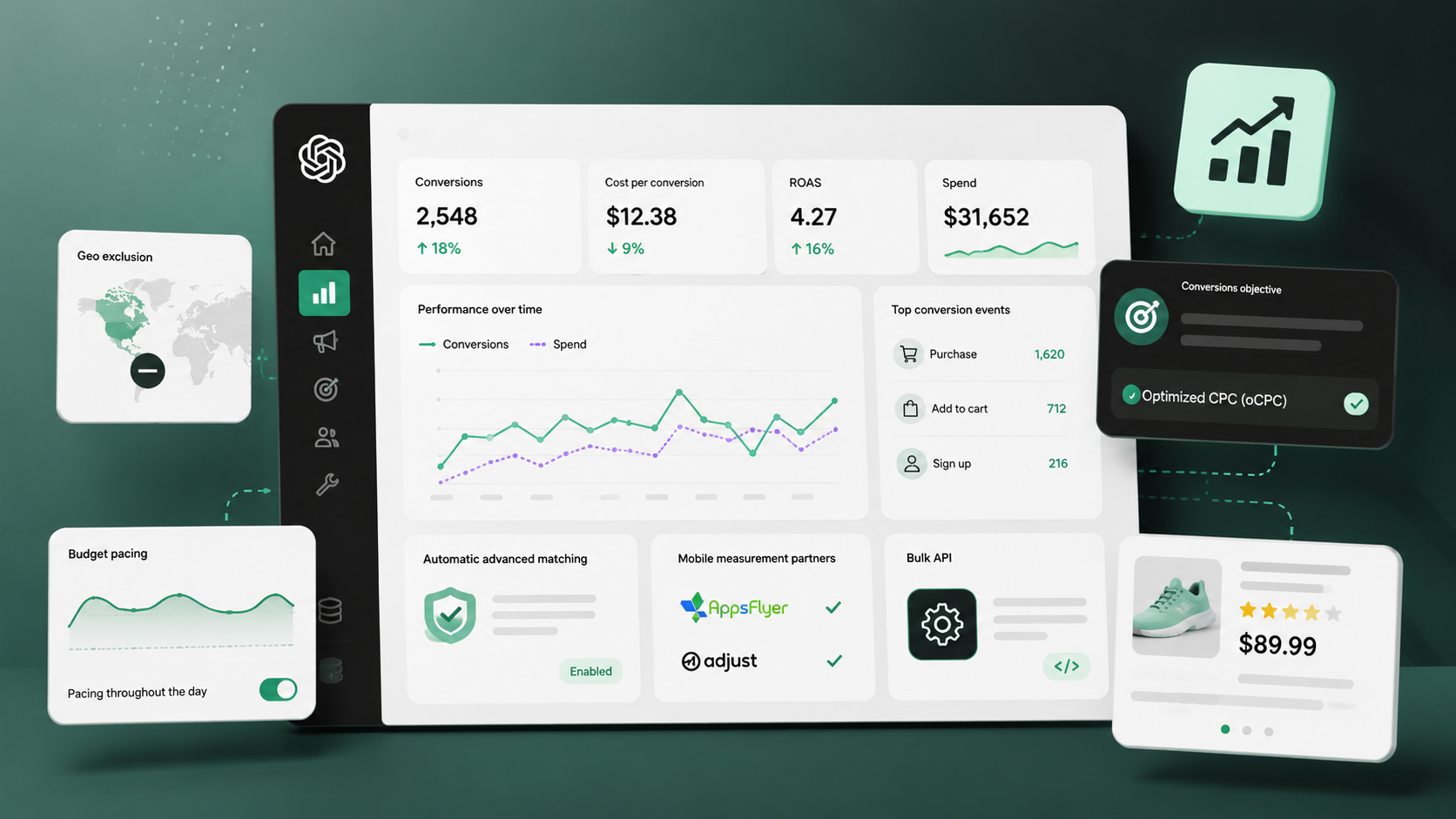
Perhaps the most significant addition is the introduction of conversion-optimized bidding. Unlike traditional bidding, which focuses on the volume of clicks, this AI-driven approach allows advertisers to optimize for specific business outcomes, such as lead submissions, sign-ups, or purchases. By leveraging OpenAI’s proprietary machine learning models, the platform can now predict which users are most likely to convert based on the context of their conversation and historical interaction patterns.
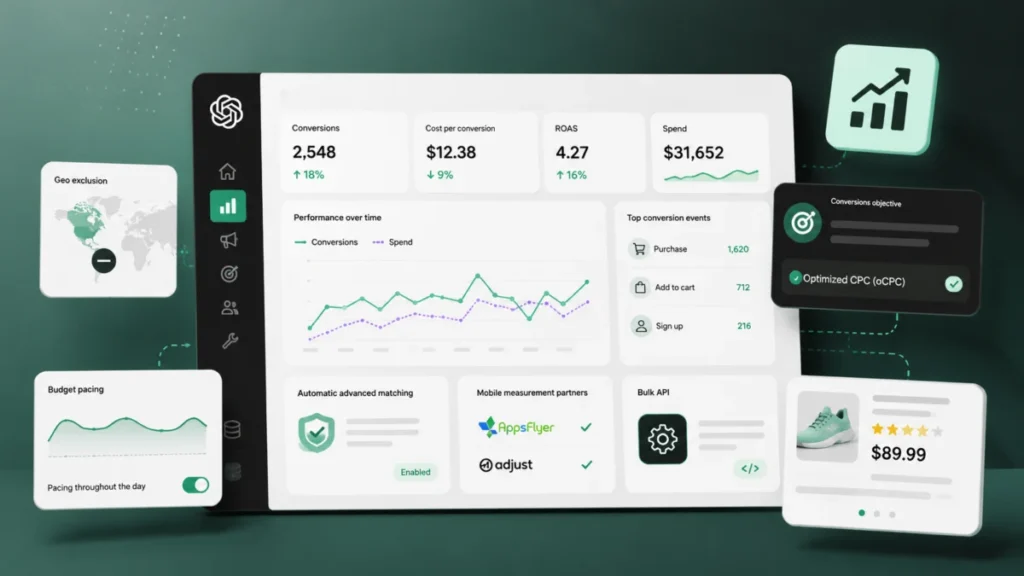
Furthermore, the introduction of "Average Daily Budgets" brings a level of financial predictability that was previously lacking. This feature allows for sophisticated budget pacing, ensuring that an advertiser’s spend is distributed intelligently throughout the day or across the duration of a campaign, preventing "front-loading" where budgets are exhausted too early in a cycle.
Advanced Measurement and Third-Party Integrations
In an era where data privacy and attribution are increasingly complex, ChatGPT Ads has prioritized integrations with leading Mobile Measurement Partners (MMPs). The platform now features native support for AppsFlyer and Adjust. These integrations are crucial for app developers and mobile-first businesses, as they allow for seamless tracking of app installs and in-app events originating from ChatGPT interactions.
Additionally, the update includes "Advanced Matching" capabilities. This tool enables advertisers to securely utilize their first-party data to improve ad relevance and attribution accuracy. By matching hashed customer data with platform interactions, brands can better understand the customer journey across multiple touchpoints, even in a landscape where third-party cookies are being deprecated.
Global Scalability and Geo-Exclusions
For global enterprises, the ability to manage campaigns at scale is a prerequisite for platform adoption. The release of Bulk API support allows agencies and large-scale advertisers to programmatically create, manage, and optimize thousands of campaigns simultaneously. This is complemented by the new "Geo Exclusions" feature, which provides granular control over where ads are served. Advertisers can now exclude specific regions, cities, or territories where their services are unavailable, thereby reducing wasted spend and improving overall campaign efficiency.
Supporting Data and Market Context
Market data indicates a growing appetite for AI-integrated advertising. According to recent industry reports, spend on AI-driven search platforms is projected to grow by over 25% annually through 2028. Advertisers are increasingly looking for alternatives to the traditional "duopoly" of Google and Meta, seeking platforms that offer higher intent and more personalized user engagement.
Initial beta testing of the new ChatGPT Ads tools has shown promising results. Early data suggests that campaigns utilizing conversion-optimized bidding saw an average 15% reduction in cost-per-acquisition (CPA) compared to standard click-based bidding. Moreover, the integration of third-party measurement tools led to a 20% increase in "visible" conversions for mobile app advertisers, who previously struggled with attribution gaps within the conversational interface.
The strategic importance of these updates is underscored by the current economic environment. As marketing budgets face increased scrutiny, performance marketers are prioritizing platforms that offer clear attribution and automated optimization. By providing these tools, ChatGPT Ads is positioning itself as a "performance-first" channel rather than a purely experimental one.
Industry Reactions and Expert Analysis
The reaction from the digital marketing community has been largely positive, with many experts noting that these updates bring ChatGPT Ads into parity with industry standards. Analysts suggest that the move toward "bulk management" and "API-first" configurations is a direct appeal to the world’s largest advertising agencies, which require such infrastructure to justify moving significant portions of their clients’ budgets.
"The introduction of conversion-based optimization is the ‘missing link’ for ChatGPT Ads," noted one senior media buyer at a global agency. "Until now, it was a great tool for engagement, but difficult to justify on a spreadsheet. With these new measurement and bidding tools, we can finally treat it as a legitimate performance channel alongside our search and social spend."

However, some analysts caution that with increased sophistication comes increased competition. As the platform becomes easier to use and more effective, the cost-per-click (CPC) and cost-per-mille (CPM) are expected to rise. The "early mover advantage" that some brands enjoyed is likely to diminish as the platform becomes a standard part of the media mix.
Broader Impact on the Advertising Landscape
The maturation of ChatGPT Ads has broader implications for the future of the open web and the search industry at large. As conversational AI becomes a primary gateway to information, the traditional "ten blue links" model of search is being challenged. ChatGPT’s ability to provide direct answers while subtly integrating relevant, high-utility ads represents a new paradigm in "native" advertising.
This shift also forces a re-evaluation of SEO and SEM strategies. In a conversational environment, the "winner-takes-all" nature of the top ad slot is amplified. Unlike a search results page where a user might scroll through several ads, a conversational AI typically provides a more focused response, making the relevance and timing of the ad even more critical.
The inclusion of sophisticated attribution tools also signals OpenAI’s commitment to transparency. By allowing third-party verification through AppsFlyer and Adjust, the platform is addressing concerns regarding "walled gardens" and the potential for self-preferencing in reporting. This level of openness is seen as a necessary step to build trust with enterprise advertisers who demand independent verification of their ad spend.
Conclusion and Future Outlook
ChatGPT Ads is steadily evolving from an emerging advertising platform into one designed for the rigors of modern performance marketing. With new tools that improve optimization, measurement, automation, and campaign scalability, the platform is no longer just an experimental add-on but a serious contender for performance-oriented budgets.
As we look toward the remainder of 2026 and into 2027, the industry expects further developments in creative automation—potentially utilizing OpenAI’s DALL-E or Sora technologies to generate ad assets in real-time based on the context of the conversation. For now, the focus remains on the "plumbing" of the platform: ensuring that the bidding, measurement, and management tools are robust enough to support the world’s largest advertisers. For performance marketers, the message is clear: the infrastructure is ready, and the era of conversational performance advertising has officially arrived.