
The photography industry has entered an era where technical perfection is no longer a luxury but an expectation. Modern manufacturing processes, aided by sophisticated computer-aided design and high-refractive-index glass, have allowed third-party manufacturers to produce lenses that often rival or exceed the performance of "native" glass from industry giants like Sony, Canon, and Fujifilm. However, as the gap between entry-level optics and professional-grade glass narrows, a new discourse has emerged among enthusiasts and professionals alike: the distinction between a lens that is technically flawless and one that possesses "character." The Sigma 15mm f/1.4 DC DN Contemporary lens has become a focal point for this debate, serving as a case study in the tension between numerical excellence and the intangible emotional quality of an image.
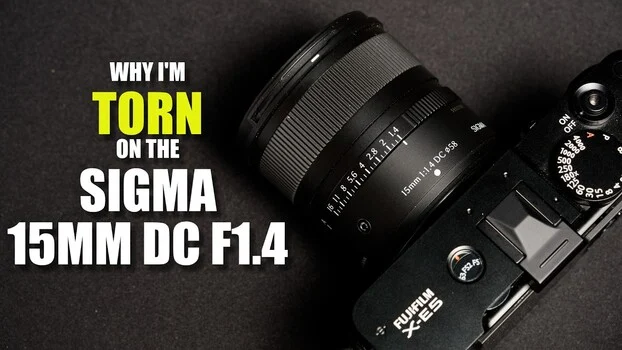
As demonstrated in recent field tests by photographer Luca Petralia using the Fujifilm X-E5, the Sigma 15mm f/1.4 DC DN presents a compelling physical package. Weighing in at approximately 225 grams, the lens is remarkably lightweight for an f/1.4 prime, particularly one designed for high-resolution APS-C sensors. This portability ensures that even on compact, rangefinder-style bodies like the X-E series, the setup remains balanced and does not become front-heavy—a common complaint with fast wide-angle glass. Furthermore, Sigma has integrated a dedicated aperture ring into this model, marking a significant design shift for the Contemporary "DC" line. Alongside the 12mm variant, this inclusion signals Sigma’s acknowledgment of the ergonomic preferences of the Fujifilm community, who traditionally favor tactile, external controls for exposure.
Engineering Specifications and Physical Build
The Sigma 15mm f/1.4 DC DN is constructed using a combination of high-quality polycarbonate and Sigma’s proprietary Thermally Stable Composite (TSC). TSC offers a thermal expansion rate similar to that of aluminum, ensuring that the internal optical elements remain precisely aligned across varying temperature ranges. This material choice is a primary factor in keeping the weight at the 225g mark without sacrificing the structural integrity required for professional use.
In terms of environmental protection, the lens features weather-sealing, including a rubber gasket at the mount to prevent dust and moisture ingress. While it may not be marketed as "fully ruggedized" in the same vein as the high-end "Sports" line, the build quality suggests it can withstand the rigors of daily travel and street photography. The price point, currently situated between $500 and $600, places it in a highly competitive bracket, appealing to hobbyists looking to upgrade from kit lenses and professionals seeking a lightweight wide-angle solution for gimbal work or street documentation.
On paper, the lens fulfills every requirement of a modern prime. It offers a fast f/1.4 maximum aperture, a compact form factor, weather resistance, and tactile controls. However, the true value of a lens is found in its rendering, and it is here that the Sigma 15mm f/1.4 DC DN begins to reveal its specific optical philosophy.
Optical Performance: The Pursuit of the Clinical Image
The term "clinical" is frequently used in modern lens reviews to describe an optic that prioritizes the elimination of aberrations over the preservation of unique rendering artifacts. In his evaluation, Petralia notes that the Sigma 15mm f/1.4 is a "technically excellent" lens that can feel "flat" in practice. This observation is backed by the lens’s performance on high-resolution sensors. When tested on a 40-megapixel sensor—the current benchmark for APS-C resolution—the lens exhibits exceptional center sharpness even when shot wide open at f/1.4.
While the corners require stopping down to approximately f/5.6 to achieve parity with the center, the central resolution is so high that users rarely feel the need to stop down for sharpness alone. Vignetting is present at the widest apertures but largely disappears by f/2.8, a standard characteristic for fast wide-angle optics. Chromatic aberration, the purple or green fringing often found in high-contrast areas, is well-controlled. While it can be detected under extreme scrutiny, it is subtle enough to be ignored in most real-world applications.
The bokeh—the quality of the out-of-focus areas—is surprisingly smooth for a wide-angle lens. Typically, wide-angle lenses struggle to produce pleasing background blur due to the inherent depth of field associated with shorter focal lengths. However, the f/1.4 aperture combined with Sigma’s optical formula allows for a respectable level of subject separation, with the blur remaining consistent even when the lens is stopped down slightly.
The "Soul" of the Glass: Character vs. Correction
The central critique of the Sigma 15mm f/1.4 DC DN is not based on what it lacks in resolution, but what it lacks in personality. Petralia’s assessment that the lens "doesn’t speak to your soul" highlights a growing sentiment in the photographic community. In the quest to eliminate every possible optical flaw, manufacturers have created lenses that produce images that are perhaps too perfect.
Historically, lenses were characterized by their "flaws"—gentle spherical aberrations that softened skin tones, unique flare patterns, or a specific way of transitioning from sharp to out-of-focus areas. Modern lens design, heavily reliant on aspherical elements and advanced coatings, has largely "solved" these issues. The result is a clean, predictable, and repeatable file. For a commercial photographer shooting a real estate interior or a journalist documenting an event, this predictability is a massive asset. For an artist seeking a specific "look" or "vibe," a clinical lens can feel sterile.
This leads to a fundamental question for potential buyers: what is the intended purpose of the image? A lens engineered for maximum correction is the ideal tool for documentation and travel, where the goal is to capture a scene exactly as it appeared. Conversely, a lens with more optical personality may be preferable for creative work where the lens itself contributes to the aesthetic of the final piece.
Comparative Market Analysis
To understand where the Sigma 15mm f/1.4 DC DN sits in the current market, it must be compared against its primary rivals in the Fujifilm and Sony ecosystems.
- The Fujifilm 18mm f/1.4 R LM WR: This is often considered the gold standard for wide-angle primes on the X-mount. While it is significantly more expensive (roughly double the price) and heavier (370g), many photographers, including Petralia, argue that its rendering has a "soul" that the Sigma lacks. The Fuji 18mm manages to balance extreme sharpness with a micro-contrast and color rendition that many find more aesthetically pleasing.
- The Viltrox 15mm f/1.7: On the budget end of the spectrum, the Viltrox 15mm f/1.7 offers a different value proposition. At nearly half the price of the Sigma, it sacrifices half a stop of light and the physical aperture ring. However, some users find its rendering to be more "fun" or "characteristic," making it a strong contender for those who prioritize artistic feel over raw specifications.
- The Sony 15mm f/1.4 G: For Sony E-mount users, the Sony 15mm f/1.4 G is the direct competitor. It shares a similar clinical, high-performance profile but often comes at a higher price point. In this comparison, the Sigma offers a more budget-friendly path to the same level of technical performance.
Autofocus and System Integration
A lens’s performance is also inextricably linked to the camera body it is paired with. During testing on the Fujifilm X-E5, the Sigma 15mm f/1.4 DC DN demonstrated reliable autofocus in most standard shooting scenarios. While some frames were missed during continuous tracking (AF-C), Petralia attributes these instances to the Fujifilm body’s autofocus algorithms rather than a failure of the Sigma’s stepping motor. This is a crucial distinction, as third-party lenses are often unfairly blamed for the limitations of the host camera’s processing power or sensor-based AF systems.
The integration of the aperture ring is a significant quality-of-life improvement for Fuji users, allowing for the tactile experience that defines the X-series. The ring is well-damped, providing clear feedback without being so stiff as to impede rapid adjustments.
Final Implications for the Modern Photographer
The Sigma 15mm f/1.4 DC DN Contemporary is a testament to how far lens technology has come. The fact that a $500 lens can deliver edge-to-edge sharpness on a 40-megapixel sensor while weighing less than a cup of coffee is an engineering marvel. It represents the "democratization of quality," allowing photographers with modest budgets to access professional-grade optical performance.
However, the "clinical" nature of the lens serves as a reminder that photography is an art form as much as it is a technical discipline. The "emptiness" some feel when looking at technically perfect photos suggests that there is still a place for "imperfect" glass in the modern kit.
The Sigma 15mm f/1.4 DC DN is the ideal choice for a specific audience: the photographer who values a compact, lightweight, and highly corrected wide-angle lens for daily use, travel, or video work where consistency is key. It is a tool of precision. For those seeking "soul," the search may continue, but for those seeking a reliable, high-performance workhorse that hits every mark on a technical wishlist, Sigma has delivered exactly what was promised. The decision, ultimately, rests on whether the photographer wants a lens that disappears into the process or one that leaves its own fingerprint on the frame.