

Google has officially ushered in a new era for its search ecosystem with the deployment of the Gemini 3.8 Live and Gemini 3.8 Live Extended Thinking models. This latest iteration of Google’s flagship artificial intelligence represents a significant leap forward in how users engage with the search engine, moving away from static queries toward fluid, conversational, and highly contextual interactions. The integration, which began rolling out to users of the Google app today, serves as the engine for the newly launched Search Live feature, enabling a more natural and intuitive way to find information on the go.
The Evolution of Conversational Search
The release of Gemini 3.8 Live marks the latest milestone in Google’s long-term strategy to transition from a keyword-matching index to an AI-first knowledge engine. Since the introduction of the Transformer architecture in 2017, Google has steadily woven machine learning into the fabric of its search results. However, the move to incorporate real-time audio models into the core search experience represents a shift in user interface design.
By leveraging the Gemini 3.8 architecture, Google is aiming to solve the latency issues that have historically plagued voice-based assistants. The new models are designed to handle complex, multi-turn conversations with lower latency and higher reasoning capabilities. According to Rajan Patel, Vice President of Engineering for Search at Google, these models are specifically tuned to power real-time interactions, allowing users to converse with the search engine as they would with a human assistant.
Understanding the Technology: Gemini 3.8 Live
The Gemini 3.8 series introduces a bifurcated approach to AI reasoning. The standard "Live" model is optimized for speed and fluidity, facilitating instantaneous back-and-forth dialogue. Meanwhile, the "Extended Thinking" model is engineered for deeper analytical tasks, allowing the model to pause, reflect, and evaluate complex queries before providing a comprehensive answer.
When users access the feature via the Google app, they are presented with a "Live" icon. Upon activation, the model initiates a full-duplex audio stream. This means the AI can listen, process, and respond in real-time, even if the user interrupts or redirects the conversation. This capability is supported by a sophisticated multimodal processing pipeline that synchronizes audio input with real-time web retrieval, ensuring that the information provided is not only conversational but also grounded in the latest index data.
Chronology of Google’s AI Search Integration
The road to Gemini 3.8 Live has been paved by a rapid series of product launches over the past 24 months.
- May 2023: Google introduced the Search Generative Experience (SGE) at I/O, marking the first time generative AI was integrated directly into the Search results page.
- February 2024: The company rebranded its AI efforts under the "Gemini" umbrella, replacing Bard and consolidating its large language models into a unified suite.
- May 2024: Google announced AI Overviews, providing summaries for complex search queries, which signaled the start of a massive scale-up of AI-generated content in the SERP (Search Engine Results Page).
- September 2026: The official announcement of Gemini 3.8 Live brings the technology into the mobile app’s primary interface, moving beyond simple summaries into interactive, voice-based exploration.
This trajectory demonstrates a deliberate pivot. Google is not merely adding a chatbot to its search engine; it is building a system where the "search" itself is a process of collaborative discovery.
Functional Mechanics: How to Utilize Search Live
The user experience has been streamlined to minimize friction. Once the Google app is updated, users will see the "Live" interface, which replaces traditional text-entry prompts with a voice-first environment.

- Initiation: The user taps the "Live" icon in the Google app.
- Voice Query: The user asks a question, such as "What are the pros and cons of visiting Kyoto in late November?"
- Real-Time Processing: The Gemini 3.8 model generates an audio response. While the user listens, the app displays supporting links and citations on the screen, allowing for immediate visual verification of the information.
- Follow-up: The user can ask follow-up questions without restarting the session, effectively maintaining the "state" of the conversation.
- Transcript Archival: For those who prefer to review information, Google provides a "Transcript" button. This feature converts the spoken dialogue into a readable text format, which can be saved or referenced later. All sessions are logged in the user’s "AI Mode" history, allowing them to revisit complex research queries at their convenience.
The Broader Implications for Search and SEO
The shift toward voice-led, conversational search models carries significant implications for the digital ecosystem. For publishers and SEO professionals, the challenge lies in the "zero-click" nature of these interactions. When the AI provides a comprehensive, synthesized answer, the user may have less incentive to click through to a primary source.
However, Google’s inclusion of links directly on the screen during a Live session suggests an attempt to balance user convenience with the need for traffic attribution. By presenting these links alongside the audio output, Google is attempting to turn the search engine into a gateway for deeper exploration rather than a terminal point.
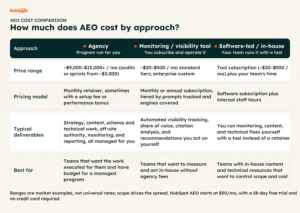
From a technical standpoint, the reliance on Gemini 3.8 implies that the quality of search results will become increasingly dependent on the model’s reasoning capabilities rather than traditional keyword density. This underscores the growing importance of "Answer Engine Optimization" (AEO), where content creators must focus on providing clear, factual, and authoritative answers that are easily parsed by large language models.
Industry Context and Competitive Landscape
Google’s announcement arrives at a critical juncture in the AI industry. With OpenAI’s development of "Advanced Voice Mode" and the continued refinement of other LLM-based search tools like Perplexity, the battle for the "default" AI assistant is intensifying.
Google’s unique advantage remains its vast index of real-time data. Unlike standalone AI agents that may rely on periodic training data, the Gemini 3.8 integration with Search Live is tethered to the live Google Search index. This ensures that when a user asks about current events, stock prices, or travel conditions, the AI is pulling from the most recent information available.
Market analysts have noted that the integration of "Extended Thinking" into mobile search is a strategic move to capture the "complex query" market. Users who previously would have abandoned a search after failing to find a quick answer are now more likely to stay within the Google ecosystem, using the AI to iterate until the desired information is found.
Future Outlook and Ethical Considerations
As Google continues to expand the capabilities of its Gemini models, the focus will likely shift toward personalization and proactive assistance. The integration of audio-first interfaces suggests that Google envisions a future where search is a seamless, hands-free experience integrated into daily life.
However, the rollout also raises questions regarding information accuracy and bias. As the models become more conversational, the risk of "hallucinations"—where the AI confidently provides incorrect information—remains a top priority for developers. Google has stated that it is implementing rigorous safety guardrails and fact-checking protocols, yet the dynamic nature of real-time search presents a unique set of challenges that will require ongoing monitoring.
The release of Gemini 3.8 Live is not the end of the road, but rather the beginning of a deeper integration of AI into the fabric of the internet. As these models continue to evolve, the distinction between "searching" for information and "having a conversation" about a topic will continue to blur, fundamentally altering how humanity interacts with the sum total of human knowledge stored online. For the average user, the search experience is about to become significantly faster, more conversational, and more deeply integrated into their daily workflows than ever before.