

Artificial intelligence (AI) is rapidly transforming how businesses connect with their audiences online. As AI models learn and grow by ingesting vast amounts of web data, understanding how these sophisticated systems interact with marketing websites has become paramount. A recent in-depth analysis of data from Cloudflare’s bot-tracking services, spanning 74 diverse marketing accounts, sheds crucial light on this evolving landscape. The findings reveal surprising patterns in how AI bots crawl web pages and, more importantly, which pages they direct human visitors to. This report, titled "The AI Crawl vs. Traffic Report," aims to demystify AI’s digital footprint and equip marketers with actionable insights.
AI’s Digital Footprint: Crawl Patterns and Referral Traffic
The fundamental way AI learns about brands is by accessing and processing information from websites. This process, often referred to as "crawling," involves AI bots systematically navigating web pages to gather data. Subsequently, AI systems can act as conduits, sending potential human visitors to specific webpages through citations within their responses. While marketers have begun to adapt their strategies to this new reality, much of this adaptation has occurred in the dark, lacking concrete data on AI’s actual behavior. Key questions have remained unanswered: Which of a brand’s pages does AI visit most frequently? And where does it subsequently send human visitors?
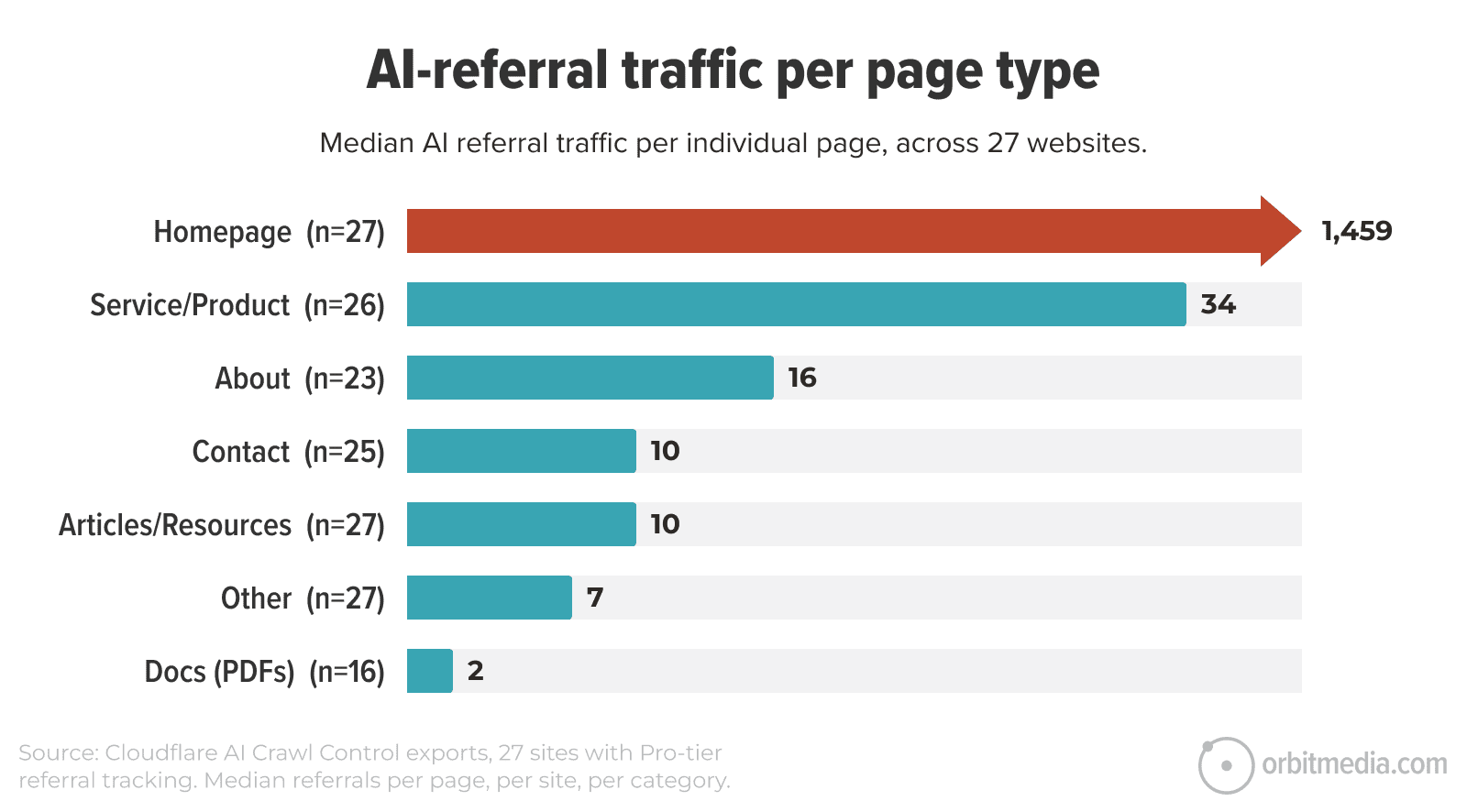
To address these critical gaps, the analysis leveraged reports from bot-tracking services like Cloudflare. Specifically, the "Most Crawled Paths" report offers insights into AI’s crawling activity, while the "AI Referral Traffic" report details actual visits driven by AI. By examining these reports across a substantial sample of accounts, researchers gained a comprehensive understanding of AI’s engagement with marketing websites.
Homepage Dominance: The AI Crawl’s Primary Target
One of the most striking findings of the study is the overwhelming attention AI bots pay to homepages. Across the analyzed websites, homepages were crawled approximately 15 times more frequently than any other type of page. This disproportionate focus shatters any notion of evenly distributed AI interest.
If AI requests were distributed proportionally to the number of URLs on a site, a page type comprising 5% of a site’s total URLs would logically receive around 5% of AI crawls. However, the data reveals a stark departure from this expectation. The homepage, often just a single page among hundreds, commands an exceptionally high volume of AI attention, rendering other page types significantly less prominent in AI crawl data.
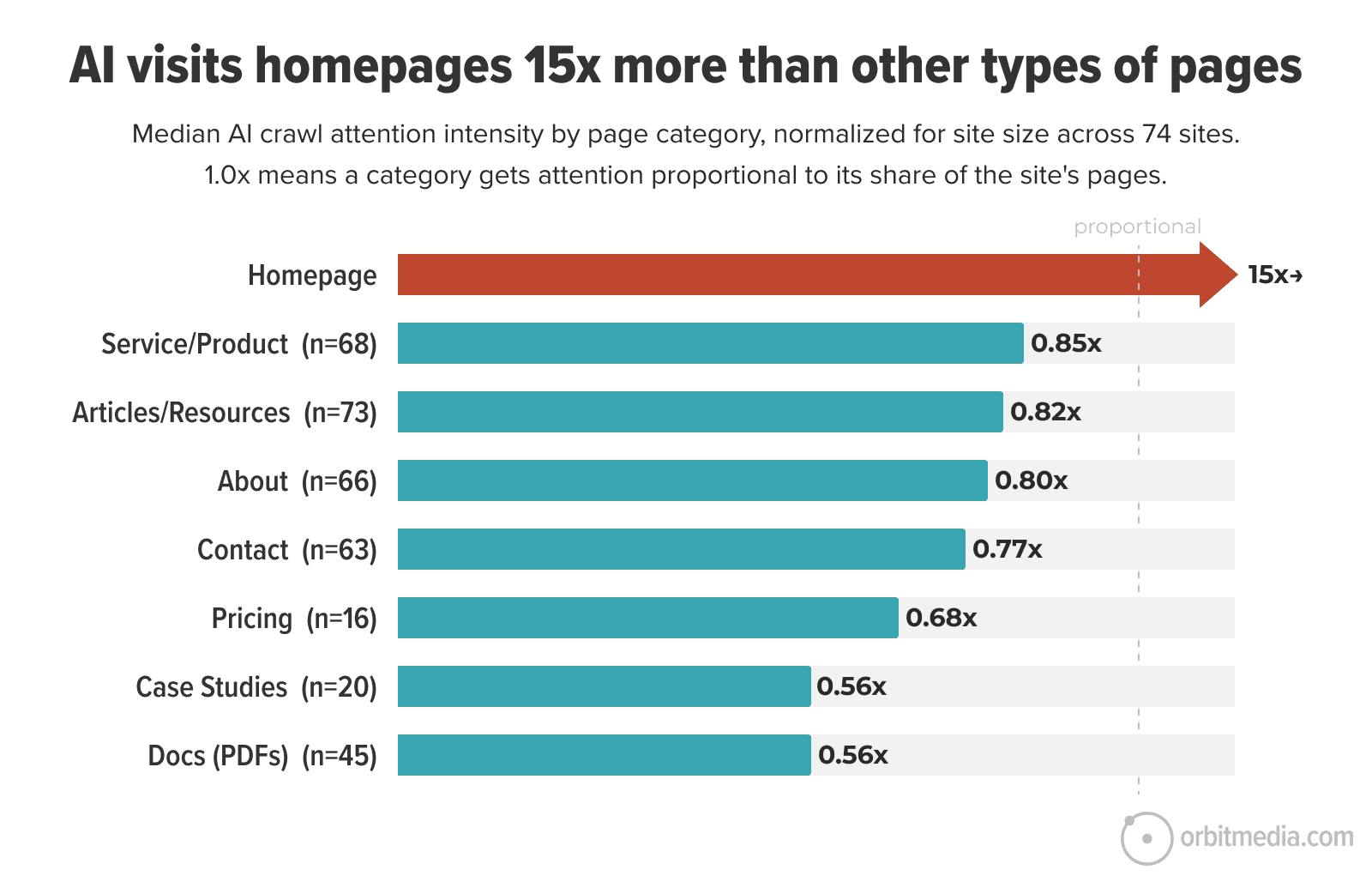
The research meticulously categorized other URL types for comparison, including service/product pages, articles/resources, about pages, contact pages, pricing pages, and case studies. Even when these categories were aggregated, they received substantially less proportional attention from AI crawlers compared to the homepage. The data unequivocally shows that AI crawlers do not exhibit a uniform preference for any specific content type but rather disproportionately favor the homepage itself.
This finding has significant implications for marketers grappling with the question of what content AI prefers. The study suggests that "where to publish" may hold more strategic importance than "what to publish." For businesses aiming to ensure their core brand message is understood by AI, strategically placing key information on the homepage is crucial.
Cyrus Shepard, Founder at Zyppy, commented on the findings, stating, "Incredible. This data suggests that many publishers may be sleeping on the potential of their homepages. Makes sense, but you have to wonder how many brands really pay attention to what their homepage says about them, or if they are offloading this valuable information space to about, support, and article pages."
Marketers’ Takeaway: The homepage is AI’s primary entry point. To effectively train AI as a brand ambassador, marketers should ensure their homepage is comprehensive, clearly articulating the brand’s value proposition, key offerings, and unique selling points.

Website Size and AI Attention: A Proportional Relationship
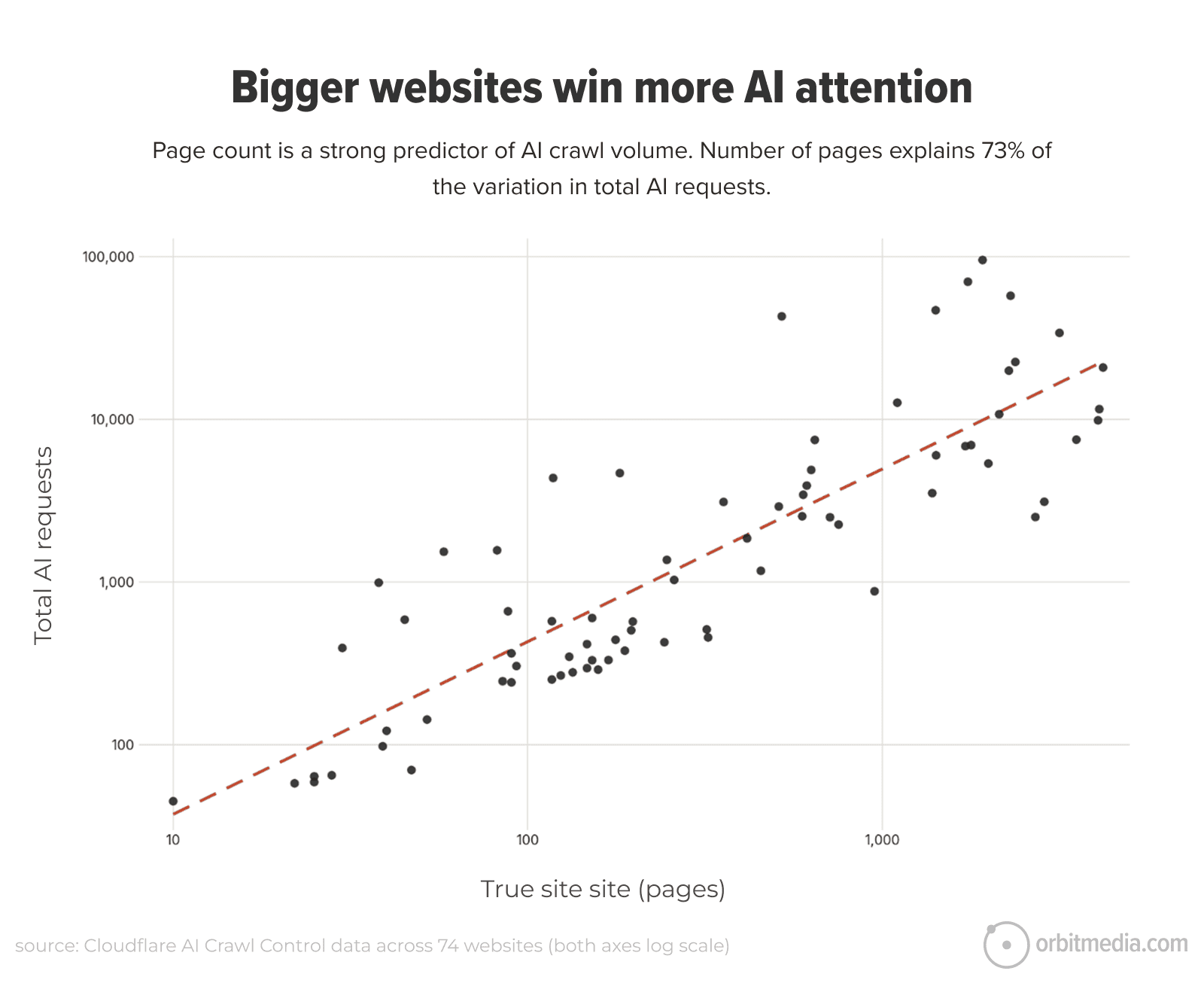
Beyond page type, the analysis explored the correlation between website size, measured by the total number of URLs, and the volume of AI attention. A strong, almost perfectly proportional relationship was observed: larger websites tend to attract more total AI attention. This correlation, with a coefficient of 0.86, indicates that AI requests generally grow in proportion to a site’s page count. There was no evidence of diminishing returns or a compounding advantage with increased scale.
This pattern aligns with traditional search engine behavior, where sites with a greater number of indexed pages typically receive more bot requests. A larger "surface area" provides more potential entry points for AI crawlers to match against queries and prompts.
However, the correlation is not absolute. The data also highlighted that some smaller websites attract a disproportionately high amount of AI attention compared to their size. These outliers suggest that factors beyond sheer volume, such as content quality, optimization strategies, brand prominence in AI training data, or effective marketing efforts, can significantly influence AI engagement.
Marketers’ Takeaway: While a larger website generally leads to more AI attention, quality and optimization can allow smaller sites to punch above their weight. Focusing on creating high-value, well-structured content can attract AI interest even without an extensive site architecture.
AI Referral Traffic: Which Pages Convert Crawls into Visits?
The study moved beyond simply tracking AI crawls to examining actual referral traffic – human visitors clicking through from AI-generated citations. This distinction is critical, as a citation does not always equate to a visit. Cloudflare’s upstream positioning provides a more accurate measure of this traffic than traditional analytics platforms.
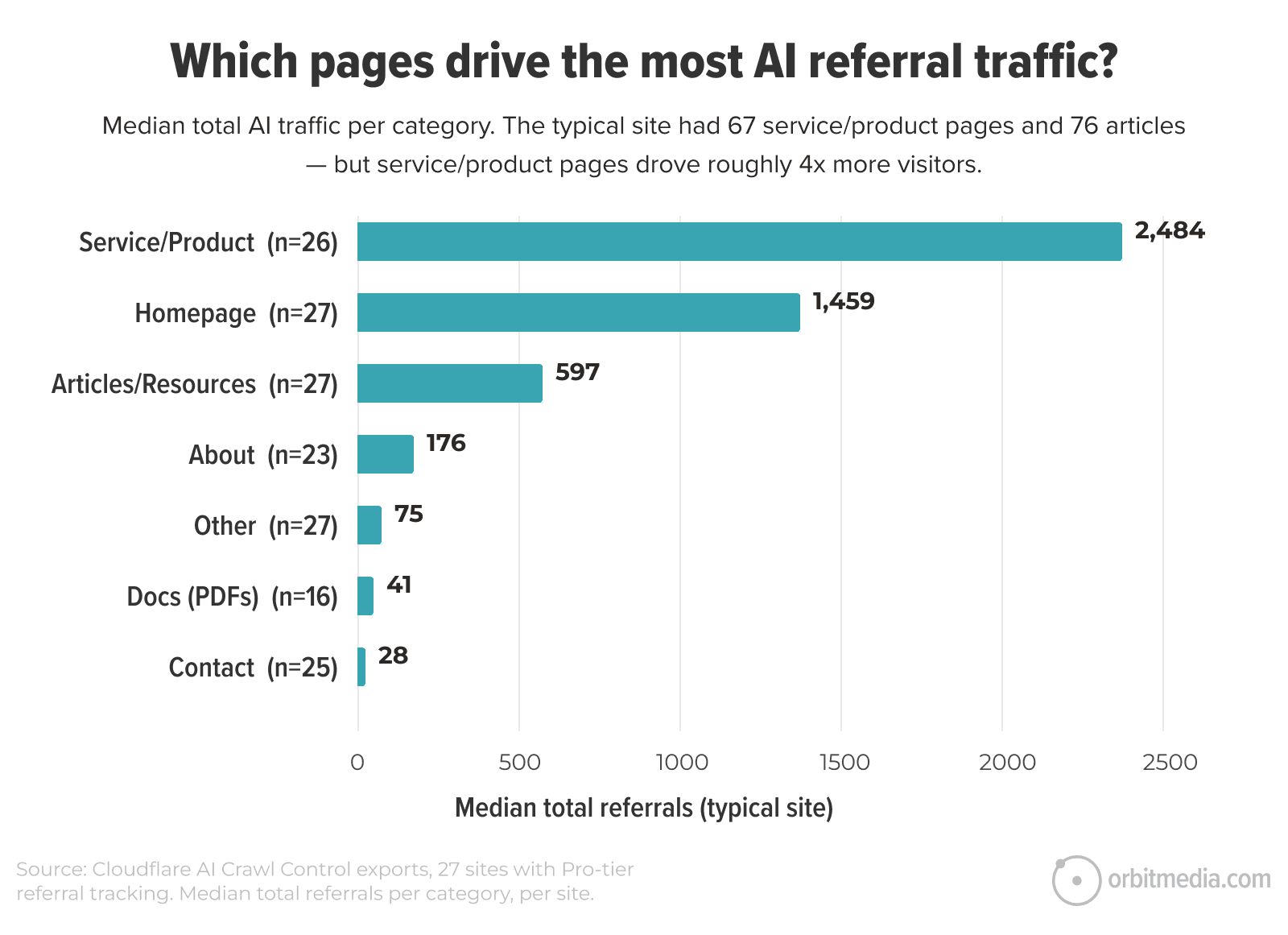
When pages were categorized, "decision-shaping" pages, which directly promote a brand’s offerings (grouped as "service/product" pages), alongside homepages, demonstrated a remarkable performance in attracting AI referral traffic. Articles and resources, while frequently crawled, significantly underperformed in generating actual visits. This phenomenon was termed the "Dark Library Effect," where AI absorbs article content for summarization and citation but does not necessarily drive clicks to those pages.
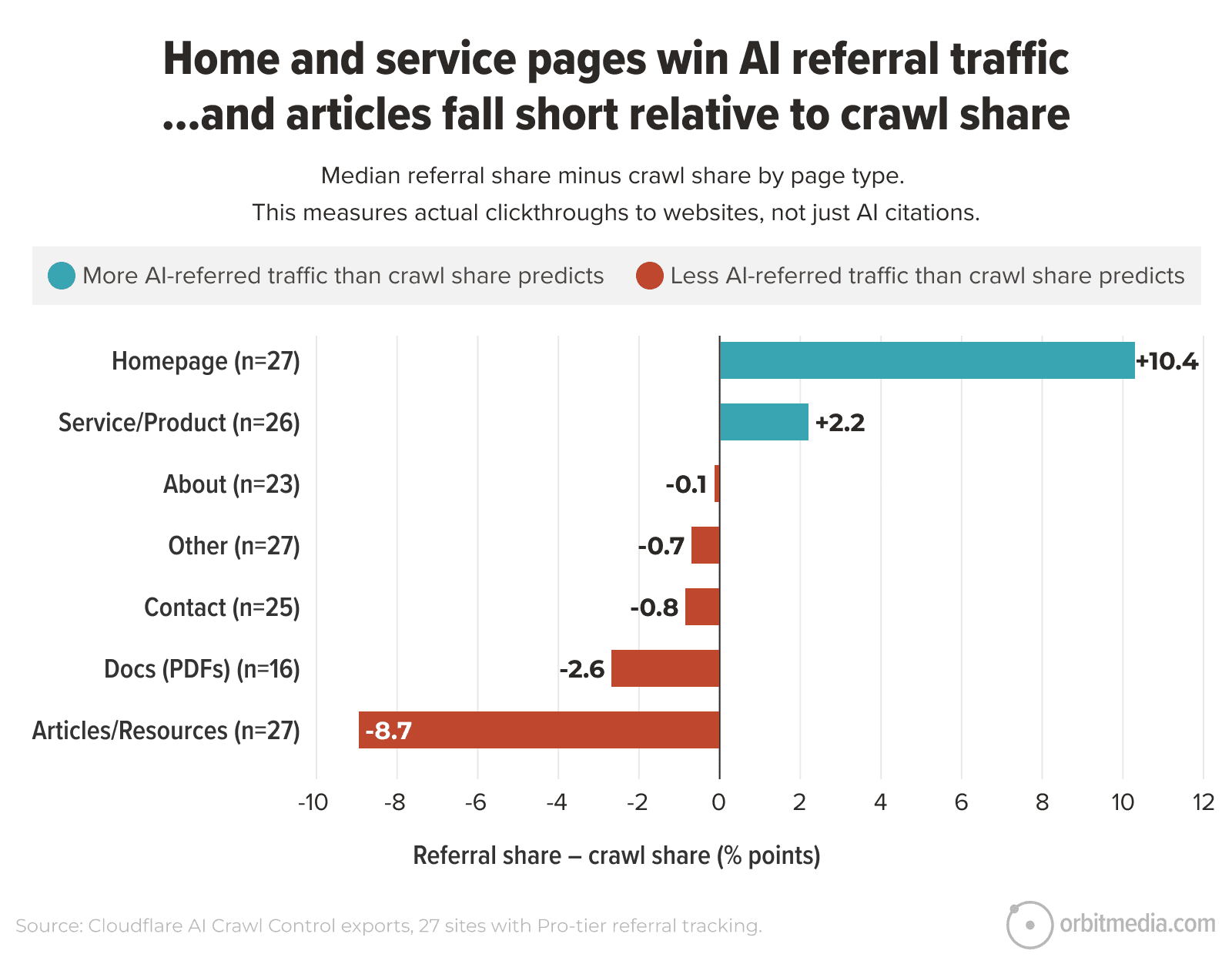
This mirrors a familiar dynamic in Search Engine Optimization (SEO), where AI systems can answer user queries directly, leading to a "zero-click" scenario, similar to how featured snippets and direct answers impact traditional search. Articles might be used to inform AI responses, but they don’t always translate into direct website traffic.
The data further indicated that service and product pages, on average, generated roughly three times more total AI-referral traffic per page than typical articles. This suggests that AI is more inclined to send users to pages that directly address commercial intent or provide specific solutions.
Marketers’ Takeaway: While content marketing remains valuable for brand awareness and knowledge dissemination, the data highlights that pages directly related to products and services, along with the homepage, are the primary drivers of AI-referred traffic. Marketers should optimize these pages for conversion and ensure they are easily discoverable and informative.
The Impact of URL Structure and Page Depth on AI Referrals
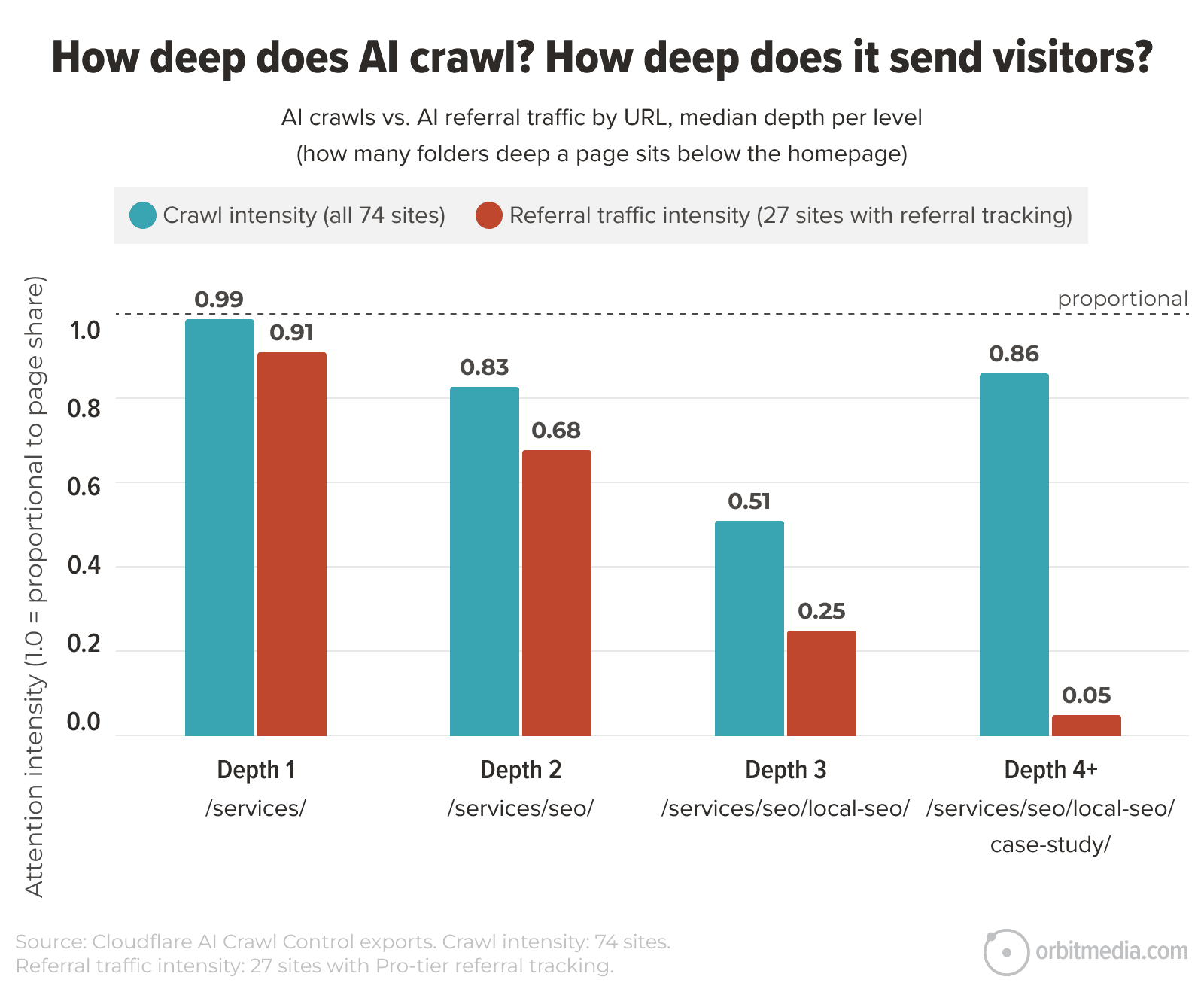
The "Most Crawled Paths" report also provided insights into the URL structure of crawled pages, allowing for an analysis of how AI crawlers navigate site hierarchies. The findings indicated that AI bots are generally capable of crawling pages located several folders deep within a website’s structure. However, a significant drop-off in referral traffic was observed for pages buried deep within folder structures.
Specifically, pages located three folders deep earned approximately a quarter of the AI traffic their crawl volume might predict. At four folders deep, this referral rate dropped to near zero. This suggests an "architecture tax" where deeper nesting within a URL structure makes pages less likely to be recommended by AI, even if they are crawled.
This pattern is attributed to crawl budget limitations, where bots allocate finite resources and may prioritize shallower, more accessible pages. While AI systems will discover deep pages, they are less likely to direct visitors to them. The study cautions against making immediate structural changes solely based on this data, as it’s a correlation rather than direct causation. However, for new website builds or reorganizations, this insight can inform strategic decisions about site architecture.
Marketers’ Takeaway: While AI can find pages anywhere on a site, shallower URL structures appear to correlate with a higher likelihood of AI referring visitors to those pages. For new site designs or restructuring efforts, prioritizing a flatter URL architecture can be beneficial for AI-driven traffic.
Empowering Marketers: Diagnostic Tools and Strategic Recommendations
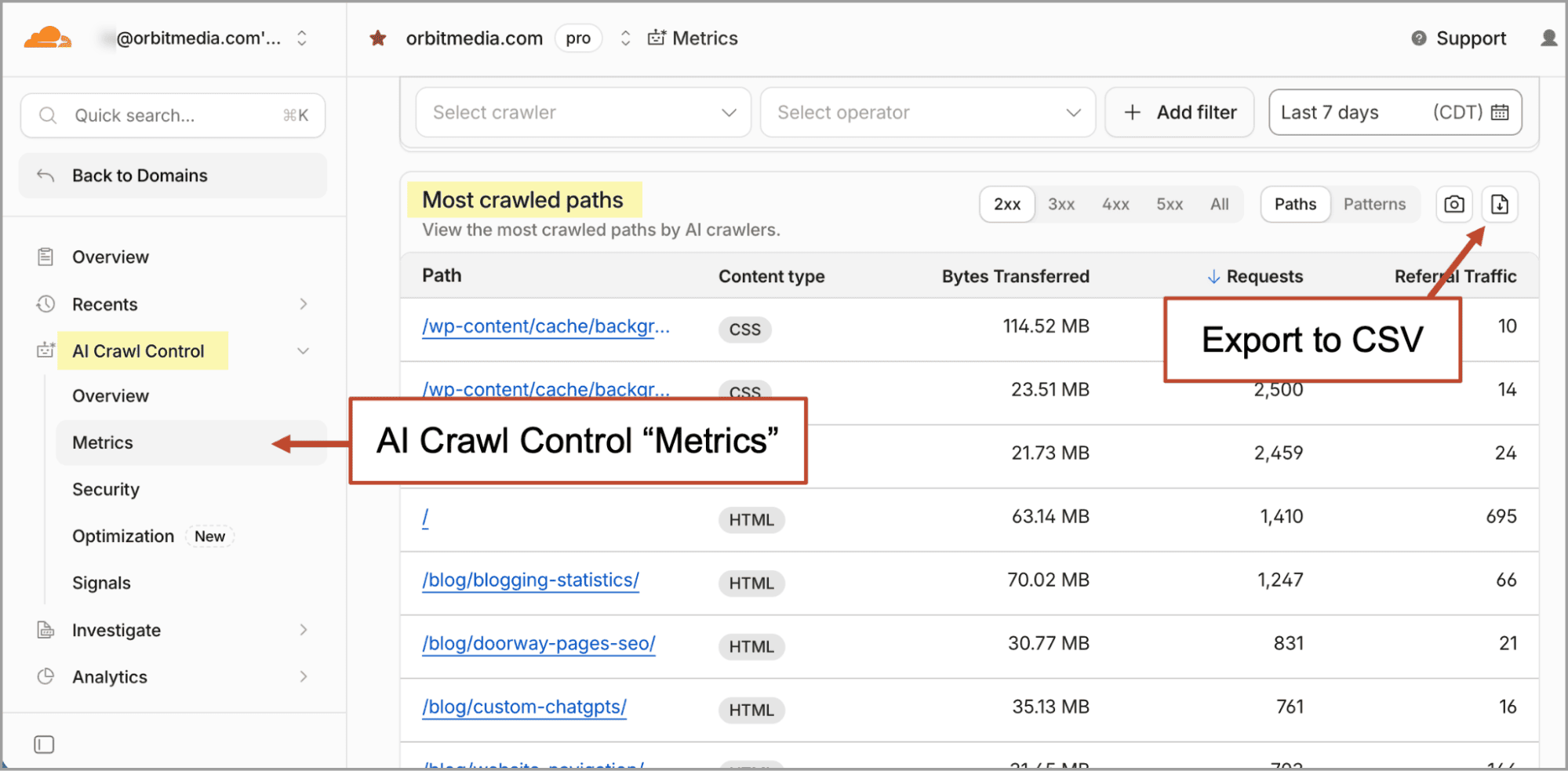
To enable marketers to conduct similar analyses on their own websites, Cloudflare users can access their "AI Crawl Control" data. By downloading the "Most Crawled Paths" and, if available, the "Referrals" CSV files, users can utilize a provided diagnostic prompt with AI models to analyze their site’s specific patterns. This prompt guides the AI to categorize pages, benchmark against industry data, identify potential data issues, and provide a verdict on the site’s AI traffic generation potential.
The broader implication of this research is the call to action for marketers to actively "train" AI systems to recommend their brands. With AI bots visiting websites daily, understanding what these bots are learning from is crucial. The study revealed that a significant percentage of pages (47% in the dataset) generated zero referrals, which is not necessarily a negative outcome. AI bots serve two primary functions: training data acquisition and real-time query answering. Regardless of the purpose, knowing where AI attention is directed allows for strategic optimization.
The analysis underscores that a brand’s website remains the most controllable digital asset for shaping AI’s perception and subsequent recommendations. By actively ensuring that key brand differentiators, offerings, and impacts are clearly articulated on AI-accessible pages, marketers can influence how AI communicates their value to potential customers.
The research methodology involved classifying pages by type and depth, normalizing data against site size to prevent bias from larger sites, and using advanced AI models for data processing and analysis. Special attention was given to handling PDFs as a distinct category and filtering out nonsensical AI crawling of irrelevant backend files.
In conclusion, the "AI Crawl vs. Traffic Report" provides a vital data-driven framework for understanding AI’s engagement with marketing websites. By focusing on homepage optimization, strategic content placement, and logical site architecture, businesses can better harness the power of AI to drive targeted traffic and cultivate brand advocacy in the increasingly AI-driven digital landscape. The study also highlights the importance of ensuring AI bots have unrestricted access to websites, as blocking them can hinder AI discovery and recommendation potential.