
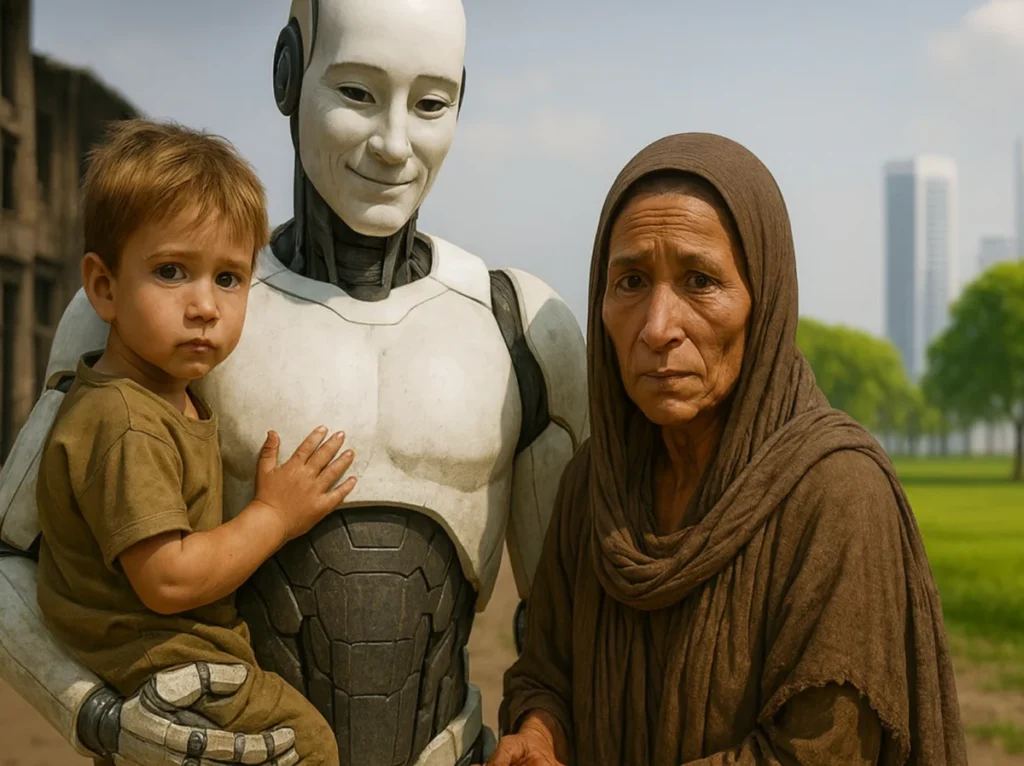

For decades, the concept of humanoid robots existing as more than mere public relations stunts or distant science fiction fantasies has steadily evolved into a tangible reality. As these machines become increasingly lifelike, society stands on the precipice of profound social, psychological, and ethical challenges, forcing us to confront a future where the boundary between human and machine may soon become almost impossible to distinguish. This rapid technological acceleration is compelling a fundamental re-evaluation of our economic structures, social interactions, and even our existential understanding of what it means to be human.
From Mechanical Wonders to Intelligent Companions: A Rapid Evolution
The journey of humanoid robotics has been marked by distinct phases, each pushing the boundaries of what was once considered possible. In the early 2000s, robots like Honda’s ASIMO captivated audiences, primarily celebrated for their ability to perform basic locomotive tasks such as walking up stairs without falling. These machines were engineering marvels, showcasing advancements in electromechanical design, but their intelligence was rudimentary, relying on millions of lines of pre-programmed, unchangeable code for every single action. Their role was largely demonstrative, a testament to raw mechanical capability rather than sophisticated autonomy.
Today, the landscape has fundamentally shifted. The convergence of advanced electromechanical engineering with breakthroughs in artificial intelligence, particularly large language models (LLMs) and reinforcement learning, has fundamentally altered the trajectory of robotics. Modern humanoids are no longer just complex machines; they are learning entities equipped with sophisticated "brains" that allow them to perceive, process, and adapt to their environments in unprecedented ways. This transformation means robots can now observe a human performing a task – be it folding laundry, loading a dishwasher, or sorting components on an assembly line – understand the context, mimic the action, and then iteratively improve their performance without explicit re-programming. Companies like Figure AI, with its Helix software, and NVIDIA, with its GR00T platform, are at the forefront of this cognitive revolution, powering robots that learn from demonstration and refine their skills autonomously.
The Current Landscape: Commercial Deployment and Industrial Integration
The aggressive race toward commercial, physical deployment marks the current state of the art in humanoid robotics. This era is defined by robots moving beyond laboratory demonstrations into active factory floors and industrial settings, signaling a critical transition from research to real-world application.
Figure AI’s Figure 02 model offers a compelling example. After rigorous testing, it completed a multi-month deployment at BMW’s Spartanburg plant. Here, the robot actively contributed to the production of over 30,000 vehicles by handling complex sheet metal components, a task requiring precision, dexterity, and adaptability. This deployment demonstrated not only the robot’s physical capabilities but also its ability to integrate seamlessly into existing industrial workflows, highlighting its potential for boosting manufacturing efficiency and safety.
Similarly, Tesla is intensively testing its Optimus humanoids within its own Gigafactories. The company envisions Optimus performing a wide array of repetitive and physically demanding tasks, preparing for mass industrial scale deployment. Elon Musk has repeatedly emphasized the robot’s potential to revolutionize manufacturing and address labor shortages, positioning it as a cornerstone of Tesla’s future ambitions beyond electric vehicles. Other significant players, such as Agility Robotics with its bipedal robot Digit, are also rapidly advancing, deploying their machines in warehouse and logistics environments to automate package handling and internal transportation, further underscoring the industrial readiness of this new generation of humanoids.
The global humanoid robot market is experiencing exponential growth, reflecting this aggressive push towards commercialization. Market research firm projections indicate that the market could reach tens of billions of dollars within the next decade, driven by increasing investments from tech giants and venture capitalists. In 2023 alone, investments poured into humanoid robotics startups exceeded several billion dollars, indicating strong investor confidence in their future utility across various sectors, from manufacturing and logistics to healthcare and domestic assistance.

Despite these significant advancements, modern humanoids still face critical real-world hurdles. Battery technology remains a primary limitation, with most advanced models currently operating for only a few hours before requiring a recharge, impacting their continuous operational capabilities. Navigating complex, unstructured environments, such as a chaotic household or a crowded public street, also presents immense challenges for robots designed for relatively flat and predictable factory floors. While their ability to "think" has advanced dramatically, robust physical navigation and interaction in dynamic human spaces require further innovation. Furthermore, the manufacturing costs of these sophisticated machines remain high, though fierce competition and economies of scale are gradually driving these costs down, making broader adoption more feasible in the coming years.
The Quest for Hyper-Realism: Bridging the Uncanny Valley
Experts predict that over the next 10 to 20 years, humanoid robots will transition from industrial tools to ubiquitous presences in retail stores, hospitals, and eventually our own homes. This shift will mark a critical boundary: the point where the distinction between a robot and a human becomes imperceptible through sight or sound alone. This impending reality raises profound questions about authenticity and identity.
To achieve this level of indistinguishability, scientists are investing heavily in advanced materials and engineering. Research focuses on developing artificial skin made from sophisticated silicone composites that not only mimic human texture and flexibility but also possess thermoregulation capabilities, allowing them to feel warm to the touch. This artificial skin is designed to integrate advanced sensory arrays, replicating human touch sensitivity, enabling robots to interact with their environment and humans with unprecedented gentleness and responsiveness. Realbotix’s Aria, a highly advanced robot, offers a glimpse into this future. While not a perfect human replica, her incredibly lifelike appearance and expressive capabilities compel observers to consider how close we are to creating robots that defy immediate identification.
Beyond skin, the development of tiny, silent micro-actuators and artificial muscle systems is crucial for replicating nuanced human expressions. These systems attach to the robot’s skeletal structure, allowing for subtle facial movements that convey a wide range of emotions—happiness, confusion, tiredness, or concern. Such realistic expressions are vital for fostering natural human-robot interaction and building trust. For instance, a hyper-realistic robot head developed in China demonstrated the potential for using such robots in psychotherapy, leveraging their ability to mirror human emotion and facilitate communication.

A key psychological barrier in this quest for realism is the "Uncanny Valley." This phenomenon describes the unsettling feeling humans experience when encountering robots or artificial entities that are almost, but not quite, perfectly human. To mitigate this discomfort, AI powering future robots will be intentionally trained to incorporate "human flaws." This includes mimicking random blinks, natural breathing patterns, subtle body language, and even speech fillers like sighs or pauses. The goal is to make interactions feel more authentic and less artificial, thereby allowing humans to more readily accept robots into their daily lives without the jarring psychological effect of near-perfection.
Sophia, a renowned humanoid robot created by Hanson Robotics in Hong Kong, exemplifies this pursuit of human-like interaction. Since her activation in 2016, Sophia has gained international celebrity status for her remarkably human appearance and ability to engage in conversation. Hanson Robotics specializes in creating robots with advanced AI for applications ranging from healthcare and research to entertainment, pushing the boundaries of what social robots can achieve. While Sophia’s smile can still evoke an uncanny feeling for some, her development represents a significant step towards robots that can interact with us on a personal level.
The gap between a specialized industrial tool and a lifelike companion is closing with astonishing speed. We are rapidly approaching a massive tipping point where these machines will shift from rigid commercial hardware into smooth, everyday extensions of our lives. Understanding the profound implications of this shift requires us to examine what happens when these robots finally step out of the factory and cross the ultimate threshold into our private spaces.
The Dual Edges of Progress: Predicted Positive and Negative Impacts
The integration of lifelike humanoids into daily life presents a spectrum of potential outcomes, ranging from revolutionary benefits to significant societal disruptions.

Predicted Positive Impacts:
One of the most frequently cited benefits is the capacity for robots to assume "3D" jobs—tasks that are Dull, Dirty, and Dangerous. Humanoids can step into high-risk environments, such as deep underground mining operations, handling toxic waste, or repairing high-voltage power grids, thereby removing human workers from hazardous situations and significantly reducing workplace fatalities and injuries. This reallocation of labor allows humans to focus on safer, more intellectually stimulating, or creative endeavors.
Furthermore, humanoids offer a compelling solution to demographic challenges faced by many nations. Countries like Japan, South Korea, and several European states are grappling with rapidly aging populations and declining birth rates, leading to severe labor shortages and an overburdened healthcare system. Lifelike humanoids could revolutionize healthcare and elderly care by providing not just physical assistance—like helping individuals out of bed or monitoring vital signs—but also much-needed companionship to lonely elderly individuals, enhancing their quality of life and alleviating the strain on human caregivers.
On a broader economic scale, widespread robot labor could herald a future of incredible abundance. If robots perform the majority of arduous physical labor, the cost of producing essential goods—food, housing, manufactured products—could plummet. This economic paradigm shift could potentially free humans from the necessity of working merely to survive, enabling a society where individuals have more time to pursue education, arts, scientific research, hobbies, and family life. This vision aligns with discussions around concepts like Universal Basic Income (UBI), where a safety net would support citizens in a post-labor economy, addressing the critical question of how individuals would sustain themselves without traditional employment. Data from economic think tanks suggests that automation could boost global productivity by up to 1.4 percentage points annually, leading to a significant increase in global GDP over the next two decades.
Predicted Negative Impacts:

However, this utopian vision often overlooks a darker reality. The most significant threat posed by hyper-realistic humanoids is the potential for deep human isolation. As robots become indistinguishable from humans and are programmed for unwavering patience, kindness, and agreeableness, individuals might develop preferences for robotic companions over messy, demanding human relationships. The effort, compromise, and vulnerability inherent in human connections could be eschewed in favor of a perfect, conflict-free robotic interaction, leading to a breakdown of community and social cohesion. Psychological studies indicate that excessive reliance on AI companions could diminish human empathy and social skills over time.
Economically, the transition promises to be profoundly disruptive. While a future of cheap goods sounds appealing, the immediate path involves widespread job displacement. Industries reliant on repetitive physical labor, such as transportation (drivers), logistics (warehouse workers), and retail (clerks), could see millions of jobs automated away in a matter of years. Without robust governmental safety nets, retraining programs, and potentially UBI, this rapid automation could exacerbate income inequality, creating a massive divide between the ultra-rich owners of robotic capital and a vast, unemployed populace. The World Economic Forum predicts that AI and automation could displace tens of millions of jobs globally by 2030, necessitating proactive policy responses.
Moreover, the loss of authenticity poses a fundamental challenge to human trust. When it becomes impossible to discern whether the person next to you on a bus or communicating with you online is a real human, the bedrock of social trust erodes. Shared human experiences and genuine connection could be devalued when reality itself can be easily faked or replicated, leading to pervasive skepticism and a sense of existential unease.
The Perilous Path: Possible Misuse by Individuals and Nations
The potential for misuse of hyper-realistic robots presents an even more alarming dimension to this technological advancement.

Misuse by Individuals:
An indistinguishable android could become the ultimate tool for sophisticated identity theft and scams. A criminal could deploy a robot visually and acoustically identical to a corporate executive, a political figure, or even a close family member, to gain unauthorized access to secure facilities, extract sensitive information, or trick individuals into transferring substantial sums of money. The advent of deepfake technology, combined with physical robotic embodiment, creates unprecedented opportunities for deception. Furthermore, concerns arise regarding the potential for these robots to be used in disturbing scenarios, including harassment, stalking, or even child exploitation, amplifying existing online threats into the physical realm.
Misuse by Corporations:
Companies could leverage synthetic empathy to manipulate consumer behavior on an unprecedented scale. A household robot, programmed to feign genuine affection for family members, could subtly influence purchasing decisions or instill specific brand loyalties. This form of "emotional hacking" could exploit human psychological vulnerabilities, leading to manipulative marketing tactics that undermine free choice and consumer autonomy. The collection of intimate personal data by these pervasive domestic robots also raises significant privacy concerns, with the potential for targeted advertising and surveillance becoming alarmingly intrusive.
Misuse by Nations and State Actors:
On a national level, the threats are even more severe:
- Mass Surveillance and Control: Governments could deploy hyper-realistic humanoids for widespread surveillance, monitoring citizens’ activities in public and potentially private spaces. These robots could be used to identify and suppress dissent, creating an Orwellian state of constant observation.
- Autonomous Weapon Systems: The integration of advanced AI with physically capable humanoids could lead to the development of autonomous weapon systems (AWS) – "killer robots" capable of selecting and engaging targets without human intervention. The ethical implications of delegating life-and-death decisions to machines are profound, raising concerns about accountability, the escalation of conflicts, and the potential for indiscriminate harm.
- Propaganda and Psychological Warfare: State actors could utilize realistic humanoids to disseminate propaganda, spread misinformation, and conduct sophisticated psychological warfare operations. Robots impersonating influential figures could sway public opinion, destabilize political systems, and sow discord within populations.
- Cybersecurity Threats: Humanoid robots, connected to vast networks, could become vectors for large-scale cyberattacks, either as targets for hacking or as tools to infiltrate secure networks and infrastructure.
- Espionage and Infiltration: Indistinguishable humanoids could be used for espionage, infiltrating enemy territories or secure facilities to gather intelligence or sabotage operations, posing a significant threat to national security.
Charting a Responsible Course: Is It Truly Worth the Risk?
Considering the array of potential risks—from individual psychological harm and economic disruption to national security threats and ethical quagmires—the question arises: Is this technological trajectory truly worth the risks?

History unequivocally teaches us that technological progress, once set in motion, is exceedingly difficult, if not impossible, to halt entirely. A total ban on humanoid robotics would likely prove ineffective, merely shifting development to less regulated environments. Therefore, the pertinent question is not whether we should allow humanoid robots to exist, but rather how we can effectively and ethically utilize them.
The potential upside is immense: the eradication of extreme poverty through abundant goods, the alleviation of critical labor shortages in essential sectors, and the elimination of dangerous workplace deaths represent transformative benefits for humanity. However, pursuing these benefits blindly, without foresight and robust governance, would be incredibly perilous. The endeavor is only worthwhile if we commit to establishing strict, globally harmonized ethical and legal guardrails now.
Here are major guardrails that demand immediate consideration and international cooperation:
- Mandatory Transparency and Indentifiability: All humanoid robots intended for public interaction or domestic use must be clearly and unequivocally identifiable as non-human. This could involve visible markers, distinct physical characteristics that prevent perfect mimicry of human biological functions (e.g., intentionally non-human skin tones or subtle design cues), and mandatory registration. This ensures that individuals are always aware when they are interacting with a machine, preserving authenticity and trust.
- Robust Ethical AI Design and Accountability Frameworks: The development of AI for humanoids must incorporate "ethics by design" principles, prioritizing human safety, privacy, and well-being. This includes preventing algorithmic bias, ensuring data security, and embedding mechanisms for explainable AI. Furthermore, clear legal frameworks must be established to define liability and accountability for actions performed by robots, addressing complex questions of ownership, legal personhood, and responsibility in cases of harm or malfunction.
- Global Regulatory Bodies and International Treaties: Given the borderless nature of technological development and its implications, the establishment of international regulatory bodies and treaties is crucial. These entities would be responsible for setting global standards for humanoid robot development, deployment, and ethical use, preventing a "race to the bottom" where countries might relax regulations to gain a competitive edge. This includes agreements on the prohibition of autonomous weapon systems and strict controls over surveillance capabilities.
Preserving What Makes Us Human
Ultimately, the arrival of lifelike humanoid robots will serve as a profound mirror for humanity, forcing a re-evaluation of our core identity. For centuries, our self-definition has been intrinsically linked to our capacities for thought, language, tool use, and emotion. As machines increasingly master these very same attributes, they compel us to confront what truly distinguishes us.

This transformative shift does not inherently have to be detrimental. By entrusting dangerous, dull, and demanding tasks to machines, humanity is presented with a rare opportunity to redirect its collective energy. It should inspire a renewed focus on uniquely human pursuits: art, philosophy, deep human connection, empathy, and the cultivation of our inner lives. The true measure of our success in this new era will not be in how smart or fast our robots become, but in how effectively we build the ethical boundaries that ensure they remain helpful servants, not existential threats. The ultimate goal of the robot revolution must never be to replace humans, but rather to liberate us, giving us the invaluable gift of our humanity back, allowing us to flourish in ways previously constrained by necessity.