
























































































Blog

  • RAG Chunking Strategies: Unveiling the Production Realities Beyond Tutorial Hype

    RAG Chunking Strategies: Unveiling the Production Realities Beyond Tutorial Hype

    The burgeoning field of Large Language Model (LLM) applications, particularly those leveraging Retrieval-Augmented Generation (RAG), hinges on a fundamental yet frequently underestimated process: chunking. This crucial step involves dividing vast swathes of source documentation into manageable, semantically coherent segments, or "chunks," which are then indexed and retrieved to inform the LLM’s responses. While countless online tutorials advocate for a seemingly straightforward approach like RecursiveCharacterTextSplitter(chunk_size=1000, chunk_overlap=200), the practical experience of teams deploying RAG systems in production reveals a far more nuanced reality, often encountering a critical "chunk size nobody talks about." This article delves into the complexities of RAG chunking, exploring six leading strategies that are actually employed by practitioners, evaluating their performance against a shared corpus, and highlighting the approach that consistently delivers superior results in real-world scenarios.

    The Foundational Challenge: Bridging the Gap Between Retrieval and Response

    Retrieval-Augmented Generation has revolutionized how LLMs interact with proprietary or domain-specific knowledge, enabling them to provide accurate, up-to-date, and attributable answers by drawing from external data sources. The efficacy of a RAG system, however, is directly proportional to the quality of its retrieval mechanism, which in turn is heavily influenced by how the underlying documents are chunked. The challenge lies in striking a delicate balance: chunks must be small enough to be precisely relevant to a query, yet large enough to provide sufficient context for the LLM to formulate a comprehensive answer.

    The "chunk size nobody talks about" refers to this often-missed sweet spot, where an ill-conceived chunking strategy can lead to significant failures. Imagine a 30-page legal contract, meticulously indexed, yet when a customer queries an indemnity clause, the system retrieves only fragmented pieces, confidently omitting crucial details. Or consider a product documentation QA bot that cites two seemingly relevant paragraphs but misses a critical table located two pages away, which holds the actual answer. Even more frustrating, a seemingly minor change like swapping an embedding model or re-chunking an entire corpus can send evaluation scores plummeting by double-digit percentages, underscoring the sensitivity and impact of this foundational choice.

    To objectively assess chunking strategies, a robust evaluation framework is indispensable. The data points presented herein are derived from a rigorous evaluation conducted on a substantial corpus: 1,200 questions posed against 2,300 pages of diverse technical-product documentation. This corpus encompassed SaaS changelogs, intricate API references, and dense contract PDFs—materials representative of complex enterprise knowledge bases. The evaluation utilized top-5 retrieval, text-embedding-3-large for embeddings, gpt-4o-2024-11-20 as the generative model, and Ragas for comprehensive scoring. Critically, only the chunking strategy varied across experiments, ensuring a direct comparison of their impact on two primary retrieval metrics: Recall (the proportion of relevant chunks successfully retrieved) and Precision (the proportion of retrieved chunks that are actually relevant).

    Evolution of Chunking Strategies: A Chronological Overview

    The landscape of RAG chunking has evolved from rudimentary methods to highly sophisticated, context-aware techniques. This progression reflects a continuous effort to overcome the limitations of simpler approaches and better align retrieved information with the nuanced requirements of LLMs.

    1. Fixed-Size Chunks: The Baseline of Simplicity

    The most basic chunking strategy, fixed-size chunking, involves slicing text into equal character windows, optionally with some overlap, without regard for linguistic or structural boundaries like sentences, paragraphs, or sections. The implementation is straightforward, often a simple loop iterating through the text.

    • Mechanism: Divides the document into segments of a predetermined character count.
    • When it Wins: Ideal for homogeneous text with minimal inherent structure, such as raw chat logs, interview transcripts, or single-author essays where semantic continuity is less dependent on explicit formatting. Its computational cheapness and predictable chunk sizes make batch-embedding trivial and cost-effective.
    • When it Loses: Its indiscriminate nature is its biggest downfall. Documents with headings, tables, or code blocks are particularly problematic. This method frequently splits mid-sentence, mid-clause, or mid-function, scattering crucial entities across multiple, disconnected chunks that a retriever may fail to reassemble. For instance, a key policy term might be severed from its definition, rendering both parts less useful.
    • Scores on Corpus: Recall 0.61, Precision 0.54. This represents the absolute floor in performance, serving as a stark reminder of the importance of more intelligent chunking.

    2. Recursive Character Splitting: The Common Default

    Recursive character splitting represents a significant step up from fixed-size chunks and is widely adopted, often being the default in popular RAG frameworks like LangChain.

    • Mechanism: This method attempts to split text using a hierarchical list of separators. It first tries the largest separator (e.g., nn for blank lines), and if the resulting chunk is still too large, it falls back to the next separator (e.g., n for newlines, then . for sentence endings, then ` for words) until the chunk fits within the specifiedchunk_size`. This approach aims to preserve paragraph and sentence boundaries where possible.
    • When it Wins: Highly effective for most prose-based documents, suchcluding articles, reports, and general descriptive text. It offers a good balance between engineering effort and retrieval performance, providing paragraph-aware splits with minimal configuration. For many initial RAG deployments, its ease of use and respectable performance make it the default choice.
    • When it Loses: While better than fixed-size, it struggles with highly structured content. Tables often get flattened into plain text, losing their inherent organization. Headings can become "orphaned," detached from the substantive sections they introduce. For example, retrieving "Pricing" without the three paragraphs detailing the pricing tiers below it severely limits the LLM’s ability to answer complex queries. The chunk_overlap parameter, while intended to mitigate boundary issues, can sometimes mask these underlying structural problems on simpler questions, only to exacerbate them on more challenging ones where precise context is paramount.
    • Scores on Corpus: Recall 0.74, Precision 0.68. This marks a substantial improvement over fixed-size chunking and is often where many development teams conclude their chunking optimization efforts.

    3. Semantic Chunking: Topic-Driven Segmentation

    Semantic chunking introduces an intelligent, meaning-aware approach to text segmentation, moving beyond mere character counts or structural delimiters.

    • Mechanism: This strategy involves embedding every sentence in a document and then iterating through these embeddings. Chunks are formed by cutting the text when the cosine distance (a measure of semantic dissimilarity) between adjacent sentences spikes past a predefined threshold. The goal is to create chunks that align with shifts in topic or meaning, rather than arbitrary length limits.
    • When it Wins: Particularly powerful for long-form narrative content characterized by clear topic changes, such as academic research papers, blog posts, or detailed interview transcripts. In such corpora, where content flows logically from one distinct subject to another, semantic chunking can yield significant recall improvements. Demos often showcase impressive recall jumps (e.g., 40%) on these specific types of documents.
    • When it Loses: Its performance degrades significantly on dense reference documents where most sentences remain "on-topic." In technical writing, the embedding-distance signal can become noisy, leading to chunks that are either excessively large (if few distance spikes are detected) or highly fragmented (if minor formatting quirks or subtle shifts trigger premature splits). Furthermore, semantic chunking is computationally intensive, typically 10 to 100 times more expensive than recursive splitting, as it requires an embedding call for every sentence. This cost is re-incurred every time the corpus changes, making it less economical for frequently updated knowledge bases.
    • Scores on Corpus: Recall 0.72, Precision 0.65. On the technical product documentation corpus, semantic chunking performed slightly worse than recursive splitting, underscoring its corpus-specific strengths and weaknesses.

    4. Hierarchical / Parent-Document Retrieval: The Production Workhorse

    Hierarchical or Parent-Document Retrieval addresses the fundamental tension between retrieval granularity and contextual completeness by separating the "matching unit" from the "answering unit."

    • Mechanism: This strategy involves splitting the document twice. First, into smaller "child" chunks (e.g., 400 characters) designed for high retrieval accuracy due to their focused content. Second, into larger "parent" chunks (e.g., 2000 characters) that provide ample context. The system then embeds the child chunks and indexes them in a vector store. At retrieval time, a query matches against these smaller child chunks, but the retriever returns the larger parent chunk that contains the matching child. This ensures that the LLM receives both precise relevance and sufficient surrounding context.
    • When it Wins: This approach consistently excels in almost every real-world document-QA workload, including complex contracts, extensive product documentation, internal knowledge bases, and operational runbooks. The small child embedding precisely identifies the relevant clause or detail, while the parent chunk provides the necessary surrounding definitions, cross-references, or explanatory text. For example, finding a specific row in a table necessitates retrieving the table’s header and potentially other related sections to fully understand its meaning. This strategy elegantly solves the problem where the ideal unit for matching a query is smaller than the ideal unit for answering it.
    • When it Loses: It can be less efficient for very short documents where a "parent" chunk would essentially encompass the entire document, negating the hierarchical benefit. It also poses challenges for extremely token-constrained budgets, where even a 2,000-character parent chunk might be too expensive to include multiple top-5 retrievals. Operationally, it adds weight: maintaining two separate stores (for children and parents) and tuning two distinct splitters introduces a layer of complexity not present in simpler methods.
    • Scores on Corpus: Recall 0.86, Precision 0.79. This strategy achieved the highest recall on the technical product documentation corpus, demonstrating its robust performance in complex, structured environments.

    Why Parent-Document Retrieval Consistently Wins in Production

    The success of Parent-Document Retrieval lies in its direct attack on a critical failure mode: the matching unit is smaller than the answering unit. In many real-world scenarios, a query might precisely hit a specific phrase, a single line in a contract, or a data point in a table. However, to provide a truly comprehensive and accurate answer, the LLM often requires broader context—surrounding definitions, preceding explanations, or related sections.

    Consider these common failure points:

    • A retriever finds the exact contract clause, but the LLM needs two paragraphs of surrounding definitions to fully interpret it.
    • It identifies a specific row in a product feature table, but requires the column headers, and possibly an introductory paragraph two pages up, to understand what that row signifies.
    • It locates a function definition in an API reference, but needs the class docstring or module overview to grasp the function’s broader purpose and usage.

    Parent-Document Retrieval elegantly resolves these issues by decoupling the optimization concerns. It allows for small, precise child chunks for effective retrieval while providing larger, contextually rich parent chunks for the LLM’s consumption. Other strategies, by forcing a single chunk size to serve both roles, inevitably compromise either retrieval precision or contextual completeness.

    The RAG Chunking Strategy That Beat All the Trendy Ones in Production

    Another, often undersold, reason for its production dominance is its graceful degradation. In complex, dynamic corpora, new document types or unexpected formatting can break even well-tuned child splitters. With parent-document retrieval, even if a child chunk is poorly segmented, the larger parent chunk often remains sufficiently intact and comprehensive to still provide a reasonable amount of context to the LLM. This resilience makes it a more robust choice for evolving knowledge bases where perfect chunking cannot always be guaranteed.

    5. Propositional Chunking: Maximizing Atomic Precision

    Propositional chunking represents a more radical departure, leveraging LLMs themselves to refine the chunking process for extreme precision.

    • Mechanism: This advanced technique employs an LLM to decompose each passage of a document into atomic, self-contained factual propositions. These propositions are designed to be independently verifiable and true without relying on the surrounding text. These granular propositions are then embedded. At retrieval time, the system matches queries against these highly precise propositions, optionally returning the original, larger passage from which they were extracted. This approach draws inspiration from research like Chen et al.’s "Dense X Retrieval" (2023).
    • When it Wins: Exceptional for fact-dense corpora where questions typically map to single, discrete claims, such as medical guidelines, regulatory texts, or encyclopedic entries. Its primary strength lies in its precision, as each retrieved proposition is a clean, unambiguous unit of information.
    • When it Loses: Cost is a significant barrier. This method requires an LLM call for each passage during the ingest process, and these costs are re-incurred with every corpus update. A 10,000-document corpus could incur hundreds of dollars ($200-$800) just for propositionalization, even before embedding costs. Furthermore, the quality of propositions is highly sensitive to the extractor’s prompt; different engineers using the same code might derive different sets of propositions, introducing variability. There’s also a risk of the LLM-based extractor inadvertently dropping context that a proposition might need, especially for highly interconnected clauses.
    • Scores on Corpus: Recall 0.81, Precision 0.84. While achieving the best precision on the corpus, its high ingest cost and maintenance complexity make it a specialized, expensive solution.

    6. Late Chunking: Contextual Embeddings for Enhanced Understanding

    Late chunking is an innovative, still-emerging strategy that aims to imbue individual chunk embeddings with broader document context.

    • Mechanism: This technique involves feeding the entire document into a long-context embedder. Instead of immediately creating chunk embeddings, the system retains the per-token embeddings generated by the model. Only after this full-document embedding pass are chunk boundaries applied. The chunk vectors are then formed by averaging the token embeddings within each boundary. The key advantage is that every chunk’s embedding implicitly carries contextual information from the rest of the document, as pronouns and implicit references are understood in their full textual environment. For instance, the pronoun "it" in chunk 7 is embedded with awareness of its antecedent in chunk 2.
    • When it Wins: Particularly effective for documents rich in anaphora and implicit references, such as legal contracts, academic papers, or narrative reports. It directly addresses the "who does ‘the Licensee’ refer to in this chunk" problem by ensuring that such references are disambiguated at the embedding stage.
    • When it Loses: Requires specialized long-context embedders (e.g., Jina v3, Voyage-3, Cohere Embed 4, typically with 8k-32k context windows), which are not universally available or always cost-effective. Incremental caching becomes challenging, as changing even a single paragraph often necessitates re-embedding the entire document. SDK support is still nascent, largely confined to specific libraries like Jina’s implementation. Being a relatively newer approach (with key papers emerging around 2024), fewer teams have extensive production mileage, making it a strategy worth watching as tooling and adoption mature.
    • Scores on Corpus: Recall 0.79, Precision 0.76. It outperformed recursive splitting but lagged behind parent-document retrieval on this specific corpus.

    Comparative Analysis: The Scorecard and Key Takeaways

    The following scorecard summarizes the performance and operational characteristics of each chunking strategy on the evaluated corpus. While "your mileage may vary" depending on the specific document types and query patterns, the general shape of these results is consistent with observations from numerous RAG deployments across various industries.

    Strategy Recall Precision Ingest Cost (relative) Ops Weight
    Fixed 0.61 0.54 1x Trivial
    Recursive 0.74 0.68 1x Trivial
    Semantic 0.72 0.65 50x Medium
    Parent-Document 0.86 0.79 1.2x Medium
    Propositional 0.81 0.84 200x Heavy
    Late Chunking 0.79 0.76 3x Medium

    The scorecard reveals a clear hierarchy. Simple, arbitrary chunking methods (Fixed, Recursive) offer low cost and trivial operational overhead but yield suboptimal retrieval performance. Semantic chunking, despite its intellectual appeal, struggles with dense technical documentation and incurs significant computational costs. Propositional chunking achieves impressive precision but at an exorbitant cost, making it feasible only for highly specialized, static, and fact-critical applications. Late chunking shows promise but is still maturing.

    Industry Perspectives and Future Outlook

    The insights gleaned from this comparative analysis reflect a growing consensus among RAG practitioners: the choice of chunking strategy is not a mere technical detail but a strategic decision with profound implications for system performance, cost, and maintainability.

    Developer Experience: For developers, the operational weight of a chunking strategy is a critical factor. Trivial methods are easy to implement but lead to debugging headaches due to poor retrieval. Heavy methods, while potentially offering high performance, can become a bottleneck in deployment pipelines, increase infrastructure costs, and complicate incremental updates. Parent-document retrieval, despite its "medium" operational weight, is often seen as a worthwhile investment due to its robust performance and graceful degradation.

    The Role of Evaluation: The exercise underscores the paramount importance of rigorous, corpus-specific evaluation. Relying solely on generalized benchmarks or flashy demos can be misleading. As demonstrated by semantic chunking’s performance on technical documentation, a strategy that excels in one domain (e.g., narrative text) may underperform significantly in another. Teams must invest in constructing representative evaluation datasets and establish clear metrics (like Recall and Precision) to make informed decisions.

    Tooling and Ecosystem: Frameworks like LangChain have democratized access to various chunking strategies, including the ParentDocumentRetriever which, despite its "unglamorous name," has proven to be a workhorse in production. The continued evolution of these tools, coupled with the emergence of specialized solutions for advanced techniques like late chunking (e.g., jinaai/late-chunking on GitHub), suggests a future where more sophisticated strategies become easier to implement and manage.

    Evolving LLM Capabilities: The rapid advancements in LLM technology, particularly the expansion of context windows in newer models (e.g., 128k, 1M tokens), might subtly shift the chunking landscape. While longer context windows reduce the urgency of aggressive chunking for LLM input, the challenge of efficient and precise retrieval from vast document stores remains. The core problem of matching units versus answering units persists regardless of LLM context size. Improved embedding models will undoubtedly enhance the effectiveness of all chunking strategies, but the structural considerations remain paramount.

    Conclusion: Prioritizing Practicality Over Hype

    In the dynamic world of RAG, where new techniques and models emerge with dizzying speed, it’s easy to be swayed by the latest research papers or visually appealing demos. Semantic chunking might generate captivating visualizations of topic shifts, propositional chunking might boast impressive precision numbers in academic contexts, and late chunking might spark engaging discussions on social media due to its technical ingenuity.

    Yet, time and again, when teams move beyond initial experimentation and into production environments with real-world document QA workloads, they find themselves converging on hierarchical or parent-document retrieval. This strategy, though less glamorous and present in codebases since 2023 without much fanfare, offers a pragmatic and robust solution to the core problem of bridging retrieval precision with contextual completeness. It excels because it acknowledges and addresses the fundamental discrepancy between the optimal size for identifying relevant information and the optimal size for enabling an LLM to formulate a comprehensive answer. Moreover, its ability to degrade gracefully provides a crucial safety net in the unpredictable world of enterprise data.

    For any team embarking on a document QA RAG project, the unequivocal advice from the trenches is clear: evaluate parent-document retrieval first. Do not let the allure of flashier, more theoretically elegant approaches distract from the practical, proven solution that keeps winning in the challenging arena of production RAG systems.

    For those seeking deeper insights into building robust RAG systems, Chapter 9 of "Observability for LLM Applications" offers an end-to-end guide on retrieval instrumentation, covering how to monitor for silent recall regressions and detailing the RAG-specific evaluation rigs that underpin the findings presented here. This resource is invaluable for any team navigating the complexities of shipping reliable RAG features.

  • March 2026 Unveils Significant Advancements Across Major Web Browsers, Enhancing Developer Capabilities and User Experience.

    March 2026 Unveils Significant Advancements Across Major Web Browsers, Enhancing Developer Capabilities and User Experience.

    The month of March 2026 has marked a pivotal period for web platform evolution, with the stable releases of Chrome 146, Firefox 149, and Safari 26.4 introducing a suite of powerful features designed to empower developers and enrich user interactions. These updates span critical areas from responsive design and animation to improved JavaScript ergonomics and native UI integration, reflecting a concerted effort by browser vendors to push the boundaries of what’s achievable on the open web. Key highlights include enhanced container query functionality, native scroll-triggered animations, refined popover controls, and foundational JavaScript improvements, setting a new standard for web application development.

    Overview of March 2026 Stable Browser Releases

    March 2026 witnessed a coordinated rollout of significant updates across the triumvirate of leading web browsers. Chrome 146, Firefox 149, and Safari 26.4 each delivered a distinct set of capabilities, yet collectively contributed to a more robust, performant, and flexible web platform. This synchronized progress underscores an industry-wide commitment to standardizing and accelerating web innovation. The features introduced are not merely incremental improvements but often represent the culmination of years of work within W3C working groups and browser developer communities, moving from experimental flags to broadly available tools.

    Deep Dive into Key Features: Enhancing Web Design and Interactivity

    The stable releases brought forth several game-changing features, each with its own set of implications for web development practices.

    Optional Container Query Conditions: A Leap Forward in Responsive Design

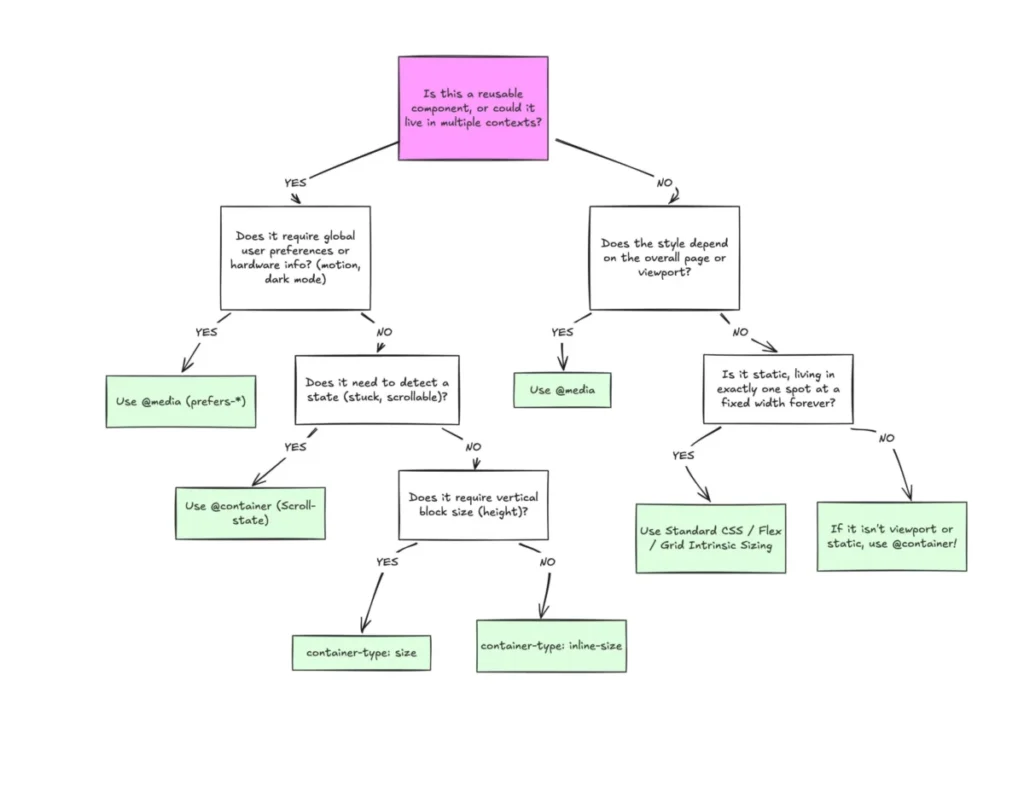
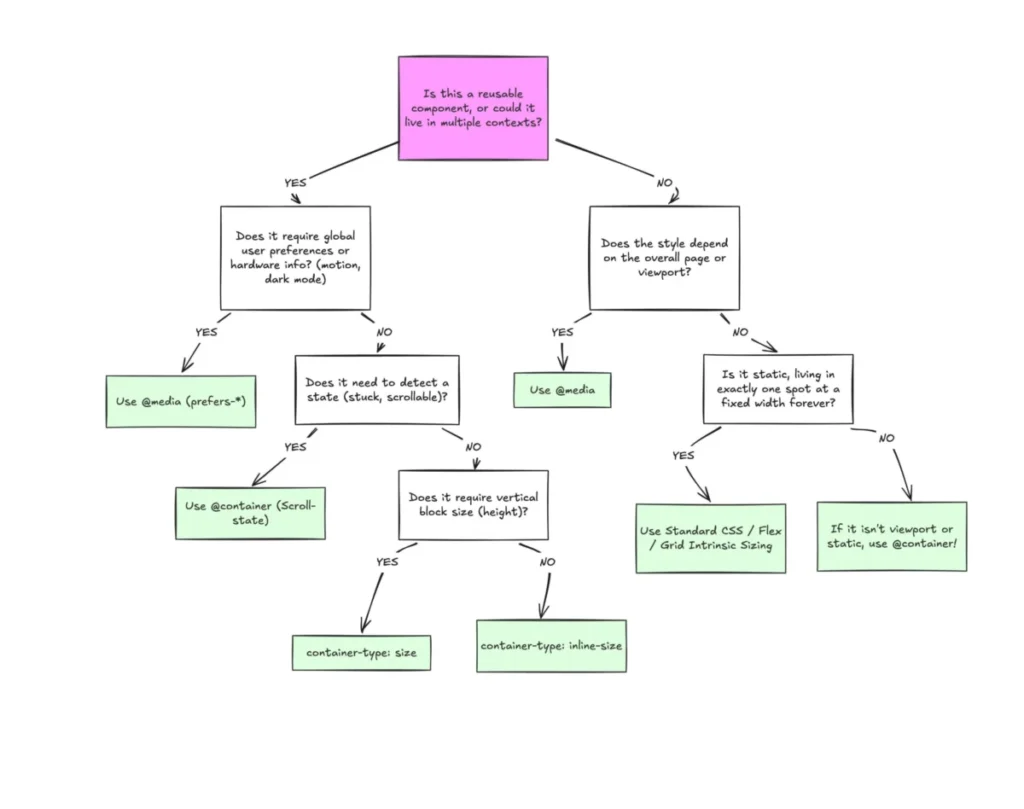
    Both Firefox 149 and Safari 26.4 have embraced support for name-only @container queries without explicit conditions. This seemingly subtle addition represents a significant leap forward in component-based responsive design. Previously, container queries primarily allowed styling elements based on the size or style characteristics of their parent container. With name-only queries, developers can now match against containers based solely on their assigned names, decoupling styling logic from specific dimensional constraints.

    This functionality empowers developers to create truly modular and reusable UI components. Imagine a Card component that needs to adapt its internal layout when placed within a Sidebar container versus a MainContent container, irrespective of the actual pixel width of those containers. By simply naming the containers (e.g., @container sidebar), the Card can apply different styles. This reduces reliance on complex media queries or intricate JavaScript logic for layout adjustments, leading to cleaner, more maintainable CSS. Industry analysts predict this will accelerate the adoption of atomic design principles and component-driven architectures, as it makes component context awareness more straightforward and declarative. "This feature simplifies responsive development dramatically," commented Dr. Anya Sharma, a leading web performance consultant. "It shifts the focus from global viewport dimensions to local component context, which is where modern UIs truly live."

    Scroll-Triggered Animations: Native Performance for Dynamic Experiences

    Chrome 146’s introduction of scroll-position-based control of animations is a monumental advancement for creating engaging and performant user experiences. This feature allows developers to declaratively link CSS animations to the scroll progress of an element or the document, eliminating the need for complex JavaScript event listeners and manual DOM manipulation. Interactions such as parallax effects, scroll-linked progress bars, and element reveals can now be defined directly in CSS, leveraging the browser’s optimized animation engine.

    Crucially, offloading these animations to a worker thread significantly improves performance. Historically, scroll-based animations, particularly those implemented with JavaScript, could lead to jankiness and frame drops, especially on less powerful devices, as they often contended with the main thread for resources. By moving these calculations off-main-thread, Chrome 146 ensures smoother, more fluid animations, enhancing the perceived responsiveness of web applications. The accompanying JavaScript interfaces for web animations provide developers with granular control when custom logic is required, offering a powerful hybrid approach. The CSS scroll-triggered animations are coming article on developer.chrome.com served as an early indicator of this feature’s potential, and its stable release is expected to inspire a new wave of creative web designs. "This is a game-changer for interactive storytelling and dynamic content presentation," stated a spokesperson from the Chrome development team. "It democratizes sophisticated animation techniques, making them accessible and performant for all web projects."

    The trigger-scope Property: Taming Animation Triggers

    Complementing scroll-triggered animations, Chrome 146 also introduced the trigger-scope property. This property addresses a potential challenge in complex web applications: the management of animation trigger names. In a large project, multiple components might define scroll-triggered animations, and without proper scoping, there’s a risk of name conflicts or unintended animation interactions.

    The trigger-scope property allows developers to limit the visibility of animation trigger names to a specific subtree of the DOM. This encapsulation helps to isolate animation-to-trigger interactions, preventing global name conflicts and making it easier to reason about and debug animation behavior within individual components. This feature promotes better architectural practices, enabling developers to build more modular and robust animation systems without worrying about adverse effects from other parts of the application. It’s a testament to the platform’s maturity, addressing not just functionality but also maintainability and scalability.

    Popover hint Value: Granular Control for UI Overlays

    Firefox 149’s support for the hint value in the popover global attribute provides developers with more fine-grained control over popover behavior, particularly in multi-popover scenarios. The popover API, a relatively recent addition to the web platform, simplifies the creation of transient UI elements like tooltips, menus, and notifications. While auto popovers close themselves when the user clicks outside or presses the Escape key, the hint value introduces a nuanced interaction model.

    Popovers with the hint value will not automatically close auto popovers when they are displayed, allowing for layered interactions. However, they will close other hint popovers, ensuring a sensible, sequential display within a specific interaction flow. This distinction is crucial for applications requiring complex overlay management, such as multi-step forms with embedded help tips, or interactive tutorials where multiple contextual prompts might appear. This feature improves the user experience by preventing premature closing of critical UI elements, while still managing the display of multiple hints effectively.

    Grid Lanes (display: grid-lanes): Native Masonry Layouts

    Safari 26.4’s support for display: grid-lanes introduces native support for masonry-style layouts, a highly anticipated feature for web designers. Masonry layouts, characterized by items of varying heights arranged in columns with no gaps, have historically been challenging to implement efficiently on the web. Developers often relied on JavaScript libraries or complex CSS hacks involving absolute positioning or Flexbox workarounds, which could be cumbersome and sometimes lead to performance issues or accessibility challenges.

    The display: grid-lanes value for the display property provides a declarative, performant, and accessible way to achieve this popular layout pattern directly within CSS Grid. This native implementation means better performance, easier maintenance, and improved cross-browser consistency for masonry grids. Content-heavy sites, portfolios, and image galleries are expected to benefit immensely from this, allowing for more dynamic and visually appealing presentations without the overhead of external scripts. "This is a huge win for design flexibility," noted a spokesperson from Apple’s WebKit team. "Masonry has been a persistent request, and bringing it natively to CSS Grid makes it robust and accessible."

    New to the web platform in March  |  Blog  |  web.dev

    Math Functions in sizes Attribute: Responsive Image Loading Refined

    Safari 26.4 further enhances responsive image loading by adding support for min(), max(), and clamp() CSS math functions within the sizes attribute of <img> elements. The sizes attribute informs the browser about the intrinsic size of an image based on the viewport, allowing it to select the most appropriate image source from a srcset.

    By enabling math functions, developers can now express more complex and precise calculations for image dimensions. For instance, an image might need to be clamp(300px, 50vw, 800px) wide, meaning it should be at least 300px, at most 800px, and scale to 50% of the viewport width in between. This capability provides unprecedented flexibility in defining responsive image breakpoints and sizes, optimizing bandwidth usage and improving perceived page load times. This is particularly beneficial for high-performance websites and those with diverse user bases accessing content on a wide range of devices.

    JavaScript Iterator Sequencing: Streamlining Data Processing

    Both Chrome 146 and Safari 26.4 have rolled out support for JavaScript iterator sequencing, introducing Iterator.concat(...items). This new static method allows developers to create a new iterator by concatenating existing iterators. This feature streamlines data processing workflows, especially when dealing with multiple sources of iterable data (e.g., arrays, sets, custom iterators) that need to be processed sequentially as a single stream.

    Prior to this, developers often had to convert iterators to arrays, concatenate them, and then iterate, or write custom generator functions to achieve similar sequencing. Iterator.concat offers a more memory-efficient and idiomatic way to handle such scenarios, as it operates on iterators directly without materializing intermediate arrays. This is now considered "Baseline Newly available," indicating its widespread support and readiness for general use, promising cleaner and potentially more performant code for data manipulation in complex JavaScript applications.

    CloseWatcher Interface: Unifying Device-Native Closing Mechanisms

    Firefox 149’s support for the CloseWatcher interface is a crucial step towards standardizing and enhancing the user experience for closable UI components. This interface allows web developers to integrate their custom components (like modals, custom dropdowns, or notification banners) with device-native closing mechanisms. For example, on Windows, this means components can respond to the Esc key, and on Android, to the system’s Back key, in the same consistent manner as built-in browser dialogs and popovers.

    Historically, implementing consistent closing behavior across different devices and operating systems for custom UI elements has been a significant challenge, often requiring extensive event listener management and conditional logic. CloseWatcher provides a unified, reliable API to manage these interactions, leading to a more coherent and intuitive user experience. Users will find web applications feeling more "native" and responsive to their device’s interaction patterns, reducing friction and improving usability. This feature is particularly valuable for Progressive Web Apps (PWAs) that aim to blur the line between web and native applications.

    Broader Implications for Web Development

    The collective impact of these March 2026 updates is profound. For developers, the platform is becoming more powerful and expressive, reducing the need for complex JavaScript workarounds for common UI patterns. Native scroll-triggered animations and masonry layouts mean better performance and accessibility out-of-the-box. Enhanced container queries promote more modular and maintainable CSS architectures. The CloseWatcher API and improved popover controls contribute to a more seamless and intuitive user experience, particularly for mobile and PWA users. These advancements collectively signal a mature web platform that continues to address developer pain points and expand creative possibilities, while prioritizing performance and user accessibility.

    The Road Ahead: Beta Browser Releases

    Looking beyond the stable releases, the beta channels for April 2026 provide an exciting glimpse into upcoming features. These beta versions are critical for developers to test new functionalities and assess potential impacts on their existing sites before wider stable deployment.

    Chrome 147 Beta: Enhanced Styling and View Transitions

    Chrome 147 Beta introduces several intriguing features:

    • contrast-color(): A new CSS function designed to automatically return either black or white, depending on which color provides the highest contrast against a given argument color. This is invaluable for ensuring text readability and accessibility, especially in dynamic theming or user-generated content scenarios, simplifying the creation of accessible color palettes.
    • border-shape: This property hints at more complex and flexible border geometries beyond traditional rectangular or rounded corners, potentially enabling advanced graphical designs directly in CSS.
    • Element-scoped view transitions: Building on the existing View Transitions API, this allows for smoother, more controlled animations when parts of a page change, scoped to specific elements rather than full page navigations. This will enable highly polished, app-like transitions within single-page applications.

    Firefox 150 Beta: CSS Keywords and Custom Elements

    Firefox 150 Beta also brings a range of significant updates:

    • CSS revert-rule keyword: This keyword allows a property to revert to the value specified by the last matching rule in the user agent’s default style sheet, offering a powerful new mechanism for resetting styles to browser defaults in a more controlled manner.
    • customElementRegistry for Elements and DocumentOrShadowRoot: This provides a more convenient way to interact with the Custom Elements API, allowing developers to query and define custom elements within specific contexts.
    • light-dark() for images: Expanding on the existing light-dark() CSS function for colors, this will enable responsive image selection based on the user’s preferred light or dark mode, further enhancing adaptive user interfaces.

    Expert Commentary and Industry Outlook

    The industry consensus is overwhelmingly positive regarding March’s stable releases and the direction indicated by the beta channels. "The focus on native performance for animations and layouts, coupled with improved control over UI components, truly elevates the web as a platform for sophisticated applications," stated a representative from the Web Standards Project. "We’re seeing a trend towards baking complex interactions directly into the browser, reducing the reliance on JavaScript libraries and leading to more efficient, accessible, and maintainable websites."

    Developers are particularly enthusiastic about the potential for scroll-triggered animations to unlock new creative possibilities without compromising performance. The maturation of responsive design tools like container queries and native masonry layouts is also being lauded as essential for managing the complexity of modern, adaptable UIs. The continued collaborative effort between browser vendors, as evidenced by shared feature adoptions and standardizations, reinforces the health and progressive trajectory of the web platform.

    Conclusion

    March 2026 stands out as a landmark month for web development, delivering a robust set of stable features that significantly enhance the capabilities of Chrome, Firefox, and Safari. From foundational CSS layout and animation tools to refined JavaScript ergonomics and intuitive UI controls, these updates collectively push the web platform forward, enabling developers to build more performant, accessible, and engaging experiences. With promising features already appearing in beta channels, the momentum for innovation on the web shows no signs of slowing, setting an exciting precedent for the remainder of 2026 and beyond.

  • Lusion: Where Digital Craft Meets Ambitious Experimentation

    Lusion: Where Digital Craft Meets Ambitious Experimentation

    Bristol, UK – Lusion, a distinguished digital production studio based in Bristol, has carved a formidable reputation for its pioneering work in interactive websites, real-time visuals, and ambitious digital experiences. Since its inception in 2017, the studio has consistently pushed the boundaries of digital craft, eschewing conventional templates in favor of bespoke solutions that define its unique creative ethos. This approach has not only garnered widespread critical acclaim, including multiple "Site of the Year" accolades, but has also attracted collaborations with an impressive roster of global brands such as Coca-Cola, Porsche, Max Mara, and Google.

    The Genesis of Lusion: A Journey of Self-Taught Excellence

    The foundation of Lusion is deeply rooted in the vision and dedication of its founder, Edan Kwan. Originally hailing from Hong Kong, Kwan’s professional trajectory was initially set on a path in music. However, a pivotal shift in personal interests led him to pivot careers, embarking on an intensive period of self-study in design and coding. This period of independent learning proved instrumental, equipping him with a robust skill set that would form the bedrock of his future endeavors.

    Following his self-taught immersion, Kwan honed his expertise through several years of freelancing, engaging in diverse digital projects that broadened his practical experience. This was succeeded by a significant tenure at a prominent agency in New York, a move that exposed him to the fast-paced, high-stakes environment of international digital production and further refined his craft. The culmination of these experiences—from the foundational independence of freelancing to the collaborative rigor of agency work—ultimately led Kwan back to independent practice, laying the groundwork for Lusion’s establishment in 2017.

    In an era increasingly defined by digital transformation, 2017 represented a burgeoning period for innovative online experiences. The demand for sophisticated, engaging, and unique digital presences was escalating, driven by advancements in web technologies and a growing consumer appetite for immersive interactions. It was into this fertile landscape that Lusion was born, fueled by Kwan’s desire to build a studio "defined by craft, curiosity, and attention to detail." This founding principle distinguished Lusion from many contemporaries, emphasizing custom solutions over off-the-shelf templates and ensuring that every project received a singular, meticulously developed system, logic, and aesthetic flavor.

    Lusion: Where Digital Craft Meets Ambitious Experimentation | Codrops

    A Philosophy of Bespoke Innovation and Uncompromising Craft

    Lusion’s core philosophy revolves around building digital experiences "from scratch." This isn’t merely a marketing slogan; it’s a fundamental operational principle. The studio believes that truly groundbreaking ideas often falter when forced into rigid, pre-existing frameworks. By custom-building each element, Lusion ensures that every project can fully embody its unique concept without compromise. This bespoke approach allows for unparalleled flexibility, enabling the integration of experimental techniques and emergent technologies that might otherwise be incompatible with standardized templates.

    "Our commitment to building from the ground up allows us to explore the full spectrum of creative possibilities for each client," remarked a studio spokesperson, reflecting the inherent value Lusion places on tailored innovation. "It’s about crafting a digital identity that is as unique as the brand it represents, rather than fitting a brand into a pre-determined mold." This dedication to originality manifests in a diverse portfolio, ranging from "polished and cinematic" works to projects that are "weird on purpose," often residing in a compelling middle ground that blends refined aesthetics with a distinctive edge.

    The studio’s unwavering pursuit of excellence has not gone unnoticed. Lusion’s own studio website, a testament to its capabilities, achieved the prestigious "Site of the Year" awards from three of the industry’s most respected authorities: FWA (Favorite Website Awards), Awwwards, and CSS Design Awards (CSSDA). These accolades are highly competitive, judged on criteria such as design, creativity, usability, and technical execution, underscoring Lusion’s mastery across multiple facets of digital production. Beyond its self-promotional triumphs, the studio’s client work has consistently garnered international recognition, including honors from Cannes Lions, D&AD, Webby Awards, further FWA and Awwwards distinctions, among others. These awards signify not just artistic merit but also commercial effectiveness and technological innovation, placing Lusion firmly among the elite in the global digital creative landscape.

    Showcasing Ambitious Experimentation: Three Pillars of Innovation

    Lusion’s portfolio is rich with examples that illustrate its ambitious and diverse capabilities. Three projects stand out as epitomes of the studio’s commitment to pushing creative and technical boundaries: Oryzo AI, Porsche: Dream Machine, and My Little Storybook. Each project, while distinct in its purpose and execution, reflects Lusion’s overarching philosophy of craft, curiosity, and bespoke innovation.

    Lusion: Where Digital Craft Meets Ambitious Experimentation | Codrops

    Oryzo AI: A Satirical Masterclass in Digital Craft

    In an era increasingly saturated with discussions around artificial intelligence and its pervasive influence, Lusion launched "Oryzo AI," a satirical campaign for a fictional product: a cork coaster presented with premium production quality and an almost absurd level of seriousness. This project serves as a brilliant example of Lusion’s ability to blend playful experimentation with high-fidelity digital craft.

    Oryzo AI was conceived as both a creative experiment and a robust showcase of the studio’s design, motion, and digital production prowess. The campaign meticulously built a "fully realized campaign world" around this ostensibly mundane object, transforming a simple cork coaster into the centerpiece of a high-end AI product launch. This included immersive web design, intricate 3D production, sophisticated motion graphics, and a comprehensive suite of supporting content spanning social media posts, a founder video, a Product Hunt listing, and even an open-weight GitHub page. Each component was executed with the same meticulous attention to detail typically reserved for real brand stories, demonstrating Lusion’s capacity to elevate even the most outlandish concepts through exceptional craftsmanship.

    The project implicitly offers a commentary on the often-exaggerated marketing surrounding AI products, while simultaneously proving Lusion’s technical versatility. It showcases their adeptness in creating complex digital ecosystems, highlighting their capabilities in immersive storytelling and advanced visual production. For potential clients, Oryzo AI serves as a compelling, albeit humorous, demonstration of Lusion’s ability to execute highly sophisticated digital campaigns, irrespective of the underlying product’s perceived value. It illustrates that when it comes to digital storytelling and technical execution, Lusion brings unparalleled seriousness and skill, even to a joke.

    Porsche: Dream Machine – Transcending Digital into Cinematic Storytelling

    Lusion’s collaboration with Wallpaper* and Porsche GB on "Porsche: Dream Machine" marked a significant venture into the realm of computer-generated (CG) film, showcasing the studio’s adaptability and creative ambition beyond its core web-based expertise. This short CG film was designed to explore the emotional and creative journey behind Ferry Porsche’s original vision, utilizing generative imagery, sophisticated motion design, and a dreamlike visual language.

    Lusion: Where Digital Craft Meets Ambitious Experimentation | Codrops

    The project’s genesis was unique. Wallpaper* approached Lusion, recognizing the potential in the studio’s immersive digital R&D work, particularly the experimental spirit demonstrated in projects like "Infinite Passerella." Porsche GB, impressed by Lusion’s innovative approach, presented the challenge of creating a 2-3 minute CG short film inspired by the genesis of the first Porsche sports car. This presented an unfamiliar medium for Lusion, primarily known for interactive web experiences.

    Despite the novelty of the format and an intense three-week production timeline, Lusion embraced the challenge. They swiftly adapted their immersive digital thinking to a cinematic format, learning, designing, and building in parallel. The film successfully translated Porsche’s "Driven by Dreams" ethos into a captivating visual narrative, evolving from abstraction and imagination towards the iconic silhouette of the original 356. The project was not only meaningful for its outcome but also for the process, underscoring Lusion’s willingness to trust its instincts and apply its unique creative problem-solving to entirely new formats. The completed film was subsequently featured by Wallpaper*, distributed through Porsche’s official channels, and publicly exhibited at Outernet London, a prominent immersive entertainment venue, significantly broadening Lusion’s reach and demonstrating their mastery in dynamic visual content production.

    My Little Storybook: The Power of Internal R&D and Heartfelt Narratives

    "My Little Storybook" exemplifies Lusion’s commitment to internal research and development (R&D) through its "Lusion Labs" initiative. This self-initiated interactive story about a bird family crossing a river began as a monthly experiment and evolved into one of the studio’s most celebrated internal pieces. It beautifully illustrates how technical exploration can merge seamlessly with simple, heartfelt storytelling to create charming and memorable digital experiences.

    The project leveraged advanced web technologies, combining WebGL for immersive rendering, handcrafted 3D environments, and illustrated animation to craft a playful digital book experience. Part of Lusion’s monthly experiment series, "My Little Storybook" provided a crucial space to test ideas, develop new skills, and experiment creatively without the constraints of client briefs. The objective was to create a storytelling experience that felt gentle, meticulously crafted, and emotionally resonant.

    Inspired by the aesthetic of Japanese anime, the project allowed Lusion to diverge from the more photorealistic, commercial styles often prevalent in their client work. Instead, it embraced a stylized visual language, utilizing hand-built 3D assets, drawn animation, and interactive storytelling elements. Despite a tight one-month production schedule, the team pushed the boundaries of web-based narrative and atmosphere, demonstrating their versatility and artistic depth. "My Little Storybook" underscores the studio’s belief that continuous internal innovation through projects like these is vital for team growth and for attracting talent passionate about learning and creating thoughtful, ambitious work. It stands as a testament to Lusion’s ability to infuse technology with genuine emotional connection, proving that technical prowess can serve deeply human narratives.

    Lusion: Where Digital Craft Meets Ambitious Experimentation | Codrops

    Culture of Collaboration and Continuous Innovation

    Lusion attributes much of its success to its close-knit team culture. This collaborative environment fosters simple, effective communication, ensuring that every project receives the dedicated attention it deserves from conception to completion. The studio’s flat hierarchy and emphasis on individual contribution allow team members to stay intimately connected with the work, promoting a sense of ownership and collective achievement.

    A cornerstone of Lusion’s operational strategy is the investment in internal projects through "Lusion Labs." These initiatives, which have spawned acclaimed works like Oryzo AI and My Little Storybook, are more than just creative outlets; they are vital training grounds. They provide a safe space for the team to test nascent ideas, develop new technical skills, and experiment with creative concepts that may not fit traditional client briefs. This mindset of continuous learning and experimentation is crucial for growth, enabling the studio to stay ahead of industry trends and to attract top-tier talent who share a passion for pushing the envelope in digital design and development. "Lusion Labs is where we truly stretch our creative muscles," a team member might observe, "It’s where we refine our craft and discover the next big thing, ensuring that our client work always benefits from cutting-edge insights."

    Broader Impact and Future Trajectory

    Lusion’s distinctive approach—prioritizing bespoke solutions, embracing ambitious experimentation, and fostering a culture of continuous learning—has positioned it as a significant influencer in the global digital production landscape. By consistently demonstrating that custom-built experiences yield superior results compared to template-driven approaches, Lusion sets a high benchmark for quality and innovation. Their work challenges the industry to move beyond mere functionality toward truly immersive and emotionally engaging digital narratives.

    The studio’s ability to seamlessly pivot between diverse project types—from satirical AI campaigns and cinematic brand films to interactive storybooks—showcases a rare versatility. This broad capability not only diversifies their client base but also solidifies their reputation as a studio capable of tackling virtually any digital challenge with creative flair and technical mastery. As the digital realm continues its rapid evolution, encompassing emerging technologies like augmented reality, virtual reality, and advanced AI integration, Lusion’s foundational commitment to craft and experimentation positions it perfectly to lead the charge. The studio’s trajectory suggests a continued exploration of new mediums and technologies, always guided by their core belief in creating meaningful, impactful, and uniquely Lusion digital experiences.

  • The Indispensable Role of Design Principles in Navigating Modern Product Development and AI Innovation

    The Indispensable Role of Design Principles in Navigating Modern Product Development and AI Innovation

    Design principles, often perceived as rigid guidelines, are in fact a powerful strategic asset for organizations, serving as a unifying force to rally teams around a shared purpose and to articulate the core values and beliefs that define an enterprise. In an increasingly complex and rapidly evolving technological landscape, these principles align teams, inform critical decision-making, and provide a steadfast anchor amidst the relentless hype cycles, ambitious assumptions, pressures for faster delivery, and the emergent challenges posed by AI-driven development. The critical question for many organizations is not whether to adopt design principles, but how to effectively select and implement those that truly resonate with their mission and user needs.

    Historical Evolution: From Industrial Aesthetics to Digital Ethics

    The concept of design principles is not new, tracing its roots back to the early 20th century with movements like the Bauhaus, which championed functionalism and the integration of art and technology. However, it was perhaps Dieter Rams, the influential German industrial designer for Braun, who codified their modern relevance with his "10 Principles of Good Design" in the late 1970s. Rams’ principles, such as "Good design is innovative," "Good design makes a product useful," and "Good design is as little design as possible," offered a humble, practical, and profoundly human-centered framework for industrial product development. These tenets emphasized clarity, utility, and longevity over fleeting trends, significantly influencing generations of designers.

    As technology evolved from physical products to abstract digital interfaces, so too did the application and scope of design principles. The advent of graphical user interfaces (GUIs) in the 1980s and the subsequent rise of the internet in the 1990s necessitated new guiding philosophies for interaction design. Pioneers in user experience (UX) like Don Norman and Jakob Nielsen began articulating principles focused on usability, learnability, and user satisfaction, laying the groundwork for what would become the cornerstone of digital product design. Companies like Apple, with its Human Interface Guidelines (HIG), and later Google, with Material Design, formalized extensive sets of principles that dictated the look, feel, and behavior of their software ecosystems, ensuring consistency and a recognizable brand experience across diverse applications. This evolution underscores a critical shift: design principles moved from being primarily aesthetic and functional considerations for physical goods to encompassing complex user interactions, psychological factors, and ultimately, the ethical implications of digital experiences.

    A Practical Guide To Design Principles — Smashing Magazine

    Defining the Unseen: What Design Principles Truly Are

    At their core, design principles are not prescriptive rules but rather adaptable guidelines and considerations that designers and product teams apply with discretion. They serve as a foundational agreement, allowing teams to proceed with decisions on what has already been established without the need for endless debate. In essence, they are the documented values and beliefs that an organization embodies through its products and services.

    In an era where passable designs and code can be generated within minutes, the focus shifts from how to design to what is worth designing and building, and crucially, what values those creations should embody. Without a clear set of principles, company initiatives often appear random, sporadic, and ad-hoc, resulting in vague, inconsistent, or uninspiring user experiences. Just as a company’s voice and tone might be unintentionally defined by end-users if not consciously crafted, so too will a product’s underlying values be perceived through its design, whether intentional or not.

    Resources such as Ben Brignell’s Principles.design, which compiles over 230 pointers for design principles and methods spanning language, infrastructure, hardware, and organizational structures, highlight the vast scope and applicability of these guidelines. They provide a comprehensive repository for understanding how various entities have articulated their design philosophy, offering invaluable inspiration for those looking to establish their own.

    The Business Imperative: Data and Impact

    The implementation of robust design principles extends far beyond mere aesthetic coherence; it yields tangible business benefits, impacting everything from operational efficiency to market perception and user loyalty. Studies and industry observations consistently suggest that organizations with clearly defined and consistently applied design principles often report higher user satisfaction, improved product-market fit, and accelerated development cycles.

    A Practical Guide To Design Principles — Smashing Magazine
    • Consistency and Trust: Principles foster consistency across a product ecosystem, reducing cognitive load for users and building trust. When interactions are predictable and aligned with user expectations, users feel more in control and are more likely to engage repeatedly with a product or service. This consistency is a hallmark of strong brands and contributes directly to customer retention.
    • Efficiency and Scalability: For development teams, principles act as a shared language and decision-making framework, significantly streamlining the design and development process. They reduce the need for constant re-evaluation of basic design choices, minimizing rework and accelerating time-to-market. This efficiency is particularly critical in large organizations or for products with extensive feature sets, enabling scalable growth without sacrificing quality.
    • Brand Differentiation: Beyond functional consistency, design principles infuse products with a distinct personality and voice, reinforcing brand identity. They articulate what an organization stands for beyond profits, stock prices, or fleeting trends, creating a unique market position that resonates with target audiences. This differentiation is invaluable in competitive landscapes, making products memorable and desirable.
    • Innovation with Purpose: Principles provide a strategic lens through which new ideas and innovations can be evaluated. Instead of pursuing every novel concept, teams can assess potential features or product directions against their core design values, ensuring that innovation serves a greater purpose and aligns with the organization’s overarching mission. This prevents feature creep and ensures that resources are allocated to initiatives that genuinely enhance the user experience and brand value.
    • Team Alignment and Collaboration: Perhaps one of the most significant internal benefits, design principles act as a powerful tool for aligning cross-functional teams. By documenting shared values and beliefs, they reduce subjective debates rooted in personal preferences, fostering a collaborative environment where decisions are guided by a common vision. This unity empowers teams to make autonomous decisions that are consistent with the organizational direction.

    Crafting Your Compass: Establishing Design Principles

    Establishing effective design principles is a collaborative endeavor that transcends the design department. Given that the user experience encompasses every touchpoint—from performance and functionality to customer support and service—it is crucial for participants in the principle-setting process to represent these diverse areas. While the abstract nature of principles can make them challenging to define and agree upon, a structured approach, often in the form of a workshop, can navigate these complexities.

    A practical eight-step workshop framework, inspired by methodologies from design thought leaders such as Marcin Treder, Maria Meireles, and Better, can guide teams through this process:

    1. Preparation and Research: Begin by gathering existing company values, mission statements, user research, competitive analyses, and any previous design guidelines. This provides a foundational understanding of the organization’s identity and market position.
    2. Individual Brainstorming: Each participant independently generates a list of potential principles, focusing on what the product or service should and should not embody. This encourages divergent thinking and prevents groupthink.
    3. Sharing and Grouping: Participants share their ideas, and similar concepts are grouped together. This phase helps identify common themes and areas of consensus, moving from individual thoughts to collective understanding.
    4. Keyword Extraction: From the grouped ideas, extract core keywords or phrases that encapsulate the essence of each cluster. These keywords form the basis for the principle statements.
    5. Drafting Statements: For each keyword, draft a concise, actionable statement that articulates the principle. Each principle should ideally be memorable and easily understood, often accompanied by a brief explanation or an example of its application.
    6. Critique and Refinement: Review the drafted principles for clarity, distinctiveness, and relevance. Are they inspiring? Do they have a clear point of view? Do they differentiate the product? This iterative phase is crucial for honing the language and ensuring each principle is robust.
    7. Prioritization and Selection: Teams vote on the most impactful and relevant principles. Aim for a manageable number (e.g., 5-7) to ensure they are all memorable and actionable. This convergent phase ensures the focus remains on the most critical guiding tenets.
    8. Socialization and Integration Plan: Develop a strategy for effectively sharing, communicating, and embedding the finalized principles across the organization. This plan should include how principles will be referenced in daily work, design critiques, and future product decisions.

    The challenge of principles being "abstract and fluffy" can be mitigated by grounding them in concrete scenarios and examples, demonstrating how they apply to real design challenges. Utilizing workshop kits, readily available on platforms like Figma Community, can further streamline this process, providing templates and structured activities to facilitate productive discussions and decision-making.

    Principles in Action: Exemplary Frameworks

    Examining established design principles from leading organizations offers valuable insights into their practical application and enduring relevance:

    A Practical Guide To Design Principles — Smashing Magazine
    • Dieter Rams’ 10 Principles of Good Design: Though developed for industrial products, Rams’ principles remain profoundly influential in digital design. Examples include "Good design is innovative" (encouraging forward-thinking solutions), "Good design makes a product useful" (prioritizing functionality), and "Good design is aesthetic" (emphasizing visual appeal without sacrificing utility).
    • Apple’s Human Interface Guidelines (HIG): Emphasize principles like "Clarity," "Deference," and "Depth." Clarity means interfaces are clear and unambiguous; Deference means the UI supports the user experience without competing with content; Depth means providing layers of content and functionality for rich interaction. These principles guide the design of all Apple software, ensuring a consistent and intuitive user experience across its ecosystem.
    • Google’s Material Design Principles: Built around "Metaphor," "Bold, graphic, intentional," and "Motion provides meaning." Material Design aims to create a unified system of visual, motion, and interaction design across platforms and devices, drawing inspiration from the physical world while embracing technological possibilities.
    • IBM Design Language: Centers on principles like "User focus," "Craft," and "Purpose." This comprehensive system aims to foster consistency and quality across IBM’s vast portfolio of products and services, ensuring that every interaction reflects IBM’s commitment to thoughtful design and meaningful solutions for enterprise users.

    These examples illustrate that effective principles are not just visionary; they offer a clear point of view, defining not only what an organization does but also what it does not do, thereby clarifying its stance in the world beyond commercial objectives.

    Guiding AI Innovation: Principles in the Age of Intelligent Interfaces

    The rapid proliferation of Artificial Intelligence (AI) technologies introduces a new frontier for design, making robust design principles more critical than ever. AI interfaces, from chatbots and recommendation engines to autonomous systems, present unique challenges related to ethics, transparency, bias, control, and trust. Without clear guiding principles, AI solutions risk being perceived as opaque, unreliable, or even harmful, undermining user adoption and public confidence.

    In this context, design principles for AI must extend beyond traditional usability to encompass considerations such as:

    • Transparency and Explainability: Users should understand how an AI system works, why it made a particular decision, and what data it used. Principles emphasizing clear communication of AI’s capabilities and limitations are paramount.
    • User Control and Agency: While AI can automate tasks, users must retain a sense of control over their interactions and data. Principles should ensure that AI acts as an assistant, empowering users rather than dictating their actions.
    • Fairness and Bias Mitigation: AI systems can inadvertently perpetuate or amplify societal biases present in their training data. Design principles must actively address fairness, ensuring equitable outcomes for all users and preventing discriminatory practices.
    • Predictability and Reliability: AI’s probabilistic nature can lead to unpredictable behavior. Principles should aim to make AI interactions as predictable and reliable as possible, setting clear expectations for users.
    • Privacy and Security: With AI often relying on vast amounts of data, principles must prioritize robust privacy protections and data security, building user trust in the handling of their personal information.

    The growing demand for expertise in this domain is highlighted by resources like Vitaly’s "Design Patterns For AI Interfaces," a video course offering practical UX guidelines and real-life examples for designing AI features. Such initiatives underscore the industry’s recognition of the urgent need for structured approaches and principled thinking in developing intelligent interfaces that are not only functional but also ethical, trustworthy, and user-centered.

    A Practical Guide To Design Principles — Smashing Magazine

    Embedding and Sustaining Principles

    While the creation of design principles is a significant achievement, it represents only a fraction of the overall effort. The greater challenge lies in effectively sharing, embedding, and sustaining these principles within the daily fabric of an organization. Principles must transition from being a document to becoming a default mode of operation.

    Strategies for successful integration include:

    • Continuous Communication: Regularly communicate principles through internal newsletters, team meetings, and dedicated presentations, ensuring they remain top-of-mind for all employees.
    • Integration into Workflows: Incorporate principles into existing design and development workflows. This could involve using them as a checklist during design reviews, referencing them in project briefs, or making them a mandatory part of new employee onboarding and training.
    • Visible Reinforcement: Display principles prominently in workspaces, on internal wikis, or within design system documentation. Visual reminders help to normalize their presence and importance.
    • Leadership Endorsement: Active support and advocacy from leadership are crucial. When leaders consistently reference and uphold the principles, it signals their strategic importance and encourages broader adoption.
    • Iterative Review and Adaptation: Design principles should not be static. Periodically review and, if necessary, adapt them to reflect evolving user needs, technological advancements, and organizational strategies. This ensures their continued relevance and efficacy.
    • Templates and Tools: Integrate principles into design system templates, naming conventions, and output formats. For instance, component documentation can include notes on how specific elements adhere to certain principles.

    By consistently revisiting settings, templates, and conventions, organizations can make design principles an ingrained part of their culture, thereby avoiding endless discussions that often stem from personal preferences or subjective taste. True design, especially in complex product development, should be guided by clearly articulated goals and values, not mere opinion.

    Conclusion: The Enduring Power of Principled Design

    In an era defined by rapid technological change and increasing complexity, design principles stand as indispensable strategic assets. They transcend their traditional role as aesthetic guidelines, evolving into fundamental frameworks that align teams, inform decision-making, and articulate the core values of an organization. From the industrial aesthetics championed by Dieter Rams to the intricate ethical considerations demanded by AI, these principles provide a crucial compass, guiding development towards consistency, efficiency, and profound user trust.

    A Practical Guide To Design Principles — Smashing Magazine

    By fostering a shared understanding of what truly matters, design principles enable organizations to navigate the pressures of accelerated delivery and the allure of fleeting trends. They ensure that products and services are not only functional but also meaningful, ethical, and reflective of a deliberate, human-centered approach. The ongoing effort to embed and sustain these principles is what transforms them from abstract ideals into tangible drivers of innovation and success, ultimately shaping more coherent, valuable, and impactful experiences for users worldwide.

  • The Comprehensive Guide to Modern SEO Audits in an AI-Driven Search Landscape

    The Comprehensive Guide to Modern SEO Audits in an AI-Driven Search Landscape

    An SEO audit is a methodical examination of a website’s overall search engine performance, encompassing its technical foundation, content quality, and visibility within search results. Historically, these audits primarily focused on identifying and rectifying issues that hindered traditional "blue-link" rankings in Google Search. However, the advent of artificial intelligence (AI) in search engines has profoundly reshaped how users discover brands and interact with information online. Consequently, modern SEO audits have evolved to include critical new dimensions, such as evaluating entity signals, assessing brand visibility in AI-generated answers, and analyzing content performance within generative AI platforms.

    This guide delves into the contemporary approach to conducting an effective SEO audit, providing clear steps, practical examples, and a comprehensive checklist designed to empower SEO professionals across all skill levels to drive measurable traffic growth and achieve business objectives in this new era of search.

    Understanding the Core of an SEO Audit and Its Evolving Significance

    At its fundamental level, an SEO audit is a structured review designed to pinpoint technical, on-page, content, and link-related issues that impede a website’s performance in search engines. These findings are then translated into a prioritized action plan to unblock traffic, improve rankings, and, most importantly, boost conversions. For businesses and their SEO teams, conducting regular audits is not merely a best practice; it is a strategic imperative for identifying growth opportunities that align directly with overarching business goals.

    Traditionally, an audit would scrutinize elements like crawlability, indexability, metadata optimization, and backlink profiles. While these remain foundational, the landscape of search has undergone a transformative shift with the integration of AI. Major search engines like Google are increasingly relying on sophisticated AI models to understand context, intent, and entities, moving beyond simple keyword matching. This necessitates a broader audit scope that considers how content is interpreted by these advanced algorithms and how brands appear in AI-generated summaries, conversational interfaces, and answer boxes—a practice now often referred to as Answer Engine Optimization (AEO) and Generative Engine Optimization (GEO).

    SEO audits: How to conduct one that drives traffic growth [+ checklist]

    SEO specialists typically conduct these audits at regular intervals—quarterly or annually—or engage third-party consultants for an objective "fresh pair of eyes." The ultimate goal is to transform audit findings into a strategic roadmap that directly supports key performance indicators such as traffic growth, lead generation, and pipeline acceleration.

    A comprehensive audit now includes:

    • Technical Health: Evaluating crawlability, indexability, page speed, Core Web Vitals, structured data implementation, and overall site architecture. These elements form the bedrock of search engine accessibility and user experience.
    • On-Page SEO: Scrutinizing metadata, heading structures, internal linking strategies, URL optimization, and the effective clustering of topics and keywords.
    • Content Quality & Depth: Assessing E-E-A-T (Experience, Expertise, Authoritativeness, Trustworthiness) signals, topical authority, content freshness, identification of duplication or thin pages, and pinpointing content gaps relative to user intent and competitive offerings.
    • Top-Performing Pages Analysis: Identifying pages that consistently generate high traffic or impressions, with a focus on opportunities to enhance click-through rates (CTR) and improve rankings further.
    • Revenue-Generating Pages: Concentrating on product, service, or conversion-oriented pages that have the highest commercial impact, and diagnosing factors that prevent them from achieving higher rankings.
    • Highest-Conversion Pages: Analyzing pages with strong conversion rates to identify scalable elements, replicable strategies, or areas for further optimization.
    • CRO Recommendations: Providing insights into layout friction, user experience (UX) issues, clarity of calls-to-action (CTAs), messaging effectiveness, and engagement metrics.
    • Backlink Profile & Gaps: Assessing the authority and quality of inbound links, identifying toxic links, and uncovering opportunities to acquire valuable links that competitors leverage.
    • Brand and Entity Signals: A crucial modern component, evaluating how clearly a brand is understood and categorized by both traditional search engines and advanced AI models. This ensures accurate representation in knowledge panels and AI-generated responses.
    • AI Search Visibility: Directly examining how a site’s content appears in AI-generated answers, using specialized tools to gauge performance in generative search environments.

    The Evolving Landscape: AI’s Impact on Search and the Audit Process

    The rise of generative AI, exemplified by models like ChatGPT and the integration of features like Google’s Search Generative Experience (SGE), marks a pivotal shift in information retrieval. No longer are users solely presented with a list of ten blue links; they often receive direct, synthesized answers or conversational responses. This fundamentally changes the objective of SEO.

    For instance, Google’s introduction of Core Web Vitals in 2021 underscored the importance of user experience, but the current wave of AI integration goes deeper. It demands that content not only be technically sound and user-friendly but also inherently authoritative, contextually rich, and structured in a way that AI can easily understand and trust as a reliable source for its generated answers. Analysts predict that an increasing percentage of search queries will be answered directly by AI, bypassing traditional organic results for many informational queries. This trend necessitates that SEO audits move beyond merely optimizing for keyword rankings to optimizing for "answerability" and "entity recognition."

    The Strategic Imperative: Why Modern SEO Audits Matter More Than Ever

    SEO audits: How to conduct one that drives traffic growth [+ checklist]

    In a competitive digital marketplace, a static website is a dying one. Regular, comprehensive SEO audits provide a dynamic mechanism for continuous improvement and competitive advantage. Neglecting audits can lead to declining traffic, missed conversion opportunities, and a gradual erosion of brand visibility.

    • Risk Mitigation: Audits identify critical issues like security vulnerabilities, broken checkout processes, or incorrect product information that can have immediate and severe business consequences beyond just SEO.
    • Competitive Edge: By analyzing competitor backlink profiles, content strategies, and AI visibility, audits reveal untapped opportunities and allow businesses to adapt proactively. The market for SEO services is projected to continue its significant growth, reflecting the increasing recognition of its importance in digital strategy.
    • Resource Optimization: A well-prioritized audit helps allocate limited marketing and development resources to tasks that yield the highest impact, preventing wasted effort on low-value activities.

    A Systematic Approach: The Five-Step SEO Audit Framework

    An effective SEO audit is not a haphazard collection of checks but a carefully orchestrated process. The following five-step framework ensures focus and translates data into actionable strategy, explicitly incorporating the demands of AI-driven search. It’s important to remember that while this is called an "SEO audit," it intrinsically includes AEO (Answer Engine Optimization) and GEO (Generative Engine Optimization) to reflect how modern users interact with brands.

    Step 1: Outline Business Goals and Audit Intent
    The foundational step involves defining why the audit is being conducted and what specific business problem(s) it aims to solve. Every audit must be rooted in business goals, not just a list of technical checks. While improving website traffic and conversions are universal SEO objectives, the specific underlying issues must be clarified. This might involve recovering from a traffic drop, boosting conversions for a new product, or establishing authority in a nascent market segment.

    • How to do it: Engage stakeholders (marketing, sales, product teams) to understand current challenges, upcoming campaigns, and overall business priorities. Ask probing questions: "What metrics have declined?" "Are there new product launches struggling to gain visibility?" "Which audience segments are we failing to reach?" The audit’s scope should then be shaped around these defined objectives.

    • Chronological Context: This initial alignment ensures that all subsequent data gathering and analysis are focused and relevant, preventing the audit from becoming a purely academic exercise. It acts as the guiding star for the entire process.

      SEO audits: How to conduct one that drives traffic growth [+ checklist]

    Step 2: Research and Comprehensive Data Gathering
    This phase is dedicated to collecting all quantitative signals that illustrate the website’s performance. It forms the empirical layer of the audit. This is where the "cookie-cutter SEO" phase takes place, with tools doing the heavy lifting.

    • Data Sources:

      • Google Search Console (GSC): Provides critical data on crawl errors, indexing status, search queries, impressions, clicks, and Core Web Vitals.
      • Google Analytics (GA4): Offers insights into user behavior, traffic sources, conversion paths, and engagement metrics.
      • Website Crawlers (e.g., Screaming Frog, Semrush Site Audit): Identify technical issues like broken links, redirect chains, duplicate content, missing metadata, and site architecture problems.
      • Backlink Analysis Tools (e.g., Semrush, Ahrefs): Reveal backlink profiles, domain authority, toxic links, and competitor link strategies.
      • Keyword Research Tools (e.g., Semrush, Ahrefs): Uncover ranking keywords, search volume, keyword gaps, and topic opportunities.
      • AI Search Graders (e.g., HubSpot AEO Grader): Specifically analyze brand and entity visibility within AI-generated search results and generative engines.
    • Pro Tip: Consolidate all data into a central repository, such as a Google Sheet or dedicated dashboard. This serves as a vital benchmark for future audits, allowing for easy comparison and measurement of progress in metrics like rankings, traffic, and AI visibility.

    Step 3: In-Depth Human Analysis of Research
    This is where raw data transforms into actionable insights, moving beyond what automated tools can provide. It’s the strategic layer where an experienced SEO professional "reads between the lines," connecting patterns, understanding the root causes of issues, and anticipating their impact on traffic, rankings, conversions, and AI visibility.

    • Analytical Process:

      • Identify Trends & Anomalies: Look for significant drops or spikes in traffic, indexing issues, unexpected content performance, or unusual backlink activity.
      • Connect the Dots: For example, a sudden drop in rankings might correlate with a Google algorithm update or a recent site migration.
      • Evaluate Against Goals: Always refer back to the business goals defined in Step 1. How do these data points affect those objectives?
      • Assess AI Readiness: Analyze content through the lens of E-E-A-T and entity clarity. Is the brand’s expertise clearly signaled? Is content structured for easy AI consumption?
      • Competitive Analysis: Compare the site’s performance across all audit areas against key competitors, especially regarding AI visibility and entity recognition.
    • Critical Aspect: Align SEO insights with the broader business strategy, including product priorities, revenue-driving pages, seasonal demand, marketing campaigns, and sales goals. This ensures the audit remains grounded in commercial reality.

      SEO audits: How to conduct one that drives traffic growth [+ checklist]

    Step 4: Huddle with Stakeholders for Alignment
    This phase bridges SEO insights with the operational realities of the business. It’s an opportunity to collaborate with stakeholders, validate assumptions, fill knowledge gaps, and ensure that the recommendations are practical within the context of existing strategy, team capacity, and upcoming initiatives.

    • Purpose: The SEO specialist, having gained a deep understanding of the site’s performance, presents preliminary findings. This meeting is not about delivering the final plan but about discussing the implications of the data. It’s a moment to confirm or adjust initial priorities based on newfound insights or evolving business needs. For instance, the data might reveal an untapped audience segment or a high-potential content cluster not previously considered.

    • How to do it: Prepare a concise summary of key findings and potential implications. Facilitate an open discussion to gain buy-in and refine the strategic direction. Crucially, secure stakeholder agreement on the overall strategic direction before proceeding to build the detailed action plan.

    Step 5: Refine the Audit and Build an Actionable Plan
    This is the culmination of the audit process, transforming insights into a concrete, executable strategy. It’s not enough to merely list issues; the true value of an audit lies in translating those findings into structured actions with assigned owners, realistic timelines, and clear expected outcomes.

    • Plan Components:

      • Prioritized Recommendations: Categorize issues by impact (high, medium, low) and effort (quick win, moderate, significant).
      • Detailed Action Items: Each recommendation should specify what needs to be done, how it should be done, and why it matters (linking back to business goals).
      • Assigned Ownership: Clearly designate who is responsible for each task (e.g., content team, development team, SEO specialist).
      • Timelines & Deadlines: Establish realistic deadlines for completion.
      • Expected Outcomes: Quantify the anticipated results for each major action (e.g., "increase organic traffic by X%," "reduce bounce rate by Y%," "improve AI answer box visibility for Z keywords").
      • Measurement Plan: Outline how the success of implemented changes will be tracked and reported.
    • Outcome: A well-structured plan makes the audit a living document, a weekly roadmap for action rather than a report filed away. For long-term implementation, managing these actions within a project management tool like Asana or Jira can significantly improve efficiency and accountability.

      SEO audits: How to conduct one that drives traffic growth [+ checklist]

    Prioritizing for Impact: Interpreting Your SEO Report and Fixing Issues

    Once audit findings are compiled, the critical next step is to prioritize them strategically based on impact, effort, and business alignment.

    1. Unblock Crawling and Indexing: Top priority must be given to any issues preventing search engines from accessing or indexing key pages. These fundamental technical errors (e.g., accidental noindex tags, broken internal links, faulty robots.txt rules) can instantly suppress visibility. Fixing them often yields the fastest and most significant traffic recovery. This aligns with the "Maslow’s Hierarchy of Needs for SEO," where crawlability and indexability form the base.

    2. Flag Issues with True Business Risk: Certain findings demand immediate attention due to direct revenue or reputational implications. Security vulnerabilities, broken checkout flows, incorrect pricing, or inaccessible forms are non-negotiable priorities that directly affect conversions and customer trust.

    3. Align Tasks with Business Goals: Prioritize content clusters and pages that directly support the company’s specific, SMART (Specific, Measurable, Attainable, Relevant, Time-bound) goals—whether it’s targeting a new audience, promoting a flagship product, or expanding into a new region. An SEO audit must always reflect and serve the business’s strategic direction.

    4. Identify Content Updates for Multiple Channels: Prioritize content that offers compounding value by serving multiple marketing channels (SEO, email nurturing, sales enablement, product education). A single high-quality asset, especially when part of a defined content cluster, can address gaps across various touchpoints. Tools like HubSpot’s free AI content writer can assist in this content amplification.

      SEO audits: How to conduct one that drives traffic growth [+ checklist]
    5. Tackle High-Impact, Low-Effort Wins First: Look for actions that require minimal time (e.g., under 30 minutes) but deliver measurable improvements. Updating a title tag, adding a favicon, compressing images, or deleting an irrelevant, outdated page can quickly build momentum and demonstrate early success, motivating the team.

    6. Cluster Recommendations into Sprints: Group related issues into thematic "sprints" (e.g., "page speed sprint," "schema sprint," "content refresh sprint"). This approach enhances team focus, reduces context switching, and streamlines implementation, allowing for faster delivery of improvements and easier reporting on completed initiatives.

    7. Focus Developer Time on Sitewide, Template-Level Issues: Developer resources are often limited, making strategic allocation crucial. Prioritize fixes that affect the entire site or specific templates, such as sitewide speed optimizations, comprehensive schema improvements, navigation restructuring, or JavaScript cleanup. These changes can positively impact hundreds or thousands of URLs simultaneously. For teams looking to enhance their capabilities, HubSpot Academy’s SEO Course offers comprehensive training.

    Essential Tools for the Modern SEO Auditor

    The right toolkit significantly enhances the speed, accuracy, and prioritization capabilities of an SEO audit.

    • HubSpot AEO Grader: This free tool is indispensable for modern audits, specifically assessing brand and entity visibility in AI search results. It evaluates how a brand appears in generative engines, answer boxes, and conversational interfaces, directly addressing the AEO/GEO components. It measures entity strength, content signals, structured data, and authority markers—all crucial for AI-generated responses.

      SEO audits: How to conduct one that drives traffic growth [+ checklist]
      • Best for: Marketers seeking to move beyond traditional rankings and understand AI’s perception of their brand.
      • Pricing: Free.
    • HubSpot Website Grader: A free, user-friendly tool offering a quick snapshot of a site’s SEO health, performance, mobile usability, and security. It aligns perfectly with identifying "quick wins" by surfacing immediate fixes related to speed, metadata, and basic technical hygiene.

      • Best for: Marketers needing a simple, high-level overview before delving into more complex analyses.
      • Pricing: Free.
    • Semrush: A comprehensive SEO platform widely regarded for its depth in keyword research, competitive analysis, backlink auditing, content insights, and site auditing. It now includes AI/LLM-driven recommendations.

      • Best for: Marketers and consultants requiring extensive data for keyword analysis, competitor insights, and robust reporting across various SEO facets.
      • Pricing: Plans typically start around $165/month (billed annually).
    • Screaming Frog SEO Spider: A must-have for technical audits, this fast, locally installed crawler scans websites to uncover major technical issues like orphan pages, broken links, redirect chains, thin content, and missing metadata.

      • Best for: Technical SEOs who need precise, crawl-based insights and have the expertise to interpret raw data.
      • Pricing: Free version available; licensed version for $279/year.
    • HubSpot Marketing Hub & Content Hub: These integrated platforms empower marketers to implement audit findings efficiently.

      • HubSpot Content Hub: A CMS with built-in AI-powered SEO recommendations, content suggestions, and intelligent content tools. It’s ideal for optimizing metadata, improving on-page signals, and managing content clusters, especially with features like Breeze AI for automated content production.
      • HubSpot Marketing Hub: A comprehensive marketing platform that integrates SEO tools directly with website data, content strategy, and reporting. It facilitates tracking performance, analyzing SEO growth, managing content clusters, assigning tasks, and measuring the impact of audit implementations on traffic and conversions.
      • Best for: Teams seeking an integrated platform to not only identify issues but also to directly implement and track their SEO strategy within a unified ecosystem.
      • Pricing: Marketing Hub offers a free plan; Starter ($9 per seat/month), Professional ($800/month), and Enterprise ($3,600/month).

    Frequently Asked Questions About Modern SEO Audits

    How long does an SEO audit typically take?
    Most SEO audits range from two to eight weeks, depending on the website’s size, complexity, and the desired depth of coverage. Smaller sites might be completed in a few days, while enterprise-level sites with thousands of URLs and intricate technical structures naturally require more time. The analysis and stakeholder alignment phases are often the most time-consuming and crucial, as they demand critical thinking and creative problem-solving. Rushing these stages risks overlooking significant opportunities or misinterpreting data.

    SEO audits: How to conduct one that drives traffic growth [+ checklist]

    Is a developer necessary to complete an SEO audit?
    SEO specialists are responsible for running the audit—diagnosing and documenting technical issues. However, developers are frequently essential for implementing many of the identified fixes. Complex technical adjustments, such as template-level changes, Core Web Vitals improvements, structured data implementation, or JavaScript cleanup, typically require development expertise. The audit identifies the work; the development team executes it.

    How often should an SEO audit be conducted?
    Most businesses benefit from regular audits: quarterly, biannual, or at least annually. Consistent audits are vital for maintaining and growing search performance over time. Companies in rapidly evolving industries, those with frequent content updates, or businesses significantly impacted by AI search shifts may require more frequent checks. At a minimum, a full audit once per year is recommended to benchmark performance and detect any unexpected declines.

    What tools are available for a free SEO audit?
    A basic audit can be performed using several free tools:

    • Google Search Console: For crawlability, indexing, and core web vitals.
    • Google Analytics: For traffic and user behavior data.
    • HubSpot Website Grader: For a quick overview of technical and on-page issues.
    • HubSpot AEO Grader: For insights into AI search visibility.
    • Google PageSpeed Insights: To analyze and improve page loading performance.
      These tools collectively cover essential areas: crawlability, indexability, content quality, and AI search visibility.

    What distinguishes an SEO audit from a general website audit?
    An SEO audit is highly specialized, focusing specifically on elements that influence search engine rankings, organic visibility, and conversions. This includes technical health, content quality, backlink profiles, and AI search visibility. A website audit, conversely, is a broader evaluation that might encompass user experience (UX) design, overall accessibility, conversion rate optimization (CRO), branding consistency, site navigation, and general site performance. Essentially, an SEO audit can be considered a specialized component within a more comprehensive website audit. Both can be combined, but the SEO audit is directly tied to improving search performance and driving traffic growth.

    Modern SEO Audits Go Beyond Blue Links

    A meticulously executed SEO audit is far more than a problem-spotting exercise; it transforms a website into a potent growth engine. By comprehensively reviewing technical health, content quality, authority signals, and critically, AI search visibility, businesses can uncover immediate "quick wins," formulate robust long-term strategies, and construct an actionable roadmap that directly fuels traffic, conversions, and pipeline growth.

    SEO audits: How to conduct one that drives traffic growth [+ checklist]

    It is paramount to remember that contemporary audits transcend the traditional focus on "blue links." They rigorously evaluate how effectively a brand appears in generative search results and whether its content is accurately understood and categorized as a distinct entity by sophisticated AI models. For businesses seeking a swift, precise assessment of their current standing, tools such as HubSpot Website Grader and HubSpot AEO Grader offer convenient ways to gauge both SEO fundamentals and crucial AI visibility within minutes.

    From the perspective of seasoned practitioners, the most impactful audits are those deeply rooted in specific business objectives and executed through collaborative effort. The moment when data unequivocally aligns with stakeholders’ intuitive understanding—or, conversely, reveals something entirely unexpected—is often the most energizing. A truly successful audit leaves teams feeling focused, confident, and invigorated, armed with a clear path forward. This is the hallmark of an exceptional audit: one that not only diagnoses issues but inspires decisive action and delivers tangible, measurable results.

  • TinyWins Forges Joby Aviation’s Brand Identity, Rooting Emotional Trust in Mid-Century Aviation Aesthetics for the Electric Air Taxi Era

    TinyWins Forges Joby Aviation’s Brand Identity, Rooting Emotional Trust in Mid-Century Aviation Aesthetics for the Electric Air Taxi Era

    California-based design studio TinyWins has completed a monumental undertaking, crafting the comprehensive brand identity for Joby Aviation, a pioneer in the electric vertical take-off and landing (eVTOL) aircraft sector. This ambitious project transcended a mere corporate rebranding, venturing into the uncharted territory of establishing a consumer-facing identity for an entirely new category of transportation – the electric air taxi. The core challenge, as identified by TinyWins, was to cultivate emotional trust and public acceptance for a service with no pre-existing user behavior or established infrastructure, such as skyports, before a single passenger ever booked a seat. To achieve this, the studio strategically drew profound inspiration from the "golden age" of aviation design, infusing the Joby Aviation brand with a sense of historical gravitas, reliability, and aspirational elegance.

    The project’s scope was extensive, encompassing strategy, identity development, website design, mobile application interface, intricate wayfinding systems for future skyports, and the distinctive aircraft livery. This holistic approach was critical for Joby Aviation, a company at the forefront of a nascent industry poised to redefine urban and regional mobility. The eVTOL market, projected by Morgan Stanley to reach $1 trillion by 2040 and $9 trillion by 2050, demands not only technological innovation and stringent safety certifications but also a compelling narrative and visual language that can bridge the gap between futuristic concept and everyday reality. Building consumer confidence and an emotional connection is paramount for a sector introducing a mode of transport previously confined to science fiction.

    The Genesis of a New Aviation Era: Joby Aviation’s Vision

    Joby Aviation, founded in 2009 by JoeBen Bevirt, has been a quiet but persistent force in the development of eVTOL aircraft for over a decade. The company’s vision is to provide fast, quiet, and emissions-free air transportation services, significantly reducing travel times in congested urban environments and connecting communities previously underserved by conventional aviation. Their proprietary aircraft is designed for piloted, five-person journeys (one pilot, four passengers) at speeds up to 200 mph, with a range of over 150 miles on a single charge. This technological leap represents a significant departure from traditional aviation, requiring novel approaches to engineering, manufacturing, regulatory compliance, and, crucially, public perception.

    Joby’s journey has been marked by significant milestones, including substantial investment from strategic partners like Toyota, and the acquisition of Uber Elevate in 2021, which brought with it a team of experienced professionals and a robust software platform for air taxi operations. The company has also made considerable progress in its certification pathway with the Federal Aviation Administration (FAA), receiving its G-1 certification basis and a Part 135 Air Carrier Certificate, essential steps toward commercial operations. Despite these technical achievements, the ultimate success of Joby and the broader eVTOL industry hinges on widespread public acceptance and the establishment of a trusted, recognizable brand. This is where TinyWins’ contribution becomes invaluable.

    The Branding Imperative: Cultivating Trust in an Unknown Future

    TinyWins Defines Joby Aviation Brand Identity for Air Taxi Era

    For any disruptive technology, the initial hurdle is often not technical feasibility but societal adoption. Electric air taxis, while offering immense potential benefits, also confront inherent human anxieties associated with flying, new technologies, and the perceived safety of autonomous or semi-autonomous systems. Traditional aviation has had over a century to build its safety record and cultural iconography. eVTOL companies, by contrast, must compress this trust-building process into a condensed timeframe.

    TinyWins recognized that the brand identity needed to serve as an emotional anchor, providing familiarity and reassurance amidst radical innovation. The decision to reference aviation’s "golden age" was a strategic masterstroke. This period, roughly from the 1930s to the 1960s, is often romanticized for its pioneering spirit, the glamour of air travel, and the sleek, optimistic design language that characterized everything from aircraft interiors to airport architecture. By tapping into this collective memory, TinyWins aimed to imbue Joby Aviation with a sense of established reliability and aspirational wonder, bypassing the skepticism often directed at entirely novel concepts.

    Early conversations within TinyWins explicitly referenced iconic examples of mid-century design excellence. Eero Saarinen’s TWA Flight Center at JFK Airport, a masterpiece of fluid concrete forms, symbolized the optimism and futuristic vision of air travel. Swissair’s meticulous guidelines, developed by Rudolf Bircher, exemplified precision, clarity, and a commitment to passenger experience. Lufthansa’s identity, emanating from the influential HfG Ulm school of design, showcased systematic thinking and timeless functionality. The British Airports Authority system, crafted by Jock Kinneir and Margaret Calvert, set the gold standard for clear, intuitive wayfinding. These historical touchstones provided a rich lexicon of design principles that emphasized clarity, elegance, human scale, and an unwavering focus on the user experience – qualities that are as relevant to a modern air taxi service as they were to post-war jet travel.

    TinyWins’ Holistic Approach: From Strategy to Skyport Concepts

    TinyWins’ engagement with Joby Aviation was comprehensive, reflecting the complexity of launching a new category. The studio’s methodology began with foundational brand strategy, likely involving in-depth market analysis, competitive landscape mapping (even if nascent), and precise definition of Joby’s target demographic and core values. This strategic bedrock informed every subsequent creative decision.

    The creative direction, under the leadership of Creative Director May Kodama, meticulously translated the "golden age" inspiration into contemporary relevance. This heritage shaped every detail of the Joby Aviation identity, ensuring a cohesive and compelling brand presence across all touchpoints.

    Core Identity Elements: Crafting a Visual Language of Trust

    TinyWins Defines Joby Aviation Brand Identity for Air Taxi Era
    • Custom Typeface: A bespoke typeface, developed in collaboration with Family Type, forms a critical component of Joby’s visual language. Custom typography offers exclusivity and allows for precise control over readability and emotional resonance. A typeface inspired by mid-century aesthetics would typically feature clean lines, balanced proportions, and a sense of enduring quality, avoiding ephemeral trends. This choice reinforces the brand’s commitment to precision and timelessness, crucial for an aviation company.
    • Color Palette: The decision to derive the color palette "from Californian skies" is deeply symbolic. It grounds Joby Aviation in its geographical origins while evoking a sense of lightness, freedom, and the natural beauty of flight. Such a palette might feature serene blues, soft grays, and perhaps warm golden tones, communicating calmness, aspiration, and environmental consciousness – aligning perfectly with Joby’s sustainable mission.
    • The "Smile" Device: This signature graphic element emerged serendipitously during a presentation when May Kodama observed the inherent warmth of rounded photo frames, remarking, "It feels so Joby." The name stuck, and the "Smile" became a distinctive visual motif. This accidental discovery speaks to the organic nature of creative development and the power of intuitive insight. The "Smile" likely adds a human, approachable, and optimistic touch to the brand, counterbalancing the high-tech nature of the aircraft and fostering a sense of welcome and ease for potential passengers. It functions as a subtle, friendly invitation into the future of flight.

    Designing for the Non-Existent: Wayfinding and Skyport Concepts

    One of the most innovative aspects of TinyWins’ project was designing wayfinding systems for Joby Aviation skyports that have not yet been built. This required foresight, imagination, and a deep understanding of user experience principles, drawing from the masters of information design. Principles from Massimo Vignelli, renowned for his systematic clarity and "design is common sense" philosophy; Otl Aicher, whose iconic pictograms for the Munich Olympics epitomized universal understanding; and Saul Bass, celebrated for his powerful graphic simplicity and emotional impact, were sourced.

    This proactive approach ensures that when skyports do materialize, the passenger journey will be intuitive, stress-free, and branded consistently. Wayfinding in an aviation context is critical for safety and efficiency, and by designing it alongside the core identity, TinyWins guarantees a seamless physical and digital experience. This foresight demonstrates an understanding of the end-to-end customer journey, from booking an air taxi on an app to navigating a skyport and boarding an aircraft.

    Extending the Brand: Aircraft Livery and Digital Presence

    The brand identity system developed by TinyWins is robust enough to cover an expansive range of applications. The aircraft livery, the exterior design of the eVTOL aircraft itself, required careful consideration of aesthetics, aerodynamics, and brand visibility from both the ground and the air. The design would need to convey Joby’s brand attributes while also being visually striking and memorable.

    The digital interfaces, including a mobile app and a "cinematic website" developed with INK Studio, are crucial for passenger interaction, booking, and information. These platforms must be intuitive, highly functional, and visually consistent with the broader brand, translating the physical elegance of the aircraft and skyports into a digital realm. The "cinematic" approach for the website suggests a rich, immersive experience designed to tell Joby’s story and evoke the dream of flight.

    Photography themes further enrich the brand’s narrative. "Shot from Above" frames the experience from an aspirational, future-oriented perspective, highlighting the unique vantage point of air travel. "Head in the Clouds" grounds the brand in relatable human experience, perhaps showcasing passengers enjoying the journey or the feeling of freedom. Together, these themes balance the technological novelty with everyday life, pointing toward a credible and desirable future.

    TinyWins Defines Joby Aviation Brand Identity for Air Taxi Era

    Broader Implications and Industry Impact

    TinyWins’ comprehensive branding work for Joby Aviation carries significant implications for both the company and the nascent eVTOL industry.

    • For Joby Aviation: This strong, well-conceived brand identity positions Joby as a mature, trustworthy leader in a market that is still largely conceptual for the general public. It provides a distinct competitive advantage, fostering investor confidence, attracting top talent, and laying the groundwork for widespread public acceptance. A clear, emotionally resonant brand can accelerate market adoption by making the unfamiliar feel familiar and desirable. It also allows Joby to differentiate itself from a growing field of eVTOL competitors, many of whom are still focused primarily on engineering challenges.
    • For the eVTOL Industry: TinyWins’ project sets a high benchmark for branding in new, disruptive categories. It underscores the critical role that design and brand strategy play in shaping public perception and accelerating the commercialization of advanced technologies. As more eVTOL companies approach commercialization, they will face similar challenges in building trust and creating a relatable identity. Joby’s brand, by successfully leveraging historical aviation aesthetics while embracing modern design principles, offers a compelling case study for navigating this complex landscape. It demonstrates that visionary technology requires an equally visionary brand to achieve its full potential.
    • For Brand Identity Agencies: The Joby Aviation project showcases the expanded scope and strategic importance of design studios. They are no longer just tasked with refreshing existing brands but are becoming integral partners in the creation of entirely new categories and industries. This type of project demands a deep understanding of technological innovation, regulatory environments, human psychology, and cultural narratives, pushing the boundaries of traditional branding.

    The Future Takes Flight

    While TinyWins has successfully provided Joby Aviation with a compelling visual language for the dream of flight, the journey for electric air taxis is far from over. Significant hurdles remain, including full FAA type certification, scaling manufacturing to meet projected demand, establishing robust operational logistics, and navigating the evolving regulatory landscape globally. The competitive field is also intensifying, with numerous companies vying for market share.

    However, with a meticulously crafted brand identity that evokes trust, aspiration, and a connection to aviation’s storied past, Joby Aviation is exceptionally well-equipped to navigate these challenges. TinyWins has not just rebranded a company; it has helped to define the aesthetic and emotional blueprint for an entire category, ensuring that as electric air taxis transition from concept to reality, they arrive not just as technological marvels, but as trusted, desirable, and familiar elements of our future transportation ecosystem. The "Smile" device, simple yet profound, encapsulates the optimism and human-centric approach that will be essential for the widespread adoption of this exciting new mode of travel.

  • How to Reduce Aliasing and Over-Sharpening on Action Camera Footage in After Effects

    How to Reduce Aliasing and Over-Sharpening on Action Camera Footage in After Effects

    The digital cinematography landscape has seen a significant shift toward miniaturized high-performance hardware, with action cameras, drones, and mobile devices now capable of recording 4K and 5K resolutions. However, this technological leap has brought a persistent visual artifact to the forefront of post-production challenges: aliasing. While action cameras from manufacturers like GoPro, DJI, and Insta360 offer unprecedented portability, the physical limitations of their small image sensors often result in "jagged" edges and artificial over-sharpening that can undermine the professional quality of a production. Industry experts and post-production specialists are increasingly turning to advanced software solutions, such as the Fast Approximate Anti-Aliasing (FXAA) plugin for Adobe After Effects, to mitigate these issues and restore a more organic, cinematic aesthetic to digital footage.

    The Technical Mechanics of Aliasing in Digital Imaging

    Aliasing is a distortion artifact that occurs when the fine detail in a scene exceeds the resolution of the camera’s sensor, leading to a phenomenon known as sampling error. In the context of video, this manifests as "stair-stepping" on diagonal lines or shimmering patterns on repetitive textures, such as water ripples, brick walls, or fabric. This issue is mathematically grounded in the Nyquist-Shannon sampling theorem, which dictates that a signal must be sampled at a rate at least twice its highest frequency to be accurately reconstructed.

    Quick Tip: Best Way to Reduce Sharpness on Action Cameras in Post

    Because action cameras utilize extremely small sensors—often 1/2.3-inch or 1/1.7-inch—to maintain their compact form factor, the individual pixels are packed tightly together. To compensate for the lack of raw optical detail provided by these small lenses, manufacturers often apply aggressive digital sharpening algorithms in-camera. While this makes the image appear "crisp" on small smartphone screens, it exacerbates aliasing when viewed on professional monitors or large displays, creating high-contrast edges that look unnatural and "digital."

    A Chronology of Post-Production Mitigation Strategies

    The evolution of fixing aliasing in post-production has moved through several distinct phases as computing power has increased. In the early days of digital video, editors had limited tools to combat these artifacts without degrading the overall image quality.

    1. The In-Camera Era (2010–2015): Early adopters of action cameras were forced to rely on physical filters. Neutral Density (ND) filters were used to introduce motion blur, which naturally masked some aliasing, though it did not solve the underlying sampling issue.
    2. The Gaussian Blur Approach (2015–2018): As software like After Effects became industry standards, editors began applying a global Gaussian Blur to footage. By setting a blur radius of 0.5 to 2.0 pixels, the "jaggies" were softened. However, this was a destructive method, as it reduced the sharpness of the entire frame, including areas that did not suffer from aliasing.
    3. The Post-Processing Anti-Aliasing Revolution (2019–Present): Borrowing techniques from the video game industry, developers began creating edge-aware plugins. These tools, like FXAA, utilize intelligent algorithms to identify high-contrast diagonal edges and apply localized smoothing while leaving the rest of the image untouched.

    Data Analysis: The Hardware Constraint and Market Impact

    Market data from 2023 indicates that the global action camera market is projected to reach over $10 billion by 2030, driven largely by content creators and extreme sports enthusiasts. As the demand for high-quality social media content grows, the disparity between high-resolution expectations and small-sensor realities becomes a critical bottleneck.

    Quick Tip: Best Way to Reduce Sharpness on Action Cameras in Post

    Technical benchmarks show that while a full-frame cinema camera might have a pixel pitch of 6.0 microns or larger, an action camera often operates with a pixel pitch of 1.5 to 2.0 microns. This reduction in surface area per pixel leads to lower dynamic range and higher noise floor, which the internal image signal processor (ISP) attempts to "fix" through over-sharpening. Post-production workflows that ignore these artifacts risk high rejection rates from broadcast networks and streaming platforms, which maintain strict quality control standards regarding "shimmering" and "moiré" artifacts.

    The FXAA Solution: A Deep Dive into Edge Detection

    The introduction of the FXAA plugin by Plugin Everything has provided After Effects users with a high-performance, free tool to combat these specific artifacts. Unlike traditional blurs, FXAA (Fast Approximate Anti-Aliasing) was originally developed by Timothy Lottes at NVIDIA as a high-speed alternative to Multi-Sample Anti-Aliasing (MSAA).

    The plugin functions by analyzing the luminance of the pixels to detect edges. Once an edge is identified, the algorithm calculates the orientation of the "stair-step" and applies a sub-pixel blend. This process effectively "fills in" the gaps of the jagged edge with weighted averages of the surrounding pixels. Because it is a post-processing effect, it is incredibly computationally efficient, allowing for real-time playback in many After Effects compositions.

    Quick Tip: Best Way to Reduce Sharpness on Action Cameras in Post

    Implementation Workflow in Adobe After Effects

    For editors looking to integrate this into their pipeline, the process is streamlined to minimize downtime. The standard professional workflow involves three primary steps:

    1. Import and Composition: Action camera footage is imported into a composition that matches the native frame rate and resolution. It is often recommended to perform color correction prior to anti-aliasing, as boosting contrast can make aliasing more visible.
    2. Applying the FXAA Plugin: By navigating to the "Effect" menu and selecting "Plugin Everything > FXAA," the algorithm is applied to the layer. The default settings are designed to handle standard 4K aliasing, but the effect can be "stacked"—applying the plugin twice—for particularly egregious sharpening artifacts.
    3. Comparison and Refinement: Using the "Effect Controls" toggle, editors compare the original "crunchy" edges of the footage against the smoothed FXAA version. The goal is to achieve a look that mimics the "Optical Low Pass Filter" (OLPF) found in high-end cinema cameras like those from RED or ARRI, which naturally prevents aliasing before the light even hits the sensor.

    Industry Responses and Professional Perspectives

    Cinematographers specializing in drone and action photography have noted that while software fixes are vital, they represent only half of the solution. "The best practice is always to reduce sharpening in-camera first," says one veteran drone pilot and colorist. "But many consumer-grade drones and cameras don’t allow you to turn the sharpening completely off. In those cases, a tool like FXAA is not just a luxury; it’s a requirement for a professional delivery."

    Responses from the post-production community highlight the speed of FXAA as its primary advantage. In fast-paced environments like newsrooms or daily vlog production, the ability to clean up footage without significantly increasing render times is a major asset. Furthermore, the fact that the plugin is offered for free has lowered the barrier to entry for independent filmmakers who may not have the budget for expensive "denoising" or "de-shimmering" suites.

    Quick Tip: Best Way to Reduce Sharpness on Action Cameras in Post

    Broader Implications for the Future of Video Editing

    The shift toward algorithmic edge-smoothing points to a broader trend in the industry: the move toward AI-driven and heuristic-based image restoration. As sensors continue to shrink while resolutions rise (with 8K action cameras already appearing on the horizon), the "sampling error" problem will only intensify.

    Future iterations of these tools are expected to incorporate machine learning to distinguish between intentional detail (like the texture of a rock face) and unintentional artifacts (like the shimmering of a distant fence). For now, the combination of hardware awareness—knowing when a camera is likely to over-sharpen—and targeted software intervention remains the most effective strategy for professional editors.

    The ability to salvage "unusable" or "cheap-looking" footage through these technical interventions ensures that the democratization of filmmaking continues. By bridging the gap between consumer hardware and professional aesthetics, plugins like FXAA allow creators to focus on the narrative and action of their shots, rather than the technical limitations of their equipment. As the industry moves forward, the integration of gaming-originated anti-aliasing techniques into traditional film and video workflows marks a significant milestone in the convergence of real-time rendering and cinematic post-production.

  • Reeflex Pro Camera V3 Introduces Advanced Exposure Bracketing and Focus Stacking Features to iPhone Photography

    Reeflex Pro Camera V3 Introduces Advanced Exposure Bracketing and Focus Stacking Features to iPhone Photography

    The mobile photography landscape has witnessed a significant technological leap with the official release of Reeflex Pro Camera version 3, a comprehensive update designed to bridge the gap between smartphone convenience and professional-grade DSLR functionality. This latest iteration from the Reeflex development team introduces a suite of sophisticated tools, including automated exposure bracketing, focus stacking, and a redesigned high-speed burst mode, all housed within a completely overhauled user interface. As mobile hardware continues to evolve with larger sensors and more powerful image signal processors, third-party applications like Reeflex are increasingly leveraging this power to offer features that were previously exclusive to dedicated camera systems.

    The launch of Version 3 represents a pivotal moment for Reeflex, a company that has steadily built a reputation for prioritizing manual control and optical precision. By focusing on the specific needs of landscape, macro, and action photographers, the update addresses several long-standing limitations of the native iOS camera app. While Apple’s built-in software utilizes "Smart HDR" and deep fusion to automate image quality, Reeflex Pro Camera V3 targets the "prosumer" demographic—users who demand granular control over every aspect of the exposure triangle and the optical behavior of their device.

    A Sophisticated Redesign of the User Experience

    The most immediate change in version 3 is the redesigned user interface (UI), which has been engineered to minimize friction during the shooting process. In professional photography, the speed at which a user can adjust settings often determines whether a fleeting moment is captured or lost. Reeflex has addressed this by implementing a more ergonomic layout that places essential controls within easy reach.

    One of the standout UI enhancements is the updated histogram. In previous versions, users were often limited to a standard luminance display. Version 3 allows photographers to toggle between luminance and a full RGB histogram with a single tap. This is a critical addition for professionals who need to monitor color clipping in specific channels—such as bright reds in a sunset or deep blues in a landscape—ensuring that the data remains recoverable during the post-processing stage.

    Furthermore, the app now incorporates intuitive gesture controls. A downward swipe from the top of the viewfinder reveals a quick-access dashboard for secondary settings, including the camera flash, self-timer, and various framing guides such as the rule of thirds or the golden ratio. To assist those utilizing manual focus, Reeflex has introduced a focus loupe. This feature provides a magnified view of the focal point, allowing for pinpoint accuracy that is often difficult to achieve on a standard smartphone screen. The interface also simplifies the selection of file formats (such as RAW, ProRAW, JPEG, and HEIF) and resolutions, providing full support for the virtual lenses found on multi-camera iPhone models.

    Mastering Light through Exposure Bracketing

    Exposure bracketing is a cornerstone technique in professional landscape and architectural photography, used to overcome the dynamic range limitations of any given sensor. While modern iPhone sensors are remarkably capable, they can still struggle with high-contrast scenes, such as a dark interior with a brightly lit window.

    Reeflex Pro Camera V3 automates this process. When the shutter is triggered in bracketing mode, the app captures three distinct images in rapid succession: a "base" exposure, an underexposed frame to preserve highlight detail, and an overexposed frame to recover shadow information. Users are granted significant flexibility, with the ability to set the offset for the under and overexposed shots anywhere from 0.5 to 4.0 stops.

    At present, version 3 requires users to merge these three frames using external software like Adobe Lightroom, Photoshop, or specialized HDR tools. However, Reeflex has indicated that an integrated merging algorithm is currently in development. This feature would allow the app to generate a single high-dynamic-range (HDR) image directly on the device, further streamlining the workflow for mobile-first creators.

    Precision Focus Stacking for Macro and Landscapes

    Perhaps the most technically impressive addition to version 3 is the focus stacking tool. Focus stacking is a technique where multiple images are taken at different focal planes and then blended to create a final image with a deeper depth of field than would be optically possible in a single shot. This is particularly vital in macro photography, where the extremely close proximity to a subject results in a razor-thin area of sharpness.

    The implementation in Reeflex Pro Camera V3 is designed for precision. The user defines a "near" focus point and a "far" focus point. The app then calculates the necessary increments and captures a sequence of images—the number of which is user-definable—as it "walks" the focus through the scene. Much like the bracketing feature, these images currently require external processing to be merged into a single "ticked" file.

    The inclusion of focus stacking is a direct response to the physical limitations of smartphone optics. Because iPhones use relatively wide-angle lenses with fixed apertures, achieving a deep depth of field in close-up shots often results in optical diffraction or requires software-based "portrait mode" blurring which can look artificial. Physical focus stacking provides a genuine optical solution that preserves the integrity of the image data.

    High-Speed Performance and Burst Mode Optimizations

    Speed is a recurring theme in the V3 update. Reeflex has undergone a series of under-the-hood optimizations to reduce shutter lag to near-zero levels. In earlier iterations of third-party camera apps, the delay between pressing the button and the sensor capturing the frame was a common complaint. Version 3 feels significantly more responsive, aligning it more closely with the performance of the native Apple camera.

    To complement this speed, the app introduces a new high-speed burst mode. By holding down the shutter button, users can capture a continuous stream of images, with a real-time counter displaying the frame count on the screen. Additionally, a "Burst On Tap" feature allows users to pre-set a specific number of captures—ranging from 2 to 20—triggered by a single tap. This is an invaluable tool for sports photography or capturing unpredictable subjects like wildlife and children, where the "perfect" frame often occurs in a fraction of a second.

    Technical Evolution and Chronology

    The development of Reeflex Pro Camera V3 is part of a broader trend in the iOS ecosystem where software developers are reclaiming "pro" features that have been obscured by Apple’s push toward automation. Since its initial launch, Reeflex has followed a steady trajectory of updates:

    1. V1.x Era: Focused on manual ISO, shutter speed, and white balance controls, establishing the foundation of the app.
    2. V2.x Era: Introduced support for ProRAW and improved the integration with external lenses (such as anamorphic or macro clip-ons).
    3. V3.0 Launch: The current milestone, moving beyond simple manual controls into complex computational photography workflows like stacking and bracketing.

    This chronology mirrors the evolution of the iPhone hardware itself. With the introduction of the 48-megapixel sensor on the iPhone 14 Pro and 15 Pro series, the sheer volume of data available to developers has increased, necessitating more robust apps to manage that information effectively.

    Market Context and Implications

    The professional mobile photography market is currently dominated by a few key players, including Halide, Moment, and Obscura. Reeflex Pro Camera V3 positions itself as a direct competitor by offering a high degree of technical sophistication at a competitive price point.

    The decision to remain iOS-exclusive is a strategic one, albeit a limitation for the broader market. The consistency of Apple’s API (Application Programming Interface) for camera hardware allows developers like Reeflex to optimize their code for specific sensor behaviors and ISP (Image Signal Processor) pipelines. On Android, the fragmentation of hardware makes this level of granular control significantly more difficult to achieve across multiple manufacturers.

    Industry analysts suggest that the rise of such apps is changing the "carrying cost" of professional photography. For many journalists, social media managers, and even some commercial photographers, the ability to perform focus stacking or bracketed exposures on a device that fits in a pocket reduces the need for heavy gear bags on certain assignments.

    Official Positioning and Availability

    Reeflex has positioned V3 as a "professional’s companion." While the app is accessible to hobbyists, its full potential is realized when used in conjunction with a tripod or a stable mounting system, particularly for the bracketing and stacking features where frame alignment is paramount.

    In terms of business model, Reeflex has adopted a hybrid approach that has become common in the App Store. The app is available on the Apple App Store with two primary tiers:

    • Annual Subscription: $15 USD per year, providing access to all premium features and future updates.
    • Lifetime Purchase: $26 USD, a one-time payment for those who prefer to avoid recurring costs.

    To lower the barrier to entry, Reeflex offers a free trial period, allowing users to test the new interface and the efficacy of the manual controls before committing to a purchase.

    Final Analysis: The Future of Mobile Stills

    Reeflex Pro Camera V3 is a testament to the fact that the smartphone is no longer just a device for casual snapshots; it is a legitimate tool for the photographic arts. By implementing exposure bracketing and focus stacking, Reeflex is providing users with the mathematical and optical tools to overcome the physical constraints of small-sensor photography.

    The primary drawback remains the lack of video support. Users looking for an all-in-one solution for both cinema and stills will still need to look elsewhere or use Reeflex alongside a dedicated video app like Blackmagic Cam or Filmic Pro. Additionally, the current requirement for external merging software for HDR and focus stacks adds a step to the workflow, though the promise of in-app merging in future updates suggests that Reeflex is committed to a truly "end-to-end" mobile professional experience.

    As mobile processors continue to rival desktop performance, the line between "computational" photography and "traditional" photography continues to blur. Reeflex Pro Camera V3 sits firmly at the center of this intersection, offering a glimpse into a future where the most powerful camera is indeed the one that is always with you.

  • 50 Years Later – Where Do I Go?

    50 Years Later – Where Do I Go?

    The solo exhibition 50 Years Later – Where Do I Go?, currently on view at the Sidney and Lois Eskenazi Museum of Art through August 2, 2026, represents a profound intersection of personal memoir and national tragedy. Curated as both a visual archive and a psychological study, the project by Lebanese-American photographer Rania Matar features approximately 128 color portraits of young women navigating the complexities of contemporary Lebanon. The title is derived from a poignant piece of graffiti found on a wall in Beirut, a simple question that has come to define the existential crisis of a generation.

    To Stay or Leave? Young Women in Lebanon Navigate War, Crisis, and Uncertainty

    The exhibition, which coincides with the release of a photobook of the same name, arrives at a moment of extreme geopolitical volatility. As Lebanon marks the 50th anniversary of the start of its civil war (1975–2025), it finds itself once again embroiled in conflict, economic collapse, and mass displacement. Matar’s work captures the faces of those who must decide whether to stay and rebuild or join the millions of Lebanese citizens who have sought refuge and opportunity abroad.

    Historical Context: A Half-Century of Fragmentation

    To understand the weight of Matar’s portraits, one must look at the timeline of the Lebanese experience over the last five decades. The Lebanese Civil War, which began in 1975, fundamentally altered the country’s demographic and physical landscape. For fifteen years, the nation was a battleground for sectarian militias and foreign powers, leading to the deaths of an estimated 150,000 people and the displacement of nearly a million more.

    To Stay or Leave? Young Women in Lebanon Navigate War, Crisis, and Uncertainty

    Rania Matar herself is a product of this era. In 1984, at the height of the conflict, she left Lebanon for the United States. She was the same age as many of the subjects in her current series. This personal history provides the emotional scaffolding for the project; Matar sees her younger self in these women, recognizing the "wrenching decision" to leave behind home, family, and identity for the uncertainty of life in the West.

    The project was specifically catalyzed by the August 4, 2020, Beirut Port explosion—one of the largest non-nuclear explosions in history. The blast killed over 200 people, injured thousands, and left 300,000 homeless. More importantly, it shattered the remaining confidence of the Lebanese youth in their state institutions. This event, occurring amidst a pre-existing economic meltdown, accelerated a "brain drain" that has seen doctors, engineers, and artists flee the country in record numbers.

    To Stay or Leave? Young Women in Lebanon Navigate War, Crisis, and Uncertainty

    Collaborative Methodology and the Agency of the Subject

    Matar’s approach to portraiture deviates from traditional documentary photography. Rather than acting as a detached observer, she engages in a deeply collaborative process with her subjects. This methodology is central to the exhibition’s goal of empowering the women portrayed.

    The process typically begins on social media, where Matar puts out a call for participants. She does not pre-screen subjects based on appearance or "scout" locations in a traditional sense. Instead, she conducts phone interviews to hear the women’s stories, learning about their relationship with Lebanon and their personal struggles. The resulting shoots are improvisational; Matar and the subject meet at a location—often one with personal significance to the woman—and begin an experimental dialogue of light, shadow, and posture.

    To Stay or Leave? Young Women in Lebanon Navigate War, Crisis, and Uncertainty

    By giving these women agency over how they are seen, Matar moves away from the trope of the "passive victim" often seen in Western media coverage of the Middle East. The women in 50 Years Later – Where Do I Go? are active participants in their own representation, choosing their clothing, their expressions, and their physical relationship to the landscape. This collaboration ensures that each image is not just a photograph of a person, but a reflection of a specific, lived reality.

    Socioeconomic Data: The Burden of Survival

    The portraits are set against a backdrop of statistical devastation. According to the World Bank, Lebanon’s economic crisis is likely to rank among the top three most severe crises globally since the mid-19th century. Since 2019, the Lebanese pound has lost more than 98% of its value, and inflation rates have frequently exceeded 100%.

    To Stay or Leave? Young Women in Lebanon Navigate War, Crisis, and Uncertainty

    For the young women in Matar’s series, these numbers translate into an "extra burden of survival." Data from various NGOs indicates that over 80% of the Lebanese population now lives in poverty. For a woman aged 18 to 25, the traditional milestones of early adulthood—completing an education, starting a career, or achieving financial independence—have become nearly impossible.

    The question "Where do I go?" is therefore a literal one. Migration data suggests that since the 2020 explosion, there has been a significant spike in passport applications and emigration. However, leaving is not a universal option. Many of the women Matar photographed remain in Lebanon not necessarily by choice, but because of visa restrictions, family obligations, or a lack of financial means to relocate.

    To Stay or Leave? Young Women in Lebanon Navigate War, Crisis, and Uncertainty

    Recurring Motifs: The Architecture of Hope and Ruin

    Artistically, the exhibition utilizes several recurring motifs to convey the duality of the Lebanese experience. Matar often uses mirrors, shafts of light, and portal-like elements to suggest a "phoenix rising from the ashes" theme.

    The mirrors, in particular, serve as a metaphor for the split identity of the Lebanese diaspora. They reflect what is just out of the frame, suggesting the "other life" that these women might lead if they were to leave, or the life they are desperately trying to hold onto while the world around them crumbles.

    To Stay or Leave? Young Women in Lebanon Navigate War, Crisis, and Uncertainty

    Other portraits show women integrated into the natural landscape—sinking into beds of flowers or framed by the Mediterranean Sea. These images contrast sharply with those set against the "architectural wounds" of Beirut—shattered windows, scarred concrete, and abandoned buildings. This tension between the inherent beauty of the Lebanese landscape and the man-made destruction of its cities is a central theme of the work. It reflects the resilience of a generation that, despite seeing their hopes shattered, continues to find ways to exist within the ruins.

    Institutional Response and Global Implications

    The Sidney and Lois Eskenazi Museum of Art has positioned this exhibition as a vital educational tool. In a statement regarding the exhibition’s opening, museum officials noted that the work serves to humanize the "abstractions" of the news cycle. While headlines often focus on casualty counts and geopolitical maneuvering, Matar’s work focuses on the individual human face.

    To Stay or Leave? Young Women in Lebanon Navigate War, Crisis, and Uncertainty

    The timing of the exhibition is particularly somber. As the project was being prepared for its 2025-2026 run, Lebanon entered a new phase of intense conflict and displacement in late 2024. Current estimates from the United Nations suggest that nearly a quarter of the Lebanese population has been displaced by recent hostilities.

    "The portraits take on a different meaning now," Matar noted in a recent interview. They have transitioned from a reflection on past trauma to a live document of an ongoing catastrophe. Many of the models featured in the exhibition are currently active in humanitarian efforts, sourcing mattresses, cooking meals, and distributing aid to those made homeless by the current war. Their real-world actions provide a definitive, if difficult, answer to the question posed by the exhibition’s they are going where they are needed most, often at great personal risk.

    To Stay or Leave? Young Women in Lebanon Navigate War, Crisis, and Uncertainty

    Conclusion: A Love Letter to a Fractured Nation

    50 Years Later – Where Do I Go? is more than an art exhibition; it is a historical record of a generation at a crossroads. By focusing on young women, Rania Matar highlights the demographic that often bears the brunt of societal collapse while simultaneously holding the key to its future.

    The 128 portraits serve as a collective "love letter" to Lebanon and its people. They capture a moment in time where history seems to be repeating itself with cruel precision, yet they also offer a glimpse of the "courage and grit" that has defined the Lebanese spirit for half a century. As the exhibition continues its run through 2026, it stands as a testament to the power of portraiture to bridge the gap between distant headlines and the intimate reality of human survival.

    To Stay or Leave? Young Women in Lebanon Navigate War, Crisis, and Uncertainty

    For the viewer, the exhibition poses its own question: in a world where displacement and conflict are increasingly common, how do we honor the identity of those whose homes are being erased? Matar’s answer is found in the eyes of her subjects—women who, despite everything, refuse to be reduced to a statistic.

  • The Evolution of the Photographic Image and the Persistence of Artistic Vision

    The Evolution of the Photographic Image and the Persistence of Artistic Vision

    The landscape of modern photography is currently defined by a profound technical paradox: while imaging hardware has reached a pinnacle of automated precision, the industry is witnessing a significant resurgence in tactile, manual, and even analog methodologies. This shift marks a transition from the "gear-centric" era of the late 20th century to a contemporary era defined by the "democratization of the image." As smartphones equipped with sophisticated computational photography capabilities become the primary tool for the global population, the fundamental principles of the medium—light, composition, and the "decisive moment"—remain the central pillars of the craft, independent of the hardware utilized.

    The Technological Paradigm Shift: From Silver Halide to Silicon

    The transition from analog to digital photography was not merely a change in storage medium; it was a fundamental shift in how light is interpreted and processed. For over a century, photography relied on the chemical reaction of light with silver halide crystals on celluloid film. This process required a high degree of technical foresight, as the results were delayed by the necessity of chemical development.

    The introduction of the Charge-Coupled Device (CCD) and later the Complementary Metal-Oxide-Semiconductor (CMOS) sensor revolutionized the industry by providing instantaneous feedback. According to data from the Camera & Imaging Products Association (CIPA), digital camera shipments peaked in 2010 at approximately 121 million units. However, the subsequent decade saw a dramatic contraction of the dedicated camera market as smartphone technology integrated high-quality sensors and advanced optics. By 2023, the market had stabilized around high-end mirrorless systems and niche enthusiast products, signaling that while the "casual" photographer has migrated to mobile devices, the "serious" practitioner continues to seek dedicated tools.

    A Chronology of Photographic Innovation

    To understand the current state of the medium, it is essential to examine the milestones that led to the contemporary era:

    • 1839: The public introduction of the Daguerreotype by Louis Daguerre, marking the birth of practical photography.
    • 1888: George Eastman launches the Kodak camera with the slogan "You press the button, we do the rest," beginning the first wave of democratization.
    • 1925: The Leica I is introduced, popularizing 35mm film and enabling the rise of street photography and photojournalism.
    • 1948: Edwin Land introduces the Polaroid Land Camera, providing the first instance of "instant" photography.
    • 1975: Steven Sasson at Kodak creates the first digital camera prototype, though the company fails to capitalize on the invention.
    • 2000: The first camera-equipped mobile phones enter the market (the J-SH04 in Japan and the Samsung SCH-V200).
    • 2007: The launch of the iPhone marks the beginning of the smartphone era, eventually leading to the decline of the "point-and-shoot" compact camera.
    • 2018–Present: The industry completes a wholesale transition from Digital Single-Lens Reflex (DSLR) cameras to Mirrorless systems, emphasizing electronic viewfinders and AI-driven autofocus.

    Computational Photography vs. Traditional Optics

    The modern smartphone does not capture an image in the traditional sense; it "computes" one. Through a process known as computational photography, mobile devices take multiple exposures in a fraction of a second, merging them to maximize dynamic range, reduce noise, and simulate the shallow depth of field typically associated with large-aperture lenses.

    Industry analysts suggest that this software-heavy approach has bridged the gap between amateur and professional-looking results. However, professional photographers argue that this automation can sometimes strip the image of its "optical truth." While a smartphone can use AI to sharpen an eye or brighten a face, it cannot replace the photographer’s decision regarding where to stand or when to trigger the shutter. This has led to a renewed appreciation for "pure" photography, where the artist works within the constraints of the physical environment rather than relying on algorithmic corrections.

    The art of photography hasn’t changed though…

    The Analog Renaissance and the Value of Constraints

    In a surprising turn for a digital-first world, film photography has experienced a sustained revival over the last five years. Manufacturers like Kodak Alaris and Fujifilm have reported increased demand for 35mm and 120mm film stocks, driven largely by Gen Z and Millennial photographers who did not grow up with the medium.

    The attraction to film is often cited as a reaction to the "infinite" nature of digital photography. A standard roll of film offers only 24 or 36 exposures. This physical limitation imposes a mental discipline; the photographer must wait for the light, perfect the composition, and ensure the moment is correct before committing to the shot. This "slow photography" movement mirrors similar trends in vinyl records and artisanal crafts, where the tactile experience and the inherent imperfections—grain, light leaks, and color shifts—are viewed as more "honest" than the sterile perfection of a digital file.

    The Core Fundamentals: The "Holy Trinity" of the Image

    Despite the evolution of the toolset, the three pillars of a successful photograph remain unchanged. Educators and historians consistently point to these elements as the universal language of the medium:

    1. Light: The word "photography" literally translates to "writing with light." Whether using a $50,000 Phase One medium-format camera or a budget smartphone, the quality, direction, and color of light remain the primary factors in determining the mood and clarity of an image.
    2. Composition: The arrangement of elements within the frame—utilizing the rule of thirds, leading lines, or negative space—is a cognitive process. No algorithm can yet replicate the human eye’s ability to find balance and narrative within a chaotic environment.
    3. The Moment: Popularized by Henri Cartier-Bresson as "The Decisive Moment," this refers to the precise instant when the visual elements of a scene align to tell a story. This remains the most difficult aspect of photography to master, as it requires intuition and presence.

    Market Analysis: Current Entry Points for Enthusiasts

    For those seeking to move beyond the smartphone or explore dedicated imaging tools, the current market offers several distinct pathways. These devices represent the various facets of modern photography, from traditional mechanics to hybrid digital experiences.

    The Traditional Entry: Canon EOS Rebel T7

    The DSLR remains a viable learning platform. The Rebel T7, featuring a 24.1MP APS-C sensor, provides a tactile experience with an optical viewfinder. Its primary value lies in its ergonomics and its ability to introduce users to the "exposure triangle" (ISO, Shutter Speed, and Aperture) through a traditional lens ecosystem.

    The Mirrorless Standard: Canon EOS R100

    As the industry moves away from mirrors, the R100 represents the most accessible entry into the RF-mount ecosystem. It utilizes Dual Pixel CMOS AF, a technology that allows the camera to track subjects with a level of precision that was impossible on entry-level gear a decade ago. It represents the "future-proof" choice for those looking to invest in modern glass.

    The Hybrid Content Tool: Sony ZV-1F

    The rise of social media has necessitated cameras that perform equally well for stills and video. The ZV-1F features a 1-inch sensor, significantly larger than those found in most smartphones, and a fixed 20mm ultra-wide lens. This device highlights the trend toward "environmental" photography, where the subject is captured within the context of their surroundings.

    The art of photography hasn’t changed though…

    The "Lo-Fi" Aesthetic: Kodak PIXPRO FZ55

    There is an emerging market for "digital lo-fi" cameras—budget point-and-shoots that produce images reminiscent of the early 2000s. The FZ55 is a response to the "Y2K aesthetic" popular on platforms like TikTok, where the goal is not technical perfection but a nostalgic, casual look that feels distinct from the highly processed output of a modern iPhone.

    The Tactile Hybrid: Fujifilm Instax Mini EVO

    The Instax Mini EVO bridges the gap between digital convenience and physical permanence. By allowing users to shoot digitally but print selectively on instant film, it satisfies the modern desire for a "tangible" object. This category has become Fujifilm’s most profitable imaging segment, proving that the desire to hold a physical photograph remains a powerful human impulse.

    Broader Impact and the Future of the Visual Record

    The implications of this photographic evolution extend into the realms of journalism, law, and history. As AI becomes more integrated into the capture process, the definition of a "photograph" is being challenged. Some purists argue that an image heavily modified by AI is "digital art" rather than "photography."

    However, the consensus among industry leaders is that the tool is merely a conduit for the artist’s vision. Whether an image is captured on a vintage Nikon FM2 or the latest flagship smartphone, its value is determined by its ability to evoke emotion, document truth, or reveal beauty. The democratization of photography has meant that more "decisive moments" are being captured than ever before in human history.

    In conclusion, the art of photography is currently in a state of healthy diversification. The coexistence of high-end mirrorless systems, a thriving analog market, and the ubiquity of smartphone cameras suggests that the medium is not being replaced, but rather expanded. The fundamental challenge for the photographer remains the same as it was in 1839: to see the extraordinary within the ordinary and to have the presence of mind to preserve it. The camera, in any form, remains an instrument that teaches us how to see the world.

Grafex Media
Privacy Overview

This website uses cookies so that we can provide you with the best user experience possible. Cookie information is stored in your browser and performs functions such as recognising you when you return to our website and helping our team to understand which sections of the website you find most interesting and useful.